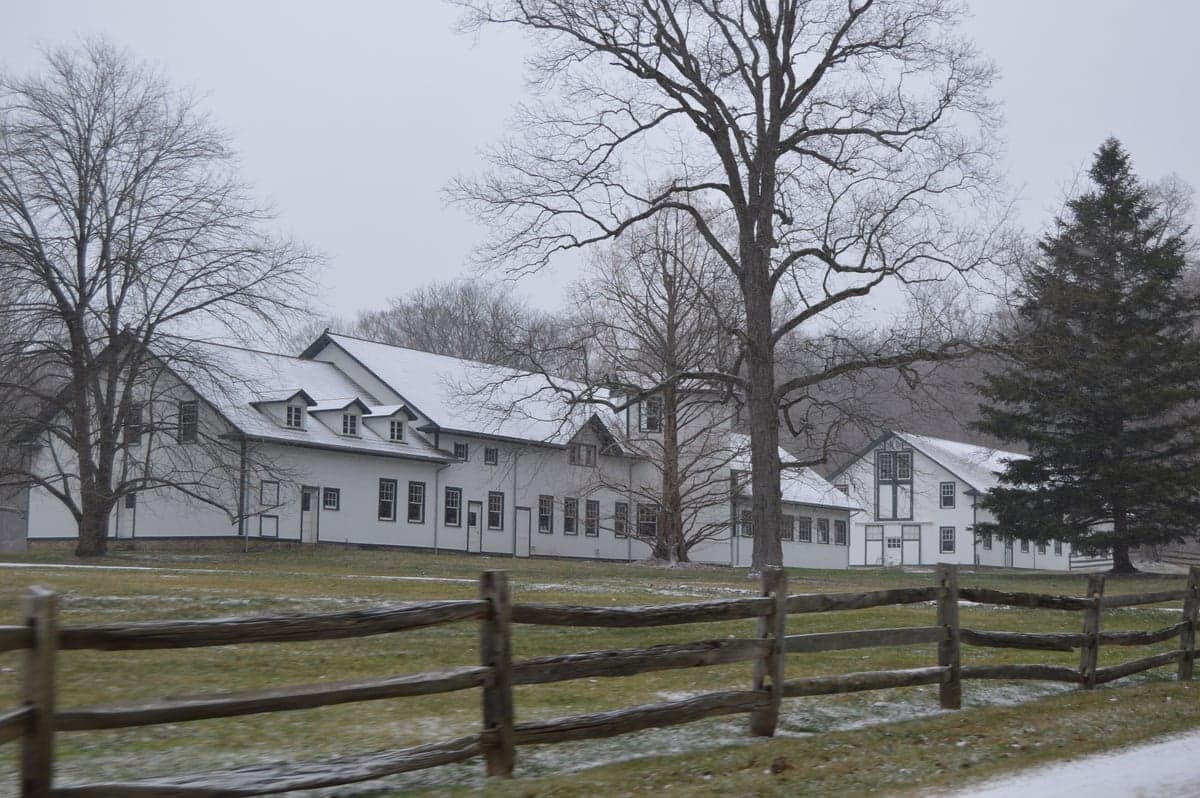
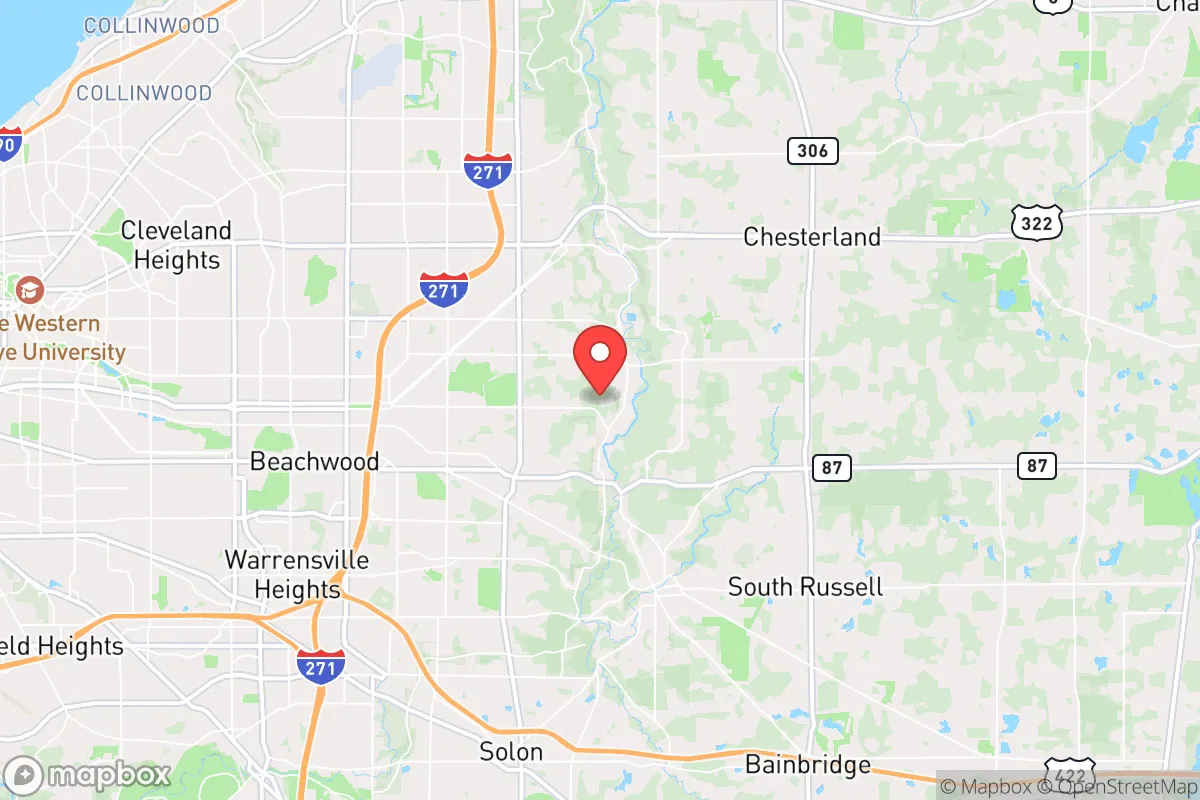
Photo: Wikipedia
Demographics of Hunting Valley, OH
Affluence Level in Hunting Valley, OH
An elite concentration of wealth — high incomes, strong home values, advanced degrees, and minimal poverty signal a top-tier socioeconomic profile.
People of Hunting Valley, OH
Hunting Valley, Ohio, is a village of 780 residents that stands as one of the most affluent and exclusive enclaves in the Greater Cleveland area. Its population is overwhelmingly white (86.4%) and highly educated (76.6% college-educated), with a distinctive character defined by large estate properties, strict zoning for minimum lot sizes, and a deliberate low-density, rural-residential atmosphere. The village’s small size and high property values create a homogeneous social fabric, with the most notable minority groups being Indian-subcontinent residents (3.2%) and East/Southeast Asian residents (2.2%), reflecting a pattern of wealth-driven, rather than labor-driven, immigration.
How the city was settled and grew
Hunting Valley’s human history is not one of industrial migration or immigrant waves, but of wealthy Cleveland families seeking country estates. Originally part of the Western Reserve, the area was sparsely farmed by Yankee settlers from New England in the early 1800s. The village itself was not incorporated until 1924, explicitly as a planned, low-density residential community for the city’s business elite. The founding families—names like Mather, Severance, and Bolton—built large summer and permanent homes along the Chagrin River valley. The historic Fairmount Boulevard corridor and the area around Shaker Boulevard (which bisects the village) became the original spine of estate development, where these industrialist families erected mansions on 5- to 10-acre lots. No significant immigrant or working-class neighborhoods ever formed; the village was designed from the start as a preserve for the wealthy. The post-World War II era saw infill of more estates, but the population never exceeded 1,000, and the village’s zoning laws—requiring minimum 5-acre lots—effectively froze development and kept density near zero.
Modern era (post-1965)
The 1965 Hart-Cellar Act had minimal direct impact on Hunting Valley because the village had no industrial or service-sector jobs to attract new immigrant populations. Instead, the modern era has been defined by domestic in-migration of wealthy professionals and corporate executives relocating to the Cleveland area. The Chagrin River Road and Solon Road neighborhoods saw new estate construction in the 1980s and 1990s, often replacing older farmhouses. The most significant demographic shift has been the arrival of Indian-subcontinent and East/Southeast Asian families, who now make up 3.2% and 2.2% of the population, respectively. These are overwhelmingly high-income professionals—physicians, engineers, and tech executives—drawn by the village’s proximity to the Cleveland Clinic, University Hospitals, and corporate headquarters in nearby Beachwood and Mayfield Heights. They settled not in ethnic enclaves but in the same estate neighborhoods as their white neighbors, particularly along Bentleyville Road and the newer subdivisions near the South Woodland Road border. The Hispanic population (6.7%) is small and likely reflects domestic migration of professionals rather than a traditional labor-immigrant pattern. The Black population (0.8%) remains negligible, consistent with the village’s history as a white-majority wealthy enclave.
The future
The population of Hunting Valley is likely to remain stable or decline slightly over the next 10–20 years, as the village is essentially built out with no room for new subdivisions. The demographic trend is toward homogenization by wealth rather than by ethnicity: the Indian-subcontinent and East/Southeast Asian communities are small but stable, and their children—educated in the excellent Orange and Chagrin Falls school districts—are likely to assimilate into the village’s existing social structure. The Hispanic share may grow modestly through professional in-migration, but the village’s high property values (median home price well over $1 million) act as a powerful demographic filter. There is no sign of tribalization into distinct ethnic enclaves; the village is too small and too expensive for that. The most likely future is a continuation of the status quo: a very small, very wealthy, predominantly white community with a thin layer of high-income Asian and Indian professionals.
For a conservative-leaning individual or family considering relocation, Hunting Valley offers a stable, low-density, and highly secure environment with exceptional schools and no significant demographic disruption. The village is not becoming more diverse in any meaningful sense—it is remaining a preserve for the top income bracket, regardless of ethnicity. The trade-off is extreme homogeneity and a lack of rental housing or starter homes, meaning it is a destination for those who have already achieved financial success, not a place for upward mobility or demographic change.

* Values derived from national, state, county, city and local statistics and may differ in a specific area. Last updated: 2026-04-27T14:31:40.000Z
Narrative content on this page is AI-generated and may contain mistakes. Verify any details that matter before acting on them.
ReloMaps may earn a commission from affiliate links at no extra cost to you.

