Photo: Wikipedia
Personal Sovereignty in Hunting Valley, OH
Viable for self-reliance. Generally workable, though some barriers may limit total independence.
What does Personal Sovereignty tell us?
Personal Sovereignty measures your capacity for self-reliance and independence with minimal government friction. Higher scores mean fewer barriers between you and the way you want to live... but it assumes you have the space you need and good neighbors.
What does this tell us?
Personal Sovereignty measures your capacity for self-reliance and independence with minimal government friction. Higher scores mean fewer barriers between you and the way you want to live... but it assumes you have the space you need and good neighbors.
State Policy
Energy independence: Importer (40% of energy produced in-state)
Personal Liberty
Homesteading

Personal Liberty Analysis
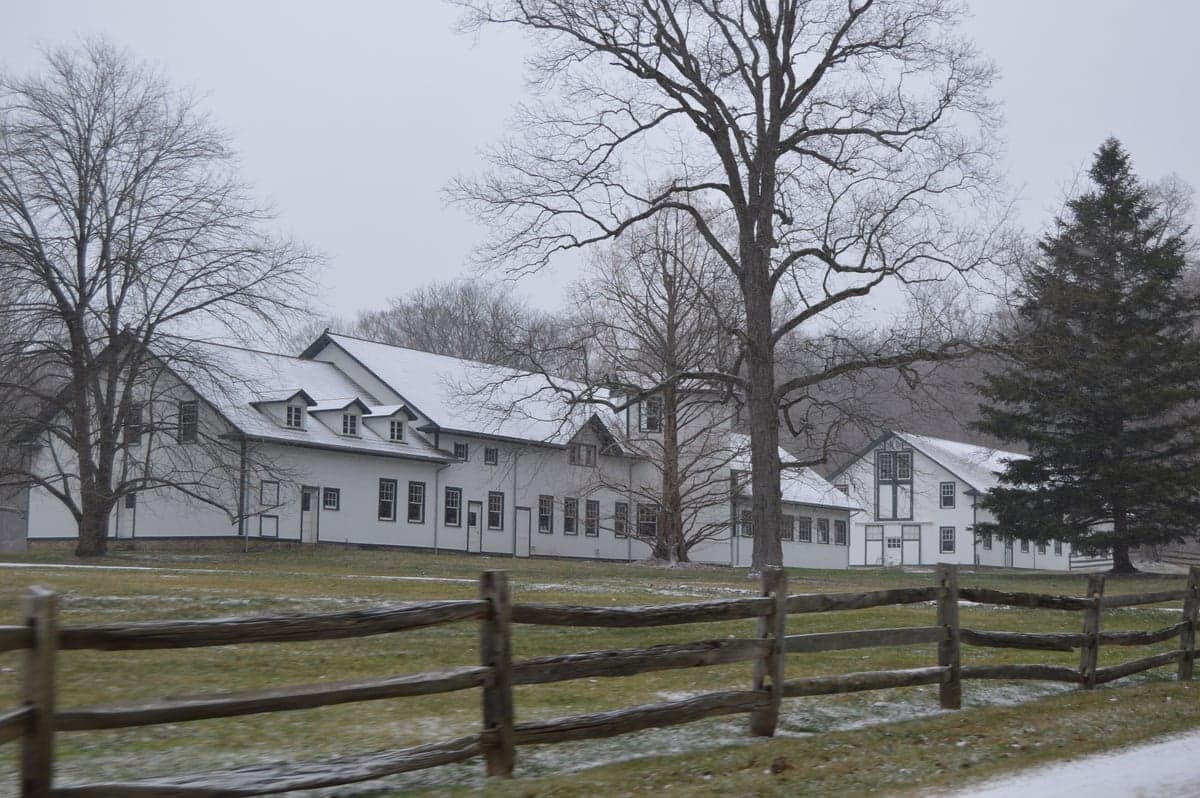
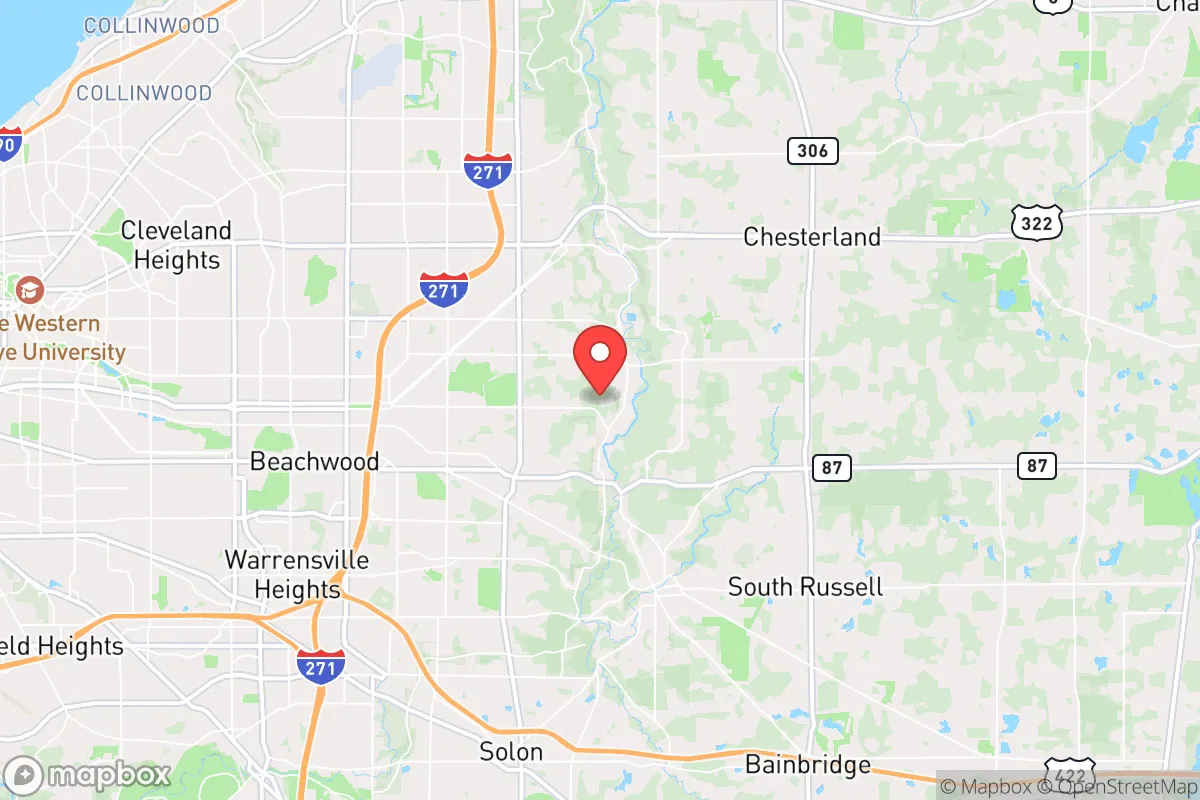
Hunting Valley, Ohio, offers one of the strongest personal sovereignty environments in the Midwest, largely because its local governance structure and state-level legal framework create a buffer against the kind of regulatory creep that erodes autonomy elsewhere. For a survivalist or prepper mindset, this village in Cuyahoga and Geauga counties is a strategic outlier—a place where low population density (roughly 700 residents across 8.5 square miles), minimal local government, and Ohio’s preemption laws combine to preserve a high degree of individual control over property, self-defense, and daily life. The trade-off is that you’re still inside the broader Ohio system, which has its own limitations, but relative to suburban or urban alternatives in the region, Hunting Valley ranks as a top-tier location for those prioritizing freedom from government overreach.
Tax burden and regulatory posture: how local and state policies limit government reach
Ohio’s state-level tax structure is moderate, but Hunting Valley’s local approach is what matters for sovereignty-minded residents. The village has no municipal income tax—a significant advantage over neighboring communities like Chagrin Falls or Pepper Pike, which levy 1-2% on residents and workers. Property taxes in Hunting Valley are high, averaging around 2.5% of assessed value, driven by the excellent school district (Orange City Schools) and county levies. However, because lot sizes are large (minimum 5 acres in most zones), the tax burden per acre is actually lower than in denser suburbs. The regulatory posture is deliberately light: Hunting Valley has no zoning code for commercial activity—there’s no downtown, no retail, no strip malls—which means fewer permits, fewer inspectors, and fewer opportunities for local government to interfere with how you use your land. The village council meets monthly and handles little beyond road maintenance and police protection. For someone concerned about creeping regulation, this is a deliberate design: the village was incorporated in 1924 specifically to avoid annexation by Cleveland and to maintain rural character. The result is a local government that is small, reactive, and unlikely to impose new restrictions without broad consensus.
Self-defense and gun law specifics: what Ohio’s legal framework allows for armed preparedness
Ohio is a constitutional carry state as of 2022, meaning no permit is required to carry a concealed handgun for anyone legally allowed to possess a firearm. This is a critical advantage for personal sovereignty: you can arm yourself without government permission, background checks for private sales are not required, and there is no state-level registry of firearms. Hunting Valley itself has no additional gun ordinances—the village defers entirely to state law. The local police department is small (about 10 officers) and primarily handles traffic and property crime; they are not known for proactive enforcement of state-level restrictions. Stand-your-ground laws are in effect, and there is no duty to retreat in any place you are lawfully present. For preppers, this means you can maintain a substantial armory on your property without local interference, and you can carry openly or concealed without fear of local ordinances overriding state preemption. The only practical limitation is that Ohio does not allow suppressors for hunting, but they are legal to own with a federal tax stamp. Magazine capacity is unrestricted. If you are concerned about federal overreach, Ohio’s state-level preemption law (ORC 9.68) explicitly prohibits local governments from regulating firearms, which means Hunting Valley cannot suddenly ban AR-15s or impose waiting periods—a protection that many states lack.
Self-reliance and homesteading viability: lot sizes, zoning, and off-grid feasibility
Hunting Valley’s minimum lot size of 5 acres—with many properties ranging from 10 to 50 acres—makes it one of the most viable locations in Greater Cleveland for serious self-reliance. Zoning is permissive for agricultural use: you can keep horses, chickens, goats, and even small livestock without special permits, as long as structures meet setback requirements. Gardening, orchards, and beekeeping are unrestricted. The village has no building code beyond basic structural safety (adopted from the state), so you can construct sheds, barns, greenhouses, and workshops without the kind of permit delays common in suburban jurisdictions. Off-grid feasibility is moderate: the village does not require connection to municipal water or sewer—most properties use wells and septic systems, which gives you control over your water supply. Solar panels are allowed without special permitting, though the village’s tree canopy (Hunting Valley is heavily wooded) may limit solar yield. The biggest limitation is that the village does not allow permanent off-grid living without a septic system, and composting toilets are not explicitly permitted. However, because enforcement is complaint-driven and the village has no code enforcement officer, many residents operate with a high degree of autonomy. For a prepper, the key takeaway is that you can achieve near-complete food and water independence on your own land, with minimal government oversight, as long as you stay within the broad boundaries of state health codes.
Personal liberties: parental rights, medical autonomy, speech, and property rights in practice
Ohio has strong parental rights protections under state law, including a parental bill of rights (HB 8, passed in 2023) that requires schools to notify parents of any medical or mental health services provided to minors and prohibits instruction on sexual orientation or gender identity in grades K-3. Hunting Valley’s school district, Orange City Schools, has been relatively compliant with these laws, though it remains a politically mixed district. For parents concerned about government overreach into family decisions, this means you have legal standing to opt your child out of any curriculum or activity you find objectionable, and the school cannot provide medical care without your consent. Medical autonomy is more limited: Ohio has not expanded Medicaid waivers for direct primary care, and the state’s vaccine mandate for school attendance (for standard childhood vaccines) remains in place, though religious exemptions are available. Speech and assembly rights are fully protected under the First Amendment, and Hunting Valley has no local ordinances restricting political signs, leafleting, or public gatherings—though the village’s rural layout means you’re unlikely to encounter organized protests. Property rights are the strongest pillar: Ohio’s property tax system is transparent, and Hunting Valley has no transfer tax on real estate sales. Eminent domain is rarely used in the village, and the local government has no incentive to seize land for development. For a survivalist, the practical reality is that you can live largely unbothered by local government, as long as you don’t draw attention through nuisance complaints.
Overall, Hunting Valley offers a sovereignty profile that is rare in the Northeast Ohio region: low local taxation, minimal regulation, strong gun rights, and permissive land use. The trade-offs are high property taxes and the proximity to a state government that is moderately conservative but still subject to federal overreach. Compared to rural areas in southern Ohio or West Virginia, Hunting Valley has less raw autonomy—you can’t legally live off-grid without a septic system, and the school district will still require standard vaccinations. But compared to any suburb within 20 miles of Cleveland, it is a fortress of personal freedom. For a prepper or survivalist who needs to remain within commuting distance of urban infrastructure (medical, supply chains, employment), Hunting Valley is the best balance of isolation and access, with a local government that is too small and too hands-off to become a threat to your way of life.

* Values derived from national, state, county, city and local statistics and may differ in a specific area. Last updated: 2026-04-27T14:31:40.000Z
Narrative content on this page is AI-generated and may contain mistakes. Verify any details that matter before acting on them.
ReloMaps may earn a commission from affiliate links at no extra cost to you.

