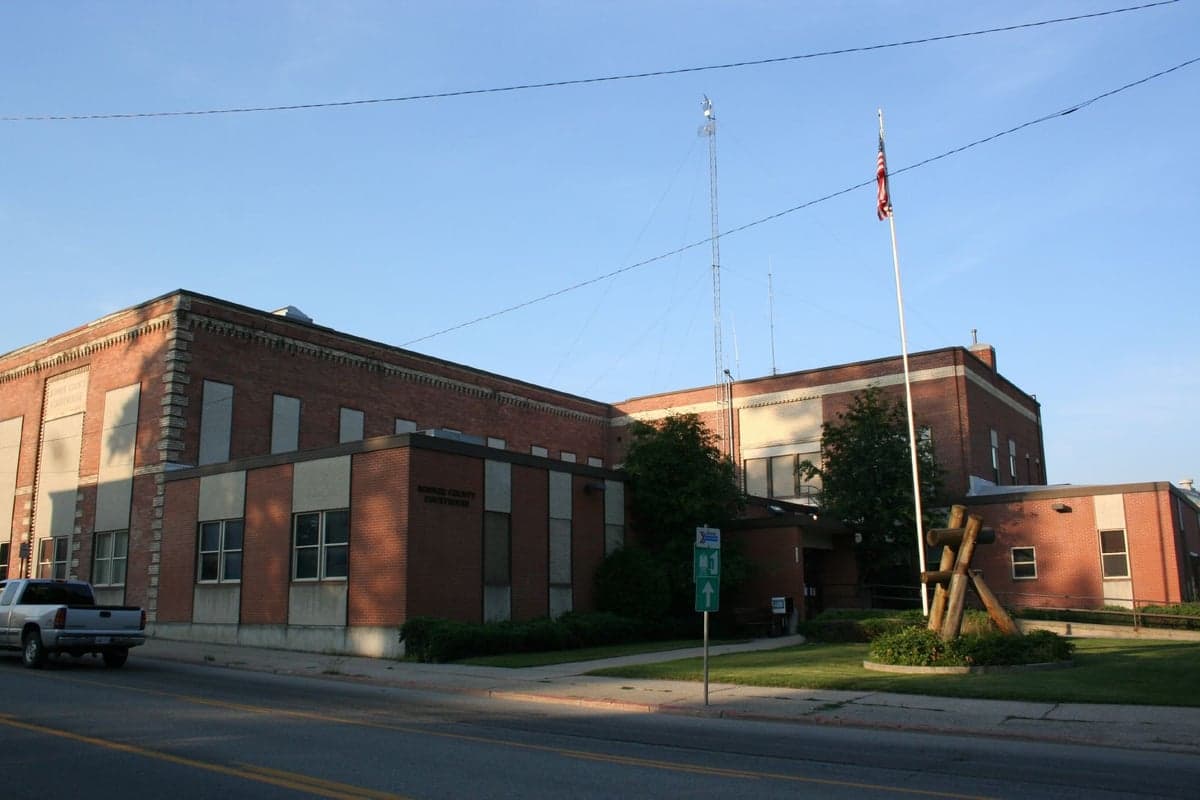
Photo: Wikipedia
Personal Sovereignty in Bonner County
Viable for self-reliance. Generally workable, though some barriers may limit total independence.
What does Personal Sovereignty tell us?
Personal Sovereignty measures your capacity for self-reliance and independence with minimal government friction. Higher scores mean fewer barriers between you and the way you want to live... but it assumes you have the space you need and good neighbors.
What does this tell us?
Personal Sovereignty measures your capacity for self-reliance and independence with minimal government friction. Higher scores mean fewer barriers between you and the way you want to live... but it assumes you have the space you need and good neighbors.
State Policy
Energy independence: Importer (25% of energy produced in-state)
Personal Liberty
Homesteading

Personal Liberty Analysis
Bonner County, Idaho, offers one of the most robust environments for personal sovereignty in the inland Northwest, where state-level preemption laws and a deeply ingrained culture of self-reliance create a legal and social atmosphere that prioritizes individual autonomy over government oversight. The county’s regulatory posture is notably light-touch, with local officials in Sandpoint, the county seat, and smaller communities like Priest River and Clark Fork generally deferring to state statutes that limit local authority over firearms, land use, and property rights. For a relocation-minded individual or family seeking maximum personal freedom, Bonner County presents a landscape where the default assumption is that you are free to act unless a specific law prohibits it, rather than the inverse.
Tax burden and regulatory posture compared to neighboring counties
Bonner County’s tax burden is among the lighter in the region, driven by Idaho’s lack of a state inheritance tax, estate tax, or intangible property tax, and a flat state income tax rate of 5.8% as of 2025. Property taxes in the county average roughly 0.7% of assessed value, which is competitive with Kootenai County to the south but slightly higher than Boundary County to the north due to local school district levies. The regulatory environment is characterized by minimal county-level zoning outside of the incorporated cities; unincorporated areas around Sagle, Cocolalla, and the rural stretches near the Pend Oreille River allow for a wide range of land uses without the need for conditional use permits. The county’s planning department processes building permits with a focus on life-safety codes rather than aesthetic or land-use restrictions, and there is no county-wide noise ordinance or light pollution regulation, which appeals to those seeking to operate workshops, keep livestock, or simply enjoy quiet rural life without bureaucratic interference.
Self-defense law and gun-friendly culture specifics
Idaho is a constitutional carry state, meaning no permit is required to carry a concealed firearm for anyone legally allowed to possess one, and Bonner County’s culture reflects this legal reality. The county is home to several gun ranges and firearms retailers, particularly around Sandpoint and along Highway 95 near Ponderay, and local law enforcement in Bonner County is known for a non-intrusive posture toward lawful gun owners. The state’s “stand your ground” law, codified in Idaho Code § 19-202A, applies without a duty to retreat in any place where a person is lawfully present, and Bonner County courts have historically interpreted this statute broadly in favor of the defender. Unlike some urban counties in the Pacific Northwest, Bonner County has no local ordinances restricting magazine capacity, firearm storage, or carry in public parks, and the sheriff’s office has publicly stated it will not enforce federal firearms laws it deems unconstitutional, a stance that resonates strongly in communities like Oldtown and Laclede.
Self-reliance and homesteading viability across the county
Homesteading and off-grid living are not just possible in Bonner County—they are a defining feature of the local lifestyle, though viability varies significantly by location. In the rural townships around Clark Fork and the Selkirk Crest, land parcels of 5 to 40 acres are common, with many properties lacking grid-tied electricity or municipal water, and the county allows for alternative energy systems, composting toilets, and rainwater catchment without special permitting. The area around Priest River and the west side of the county near the Washington border offers more affordable land—often under $3,000 per acre for raw timberland—with fewer covenants or homeowners’ association restrictions than in the more developed Sandpoint area. However, in the immediate vicinity of Sandpoint and along the Lake Pend Oreille shoreline, lot sizes shrink to under an acre, and the city enforces building codes that can complicate off-grid setups, including requirements for septic systems and setbacks. For those serious about self-reliance, the unincorporated areas of Sagle and the remote stretches near the Idaho Panhandle National Forest offer the best combination of large lot sizes, minimal zoning, and access to public lands for hunting, foraging, and timber harvest.
Personal liberties in daily life: parental rights, medical autonomy, and property
Bonner County is a stronghold for parental rights in education, with the local school district in Sandpoint and smaller districts in Priest River and Clark Fork maintaining policies that allow parents to opt their children out of specific curriculum content without penalty, and the state’s “Parents’ Bill of Rights” (Idaho Code § 33-5201) gives legal standing to challenge school decisions. Medical autonomy is protected under Idaho’s broad health freedom statutes, which prohibit mandatory vaccination for adults and allow for the use of off-label treatments with physician consent, though the county’s rural healthcare infrastructure—limited to Bonner General Health in Sandpoint and a few clinics—means that serious medical decisions often require travel to Spokane or Coeur d’Alene. Property rights are strongly guarded; Bonner County has no county-wide rent control, no short-term rental bans outside of Sandpoint’s city limits, and no tree-cutting ordinances on private land, meaning landowners in Cocolalla or the Pack River Valley can harvest timber, build fences, or subdivide parcels with minimal red tape. Free speech is robustly protected, with the county’s public meetings and school board sessions frequently featuring spirited debate, and local law enforcement rarely intervening in political expression even when it becomes heated.
Overall, Bonner County ranks among the top-tier locations in the inland Northwest for personal sovereignty, comparable to Boundary County to the north and Shoshone County to the east, but with better access to amenities and a more established community of like-minded individuals. The combination of constitutional carry, low property taxes, minimal zoning in unincorporated areas, and strong parental and medical autonomy laws creates an environment where a family or individual can live largely unbothered by government oversight. The trade-off is that this freedom comes with limited public services—rural road maintenance is sparse, emergency response times can exceed 30 minutes in the far reaches of the county, and the nearest major airport is in Spokane, 90 minutes west. For those who prioritize personal sovereignty and are willing to accept the logistical realities of remote living, Bonner County delivers a level of autonomy that is increasingly rare in the contiguous United States.

* Values derived from national, state, county, city and local statistics and may differ in a specific area. Last updated: 2026-08-08T12:20:16.000Z
Narrative content on this page is AI-generated and may contain mistakes. Verify any details that matter before acting on them.
ReloMaps may earn a commission from affiliate links at no extra cost to you.

