Photo: Wikipedia
Demographics of Bonner County
Affluence Level in Bonner County
A middle-class area roughly in line with national averages across income, home values, education, and employment.
People of Bonner County
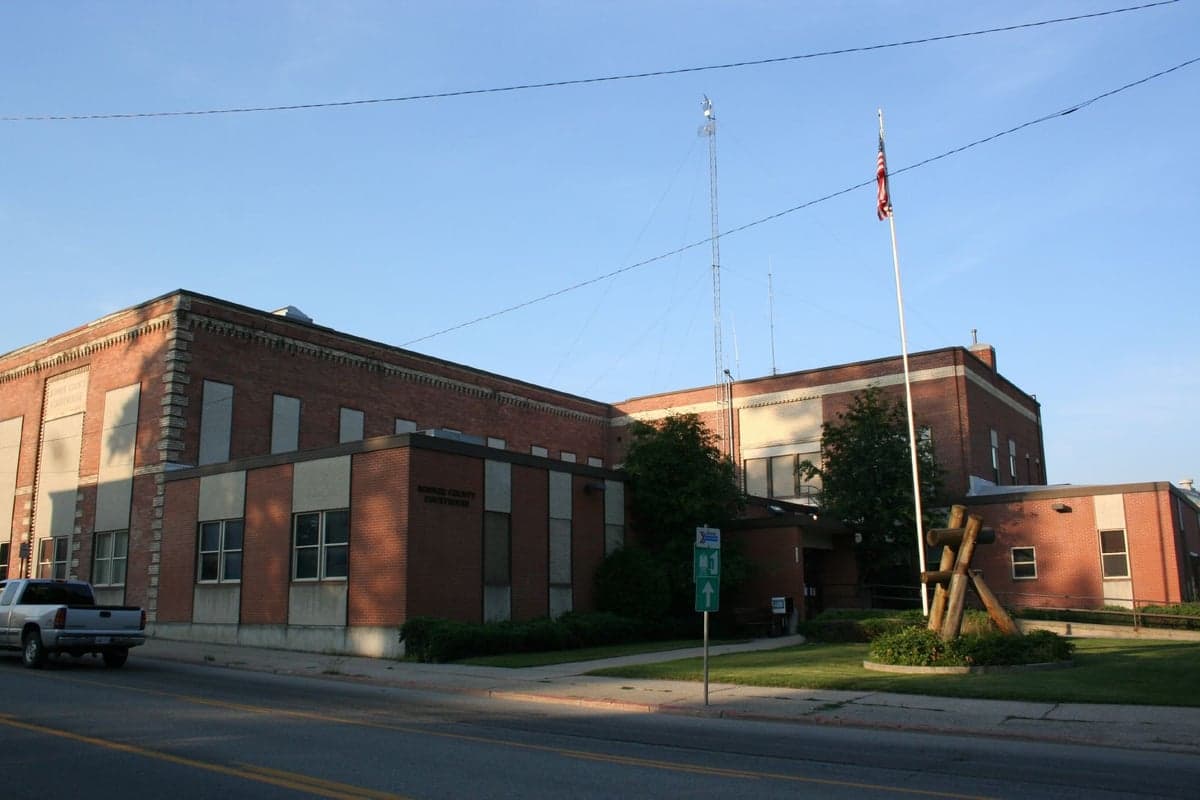
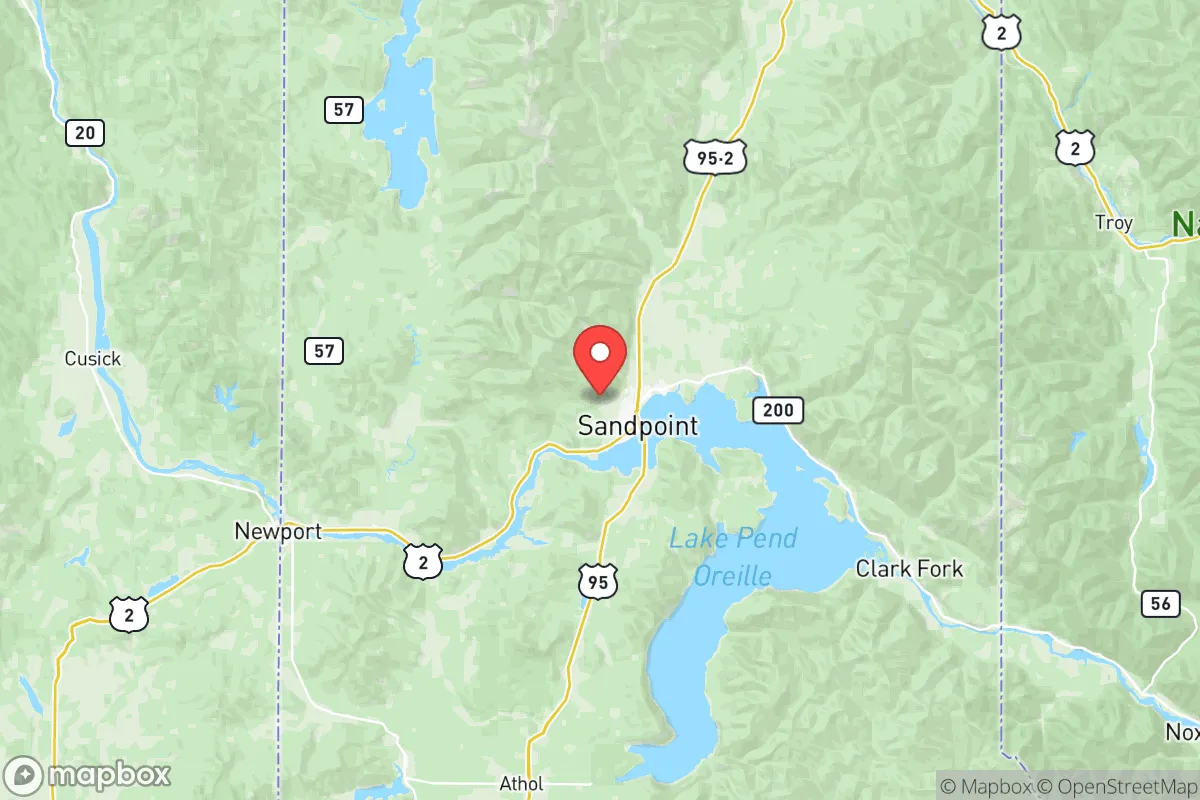
Bonner County, Idaho, is home to roughly 49,500 residents, making it one of the more populous counties in the Idaho Panhandle, yet it retains a distinctly rural and small-town character. The population is overwhelmingly white (90.1%) and native-born, with a foreign-born share of just 1.4% — far below the national average — and a Hispanic population of 3.6%. The county's identity is shaped by its deep-rooted logging, mining, and outdoor-recreation heritage, with a growing influx of domestic migrants from Western states seeking lower taxes, conservative governance, and access to the natural amenities of the Selkirk and Cabinet Mountains, Lake Pend Oreille, and the Clark Fork River.
Settlement & growth (pre-1960)
The original inhabitants of the Bonner County area were the Kalispel (or Pend d'Oreille) people, a Salish-speaking tribe who lived in seasonal villages along the Pend Oreille River, Lake Pend Oreille, and the Clark Fork River. They fished for salmon, hunted game, and gathered camas roots. The region saw no permanent European settlement until the mid-19th century, when fur trappers and Jesuit missionaries passed through. The first sustained non-Native presence came with the discovery of gold in the 1880s, which drew prospectors to the Coeur d'Alene region and, by extension, into the Bonner County backcountry. The arrival of the Northern Pacific Railway in the 1880s opened the area to logging and mining, and the county was formally established in 1907 from part of Kootenai County.
The early white settlers were overwhelmingly of Northern European stock — English, Scots-Irish, German, and Scandinavian — drawn by the promise of cheap land under the Homestead Act and jobs in the timber industry. The town of Sandpoint, the county seat and largest city, grew as a railroad and sawmill hub. Priest River, Clark Fork, and Dover also developed as mill towns. Logging camps and small farming communities dotted the Pend Oreille River valley. By 1910, the county had about 12,000 residents. The population remained stable through the 1920s and 1930s, as the timber industry consolidated and the Great Depression slowed migration. World War II brought a modest boost from the Farragut Naval Training Station at the south end of Lake Pend Oreille, which trained over 293,000 sailors before closing in 1946. After the war, many veterans returned to the area, and the county's population grew slowly but steadily, reaching about 19,000 by 1960.
Modern era (post-1965)
The post-1965 period in Bonner County was not defined by the Hart-Cellar Act's immigration reforms — the county's foreign-born population remains minuscule at 1.4%, and there are no significant immigrant enclaves. Instead, the major demographic force has been domestic migration: a steady stream of Americans from California, Oregon, Washington, and other Western states seeking a lower cost of living, less congestion, and a more conservative political environment. This trend accelerated in the 1990s and 2000s, as retirees, remote workers, and second-home buyers discovered the area's recreational appeal — Lake Pend Oreille, Schweitzer Mountain Resort, and the vast Idaho Panhandle National Forests.
The county's population grew from about 26,000 in 1990 to 40,000 in 2010, and to 49,456 by 2024. The growth has been concentrated in and around Sandpoint, which has seen new subdivisions, retail development, and an influx of residents with higher incomes and college degrees (28.9% of county adults hold a bachelor's or higher). Ponderay and Kootenai, small towns just south of Sandpoint, have absorbed much of the spillover growth, with new housing developments and big-box retail. Priest River and Clark Fork have grown more modestly, retaining their small-town, working-class character. The Hispanic population, while still small at 3.6%, has grown from near-zero in 1990, largely through domestic migration of Hispanic families from the Southwest and Pacific Northwest, working in construction, hospitality, and agriculture. The East/Southeast Asian population (0.6%) and Black population (0.3%) remain very small, concentrated in Sandpoint and associated with professional and service-sector jobs.
Suburbanization has been limited compared to the Boise or Coeur d'Alene areas, but the rural-urban fringe around Sandpoint has filled with acreage homes and hobby farms. The county's political character has shifted rightward over the past two decades, reflecting both the conservative lean of the in-migrants and the existing rural culture. Bonner County voted for Donald Trump by a wide margin in 2020 and 2024, and local politics are dominated by debates over growth management, property rights, and environmental regulation.
The future
Bonner County's population is projected to continue growing at a moderate pace, likely reaching 55,000–60,000 by 2040, driven primarily by domestic migration from the West Coast and Mountain West. The county is not becoming more diverse in the traditional sense — the white share is expected to remain above 85%, and the foreign-born share will likely stay below 3%. The Hispanic population may grow to 5–7% as families follow job opportunities in construction, services, and agriculture. The East/Southeast Asian and Black populations will remain very small, though the county may see a slight increase in Asian residents as remote workers and professionals relocate from Seattle and Portland.
The cultural identity of the county is evolving from a rough-hewn logging and mining community to a more amenity-driven, recreation-oriented place, but the political and social values remain deeply conservative. New residents are dispersing across the county, with the fastest growth in the Sandpoint-Ponderay-Kootenai corridor and along the Lake Pend Oreille shoreline. Smaller communities like Oldtown, Laclede, and Sagle are seeing infill development as well. The tension between long-time locals and newcomers — over development, taxes, and land use — will define local politics for the next decade.
For someone moving to Bonner County now, the area offers a conservative, outdoor-oriented lifestyle with a strong sense of community and relatively affordable housing compared to the West Coast. The population is overwhelmingly white and native-born, with limited ethnic diversity but a growing mix of backgrounds among domestic migrants. The county is becoming more suburban around Sandpoint, but the vast majority of its land remains forested and rural. New arrivals should expect a welcoming but culturally homogeneous environment, where political and social conservatism is the norm and the pace of life is slow by metropolitan standards.

* Values derived from national, state, county, city and local statistics and may differ in a specific area. Last updated: 2026-08-08T12:20:16.000Z
Narrative content on this page is AI-generated and may contain mistakes. Verify any details that matter before acting on them.
ReloMaps may earn a commission from affiliate links at no extra cost to you.

