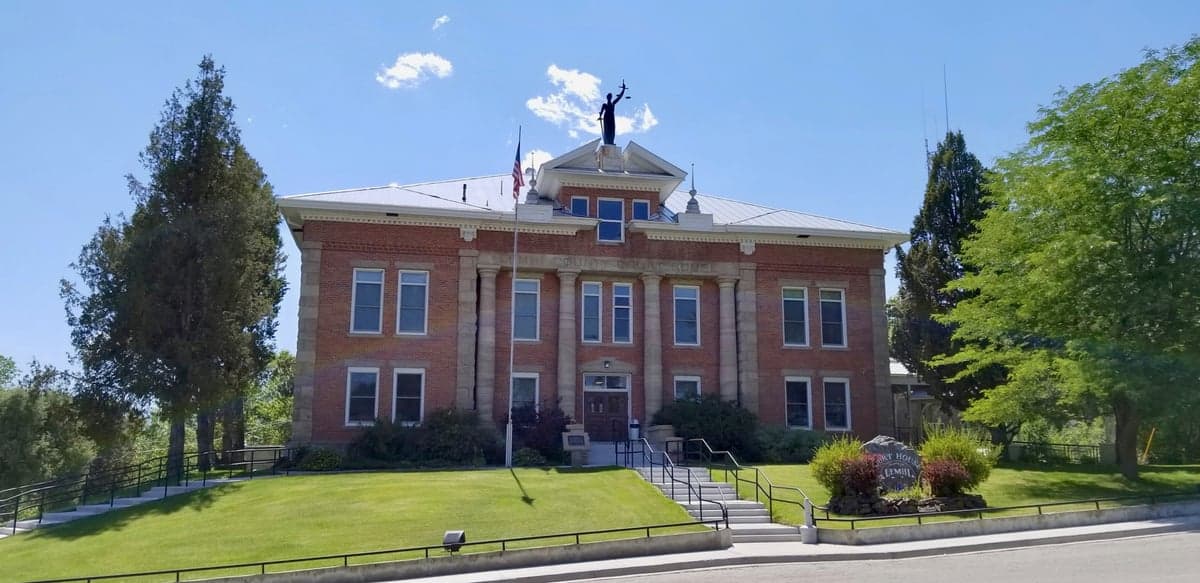
Photo: Wikipedia
Demographics of Lemhi County
Affluence Level in Lemhi County
A middle-class area roughly in line with national averages across income, home values, education, and employment.
People of Lemhi County
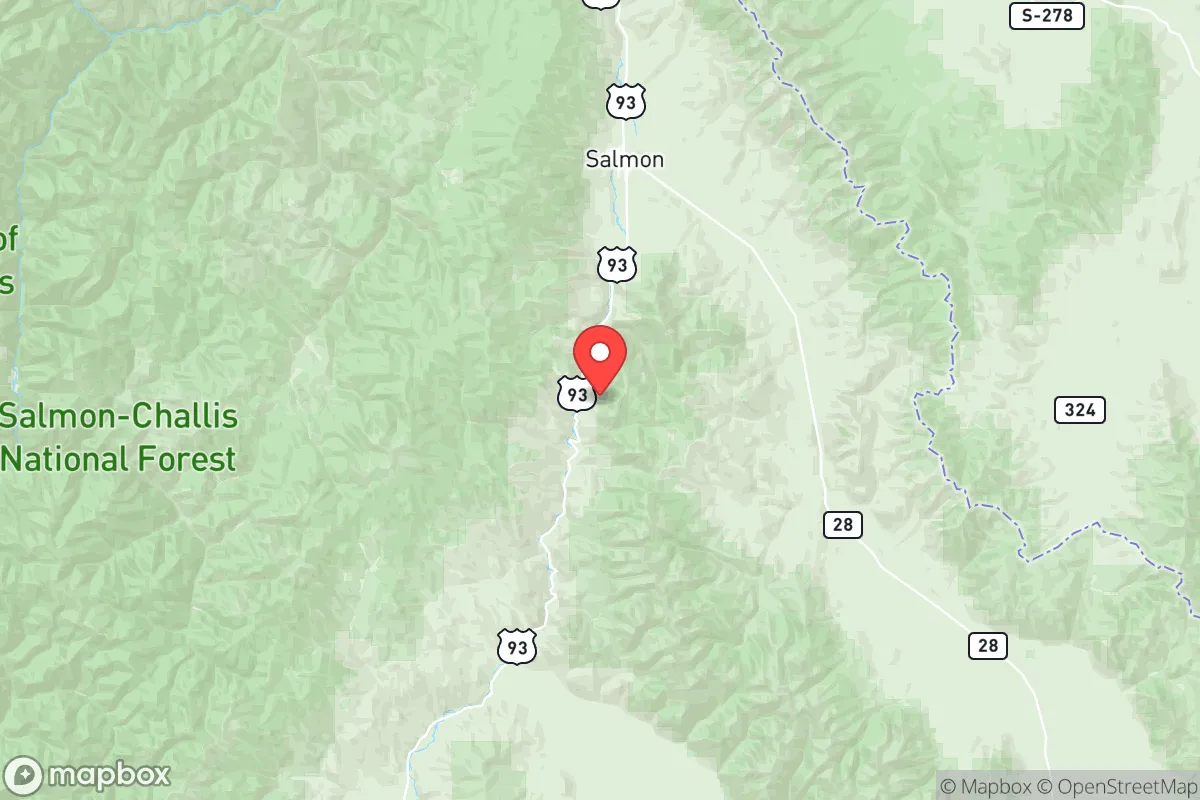
Today, Lemhi County, Idaho, is home to roughly 8,200 people, making it one of the most sparsely populated counties in the state. Its population is overwhelmingly white (91.7%) and native-born, with a foreign-born share of just 0.5% — one of the lowest in the nation. The county’s identity is rooted in a frontier ranching and mining heritage, with a strong libertarian-leaning, self-reliant character that appeals to those seeking solitude and wide-open spaces. The largest population center is the county seat of Salmon, with smaller, historic settlements like Leadore, Gibbonsville, and Shoup dotting the Salmon River corridor.
Settlement & growth (pre-1960)
The first human history of Lemhi County is that of the Lemhi Shoshone, a band of the Northern Shoshone who lived along the Salmon River and its tributaries for centuries. Their name, "Lemhi," is derived from a Mormon missionary term referencing a Book of Mormon king, but the people themselves called the area home long before European contact. The Lemhi Shoshone were forcibly removed to the Fort Hall Reservation in the 1870s, a displacement that cleared the way for American settlement.
American settlement began in earnest with the gold rush of 1866, when prospectors flooded the region after discoveries in the Birch Creek and Leesburg areas. Leesburg, now a ghost town, briefly boasted a population of several thousand. The boom drew a mix of Anglo-American miners, many from California and the Midwest, along with a small number of Chinese laborers who worked placer claims. By the 1870s, the mining camps of Gibbonsville and Shoup were established, producing gold, silver, and lead.
After the initial mining bust, the county transitioned to ranching and agriculture in the late 19th and early 20th centuries. The Salmon River Valley became the center of cattle and sheep ranching, attracting homesteaders of predominantly Scots-Irish and English descent from the Midwest and the Intermountain West. The town of Salmon grew as a supply hub, and the arrival of the railroad in 1910 (the Gilmore and Pittsburgh line) briefly boosted the economy, though the line was abandoned by 1939. The Dust Bowl of the 1930s brought a small wave of Okie and Arkie families, who took up ranching and dryland farming in the Lemhi Valley around Leadore and Tendoy. By 1960, the county’s population had stabilized at around 5,000, with a nearly entirely white, native-born, and rural character that would persist for decades.
Modern era (post-1965)
The 1965 Hart-Cellar Act had virtually no impact on Lemhi County. The county’s foreign-born population remains at 0.5% in 2026, and there are no significant immigrant enclaves. The dominant demographic story since 1965 has been domestic out-migration and an aging population. Young people have consistently left for college and jobs in Boise, the Treasure Valley, or out of state, while retirees and second-home buyers have trickled in, drawn by the low cost of land and the area’s reputation for hunting, fishing, and backcountry recreation.
The Hispanic population, at 1.8%, is small but has grown slightly since the 1990s, primarily through seasonal agricultural work on ranches and in the Salmon area. These families are largely of Mexican descent and have integrated into the ranching economy, though they remain a tiny minority. The Asian and Black populations are statistically negligible (0.1% and 0.0%, respectively), and the Indian-subcontinent population is zero. The county has seen no significant suburbanization; the only incorporated town, Salmon, has grown modestly from about 3,000 in 1990 to roughly 3,100 today, while the unincorporated areas have lost population.
A notable modern trend is the arrival of remote workers and "amenity migrants" since the 2010s, particularly after the COVID-19 pandemic. These newcomers, often from California, Oregon, and Washington, have purchased ranch properties and homes in Salmon and the North Fork area. They are typically white, college-educated, and politically conservative or libertarian, blending into the county’s existing cultural fabric while bringing new economic activity. This group has slightly raised the college-educated share to 22.9%, though it remains well below the national average.
The future
Lemhi County’s population is projected to remain flat or decline slightly over the next 10-20 years. The county’s birth rate is low, and the population is older (median age around 50), meaning natural decrease is likely. The primary growth driver will be continued in-migration of remote workers and retirees seeking a low-regulation, high-amenity lifestyle. These newcomers will concentrate in Salmon and along the Salmon River corridor from North Fork to Shoup, where internet access and scenic properties are available.
The county will not become more diverse in any meaningful sense. The Hispanic share may inch up to 3-4% as agricultural families grow, but the overall population will remain overwhelmingly white and native-born. The cultural identity will remain rooted in ranching, mining history, and outdoor recreation, though tensions may emerge between long-time locals and newer amenity migrants over land use, water rights, and development. The county’s political character — deeply conservative and skeptical of federal land management — will likely intensify as newcomers self-select for that environment.
For someone moving in now, Lemhi County offers a place where the population is stable, predictable, and culturally homogeneous. It is not a destination for those seeking diversity or urban amenities, but for those who value privacy, low taxes, and direct access to the largest roadless wilderness in the lower 48 states, it remains one of the last strongholds of the rural American West.

* Values derived from national, state, county, city and local statistics and may differ in a specific area. Last updated: 2026-08-20T10:55:19.000Z
Narrative content on this page is AI-generated and may contain mistakes. Verify any details that matter before acting on them.
ReloMaps may earn a commission from affiliate links at no extra cost to you.

