
Photo: Wikipedia
Personal Sovereignty in Cook County
Viable for self-reliance. Generally workable, though some barriers may limit total independence.
What does Personal Sovereignty tell us?
Personal Sovereignty measures your capacity for self-reliance and independence with minimal government friction. Higher scores mean fewer barriers between you and the way you want to live... but it assumes you have the space you need and good neighbors.
What does this tell us?
Personal Sovereignty measures your capacity for self-reliance and independence with minimal government friction. Higher scores mean fewer barriers between you and the way you want to live... but it assumes you have the space you need and good neighbors.
State Policy
Energy independence: Importer (45% of energy produced in-state)
Personal Liberty
Homesteading

Personal Liberty Analysis
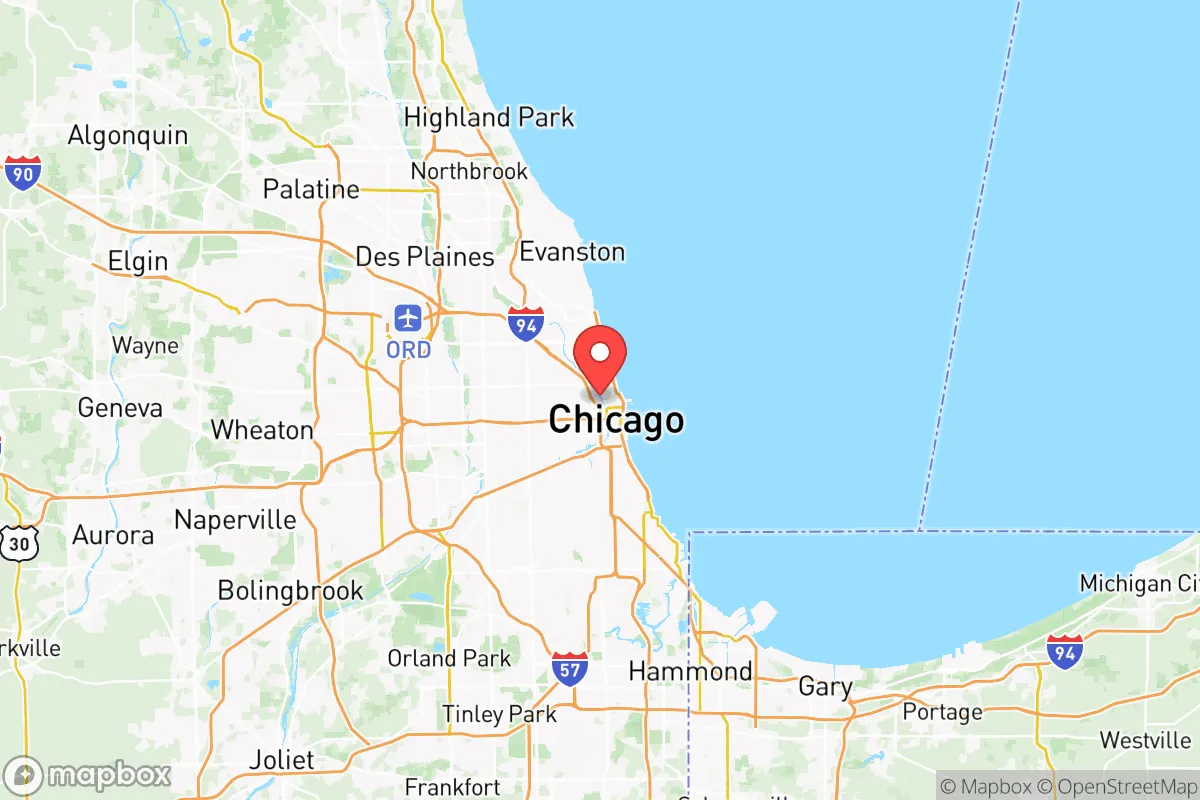
For conservative-leaning individuals and families evaluating personal sovereignty, Cook County, Illinois represents one of the most challenging environments in the Midwest. The county's 5.1 million residents operate under a dense web of municipal, county and state-level regulations that consistently rank among the nation's most restrictive on gun rights, property use, and tax burden. While Chicago dominates the county's reputation, the political and regulatory landscape varies significantly between the urban core and outlying towns like Barrington, Orland Park, and Palatine, though none escape the overarching reach of Cook County government and Illinois state law. For those prioritizing autonomy, self-reliance, and minimal government interference, this area demands careful scrutiny of specific policies that directly impact daily life.
Tax burden and regulatory posture: what it costs to live here
Cook County's tax environment is among the heaviest in the United States, a fact that directly erodes personal sovereignty by limiting disposable income and property control. The combined state and county sales tax rate reaches 10.25% in Chicago and most suburban municipalities, among the highest in the nation. Property taxes are equally punishing: the median effective property tax rate in Cook County hovers around 2.1% of assessed value, meaning a $300,000 home carries roughly $6,300 in annual property taxes. This burden is not uniform—towns like Barrington and Palatine in the northwest suburbs see slightly lower rates due to smaller municipal levies, but still face the county's base assessment structure. The regulatory posture extends beyond taxes: Cook County imposes a $0.01 per-ounce tax on sweetened beverages, a county-wide plastic bag ban, and strict building codes that limit property modifications without permits. For a prepper or homesteader, these layers of taxation and regulation mean that every major decision—from home renovation to vehicle purchase—carries an additional cost and bureaucratic hurdle that is absent in nearby counties like McHenry or Will.
Self-defense and gun law specifics: what you can and cannot do
Illinois and Cook County maintain some of the most restrictive firearm laws in the country, directly impacting the ability to defend oneself and one's family. The state requires a Firearm Owner's Identification (FOID) card for any firearm possession, a process that involves background checks and can take months for approval. Concealed carry is permitted only with a Illinois Concealed Carry License (CCL), which requires 16 hours of training and a $150 fee. Cook County adds its own layer: unincorporated areas of the county—such as parts of Barrington Hills and Lemont—allow rifle and shotgun hunting with proper permits, but Chicago and most suburbs ban the discharge of firearms entirely. Magazine capacity is capped at 10 rounds for long guns and 15 rounds for handguns under state law, and the state's assault weapons ban, passed in 2023, prohibits many common semi-automatic rifles and handguns. For those seeking a gun-friendly environment, the contrast is stark: Orland Park and Tinley Park in the southwest suburbs have more permissive local ordinances regarding storage and transport, but still fall under state restrictions. The practical reality is that Cook County is not a jurisdiction where one can easily stockpile firearms or practice tactical training on private property without significant legal risk.
Self-reliance and homesteading viability: lot sizes, zoning, and off-grid feasibility
Homesteading and off-grid living within Cook County face severe constraints due to zoning density and utility requirements. The county's minimum lot size in unincorporated areas is typically 1 acre for residential use, but many suburbs like Palatine and Barrington require 2-5 acres for agricultural zoning. Even then, raising livestock is heavily regulated: chickens are allowed in most unincorporated areas but require permits and setback distances, while goats, pigs, and cattle are generally prohibited within 500 feet of neighboring homes. Off-grid systems face even greater hurdles: solar panel installation requires county permits and must comply with building codes that mandate grid-tied systems in most residential zones. Rainwater collection is legal but limited to non-potable uses and must not exceed 1,000 gallons of storage without a permit. Composting toilets are not recognized as primary sanitation in any Cook County jurisdiction, meaning a septic system or municipal sewer connection is mandatory. For serious self-reliance, the far northwest corner of the county, near Barrington Hills, offers the best prospects with larger parcels and more permissive agricultural zoning, but even there, the county's building department enforces strict energy codes and setback requirements that make true off-grid living impractical. Compare this to McHenry County immediately to the north, where 5-acre minimums are common and off-grid systems face fewer restrictions.
Personal liberties: parental rights, medical autonomy, speech, and property
Parental rights in Cook County are shaped by state law that gives school boards significant authority over curriculum and health policies. Illinois mandates comprehensive sex education in public schools, including topics like sexual orientation and gender identity, with an opt-out provision that requires parents to actively request exclusion. The state's Parental Notice of Abortion Act requires notification for minors, but Cook County courts have historically been more permissive in granting judicial bypass waivers. Medical autonomy is similarly constrained: Illinois has no religious or philosophical exemption for childhood vaccination requirements in schools, and Cook County's public health department aggressively enforces immunization mandates. On speech and property, the county's home rule status allows municipalities to regulate signs, noise, and public gatherings more strictly than state law. Chicago's noise ordinance, for example, limits amplified sound after 10 PM and requires permits for any public assembly over 50 people. Property rights are further limited by Cook County's stormwater management ordinance, which restricts impervious surfaces and requires permits for any land disturbance over 5,000 square feet. For a conservative family, these policies create an environment where personal decisions—from medical choices to property use—are subject to extensive government oversight.
Overall, Cook County ranks among the lowest in personal sovereignty for a major urban county in the United States, comparable to Los Angeles County or King County, Washington. The combination of high taxes, restrictive gun laws, limited homesteading viability, and extensive regulation of personal liberties creates an environment where individual autonomy is consistently subordinated to government authority. For those prioritizing self-reliance and minimal government interference, the northwest suburbs like Barrington Hills offer marginally better conditions than Chicago or the inner-ring suburbs, but the county's regulatory framework ensures that no location within its borders provides the level of sovereignty found in neighboring McHenry or Kendall counties. A strategic relocation decision would require weighing these constraints against employment opportunities or family ties that might justify the trade-offs.

* Values derived from national, state, county, city and local statistics and may differ in a specific area. Last updated: 2026-05-17T15:00:35.000Z
Narrative content on this page is AI-generated and may contain mistakes. Verify any details that matter before acting on them.
ReloMaps may earn a commission from affiliate links at no extra cost to you.

