
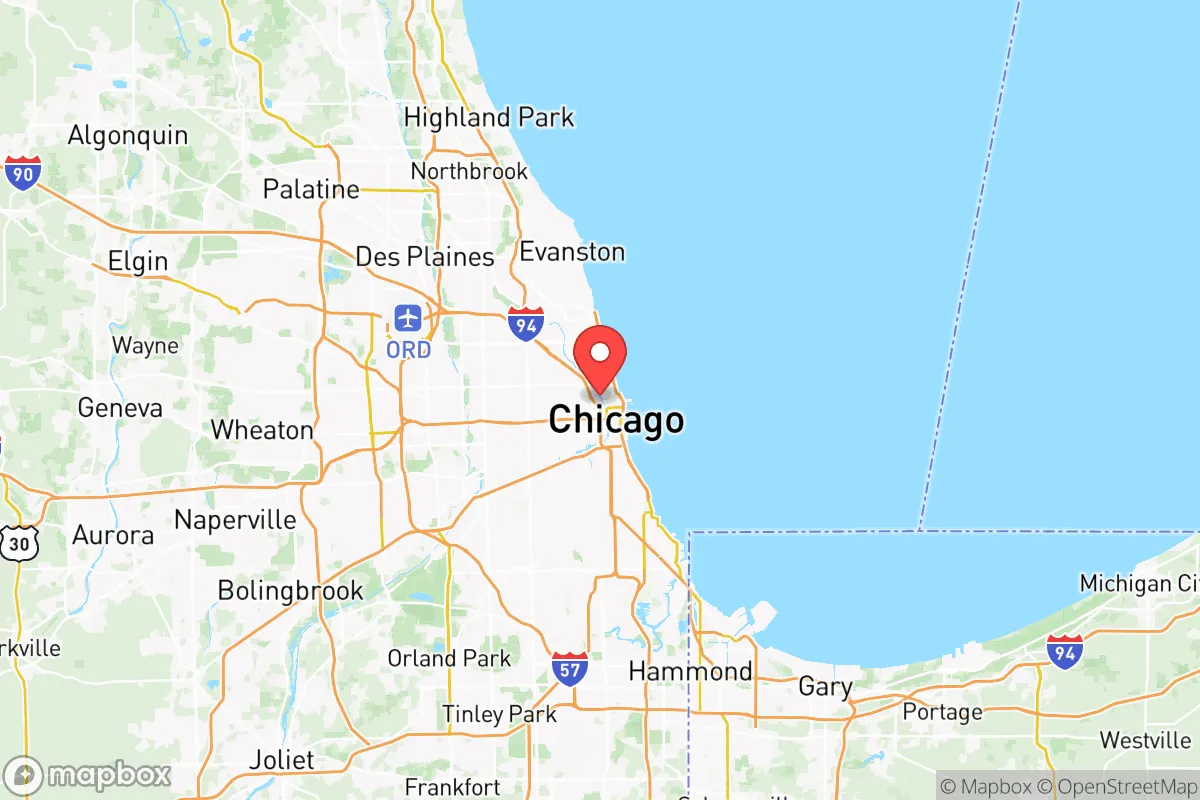
Photo: Wikipedia
Quality of Life in Cook County
A livable area that tracks near national norms for affordability, walkability, and neighborhood health.
What does Quality of Life tell us?
Quality of Life measures an area by evaluating factors like cost of living, nearby amenities, country club access, airport proximity, socioeconomic signals and neighborhood character. For large states, this is a general average — quality of life can vary dramatically between metro areas, suburbs, and rural communities within the same state.
What does this tell us?
Quality of Life measures an area by evaluating factors like cost of living, nearby amenities, country club access, airport proximity, socioeconomic signals and neighborhood character. For large states, this is a general average — quality of life can vary dramatically between metro areas, suburbs, and rural communities within the same state.
Cost of Living
15% above national average
94%
The Real Cost of Living in Cook County for 2026
| Tier | Individual | Family (4) |
|---|---|---|
| Survival | $22k | $41k |
| Comfortable | $59k | $87k |
| Luxury | $148k+ | $229k+ |
| Elite (Top 5%) | $202k+ | $313k+ |
Quality-of-Life Analysis
Cook County, Illinois, offers one of the most dramatic quality-of-life spectrums in the Midwest, ranging from the dense urban core of Chicago to quiet, unincorporated rural hamlets like Barrington Hills and the forested pockets of the Palos Township. The county draws a wide cross-section of residents: young professionals and corporate transplants gravitate to the high-amenity, transit-rich neighborhoods of Chicago and its inner-ring suburbs, while families and long-time locals seeking lower taxes and larger lots settle in the outer townships and agricultural edges near the county line. With a cost-of-living index of 115 (100 being the U.S. average), the county is 15% more expensive than the national norm, but that figure masks enormous internal variation — from the premium lakefront enclaves of Evanston and Wilmette to the more affordable, working-class communities of Harvey and Chicago Heights.
Largest town(s) & population centers
Chicago is the dominant population center, home to roughly 2.7 million residents and the engine of the county's economy, culture, and transit network. Daily life in the city is defined by walkable neighborhoods, the CTA 'L' train and bus system, and a 24/7 rhythm of dining, entertainment, and professional opportunity. Outside Chicago, the largest suburban population centers include Evanston (pop. ~78,000), home to Northwestern University and a lively downtown with lakefront parks; Schaumburg (pop. ~74,000), a major employment hub anchored by Woodfield Mall and corporate offices; and Arlington Heights (pop. ~75,000), known for its historic downtown, top-rated schools, and the Arlington Park redevelopment site. These suburbs offer a more suburban lifestyle — single-family homes, strong public school systems, and commuter rail access to downtown Chicago — while still providing dense commercial corridors and cultural amenities. The average commute across Cook County is roughly 32 minutes, though residents in the outer suburbs often face longer drives, while those in Chicago's central neighborhoods may commute 20–25 minutes by train or bike.
Smaller towns & rural pockets
Despite its reputation as a fully urbanized county, Cook County contains distinct smaller towns and rural pockets, particularly in its far northwest and southwest corners. Barrington Hills, straddling the McHenry County line, is a wealthy, semi-rural village where zoning requires minimum 5-acre lots, preserving horse farms, wooded trails, and a quiet, estate-like atmosphere. Palos Park and Palos Hills, in the southwest, sit within the Palos Forest Preserves — over 15,000 acres of oak-hickory woodlands, hiking trails, and glacial ridges that feel a world away from the city. Orland Hills and Tinley Park offer a mix of newer subdivisions and older farmsteads, with access to the Metra Rock Island Line. Unincorporated areas like Bremen Township and Rich Township contain scattered homes on large lots, small farms, and a slower pace of life, though they still fall under county zoning and services. These areas attract residents who want Cook County's proximity to Chicago jobs and hospitals but prefer a rural or semi-rural setting with more land and privacy.
Cost & lifestyle range
The cost of living in Cook County varies dramatically by location. At the high end, lakefront suburbs like Winnetka, Glencoe, and Kenilworth have median home values well above $1 million, with top-tier public schools, private beach access, and commuter express trains to downtown Chicago. The median home value countywide is $305,200, and median rent is $1,381, but those figures are pulled down by the more affordable south and west suburbs. At the lower end, communities like Harvey (median home value ~$80,000), Chicago Heights (~$110,000), and Dolton (~$90,000) offer significantly cheaper housing stock, though they face higher property tax rates, older infrastructure, and fewer local amenities. The lifestyle range is equally broad: a family in Barrington Hills might drive 40 minutes to work and keep horses, while a single professional in Lincoln Park walks to coffee shops and takes the Brown Line to the Loop. Property taxes are a major factor across the entire county — Cook County has among the highest effective property tax rates in the U.S., often 2–3% of assessed value — which affects affordability even in lower-priced areas.
Cook County is best suited for people who value proximity to Chicago's economic and cultural opportunities but need flexibility in housing type, density, and cost. Urbanites thrive in Chicago's neighborhoods and inner-ring suburbs like Oak Park and Evanston; families seeking strong schools and a suburban feel gravitate to Arlington Heights, Naperville (though technically DuPage), or the northwest suburbs; and those wanting land and quiet find their niche in the rural pockets of Barrington Hills or the Palos preserves. The county's diversity of lifestyle options — from high-rise lakefront condos to 5-acre horse properties — means that with careful research, most residents can find a fit that balances commute, cost, and community character.

Crime in Cook County
WARNING: The crime statistics are unreliable for this jurisdiction. Local authorities have either not reported or under reported their data to the FBI. This could be due to bad intentions, incompetence or technical issues. Regardless, we suggest skepticism.
Higher crime rates than 64% of comparable U.S. locations.
Violent CrimeViolent Crime Analysis
Property CrimeProperty Crime Analysis
Crime Analysis
Cook County, Illinois, presents a complex safety landscape shaped by the stark contrast between its densely urban core and its suburban periphery. With a violent crime rate of 241.9 violent crimes per 100,000 residents and a property crime rate of 1,462 per 100,000, the county’s overall figures are elevated by the high-crime environment of Chicago, while many outlying towns experience significantly lower risk. The county-level rates. The county’s progressive judicial leadership, including State’s Attorney Kim Foxx, has pursued policies emphasizing diversion and reduced incarceration, a approach that critics argue has contributed to a revolving-door justice system and emboldened repeat offenders, particularly in property crime.
Crime in context
Cook County’s violent crime rate of 241.9 per 100,000 is roughly 30% higher than the Illinois state average and about 50% higher than the national rate. Property crime, at 1,462 per 100,000, also exceeds both state and national averages, driven largely by theft and motor vehicle theft in Chicago and nearby suburbs like Cicero and Berwyn. However, these county-wide numbers mask extreme internal variation: Chicago alone accounts for the vast majority of homicides and aggravated assaults, while suburban communities such as Evanston, Oak Park, and Arlington Heights report violent crime rates well below the county average. The county’s progressive bail reform and sentencing guidelines, championed by the Cook County State’s Attorney’s Office, have been linked to a rise in carjackings and retail theft rings, as offenders face minimal consequences for non-violent property crimes.
What residents experience
Daily safety in Cook County depends heavily on location. In Chicago’s South and West Side neighborhoods—such as Englewood, Austin, and Garfield Park—residents face violent crime rates that can exceed 1,500 per 100,000, making them among the most dangerous in the nation. In contrast, residents of Palatine, Schaumburg, and Naperville (the latter partially in DuPage County) experience crime rates comparable to small Midwestern towns, with violent crime often below 100 per 100,000. Property crime, however, is a more universal concern: even safer suburbs like Evanston report property crime rates near 2,000 per 100,000, driven by package theft, bicycle theft, and vehicle break-ins. The county’s liberal judicial policies have created a perception among many suburban residents that property crimes are effectively decriminalized, as prosecutors routinely offer plea deals to first-time offenders and avoid jail time for thefts under $1,000.
Neighborhood-level variation and judicial impact
The most significant safety divide in Cook County is between Chicago’s high-crime neighborhoods and the surrounding suburbs. Oak Park, a near-west suburb, has seen a spike in carjackings and armed robberies in recent years, which local officials attribute to offenders crossing from Chicago’s West Side, emboldened by the county’s lenient prosecution policies. Meanwhile, Orland Park and Tinley Park in the southwest consistently report violent crime rates below 150 per 100,000, benefiting from well-funded police departments and community watch programs. The Cook County court system, under progressive leadership, has prioritized alternatives to incarceration for non-violent offenders, but this has led to a documented increase in recidivism for property crimes. Residents in safer areas often invest in private security systems and neighborhood patrols, reflecting a lack of confidence in the county’s ability to deter repeat offenders. For those considering relocation, the choice between Chicago’s urban and suburban Cook County is not just about commute times—it is a fundamental decision about personal safety and exposure to a justice system that many feel prioritizes offender rehabilitation over public protection.
* Values derived from national, state, county, city and local statistics and may differ in a specific area. Last updated: 2026-05-17T15:00:35.000Z
Narrative content on this page is AI-generated and may contain mistakes. Verify any details that matter before acting on them.
ReloMaps may earn a commission from affiliate links at no extra cost to you.

