
Photo: Wikipedia
Strategic Assessment of Cook County
High tactical risk. This location is likely close to major population centers, strategic targets, or sits in a high-disaster corridor. A retreat property and careful exit planning is required.
What does the Strategic Assessment tell us?
Our Strategic Assessment grades tactical survivability of an area. Major population centers, military targets, fallout zones, natural disasters, and border exposure all drive risk — lower exposure means a more defensible position in a crisis.
This is heavily inspired by Joel Skousen's Strategic Relocation book. Highly recommended you checkout the book ($)What does this tell us?
Our Strategic Assessment grades tactical survivability of an area. Major population centers, military targets, fallout zones, natural disasters, and border exposure all drive risk — lower exposure means a more defensible position in a crisis.
This is heavily inspired by Joel Skousen's Strategic Relocation book. Highly recommended you checkout the book ($)Strategic Pillars

Key Distances
Strategic Assessment Analysis
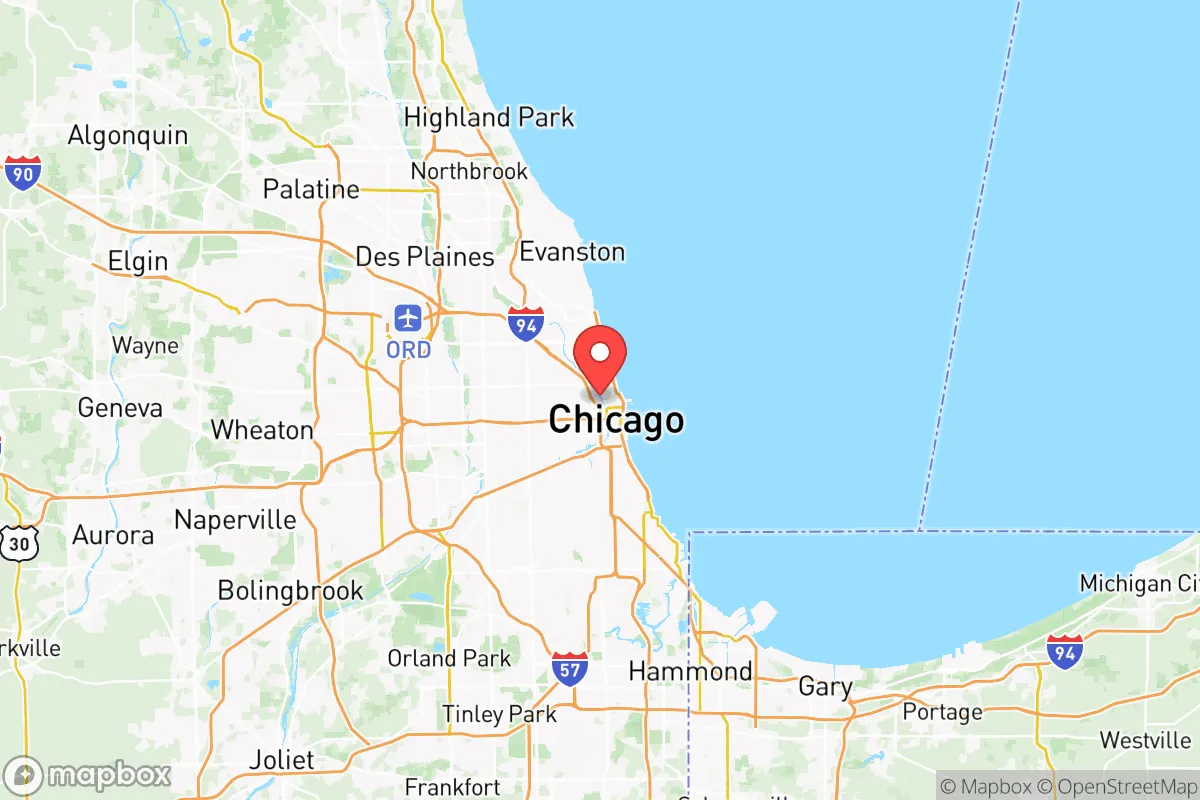
Cook County, Illinois, presents a paradox for the strategic relocator: it sits at the center of a massive logistical and industrial hub, yet its very density and political fragility make it a high-risk zone for anyone prioritizing long-term resilience. The county-level resilience. The county’s location on the southwestern shore of Lake Michigan gives it access to the largest freshwater system in the world, but that advantage is offset by its position as a primary target for civil unrest, infrastructure failure, and fallout from nearby critical infrastructure. For a conservative-leaning individual or family thinking about where to hunker down, Cook County is less a sanctuary and more a high-stakes chess piece—one that demands serious contingency planning if you choose to live here at all.
Geographic position and natural advantages for long-term survival-minded residents
Cook County’s most undeniable asset is its direct frontage on Lake Michigan, which provides a virtually limitless supply of fresh water—something that becomes priceless in any prolonged disruption. The county’s 150+ miles of shoreline, from the affluent North Shore suburbs like Evanston and Winnetka down to the industrial south side around Calumet City, means that even in a grid-down scenario, a prepared household with a manual pump or gravity filter can secure drinking water without relying on municipal treatment plants. The terrain is mostly flat, with the Des Plaines River and the Calumet River systems offering secondary water sources and natural corridors for movement or evasion. However, the lack of significant elevation or dense forest cover means defensible positions are scarce—you’re not going to find a mountain redoubt here. The county’s position at the nexus of major interstate highways (I-90, I-94, I-55, I-57) and rail lines is a double-edged sword: it allows rapid resupply in normal times, but in a crisis, those same arteries become chokepoints for refugees and looters. The natural advantages are real, but they are heavily urbanized and compromised by the sheer scale of human presence.
Risks, exposures, and proximity to fallout-relevant landmarks
This is where the analysis gets sobering. Cook County is home to O'Hare International Airport and Midway Airport, both of which are high-value targets for any coordinated attack or act of sabotage. The county also contains the Argonne National Laboratory in Lemont, a major nuclear research facility that, while secure, represents a potential radiological hazard if compromised. On the industrial side, the Calumet region hosts a dense cluster of oil refineries, chemical plants, and steel mills—the BP Whiting Refinery just across the Indiana border is one of the largest in the Midwest, and its proximity to Cook County’s southeast side means a major accident or strike could render large areas uninhabitable for weeks. The county’s population density—over 5.2 million people packed into 945 square miles—creates a cascading risk: any major event, from a pandemic to a power grid failure, will trigger mass panic and resource competition far faster than in rural areas. The presence of Fort Sheridan (now a reserve center) and the Great Lakes Naval Station Great Lakes in North Chicago provides some military presence, but these are training and support facilities, not combat-ready bases. For the prepper, the risk profile is clear: Cook County is a target-rich environment for anyone wanting to disrupt American logistics, and its residents will bear the brunt of any fallout—literal or figurative.
Practical resilience for a relocator: food, water, energy, and defensibility
If you’re determined to make a stand in Cook County, you need to think like a survivalist in a city that was not designed for self-sufficiency. Water is the easiest win: Lake Michigan is right there, but you’ll need a way to access it without relying on the municipal system. A rooftop rainwater catchment system is legal in most suburbs, but check local ordinances—some towns like Oak Park have restrictive codes. For food, the county has a surprising number of community gardens and farmers’ markets, but these are not reliable in the volume needed for long-term storage. You’ll want to establish relationships with local growers in the collar counties (Will, Lake, McHenry) and plan for regular supply runs. Energy is a weak point: the grid is aging and vulnerable to weather events (remember the 2021 polar vortex and the 2023 ice storms that knocked out power for days). A whole-home generator with a buried propane tank is not a luxury here—it’s a necessity. Solar is viable but less effective in the cloudy Midwest’s cloudy winters. Defensibility is the hardest factor. Cook County’s suburbs are mostly sprawling subdivisions with limited natural cover. If you can afford it, look at properties near the Palos Forest Preserves or the Cook County Forest Preserve system—these offer some wooded buffer and escape routes. But the reality is that no single-family home in a suburb like Arlington Heights or Orland Park is going to withstand a determined mob. Your best bet is to have a secondary retreat outside the county—within a 90-minute drive—and treat your Cook County residence as a base for work and logistics, not a final redoubt.
The overall strategic picture for Cook County is one of high risk with conditional rewards. If you’re a single professional or a family that needs to stay near Chicago for work, family, or medical reasons, you can make it work—but only with a serious investment in preparedness. The prepper infrastructure and a clear-eyed understanding that you are living in a potential blast zone. The county’s water access and logistical centrality are real assets, but they are dwarfed by the dangers of population density, industrial targets, and political instability. For the conservative relocator who values liberty and self-reliance, Cook County is a place to pass through, not to dig in. If you do choose to stay, your plan must include a bug-out route, a stocked safe room, and a network of trusted neighbors who share your mindset. Otherwise, you’re just another statistic waiting for the next crisis to hit.

* Values derived from national, state, county, city and local statistics and may differ in a specific area. Last updated: 2026-05-17T15:00:35.000Z
Narrative content on this page is AI-generated and may contain mistakes. Verify any details that matter before acting on them.
ReloMaps may earn a commission from affiliate links at no extra cost to you.

