
Photo: Wikipedia
Political ClimatePolitical Climate in Dupage County
Showing district-level results — no local-only data available.
Local Political AnalysisPolitical Analysis of Dupage County
DuPage County has long been a reliable Republican stronghold in Illinois, but that's been shifting noticeably over the past decade. The Cook Partisan Voting Index (PVI) now rates the county at D+3, meaning it leans three points more Democratic than the national average. That's a significant move from where things stood even ten years ago, when the county was solidly red. The surrounding state of Illinois carries a D+7 PVI, so DuPage is still more conservative than the state as a whole, but the gap is narrowing fast. If you're looking at the political trajectory here, it's a slow but steady drift leftward, driven largely by changing demographics and suburban voters moving away from traditional GOP positions.
How it compares
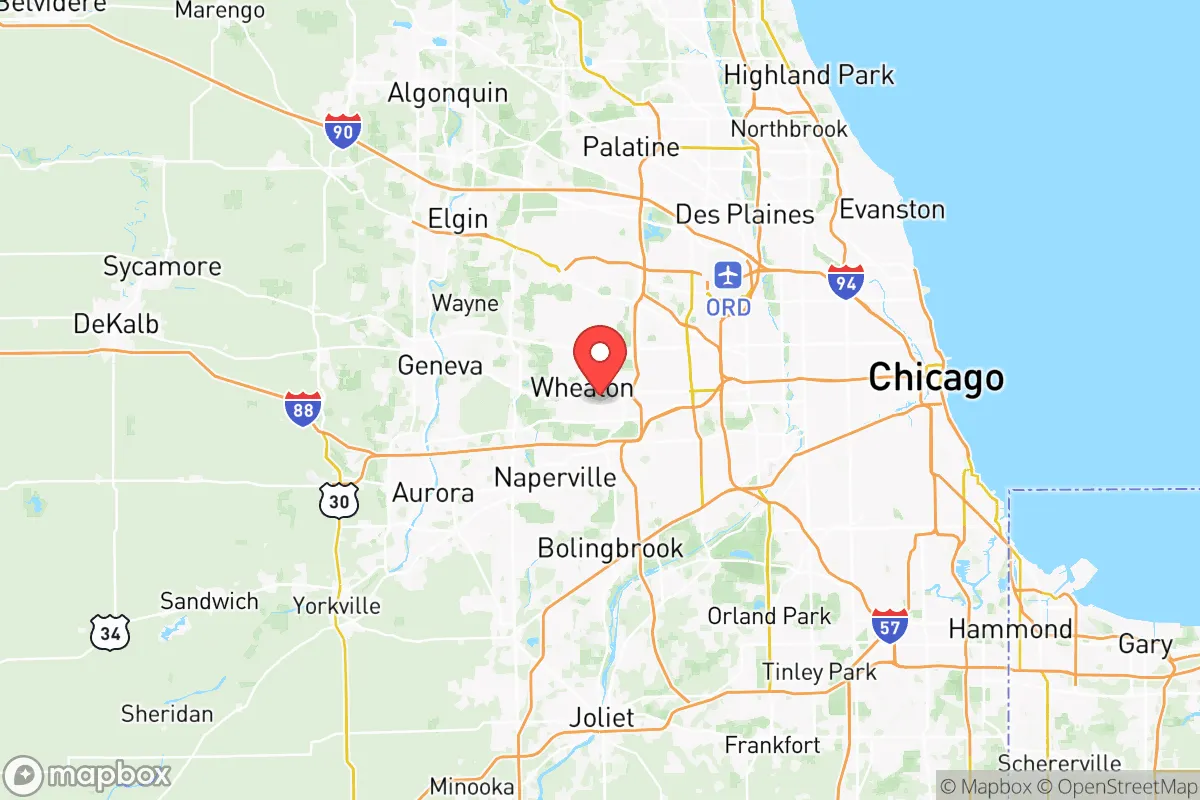
Compared to Illinois as a whole, DuPage County is still a relative island of conservatism in a deep-blue state. The state's D+7 PVI reflects Chicago's overwhelming Democratic influence, plus the collar counties like Cook and Lake that have gone blue in recent cycles. DuPage, however, has pockets that still vote reliably Republican. Towns like Wheaton and Glen Ellyn remain GOP strongholds, with precincts that routinely deliver 60% or more for Republican candidates. On the flip side, Naperville and Downers Grove have become more competitive, with swing precincts that can flip depending on the election. Lombard and Addison lean more Democratic, reflecting their diverse, working-class populations. The county's political map is no longer a solid red block—it's a patchwork of blue-leaning suburbs and red-leaning exurbs, with the balance tipping slowly toward the left.
What this means for residents
For residents who value limited government and personal freedoms, the trend in DuPage is concerning. As the county shifts left, you're seeing more progressive policies creep into local governance. School boards in areas like Naperville and Downers Grove have adopted curriculum changes that some parents feel prioritize ideological agendas over academic rigor. County-level decisions on zoning, taxes, and public health mandates have become more aligned with state-level Democratic priorities. The push for higher property taxes to fund expanded government programs is a real worry for homeowners who already carry a heavy tax burden in Illinois. If you're someone who believes in keeping government out of your wallet and your personal life, these changes are worth watching closely.
On a cultural level, DuPage still retains a lot of its traditional Midwestern character—church communities, family-owned businesses, and a general respect for self-reliance. But the influx of new residents from Chicago and other blue areas is slowly eroding that. You'll see more "equity" initiatives in local government, more restrictions on property rights, and a growing acceptance of policies that prioritize collective outcomes over individual liberty. For now, the county remains a place where you can still find a conservative voice at the ballot box, but the margin for error is shrinking. If you're considering a move here, understand that the political climate is in flux—and if you value personal freedom and limited government, you'll want to keep an eye on local elections, because that's where the real battles are being fought.

State Political ClimatePolitical Climate in Illinois
State Political AnalysisPolitical Environment in the State
Illinois is a solidly blue state with a Cook PVI of D+7, but that number masks a deep and growing chasm between the Chicago metro area and the rest of the state. Over the last 20 years, the Democratic stronghold in Cook County and its collar counties has tightened, while the rest of the state has swung hard to the right, creating a political landscape that feels like two different countries under one capitol dome. For a conservative considering a move here, the reality is that your vote and your voice will be heavily diluted by Chicago’s population, and the state-level policy reflects that imbalance.
Urban vs. rural divide
The political map of Illinois is a textbook case of urban-rural polarization. Chicago and its immediate suburbs in Cook County are the engine of the state’s Democratic majority, routinely delivering 70-80% of the vote for statewide Democrats. The collar counties—DuPage, Lake, Kane, Will, and McHenry—have been trending blue over the past decade, with once-reliable Republican suburbs like Naperville and Schaumburg now consistently voting for Democratic candidates. Meanwhile, downstate Illinois is a sea of red. Counties like Effingham, Jasper, and Clay routinely vote 70-80% Republican. The Metro East area across from St. Louis is a mixed bag, with Madison County still leaning red but St. Clair County (home to East St. Louis) staying blue. The Peoria area is a bellwether that has shifted left in recent cycles, while Rockford in Winnebago County has become a Democratic stronghold. The Champaign-Urbana area, home to the University of Illinois, is a deep blue island in a red sea. The bottom line: if you live outside the I-294/I-80 corridor, your vote for president or governor is essentially symbolic.
Policy environment
Illinois’s policy environment is a cautionary tale for conservatives. The state has the second-highest property tax burden in the nation, with effective rates averaging over 2.0% of home value. The state income tax is a flat 4.95%, but there’s a progressive tax amendment that Democrats have tried to pass and will likely try again. Sales taxes can exceed 10% in Chicago. The regulatory posture is heavily pro-union and pro-regulation, with a prevailing wage law that drives up construction costs and a clean energy law that mandates a 100% carbon-free grid by 2050, which has already led to higher electricity rates. Education policy is dominated by the Chicago Teachers Union, which has successfully resisted charter school expansion and pushed for progressive curricula. The state has universal mail-in voting and automatic voter registration, which conservatives argue erodes election integrity. On healthcare, Illinois expanded Medicaid under the Affordable Care Act and has some of the most generous abortion access laws in the country, including the Reproductive Health Act of 2019, which removed nearly all restrictions. The state also has a sanctuary state law (the TRUST Act) that limits local law enforcement cooperation with federal immigration authorities.
Trajectory & freedom
Over the past decade, Illinois has become less free by nearly any measure. The Firearm Owners Identification (FOID) Card Act remains one of the most restrictive gun laws in the nation, and in 2023, the state passed a ban on assault weapons and high-capacity magazines (the Protect Illinois Communities Act), which is currently being challenged in court but remains in effect. Parental rights have been eroded by the Keeping Youth Safe and Healthy Act, which allows minors to access certain healthcare services (including reproductive health) without parental consent. The state has also eliminated cash bail through the Pretrial Fairness Act, which critics argue has led to a surge in released offenders committing new crimes. On the economic freedom front, the state’s pension crisis—with unfunded liabilities exceeding $140 billion—means taxes are almost certain to rise further. The only bright spot for conservatives is that the state has not passed a statewide rent control law, though Chicago has its own. The trajectory is clear: more regulation, higher taxes, and less individual autonomy, especially for gun owners and parents.
Civil unrest & political movements
Illinois has seen its share of political flashpoints. The 2020 George Floyd protests in Chicago were among the largest and most destructive in the nation, with looting and property damage in the Loop and along the Magnificent Mile. The city’s response—or lack thereof—led to a significant suburban backlash and fueled the election of a more moderate mayor in 2023. The sanctuary state policy has created tension between Chicago and downstate communities, with some counties passing resolutions to declare themselves “non-sanctuary” or “Second Amendment sanctuaries.” The election integrity debate is heated, with downstate Republicans pushing for voter ID laws that have been blocked by the Democratic supermajority. The Illinois Family Institute and other conservative groups have been active in school board races, particularly over critical race theory and LGBTQ curriculum. The secession movement—proposals to split the state into two or even three separate states—has gained some traction in downstate counties, with over 30 counties voting on non-binding referendums to explore secession. While legally impossible, it reflects the deep alienation many downstate residents feel.
Projection
Looking ahead 5-10 years, the demographic trends are not favorable for conservatives. Chicago’s population is declining, but the suburbs are growing and becoming more diverse and more Democratic. The collar counties will continue to shift left, while downstate will become even redder but with a shrinking population. The state’s pension crisis will force either massive tax hikes or severe service cuts, and the Democratic supermajority is unlikely to pursue meaningful reform. The assault weapons ban will likely survive legal challenges, and further gun restrictions are probable. The parental rights battles will intensify, especially around school curriculum and medical consent. The only wildcard is a potential federal shift—if a conservative Supreme Court or Congress limits state power on issues like gun rights or abortion, Illinois’s laws could be preempted. But as it stands, someone moving to Illinois today should expect to live in a state where their political views are increasingly marginalized, their taxes are high and rising, and their personal freedoms—especially regarding firearms and parenting—are under constant pressure.
Bottom line for a new resident: If you’re a conservative considering Illinois, you need to be realistic. Your vote for statewide office will be largely symbolic. You will pay high property taxes that fund a pension system you don’t benefit from. You will live under some of the strictest gun laws in the nation. And you will be part of a shrinking minority in a state that is moving further left every election cycle. The only practical reason to move here is if you have a high-paying job in Chicago or its suburbs that you can’t get elsewhere, or if you have deep family ties. Otherwise, the freedom and affordability of neighboring states like Indiana, Missouri, or Iowa are hard to ignore.
* Values derived from national, state, county, city and local statistics and may differ in a specific area. Last updated: 2026-05-12T08:50:46.000Z
Narrative content on this page is AI-generated and may contain mistakes. Verify any details that matter before acting on them.
ReloMaps may earn a commission from affiliate links at no extra cost to you.

