Photo: Wikipedia
Demographics of Rock Island County
Affluence Level in Rock Island County
A below-average socioeconomic profile. Incomes, home values, and educational attainment trail the U.S., with higher poverty and unemployment.
People of Rock Island County
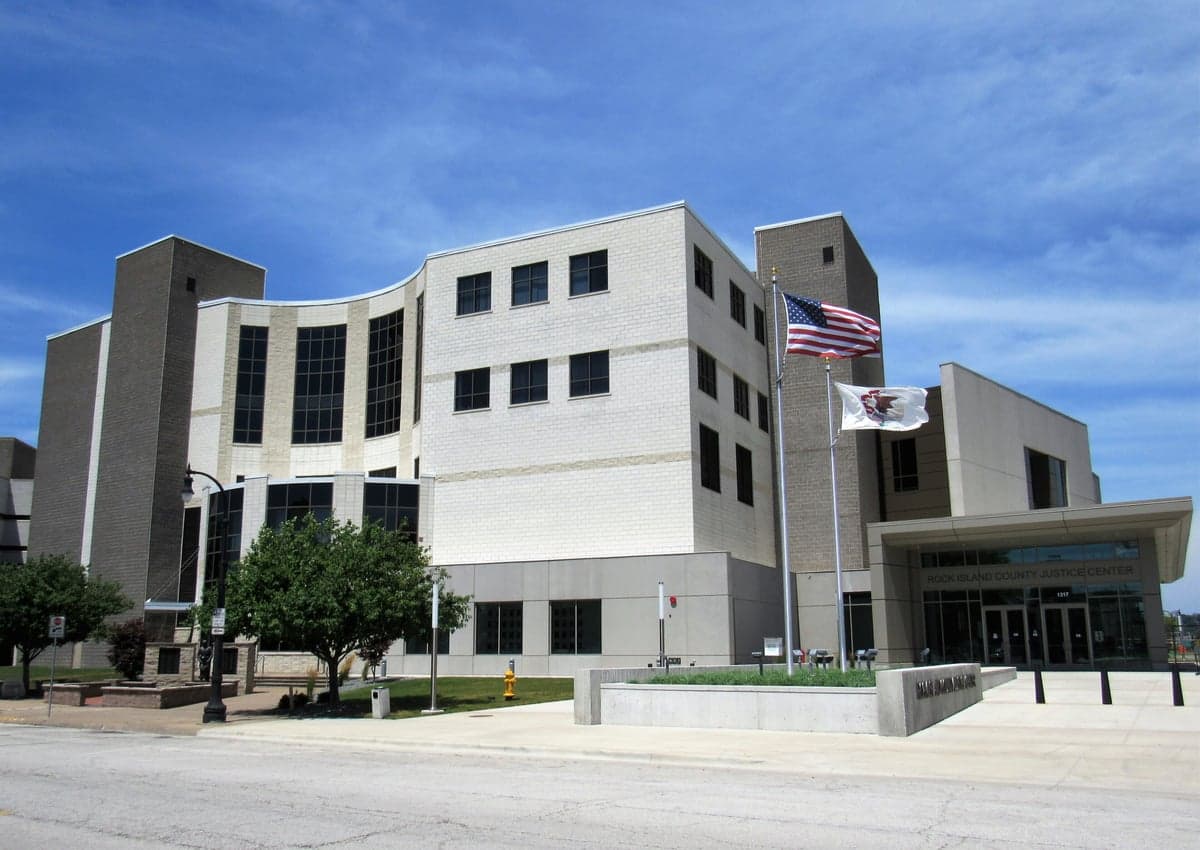
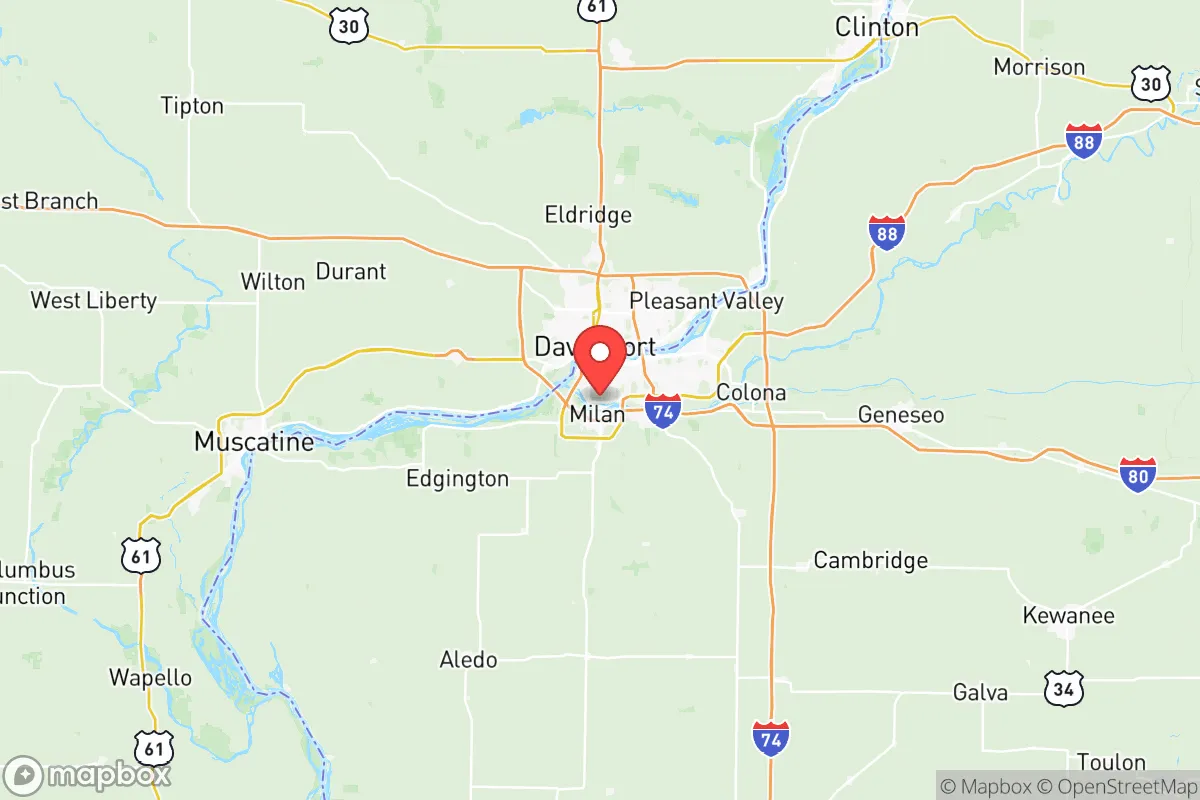
Rock Island County, with a population of 142,995, is a historically industrial and agriculturally-rooted region in western Illinois where the Mississippi River has long defined settlement patterns. The county's population today is predominantly white (68.5%) with significant Hispanic (14.0%) and Black (10.4%) communities, and a foreign-born share of just 4.6% that reflects a modest but growing immigrant presence. Its character is shaped by a blend of river town heritage, manufacturing legacy, and a slower pace of life that appeals to families seeking affordable housing and Midwestern community values. The county's identity is distinctly working-class and pragmatic, with a population that values self-reliance and local tradition.
Settlement & growth (pre-1960)
Before American settlement, the region was home to the Sauk and Meskwaki (Fox) nations, who established villages along the Rock and Mississippi Rivers. The Sauk leader Black Hawk's resistance to white encroachment culminated in the 1832 Black Hawk War, after which the tribes were forcibly removed west of the Mississippi. The first permanent American settlers arrived in the 1820s and 1830s, primarily of Scots-Irish and English stock, drawn by fertile bottomlands and the promise of river commerce. The founding of Rock Island (then called Stephenson) in 1835 and Moline in 1848 established the county's twin urban anchors.
The great wave of German immigration hit Rock Island County hard in the 1840s through 1860s. Germans fleeing political unrest and economic hardship settled heavily in Moline and Rock Island, where they found work in the emerging farm implement industry. By 1870, Germans and their descendants made up roughly a third of the county's population. They established tight-knit neighborhoods, Lutheran churches, and German-language newspapers that persisted into the early 20th century. Swedish immigrants also arrived in significant numbers during this period, particularly in Andalusia and rural townships, where they took up farming along the Mississippi bottomlands.
The industrial boom of the late 19th and early 20th centuries transformed the county's demographics. The establishment of John Deere's plow works in Moline and the Rock Island Arsenal in 1862 created a massive demand for labor. This drew a second wave of European immigrants: Italian and Polish workers arrived between 1890 and 1910, settling in ethnic enclaves in Moline's "Patch" neighborhood and Rock Island's near-west side. These groups brought Catholic parish life and strong labor union traditions that still echo in local politics. The Arsenal, a federal employer, also attracted a steady stream of skilled workers from across the Midwest.
The Great Migration brought Black families from the rural South to Rock Island County between 1915 and 1960, primarily to work in the Arsenal and the John Deere plants. Rock Island's 5th Ward and Moline's east side became the primary settlement areas for this community, which grew from a tiny fraction to roughly 5% of the county's population by 1960. The county's Black population faced de facto segregation in housing and schools, but found relatively stable industrial employment compared to many Northern cities.
Modern era (post-1965)
The post-1965 period brought slower but significant demographic change. The Hart-Cellar Act's family reunification provisions enabled chain migration from Mexico and Central America, which accelerated in the 1980s and 1990s. Hispanic residents, who made up less than 2% of the county in 1970, now constitute 14.0% of the population. The largest concentration of Hispanic families is in Silvis and East Moline, where a vibrant Mexican-American community has established taquerias, panaderias, and Catholic festivals that have become part of the Quad Cities' cultural fabric. Many of these families work in manufacturing, construction, and service industries.
Domestic migration patterns since 1970 have been shaped by deindustrialization. The farm implement industry shed thousands of jobs in the 1980s, leading to a population decline from a peak of 162,000 in 1970 to the current 142,995. This outmigration was primarily white working-class families who moved to Sun Belt states or suburban Chicago. However, the county has stabilized in recent decades, retaining a core of manufacturing employment at John Deere, the Arsenal, and newer logistics and healthcare employers. Moline and Rock Island have seen modest reinvestment in their downtowns, attracting some younger professionals and empty-nesters.
The Asian population, at 1.7% East and Southeast Asian and 0.8% Indian subcontinent, is small but growing. The largest Asian community is Vietnamese and Filipino families who arrived as refugees and medical professionals in the 1980s and 1990s, settling primarily in Moline and Rock Island. A smaller but notable Indian community has grown around the healthcare sector, with doctors and engineers working at UnityPoint Health-Trinity and local manufacturing firms. The county's foreign-born share of 4.6% remains well below the national average of 13.7%, reflecting the region's limited appeal to new immigrants compared to coastal or Sun Belt metros.
The future
Rock Island County's population is projected to continue a slow decline or stagnation over the next 10-20 years, as the region's older white population ages and younger residents leave for larger job markets. The county's median age of 40.5 is above the national average, and the college-educated share of 24.1% is below the national average of 33%, limiting the region's ability to attract knowledge-economy employers. However, the Hispanic population is younger and growing through both natural increase and continued immigration, which will gradually increase the county's diversity. Silvis and East Moline are likely to see the most growth and cultural change, while rural townships and smaller communities like Hampton and Port Byron will remain predominantly white and older.
The county's cultural identity is evolving from a purely industrial, European-ethnic character to a more diverse, service-oriented one. The Quad Cities region has invested in riverfront development, arts districts, and healthcare expansion to retain and attract residents. The Rock Island Arsenal's continued role as a major employer provides stability, but the county's future depends on whether it can retain its manufacturing base while attracting new industries and younger families. The growing Hispanic community is becoming more politically and economically integrated, with increasing representation in local government and business.
For someone moving in now, Rock Island County offers an affordable, community-oriented lifestyle with a strong sense of place and history. The population is becoming more diverse but remains predominantly white and working-class, with a conservative-leaning political culture that values fiscal responsibility and local control. The county's slow decline in population is a concern, but its stable core of manufacturing and healthcare employment, combined with low housing costs and a slower pace of life, make it a viable choice for families seeking a grounded Midwestern community. The key question for newcomers is whether the region can generate enough economic opportunity to retain the next generation, or whether it will continue to lose its young people to faster-growing parts of the country.

* Values derived from national, state, county, city and local statistics and may differ in a specific area. Last updated: 2026-08-08T13:18:46.000Z
Narrative content on this page is AI-generated and may contain mistakes. Verify any details that matter before acting on them.
ReloMaps may earn a commission from affiliate links at no extra cost to you.

