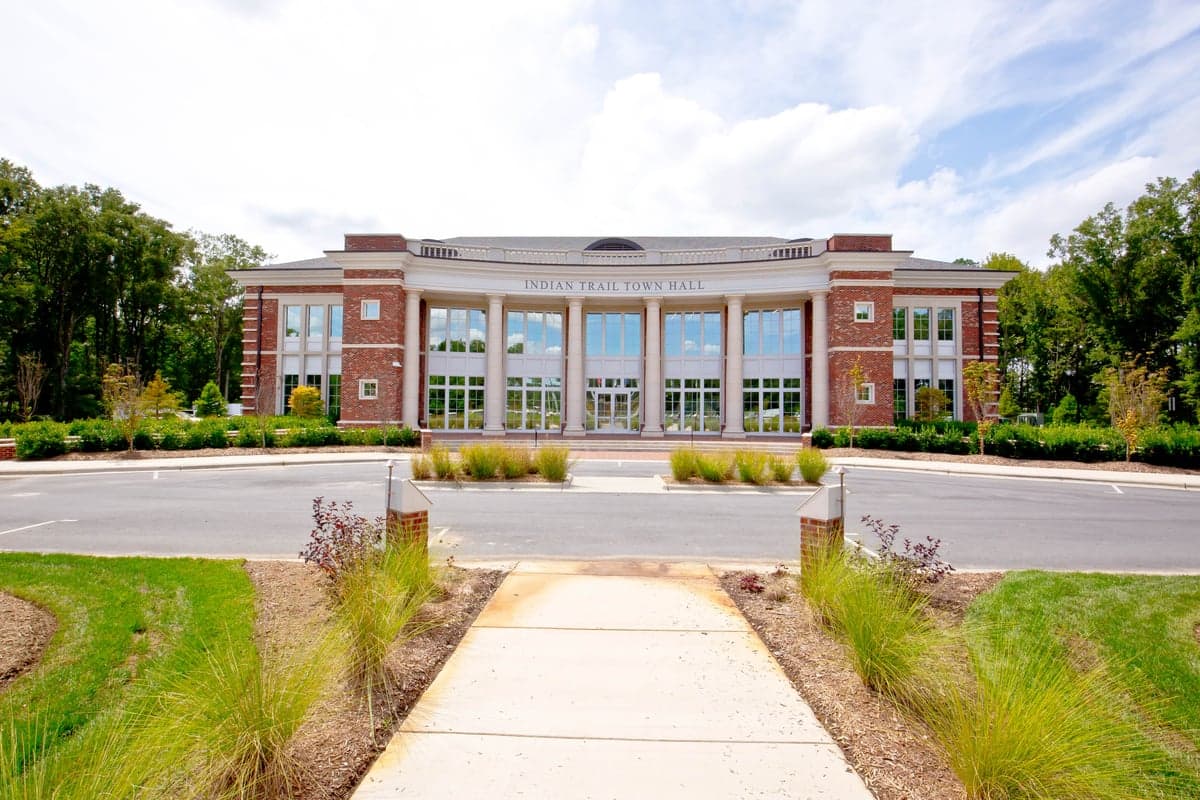
Photo: Wikipedia
Quality of Life in Indian Trail, NC
Above-average quality of iife. The area offers a reasonable cost of living, decent mobility, and a mix of neighborhood amenities.
What does Quality of Life tell us?
Quality of Life blends cost of living, nearby amenities, socioeconomic signals, and neighborhood character. City-level scores represent the whole municipality; individual neighborhoods can differ.
What does this tell us?
Quality of Life blends cost of living, nearby amenities, socioeconomic signals, and neighborhood character. City-level scores represent the whole municipality; individual neighborhoods can differ.
Cost of Living
48% above national average
The Real Cost of Living in Indian Trail, NC for 2026
| Tier | Individual | Family (4) |
|---|---|---|
| Survival | $31k | $57k |
| Comfortable | $67k | $98k |
| Luxury | $144k+ | $223k+ |
| Elite (Top 5%) | $170k+ | $263k+ |
101%
The Area Signal
A metric tracking the socioeconomic signals of the area.
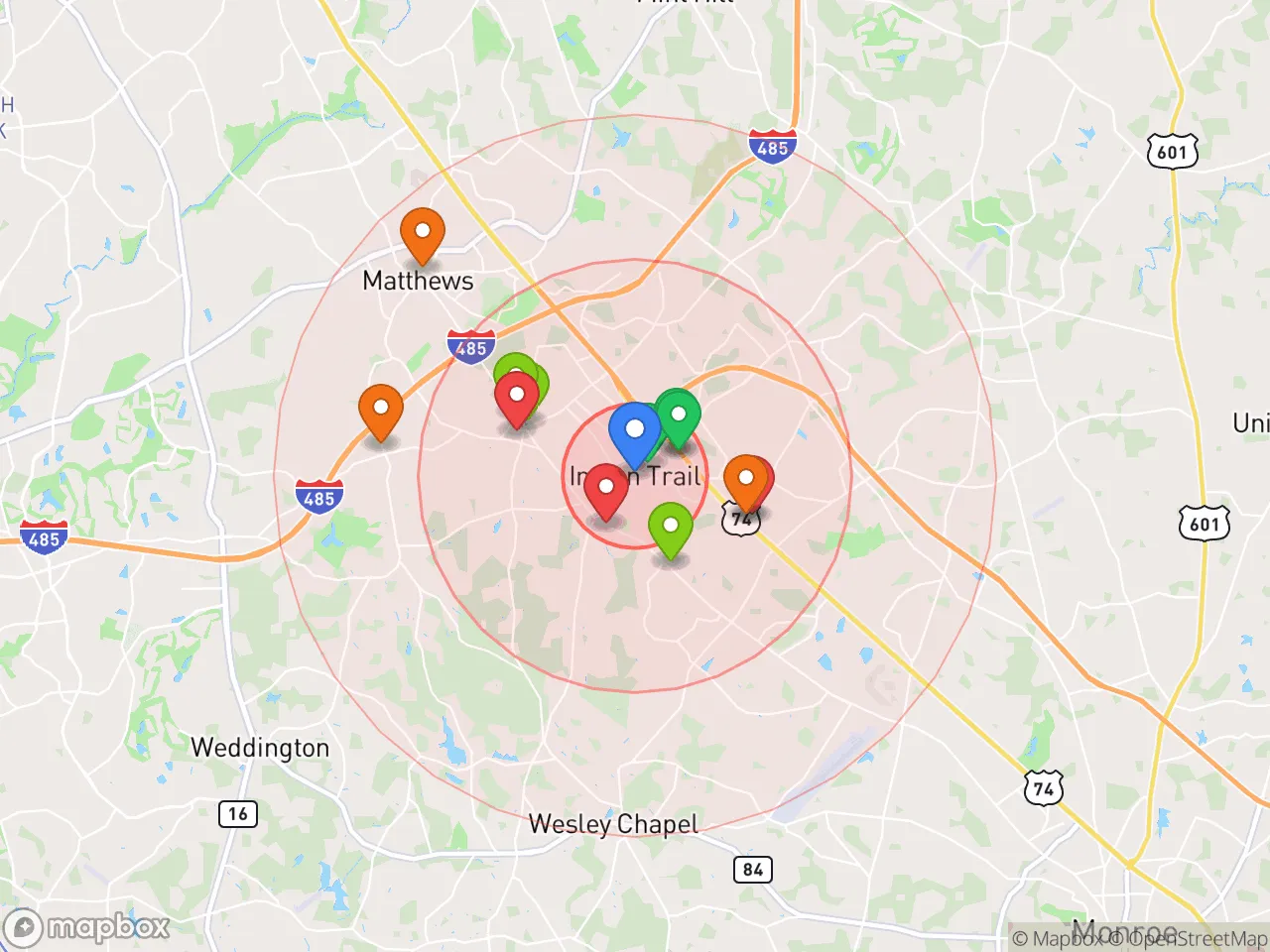
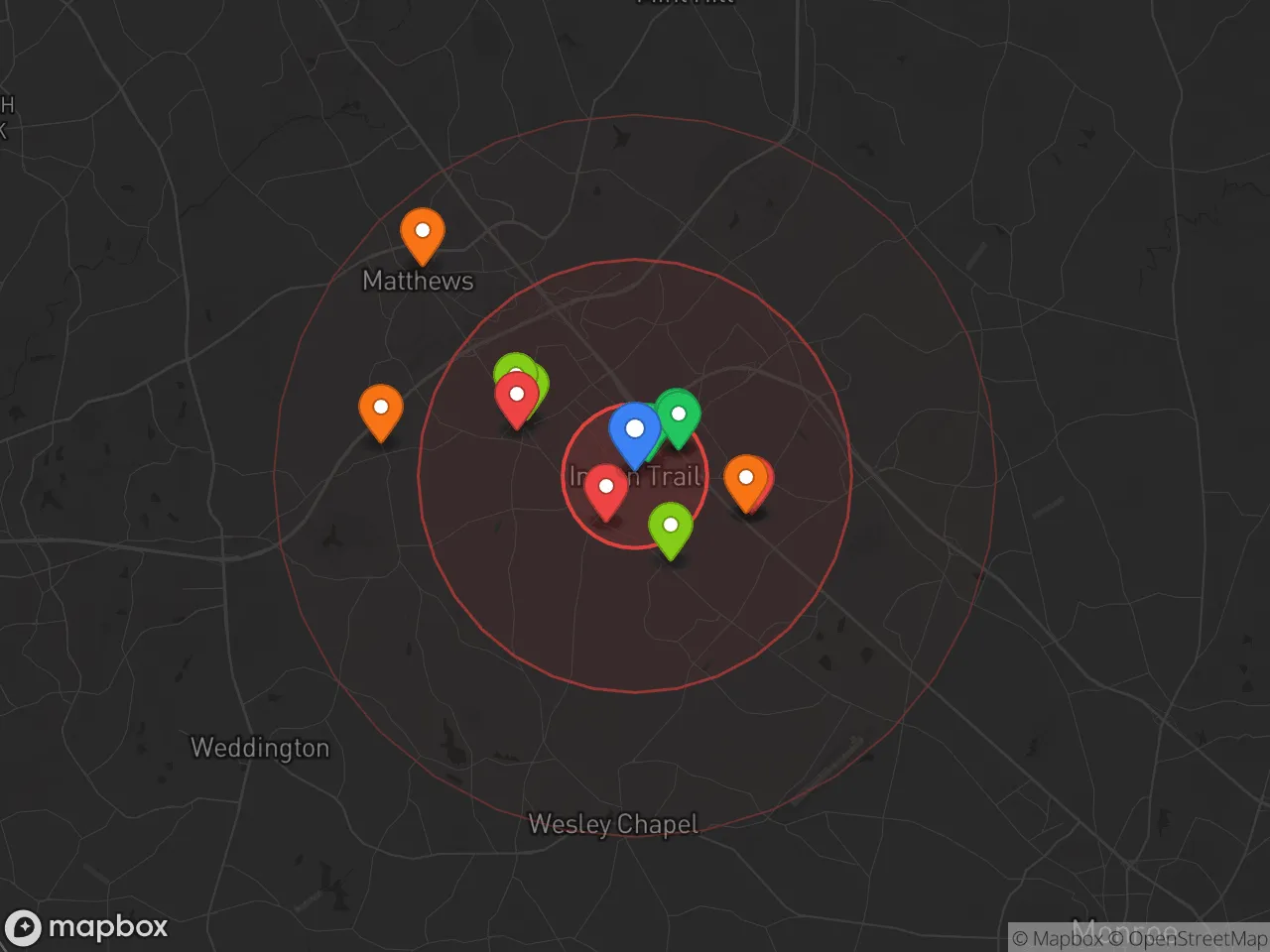
Hobbies
Explore the areaGroceries
6 within 10 miles
Gas
20 within 10 miles
Hospital
20 within 20 miles
Airport
CLT — Charlotte Douglas International
Post Office
USPS — Indian Trail, NC
Critical Amenities
Quality-of-Life Analysis
Indian Trail, North Carolina, presents a quality of life defined by suburban affluence and family-oriented stability, attracting professionals and families who prioritize space, safety, and strong schools over urban immediacy. With a cost of living index of 148 (well above the US average of 100), the town sits as a premium option within the Charlotte metro, drawing residents who can afford its higher price tag in exchange for larger homes, lower crime rates, and a slower daily pace than Mecklenburg County offers. The typical resident here is a married homeowner with a commute to Charlotte or Monroe, valuing the trade-off of a longer drive for a quieter, more spacious lifestyle.
Cost of living, housing, and affordability compared to Charlotte and Monroe
Indian Trail’s cost of living is significantly higher than the national norm, driven primarily by housing. The median home value sits at $343,500, roughly 15% above the Charlotte metro average of $300,000, while the median rent of $1,916 per month is about 10% higher than nearby Matthews and 25% higher than Monroe. This premium reflects the town’s desirability: newer subdivisions, lower property taxes than Mecklenburg County (Union County’s rate is roughly 0.72% vs. Mecklenburg’s 0.85%), and a reputation for well-maintained neighborhoods. However, buyers and renters get more square footage per dollar than in Charlotte proper—a typical 2,200-square-foot home in Indian Trail costs about $50,000 less than a comparable property in Ballantyne. The average commute of 27.9 minutes is a key trade-off: residents save on home costs versus Charlotte’s core but spend extra time on I-485 or US-74, with traffic congestion during peak hours adding 10-15 minutes to the drive.
Schools, parks, and what daily life is like for families
Daily life in Indian Trail revolves around its highly rated Union County Public Schools, with elementary schools like Indian Trail Elementary and Porter Ridge Elementary consistently earning 8-9 out of 10 on GreatSchools ratings. The town’s amenity anchor is the Indian Trail Community Park, a 40-acre facility with sports fields, a splash pad, and walking trails that hosts youth soccer and baseball leagues. For shopping and dining, residents rely on the nearby Sun Valley Marketplace and the Indian Trail Town Center, which feature chain retailers (Target, Publix) and local eateries like The Bacon Cafe. The rhythm is distinctly suburban: weekend mornings at the park, weekday carpools to school, and evenings on patios or at the town’s seasonal events like the Indian Trail Summer Concert Series. The lack of a downtown core means most errands require driving, but the town’s layout—with cul-de-sacs and greenway connections—encourages walking within subdivisions.
Indian Trail is best suited for families and professionals who value space, school quality, and safety over walkability or urban nightlife. Empty nesters downsizing from Charlotte may find the housing costs high relative to smaller towns like Monroe, but the combination of Union County’s low crime rate (roughly 60% below the national average) and strong school performance makes it a logical choice for parents with school-age children. Remote workers and commuters willing to accept the 28-minute drive to Uptown Charlotte will find a stable, well-maintained community where the higher cost of living is offset by tangible lifestyle returns: larger homes, quieter streets, and a predictable, family-first environment.

Crime in Indian Trail, NC
Crime rates similar to the national median for U.S. locations.
Violent CrimeViolent Crime Analysis
Property CrimeProperty Crime Analysis
Crime Analysis
Indian Trail, North Carolina, presents a mixed safety profile for prospective residents. The town’s violent crime rate of 299.4 incidents per 100,000 people is slightly below the national average, while its property crime rate of 1,659.9 per 100,000 sits moderately above the national benchmark. However, as a rapidly growing suburb within the Charlotte-Concord-Gastonia metropolitan area, Indian Trail is subject to broader regional criminal justice trends that warrant careful consideration.
Crime in context
Compared to North Carolina’s statewide violent crime rate of roughly 340 per 100,000, Indian Trail’s rate is about 12% lower. Property crime in Indian Trail, however, runs notably higher than the state average of approximately 1,400 per 100,000. The town benefits from its own police department, but it is embedded in a larger metro area where progressive prosecutorial policies in Mecklenburg County (Charlotte) and surrounding jurisdictions have drawn criticism. District attorneys in the region have implemented diversion programs, reduced cash bail requirements, and declined to prosecute certain low-level offenses. While these policies aim to reduce incarceration, critics argue they contribute to higher recidivism and embolden property criminals, as offenders face fewer consequences. This regional approach means that even in a relatively safe suburb like Indian Trail, residents may encounter spillover crime from Charlotte’s more permissive justice environment.
What residents experience
Daily life in Indian Trail involves practical precautions against property crime. Vehicle break-ins and package thefts are the most commonly reported incidents, particularly in neighborhoods near major corridors like US-74 and Independence Boulevard. Violent crime is less frequent but not absent; aggravated assaults and robberies occur, often tied to domestic disputes or opportunistic thefts. The town’s rapid population growth—from under 20,000 in 2010 to over 40,000 today—has strained police resources, though the department has expanded patrols and added community outreach officers. Residents frequently cite neighborhood watch programs and Ring doorbell cameras as essential tools for maintaining security. The presence of progressive judicial policies in the broader metro area means that even when arrests are made, offenders may face reduced charges or short sentences, a dynamic that frustrates many long-term residents.
Neighborhood-level variation
Safety in Indian Trail varies noticeably by location. Newer subdivisions west of US-74, such as those in the Weddington Road corridor, report lower crime rates due to higher property values, gated entries, and active homeowners’ associations. Older neighborhoods near the town center and along the Monroe Bypass see more property crime, particularly in rental-heavy areas. The Hemby Bridge and Stallings borders also show elevated incident reports, as these zones lack consistent police coverage. Prospective residents should examine crime maps for specific streets and complexes, as a single block can differ significantly from its surroundings. Overall, Indian Trail is safer than many Charlotte suburbs, but the regional justice system’s leniency toward property offenders remains a legitimate concern for families prioritizing security.
* Values derived from national, state, county, city and local statistics and may differ in a specific area. Last updated: 2026-05-03T20:25:34.000Z
Narrative content on this page is AI-generated and may contain mistakes. Verify any details that matter before acting on them.
ReloMaps may earn a commission from affiliate links at no extra cost to you.

