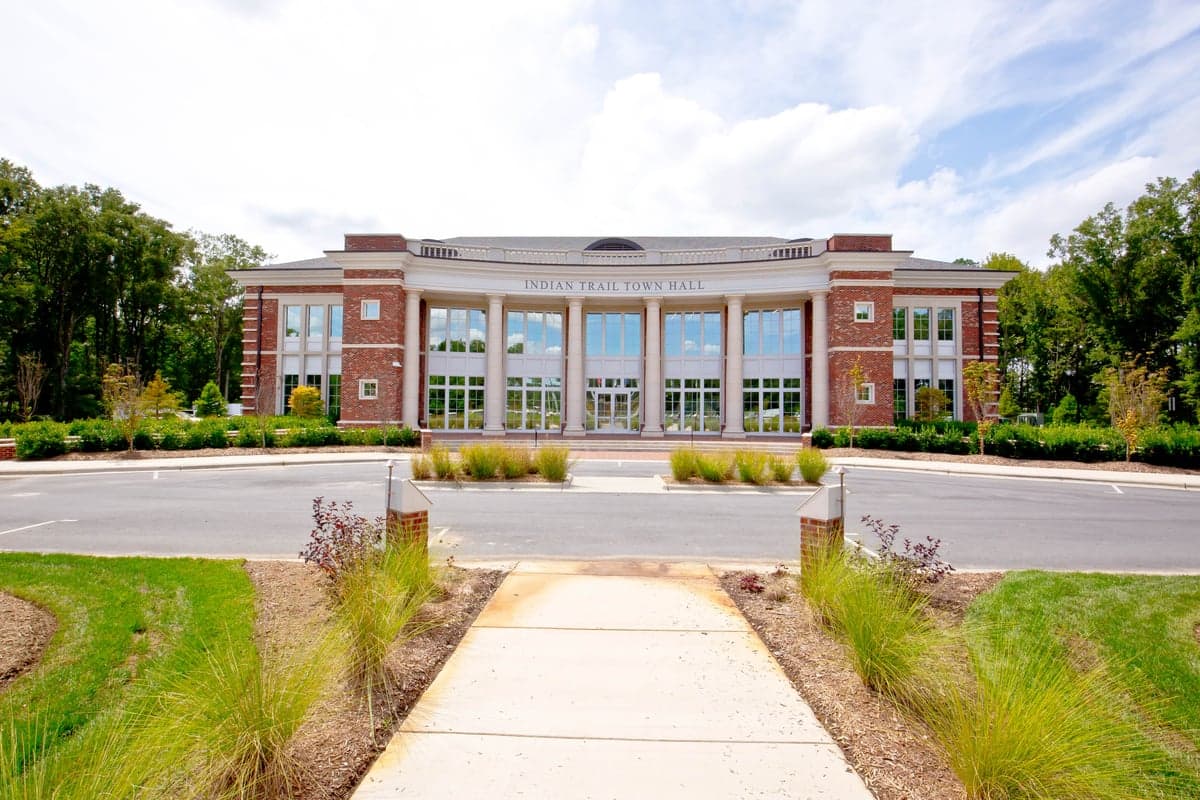
Photo: Wikipedia
Political ClimatePolitical Climate in Indian Trail, NC
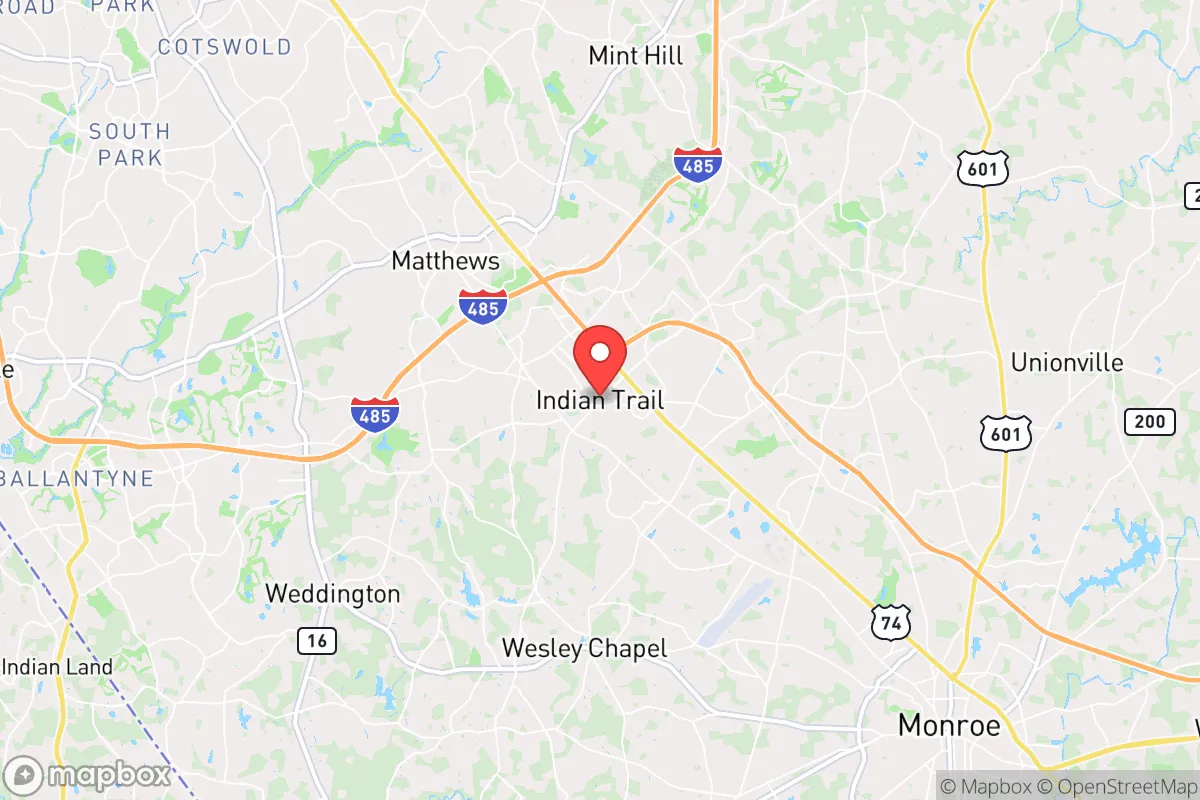
District shown is the primary district for this city’s centroid. Cities may span multiple districts.
Local Political AnalysisPolitical Analysis of Indian Trail, NC
Indian Trail, North Carolina, has long been a solidly conservative community, and that hasn't changed much despite the rapid growth. The Cook PVI of R+10 tells you the baseline, but living here, you feel it more than any number can show. This is a place where folks still believe in minding your own business, keeping the government out of your backyard, and letting local decisions stay local. The political trajectory here has been steady, but there's a quiet concern among long-time residents that the wave of new people moving up from Charlotte or down from the Northeast might start shifting things if we're not careful. For now, though, Indian Trail remains a reliably red pocket in Union County, and that's a big part of why many of us chose to raise our families here.
How it compares
Drive ten minutes north into Charlotte, and you're in a completely different world politically. Mecklenburg County votes blue by wide margins, and you can feel the difference in everything from local ordinances to the way people talk about taxes and regulations. Indian Trail, by contrast, sits in Union County, which is one of the most conservative counties in the Charlotte metro area. Surrounding towns like Monroe and Waxhaw lean the same direction, but Indian Trail has a bit more of a suburban, family-oriented feel that keeps the politics grounded in practical concerns rather than ideological battles. If you go west toward Matthews, you start to see a more mixed political landscape, but here in Indian Trail, the conservative majority is still the norm. The contrast is stark: you can live your life here without the constant feeling that someone in government is trying to tell you how to run it.
What this means for residents
For the people who live here, the political climate translates into a few very real, everyday benefits. Property taxes stay reasonable because the county isn't chasing every new social program that comes down the pike. The schools, while growing fast, still operate with a focus on basics and local control rather than top-down mandates from Raleigh or Washington. You don't see the kind of overreach you hear about in other places—no heavy-handed zoning that tells you what you can do with your own land, no aggressive policing of small businesses, and no pressure to adopt every progressive trend that pops up on social media. That said, there's a growing unease as the area gets more attention from developers and outside interests. The concern among folks I talk to is that if we're not vigilant, we could see the same kind of government creep that's already hollowed out parts of Charlotte. For now, though, Indian Trail still feels like a place where your personal freedoms are respected, and that's worth holding onto.
Culturally, Indian Trail has a few distinctions that set it apart from its more progressive neighbors. You won't find a lot of the flashy, transient culture you see in the city. Instead, there's a strong emphasis on community events, church involvement, and local sports leagues that keep families connected. The policy differences are subtle but real: the local government tends to favor low regulation, which means you can start a home-based business without jumping through a dozen hoops, and you're not constantly fighting over land use with a planning board that has its own agenda. The long-term outlook depends on whether the new arrivals embrace that ethos or try to import the politics they left behind. If the conservative foundation holds, Indian Trail will stay a great place for people who value independence and common sense. If it shifts, well, that's what a lot of us are quietly watching for.

State Political ClimatePolitical Climate in North Carolina
State Political AnalysisPolitical Environment in the State
North Carolina is a classic purple state that has been trending rightward in key metrics over the past decade, though it remains a battleground. The state voted for Donald Trump in both 2016 and 2024, with the 2024 margin around +3 points, a notable shift from the 2020 margin of just +1.3 points. The dominant coalition is a mix of rural conservatives, suburban moderates, and a growing population of conservative-leaning transplants from the Northeast and Midwest, who are often drawn by lower taxes and a business-friendly climate. Over the last 10-20 years, the state has moved from a reliably Republican state in presidential elections (voting for Romney in 2012) to a competitive one, but the 2024 results suggest a re-solidification of the GOP base, driven by in-migration and a backlash against progressive policies in neighboring states.
Urban vs. rural divide
The political map of North Carolina is a textbook case of the urban-rural split. The major metros—Charlotte (Mecklenburg County), Raleigh-Durham (Wake and Durham Counties), and Greensboro-Winston-Salem (Guilford and Forsyth Counties)—are solidly Democratic, driven by tech, finance, and university populations. Mecklenburg County went for Biden by +30 points in 2020, and Wake County by +25. In contrast, the rural and exurban counties are deeply Republican. Union County, just southeast of Charlotte, voted for Trump by +30 points, while Johnston County, southeast of Raleigh, went +25. The coastal regions are mixed: Wilmington (New Hanover County) is a swing area trending redder as retirees and military families move in, while the Outer Banks remain more libertarian-leaning. The mountain counties like Watauga (Boone) are liberal due to Appalachian State University, but surrounding rural counties like Avery and Mitchell are deep red. The key takeaway: if you want a conservative environment, you’re looking at the suburbs and exurbs of Charlotte and Raleigh, or the smaller cities like Hickory, Gastonia, and Fayetteville.
Policy environment
North Carolina’s policy environment is a mixed bag, but generally favorable for conservatives. The state has a flat income tax rate of 4.5% (down from 5.25% in 2023, with a path to 3.99% by 2027), and no state tax on Social Security benefits. The corporate income tax is 2.5%, one of the lowest in the nation. The state is a right-to-work state, and the legislature has consistently pushed back against unionization efforts. On education, the state has a robust school choice program, including Opportunity Scholarships (vouchers) that were expanded in 2024 to cover all families regardless of income, and a growing charter school sector. However, the state’s public school system is heavily influenced by the Democratic governor, Roy Cooper, who has vetoed several parental rights bills. On healthcare, the state expanded Medicaid in 2023 under a bipartisan deal, which was a win for rural hospitals but a concern for fiscal conservatives. Election laws are a bright spot: the state requires voter ID, has strict absentee ballot rules, and conducts regular purges of voter rolls. The legislature overrode Cooper’s veto of the 2023 election law that tightened same-day registration and mail-in ballot rules.
Trajectory & freedom
The trajectory is cautiously positive for personal freedom, but with real threats. On the plus side, the state passed a constitutional carry law in 2023 (HB 189), allowing permitless concealed carry for adults 18 and older, a major win for gun rights. The legislature also passed the Parents’ Bill of Rights (HB 755) in 2023, requiring schools to notify parents of instructional materials involving sexuality and to get parental consent for pronoun changes—though Cooper vetoed it, and the override failed by one vote. A similar bill is expected to pass in 2025 with a Republican supermajority. On medical freedom, the state banned COVID-19 vaccine mandates for state employees and contractors in 2023 (SB 36). However, the state’s Certificate of Need (CON) laws remain a major barrier to healthcare freedom, restricting the opening of new hospitals and clinics. Property rights are strong, with no state-level rent control and a robust homestead exemption. The biggest threat is the potential for a Democratic governor in 2028, who could veto future freedom-expanding legislation. The 2024 election gave Republicans a supermajority in the House and a near-supermajority in the Senate, so the next two years should see more pro-freedom bills.
Civil unrest & political movements
North Carolina has seen its share of political flashpoints, but nothing like the West Coast or Northeast. The Moral Monday protests of 2013-2014 were a major left-wing movement against the Republican legislature’s policies on voting rights, education, and healthcare. More recently, the 2020 George Floyd protests in Charlotte and Raleigh led to property damage and curfews, but were smaller than in other states. The Confederate monument debates have been contentious, with the 2015 law (HB 22) protecting monuments from removal being partially overturned by courts. Immigration politics are relatively quiet, with no major sanctuary city policies—though Durham and Orange County have declared themselves “welcoming” jurisdictions. The state has a strong Second Amendment sanctuary movement, with over 80 counties passing resolutions against unconstitutional gun laws. Election integrity remains a hot topic: the 2020 election saw a close result, and the 2024 election was certified without major controversy, but the state’s voter ID law is still being challenged in court. A new resident would notice the strong presence of conservative grassroots groups like the NC Values Coalition and Grassroots NC, which are active in school board and county commission races.
Projection
Over the next 5-10 years, North Carolina is likely to become more conservative, but not without a fight. The in-migration from blue states (New York, New Jersey, California) is accelerating, but many of these transplants are conservative-leaning or libertarian, drawn by lower taxes and housing costs. The state’s population is projected to grow by 10% by 2030, with most growth in the exurbs of Charlotte and Raleigh, which will further tilt the map red. The Republican supermajority in the legislature is likely to hold through at least 2028, meaning more school choice expansion, tax cuts, and Second Amendment protections. However, the governor’s race in 2028 will be critical—if a Democrat wins, they could veto the most ambitious conservative legislation. The wild card is the state Supreme Court, which flipped to a 5-2 Republican majority in 2024, ensuring that election laws and parental rights bills will be upheld. For a new resident, expect a state that is increasingly friendly to traditional values, low taxes, and personal freedom, but with a persistent blue urban corridor that will keep the culture wars alive.
For a conservative individual or family moving to North Carolina, the bottom line is this: you’ll find a state that respects your gun rights, keeps taxes low, and gives you choices in education. The key is to pick your county wisely—stick to the exurbs and rural areas like Union, Johnston, or Cabarrus counties, and avoid the urban cores of Durham and Orange counties if you want to avoid progressive politics. The state is on a solid trajectory, but you’ll need to stay engaged locally to keep it that way.
* Values derived from national, state, county, city and local statistics and may differ in a specific area. Last updated: 2026-05-03T20:25:34.000Z
Narrative content on this page is AI-generated and may contain mistakes. Verify any details that matter before acting on them.
ReloMaps may earn a commission from affiliate links at no extra cost to you.

