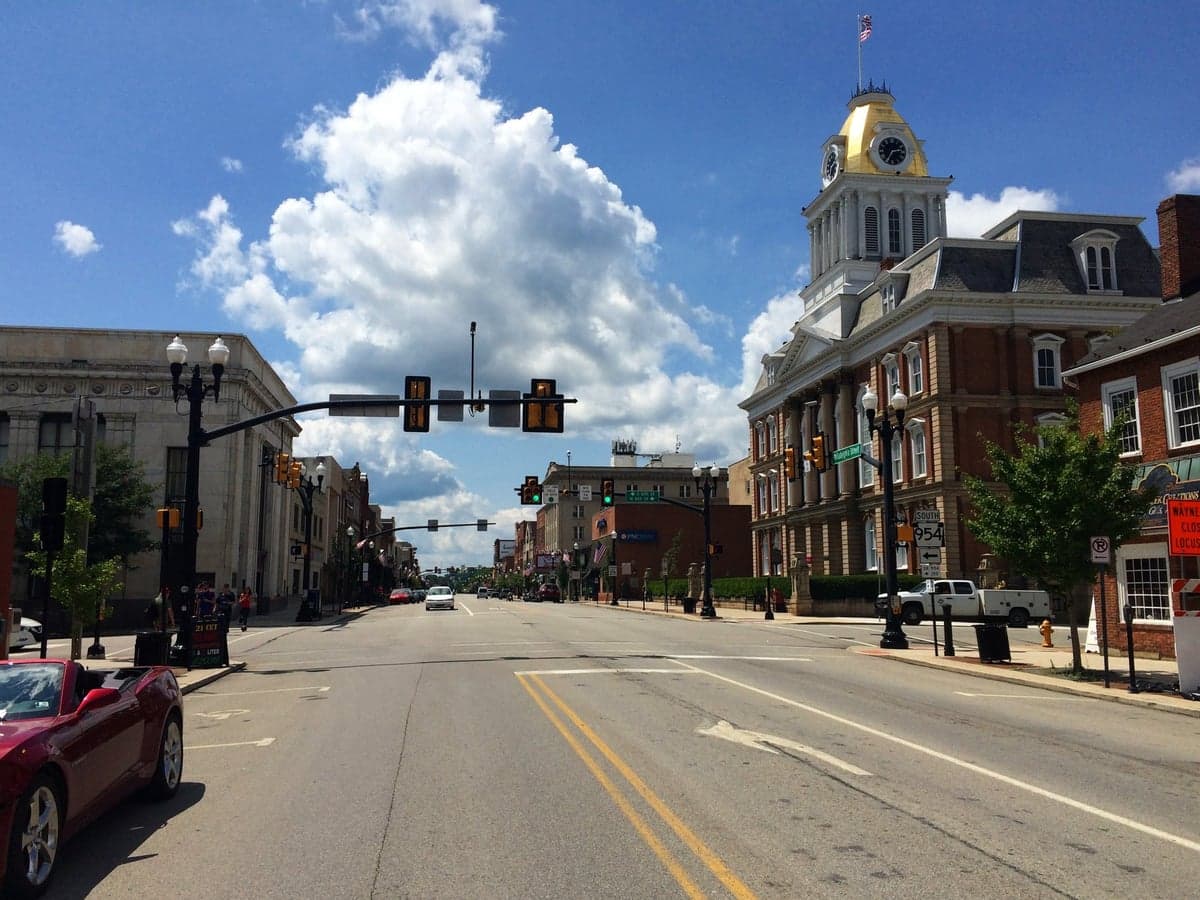
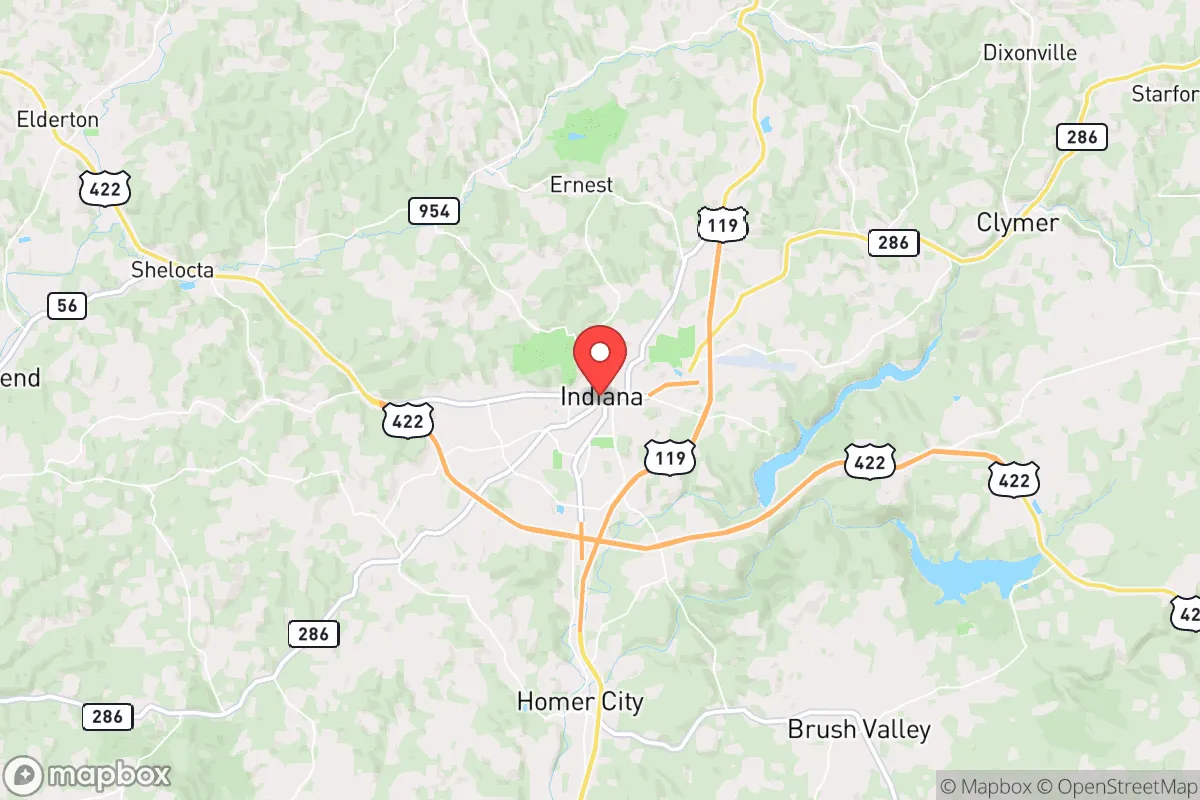
Photo: Wikipedia
Quality of Life in Indiana, PA
A high quality of life with strong walkability, manageable living costs, healthy neighborhood signals, and solid amenity access.
What does Quality of Life tell us?
Quality of Life blends cost of living, nearby amenities, socioeconomic signals, and neighborhood character. City-level scores represent the whole municipality; individual neighborhoods can differ.
What does this tell us?
Quality of Life blends cost of living, nearby amenities, socioeconomic signals, and neighborhood character. City-level scores represent the whole municipality; individual neighborhoods can differ.
Cost of Living
41% below national average
The Real Cost of Living in Indiana, PA for 2026
| Tier | Individual | Family (4) |
|---|---|---|
| Survival | $13k | $24k |
| Comfortable | $24k | $35k |
| Luxury | $81k+ | $125k+ |
| Elite (Top 5%) | $119k+ | $185k+ |
127%
The Area Signal
A metric tracking the socioeconomic signals of the area.
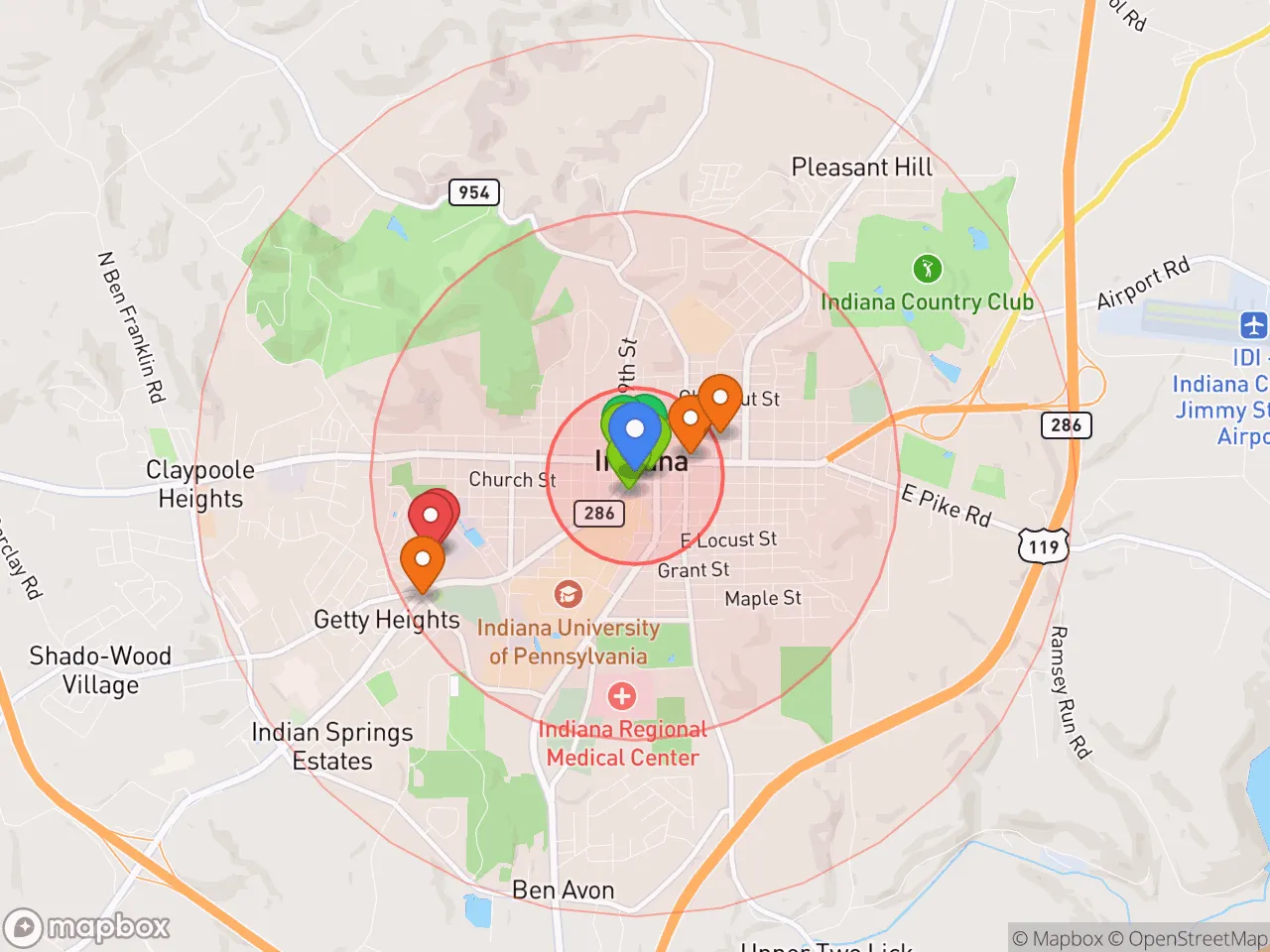
Hobbies
Explore the areaGroceries
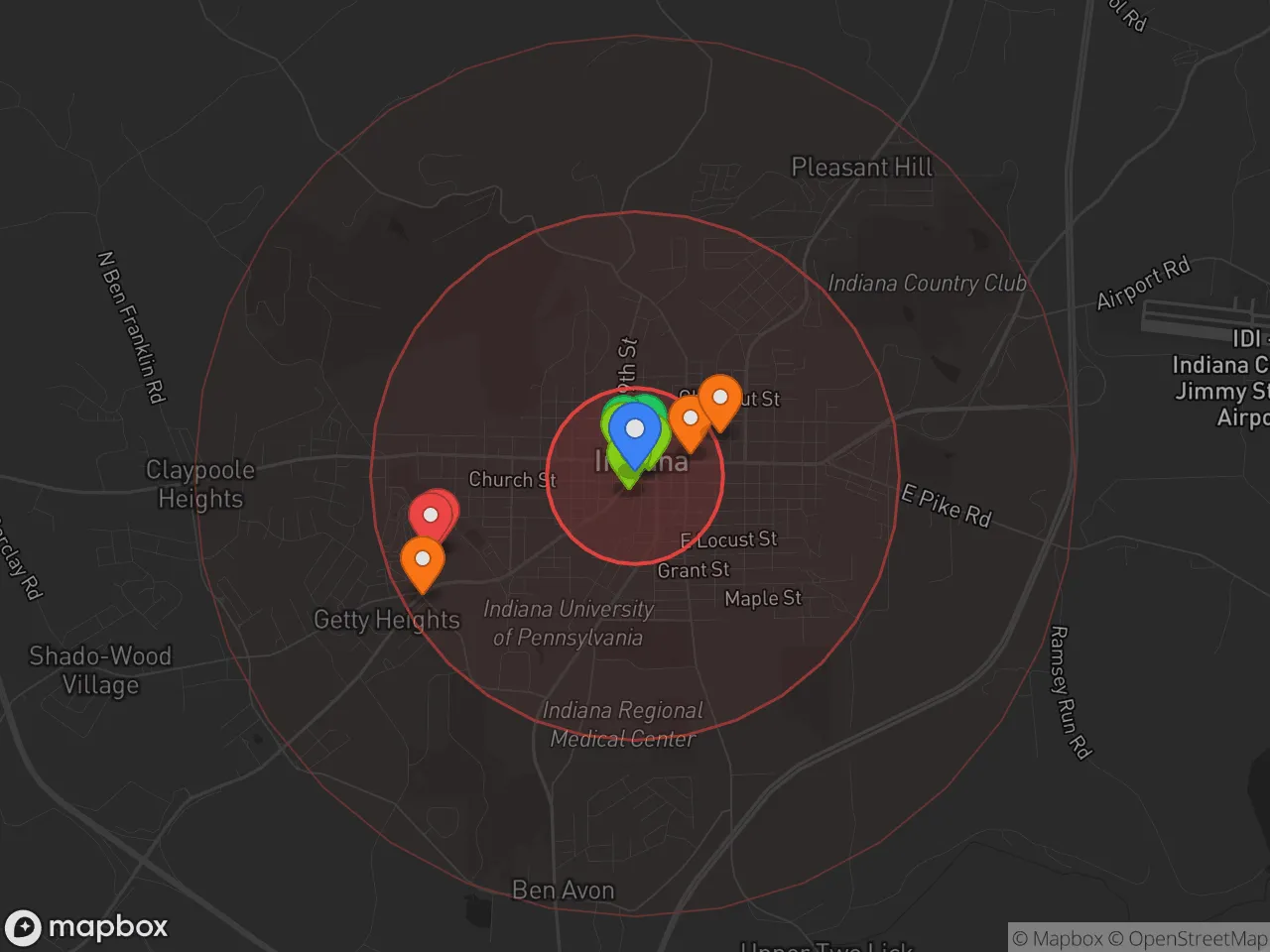
3 within 10 miles
Gas
8 within 10 miles
Hospital
2 within 20 miles
Airport
Pittsburgh International Airport
Post Office
USPS — Indiana, PA
Critical Amenities
Quality-of-Life Analysis
Indiana, Pennsylvania, presents a quality of life defined by small-town affordability and a steady, family-oriented rhythm, with a cost of living index of 59—well below the U.S. average of 100. The area’s population is a mix of university students attending Indiana University of Pennsylvania (IUP), long-time residents, and professionals drawn to the region’s low-stress commute and accessible housing. With a median home value of $123,300 and a median rent of $806, Indiana offers a financial buffer that is increasingly rare in the broader Northeast, making it a practical choice for those prioritizing savings and stability over urban amenities.
Cost of living, housing, and how Indiana compares to nearby towns
Indiana’s housing market is a standout feature: the median home value of $123,300 is roughly 60% lower than the national median, and the median rent of $806 is similarly modest. This affordability extends to everyday expenses, with the overall cost of living index at 59 meaning residents spend significantly less on groceries, utilities, and transportation than the average American. Compared to nearby cities like Pittsburgh (about 50 miles southwest) or Johnstown, Indiana’s housing costs are roughly 30-40% lower, while the average commute of just 17 minutes—far below the national average of 26 minutes—reduces transportation expenses and frees up time for family or leisure. For context, a home in Indiana costs less than half of what a comparable property would fetch in State College or Altoona, making it one of the most budget-friendly options in western Pennsylvania.
What daily life is like: amenities, schools, and local rhythm
Daily life in Indiana revolves around a compact downtown core anchored by IUP, which provides cultural events, a public library, and a steady stream of student activity. The Indiana Area School District serves most families, with elementary schools like Horace Mann and Ben Franklin receiving above-average ratings for academic performance. For recreation, residents frequent the Ghost Town Trail for hiking and biking, and the nearby Yellow Creek State Park offers fishing and camping within a 15-minute drive. The local rhythm is unhurried: restaurants like The Coney and Spaghetti Benders fill with families on weekends, while the annual Indiana County Fair draws crowds each summer. Healthcare is accessible via Indiana Regional Medical Center, and grocery shopping is served by a Giant Eagle and a Walmart Supercenter. The absence of major traffic congestion or long commutes—the average commute is just over 17 minutes—means residents spend less time in cars and more time at home or in community spaces.
This combination of low costs, short commutes, and a tight-knit community makes Indiana an ideal fit for budget-conscious families, IUP faculty and staff, and remote workers who value financial breathing room over urban excitement. Retirees on fixed incomes also find the area appealing, as the low property taxes and affordable healthcare stretch retirement savings further. However, those seeking vibrant nightlife, diverse dining, or high-end retail may find Indiana limited—Pittsburgh is a 50-minute drive for such needs. For anyone prioritizing a quiet, affordable, and safe environment where a dollar goes far and daily errands are stress-free, Indiana, PA, delivers a quality of life that is hard to match in the region.

Crime in Indiana, PA
Lower crime rates than 94% of comparable U.S. locations.
Violent CrimeViolent Crime Analysis
Property CrimeProperty Crime Analysis
Crime Analysis
Indiana, Pennsylvania, reports a violent crime rate of 41.8 incidents per 100,000 residents, which is significantly lower than both the Pennsylvania state average and the national median. However, the property crime rate stands at 779.8 per 100,000, a figure that warrants closer examination given the town’s character as a small college community and regional commercial hub. While overall safety perceptions are generally positive, the area’s proximity to larger metro influences and local justice system dynamics introduce specific considerations for potential residents.
Crime in context
Indiana’s violent crime rate is roughly one-third of the national average, placing it among the safer small towns in western Pennsylvania for serious offenses like homicide, robbery, and aggravated assault. The property crime rate, however, is approximately 15% higher than the national median, driven largely by thefts and vehicle break-ins common in college towns and areas with transient populations. Compared to larger nearby cities like Pittsburgh (which reports violent crime rates near 700 per 100K), Indiana is markedly safer for violent incidents. Yet property crime here is elevated relative to similarly sized Pennsylvania boroughs, partly due to the seasonal influx of Indiana University of Pennsylvania (IUP) students and the town’s role as a retail and service center for surrounding rural areas.
What residents experience
Daily life for most residents involves low exposure to violent crime, with the majority of incidents concentrated in specific contexts—late-night hours near campus bars or isolated disputes. Property crime, particularly theft from vehicles and bicycle theft, is the more common nuisance. The local justice system, influenced by the broader judicial philosophy of Indiana County, has seen criticism for a progressive approach to prosecution and sentencing. Observers note that district attorneys and judges in this region have increasingly favored diversion programs and reduced sentences for property and drug offenses. While intended to reduce recidivism, this ideology has practical consequences: repeat property offenders often cycle through the system quickly, contributing to the elevated property crime rate. Residents report frustration with a perceived lack of accountability for serial theft, as lenient plea deals and probation-heavy sentences keep offenders on the street. This dynamic is especially pronounced in a small town where repeat offenders are known to law enforcement but face limited deterrent consequences.
Neighborhood-level variation is notable. Areas immediately surrounding the IUP campus, particularly along Philadelphia Street and near off-campus student housing, experience the highest rates of property crime and occasional alcohol-fueled disturbances. In contrast, established residential neighborhoods like the East End and areas west of Route 286 report far fewer incidents, with violent crime being virtually absent. The rural townships surrounding Indiana borough—such as White and Center Townships—offer the lowest crime rates, though they lack walkable amenities. For families and retirees, the safest choice is typically a single-family home in these outlying areas, while renters near campus should budget for comprehensive renter’s insurance and secure parking. The overall safety picture is one of manageable risk, provided residents remain vigilant about property security and aware of the local justice system’s lenient tendencies.
* Values derived from national, state, county, city and local statistics and may differ in a specific area. Last updated: 2026-05-01T08:33:18.000Z
Narrative content on this page is AI-generated and may contain mistakes. Verify any details that matter before acting on them.
ReloMaps may earn a commission from affiliate links at no extra cost to you.

