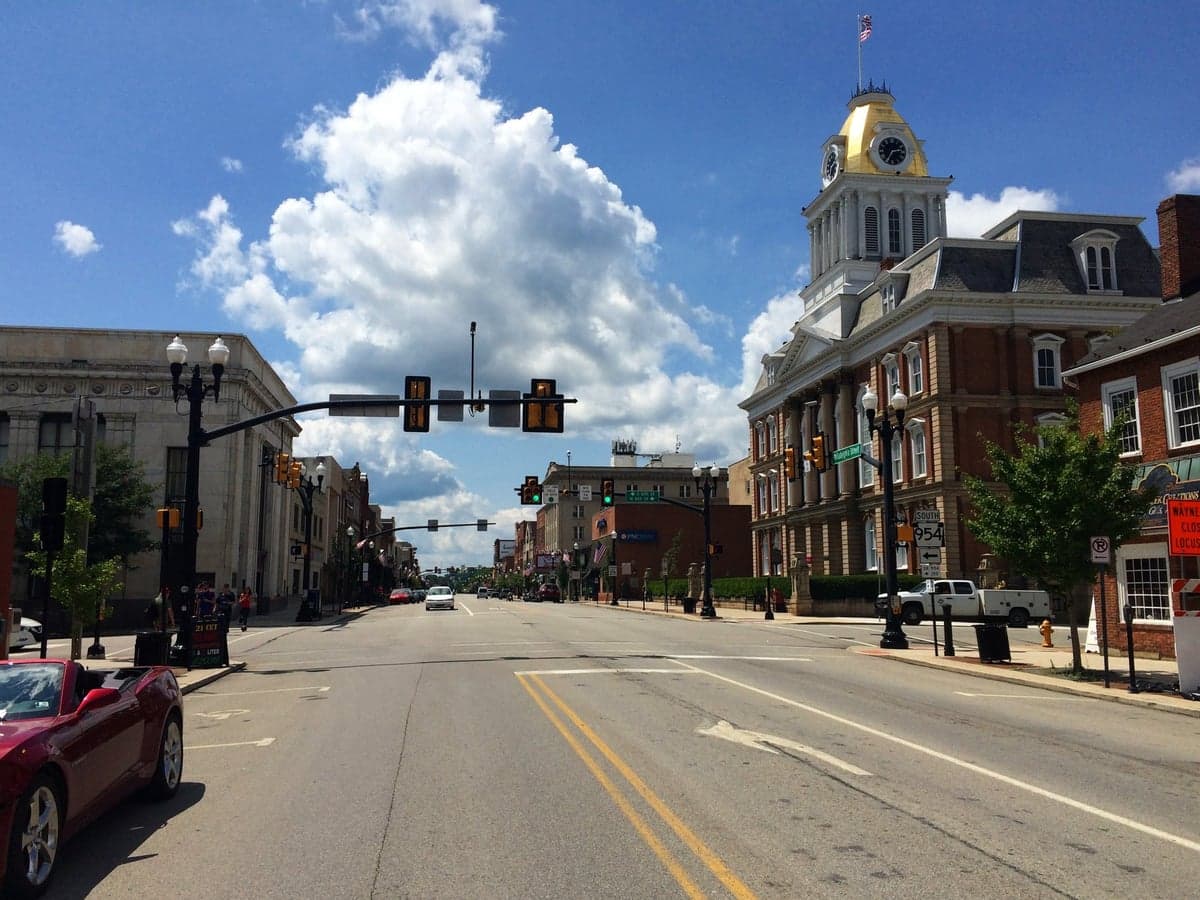
Photo: Wikipedia
Political ClimatePolitical Climate in Indiana, PA
District shown is the primary district for this city’s centroid. Cities may span multiple districts.
Local Political AnalysisPolitical Analysis of Indiana, PA
Indiana, Pennsylvania, has long been a reliably conservative stronghold, and that hasn't changed much despite some national trends. With a Cook Partisan Voting Index of R+17, this area votes Republican by a wider margin than most of the country. You can feel it in the local culture—people here value self-reliance and aren't big fans of government telling them how to live their lives. That said, like a lot of small towns, there's been a slow shift, especially as younger folks move away and the university brings in a more transient, progressive crowd. It's still a red area, but you can see the edges starting to fray if you pay attention.
How it compares
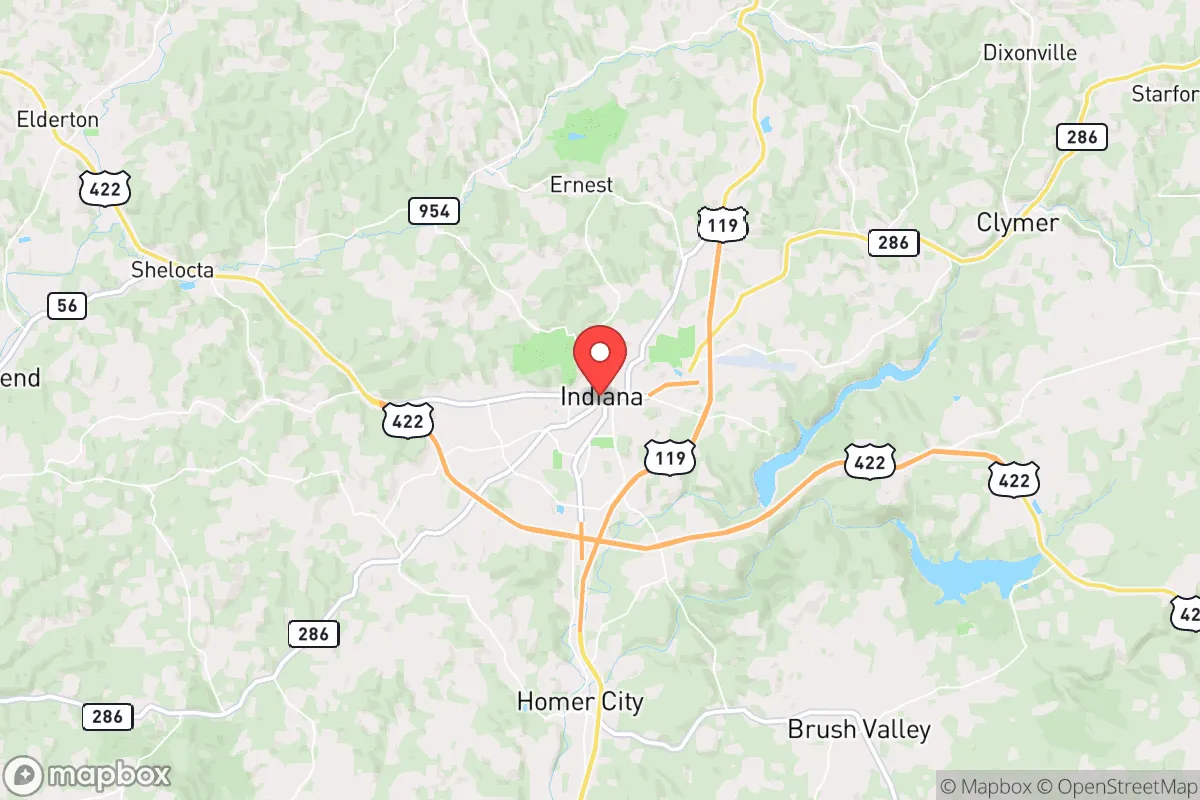
Compared to the rest of Indiana County, the borough of Indiana itself is a bit of an outlier. The town is more purple than the surrounding rural townships, thanks to Indiana University of Pennsylvania (IUP) and its faculty and student population. Drive ten minutes out to Homer City or Blairsville, and you're back in deep-red territory where folks are more skeptical of progressive ideas. Nearby Pittsburgh, about an hour west, is a completely different world—solidly blue and pushing policies that would never fly here. Even Johnstown, to the south, leans more conservative than Indiana Borough but still has its own struggles with urban decay and government overreach. The contrast is stark: Indiana County as a whole votes like a rural Pennsylvania county, but the town itself is a battleground where you see more "In This House We Believe" signs than you'd expect.
What this means for residents
For those of us who've lived here a while, the political climate means a few practical things. First, taxes are relatively low compared to blue areas in the state, and there's less red tape on things like property improvements or starting a small business. You can still buy a decent house for under $150,000, and the local government isn't breathing down your neck about zoning or permits. Second, the Second Amendment is still respected here—you won't find the kind of restrictive gun laws you see in Philadelphia or Pittsburgh. But there's a growing concern: the county commissioners and school board have been leaning more moderate, and some worry about creeping progressive policies, like diversity initiatives in the schools or zoning changes that could bring more density and government control. The long-term worry is that as IUP expands and attracts more out-of-state faculty, the local elections could start to flip, bringing the kind of overreach we see in bigger cities.
One thing that sets Indiana apart is its strong coal and natural gas heritage, which shapes the local politics. People here remember when the mines were the backbone of the economy, and there's a deep distrust of environmental regulations that kill jobs. You'll hear folks talk about how the "Green New Deal" is just a way to shut down the region. Culturally, it's a place where church potlucks and hunting season are still central, and there's a quiet but firm resistance to anything that feels like social engineering from Harrisburg or Washington. The local paper, the Indiana Gazette, still runs letters to the editor complaining about government overreach, and the county fair is a bigger deal than any political rally. For now, Indiana remains a place where you can live your life without too much interference, but you have to keep an eye on the school board meetings and local elections to make sure it stays that way.

State Political ClimatePolitical Climate in Pennsylvania
State Political AnalysisPolitical Environment in the State
Pennsylvania is a classic purple state that has been trending blue for the last 20 years, but it’s a much more complicated picture than the presidential vote totals suggest. The state went for Biden by just 1.2 points in 2020 and Trump by 0.7 points in 2016, but the real story is the slow-motion collapse of the old Democratic strongholds in the west and the explosive growth of the Philadelphia suburbs. If you’re looking at Pennsylvania as a potential home, you need to understand that the state is a battlefield where the outcome depends on which side of the Susquehanna you live on.
Urban vs. rural divide
The political map of Pennsylvania is a textbook example of the urban-rural split. Philadelphia and its collar counties—Montgomery, Delaware, Chester, and Bucks—are the engine of the Democratic vote. Philadelphia itself is a deep blue city, but the real story is the suburbs: in 2020, Bucks County flipped from red to blue by about 5 points, and Chester County has become reliably Democratic. Meanwhile, Pittsburgh and Allegheny County are still blue, but the margins have shrunk as the city’s population has declined. The rural T—the vast stretch of counties from Erie down to the Maryland border and across the northern tier—is deeply red. Lycoming, Tioga, and Bradford counties routinely vote 70%+ Republican. The real battleground is the “collar counties” around Philadelphia and the old industrial towns like Scranton, Wilkes-Barre, and Erie, where working-class voters have been swinging hard toward Trump. If you’re moving to the state, your political experience will be completely different depending on whether you land in Lancaster County (red, growing) or the Philly suburbs (blue, dense).
Policy environment
Pennsylvania’s policy environment is a mixed bag that reflects its purple status. The state has a flat income tax of 3.07%, which is relatively low, but property taxes are among the highest in the nation—averaging about $3,500 annually on a median home. There is no state-level sales tax on groceries or clothing, but the overall state and local tax burden is above the national average. The regulatory climate is moderate: Pennsylvania has a right-to-work law? No, it doesn’t—it’s one of the few northern states without one, and unions remain powerful in construction, education, and public services. Education policy is a flashpoint: the state has a school voucher program that was expanded in 2023, but it’s limited to low-income students in low-performing districts. Election laws are a mess: no-excuse mail-in voting was passed in 2019, but the state Supreme Court has been split on ballot deadlines and signature verification. Pennsylvania has no voter ID law for in-person voting, which is a major concern for conservatives. Gun laws are relatively permissive: the state has a preemption law that prevents local governments from passing their own restrictions, but Philadelphia has been trying to get around it with local ordinances that have been struck down in court.
Trajectory & freedom
Pennsylvania is becoming less free in several key areas, and the trend is accelerating. The biggest red flag is the expansion of government power during COVID: Governor Wolf’s emergency orders shut down businesses for months, and the state Supreme Court upheld his authority. That led to a backlash, and in 2022, voters passed a constitutional amendment limiting the governor’s emergency powers, but the damage was done. On gun rights, the state has been a mixed bag: in 2022, the legislature passed a permitless carry bill, but Governor Shapiro vetoed it. Pennsylvania still requires a permit to carry a concealed firearm, and the process is shall-issue but can take months in Philadelphia. On parental rights, the state has been a battleground: in 2023, the legislature passed a bill requiring schools to notify parents of changes in a child’s health or well-being, but it was vetoed. Medical autonomy took a hit in 2024 when the state Supreme Court ruled that the state could mandate COVID vaccines for healthcare workers. Property rights are under pressure from the growing use of eminent domain for “blight” redevelopment in cities like Pittsburgh and Philadelphia. The overall trajectory is toward more regulation and higher taxes, especially if the state legislature flips blue in the next decade.
Civil unrest & political movements
Pennsylvania has seen its share of political flashpoints. The 2020 election was a major controversy: Philadelphia’s ballot counting process was the subject of lawsuits and protests, and the state Supreme Court’s decision to extend the ballot receipt deadline was criticized by conservatives. The January 6th investigation had a Pennsylvania angle, with state lawmakers subpoenaed. On the left, the Black Lives Matter protests in Philadelphia in 2020 were large and destructive, with looting and property damage that led to a permanent police presence in Center City. On the right, the “Pennsylvania Freedom” movement has been active, with rallies at the state capitol against vaccine mandates and school closures. Immigration politics are relatively quiet compared to border states, but Philadelphia is a sanctuary city, and the state has a law that prevents local police from cooperating with ICE in most cases. There is a growing secessionist movement in northern Pennsylvania counties that want to join a new state called “Jefferson,” but it’s mostly symbolic. The most visible flashpoint for a new resident would be the constant political ads: Pennsylvania is the most expensive media market in the country for political advertising, and you will see non-stop attack ads for governor, senator, and state legislature races every two years.
Projection
Over the next 5-10 years, Pennsylvania is likely to continue its slow drift to the left, but the pace depends on migration patterns. The Philadelphia suburbs are growing faster than the rest of the state, and they are becoming more Democratic. The rural areas are shrinking and aging, which reduces their political power. The wild card is the I-81 corridor: cities like Harrisburg, York, and Scranton are seeing an influx of people from New York and New Jersey, and many of them are conservative-leaning but not necessarily Republican. The state is projected to lose a congressional seat after the 2030 census, which will shift the balance of power. If you’re moving to Pennsylvania now, expect to see the state legislature remain Republican for the next few years, but the governorship and the state Supreme Court will likely stay blue. The practical implication is that your local experience will vary wildly: you can live in a red county like Lancaster or York and feel like you’re in a conservative haven, but you’ll still be subject to state-level policies on taxes, education, and gun laws that are increasingly progressive.
For a new resident, the bottom line is that Pennsylvania offers a lot of geographic and cultural diversity, but it’s not a state where you can escape government overreach. The state government is actively expanding its control over your life, from vaccine mandates to school curriculum to property taxes. If you’re looking for a place where your vote matters and your values are respected, you’ll want to focus on the red counties in the central and northern parts of the state, like Lancaster, York, or Cumberland. Avoid Philadelphia and Pittsburgh unless you’re prepared for high taxes, restrictive policies, and a political environment that is hostile to conservative values. The state is a battlefield, and you’ll need to choose your ground carefully.
* Values derived from national, state, county, city and local statistics and may differ in a specific area. Last updated: 2026-05-01T08:33:18.000Z
Narrative content on this page is AI-generated and may contain mistakes. Verify any details that matter before acting on them.
ReloMaps may earn a commission from affiliate links at no extra cost to you.

