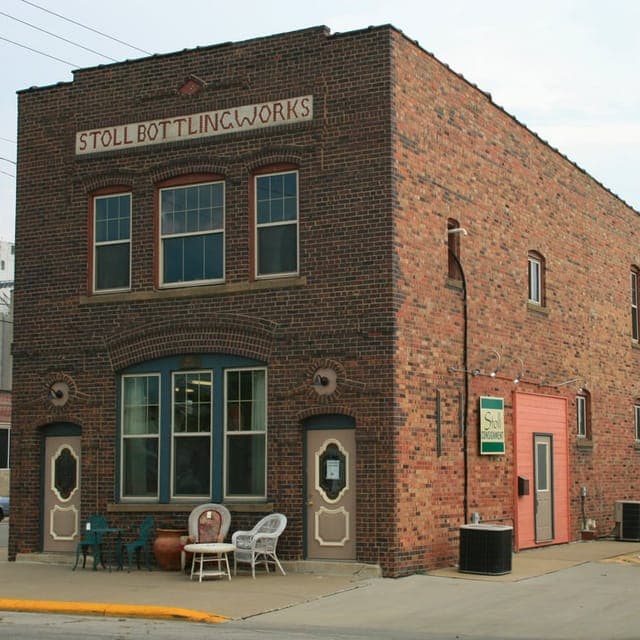
Photo: Wikipedia
Personal Sovereignty in Iowa
Viable for self-reliance. Generally workable, though some barriers may limit total independence.
What does Personal Sovereignty tell us?
Personal Sovereignty measures your capacity for self-reliance and independence with minimal government friction. Higher scores mean fewer barriers between you and the way you want to live... but it assumes you have the space you need and good neighbors.
What does this tell us?
Personal Sovereignty measures your capacity for self-reliance and independence with minimal government friction. Higher scores mean fewer barriers between you and the way you want to live... but it assumes you have the space you need and good neighbors.
State Policy
Energy independence: Importer (50% of energy produced in-state)
Personal Liberty
Homesteading

Personal Liberty Analysis
Iowa offers a notably high degree of personal sovereignty relative to much of the United States, particularly for those who prioritize self-reliance, limited government interference, and the ability to live according to their own values. The state’s political culture, rooted in a tradition of local control and individual responsibility, creates an environment where residents face fewer legal barriers to personal autonomy than in coastal or urban-dominated states. For the strategic relocator—whether a single individual seeking freedom from overreach or a parent wanting to raise children without state intrusion—Iowa presents a compelling balance of low regulatory friction, strong property rights, and a legal framework that generally respects personal choices in self-defense, medical decisions, and family life. However, sovereignty is not uniform across the state; the contrast between urban centers like Des Moines and Iowa City and rural strongholds like Pella, Decorah, and Council Bluffs is sharp, and understanding these local differences is critical for anyone serious about maximizing personal liberty.
Tax burden and regulatory posture: How Iowa compares to neighboring states
Iowa’s tax and regulatory environment has shifted decisively toward individual freedom in recent years, making it one of the more attractive states in the Midwest for those seeking to keep more of their own money and operate without excessive bureaucratic oversight. The state enacted a flat individual income tax rate of 3.8% in 2025, down from a progressive top rate of 8.53% just a few years prior, and the rate is scheduled to drop further to 3.5% by 2027. Property taxes remain moderate, with effective rates around 1.5% of home value, though they vary significantly by county—rural areas like Osceola County and Decatur County offer much lower levies than suburban Polk County. Sales tax is capped at 6%, with local options pushing it to 7% or 8% in some cities like Cedar Rapids and Davenport, but essential items like groceries and prescription drugs are exempt. On the regulatory side, Iowa has aggressively rolled back occupational licensing requirements, eliminated many state-level business permits, and preempted local ordinances that would restrict agricultural operations or energy production. This means a homesteader near Creston or a small-scale manufacturer in Oskaloosa faces far less red tape than counterparts in Illinois or Minnesota, where county-level zoning and state environmental reviews can stall projects for years. For the prepper or survivalist, this regulatory posture translates directly into fewer barriers to building a self-sufficient property, storing supplies, or running a home-based business without government permission.
Self-defense and gun law specifics: Constitutional carry and castle doctrine in practice
Iowa is a strong Second Amendment state, and its laws reflect a clear presumption that the individual, not the government, is the first line of defense. The state enacted permitless (constitutional) carry in 2021, meaning any law-abiding adult 21 or older can carry a concealed firearm without a license, background check, or training requirement. This applies statewide, including in cities like Des Moines and Iowa City, though private property owners and some government buildings can still restrict carry. The castle doctrine is codified in Iowa Code §704.1, establishing that a person has no duty to retreat before using deadly force in their home, vehicle, or place of business if they reasonably believe it’s necessary to prevent death or serious injury. Stand-your-ground protections extend to any place where the person is lawfully present, which is critical for those who may need to defend themselves while traveling or camping on their own land. Magazine capacity, firearm types, and ammunition are unregulated at the state level, and there is no firearm registry or waiting period. For the survivalist mindset, this legal framework means you can arm yourself and your family without government permission, store weapons and ammunition without fear of confiscation, and rely on your own judgment in a defensive situation. The practical difference between rural and urban enforcement is notable: in towns like Storm Lake or Mount Pleasant, sheriff’s offices are generally supportive of gun rights, while in Johnson County (Iowa City), some local officials have expressed hostility, though state preemption laws limit their ability to impose additional restrictions.
Self-reliance and homesteading viability: Lot sizes, zoning, and off-grid feasibility
Iowa’s rural character and agricultural heritage make it one of the most viable states in the nation for homesteading, off-grid living, and self-sufficient property development. Outside of incorporated city limits, county zoning is minimal, and many rural counties have no building codes, no permit requirements for accessory structures, and no restrictions on keeping livestock, chickens, or even larger animals like goats and cattle. Lot sizes for rural residential parcels can be as small as one acre in some counties, but five to forty acres is common and affordable—land prices in counties like Ringgold, Wayne, and Taylor often run under $3,000 per acre. Off-grid feasibility is high: Iowa has abundant groundwater, and drilling a well typically costs $5,000–$10,000; septic systems are straightforward and permitted at the county level with minimal inspection. Solar panels, wind turbines, and rainwater collection are legal statewide, though some homeowners’ associations in subdivisions near cities like Ankeny or West Des Moines may restrict them—so avoiding HOAs is essential for the serious prepper. The state also has a strong right-to-farm law that protects agricultural operations from nuisance lawsuits, which is a double-edged sword: it protects your own farming activities but also means you cannot easily stop a neighbor from running a large-scale hog operation. For those seeking maximum autonomy, the unincorporated areas around towns like Bloomfield, Sidney, and Algona offer the least regulatory interference, while the suburbs of the I-35 corridor (Ames, Johnston) are increasingly adopting subdivision covenants that limit self-reliance activities.
Personal liberties: Parental rights, medical autonomy, speech, and property
Iowa has become a battleground for personal liberties, with recent legislative actions significantly expanding parental rights and medical freedom while maintaining strong protections for speech and property. The state’s Parents’ Bill of Rights, enacted in 2023, affirms that parents have the fundamental right to direct the upbringing, education, and healthcare of their children, including the right to opt out of any school curriculum or activity they find objectionable. This law also requires schools to obtain parental consent before administering any mental health screening or survey, and it prohibits school officials from hiding information about a child’s gender identity or medical decisions from parents. On medical autonomy, Iowa passed a law in 2024 prohibiting any vaccine mandate by private employers or government entities, and it maintains broad exemptions for religious and medical objections to any vaccination requirement. The state also has a strong conscience clause for healthcare providers, allowing them to refuse participation in procedures they find morally objectionable without penalty. Free speech protections are robust, with no state-level hate speech laws and a strong tradition of protecting political expression, even on public university campuses like the University of Iowa and Iowa State University. Property rights are reinforced by a 2022 law that requires government to pay just compensation for any regulatory taking that reduces property value by more than 20%, a powerful tool against overzealous zoning or environmental restrictions. For the parent concerned about government overreach into family life, or the individual who values medical choice and the right to speak freely without fear of censorship, Iowa’s legal environment is among the most protective in the Midwest.
In the broader landscape of American personal sovereignty, Iowa ranks in the top tier for those who prioritize individual freedom over collective conformity. The state’s combination of low taxes, minimal regulation, constitutional carry, strong parental rights, and viable off-grid living creates a legal ecosystem where a determined individual or family can build a life largely free from government interference. While no state is a libertarian utopia—Iowa still has property taxes, some local zoning friction, and a growing urban-rural divide in enforcement of these freedoms—it offers a practical, achievable path to self-reliance that is increasingly rare in the United States. For the strategic relocator weighing the trade-offs between the deep sovereignty of rural Montana or Idaho and the more temperate climate and economic opportunities of the Midwest, Iowa represents a balanced, actionable choice where personal liberty is not just a theory but a daily reality.

Top Cities for Personal Sovereignty in Iowa
* Values derived from national, state, county, city and local statistics and may differ in a specific area. Last updated: 2026-04-18T22:25:01.000Z
Narrative content on this page is AI-generated and may contain mistakes. Verify any details that matter before acting on them.
ReloMaps may earn a commission from affiliate links at no extra cost to you.

