 Popular
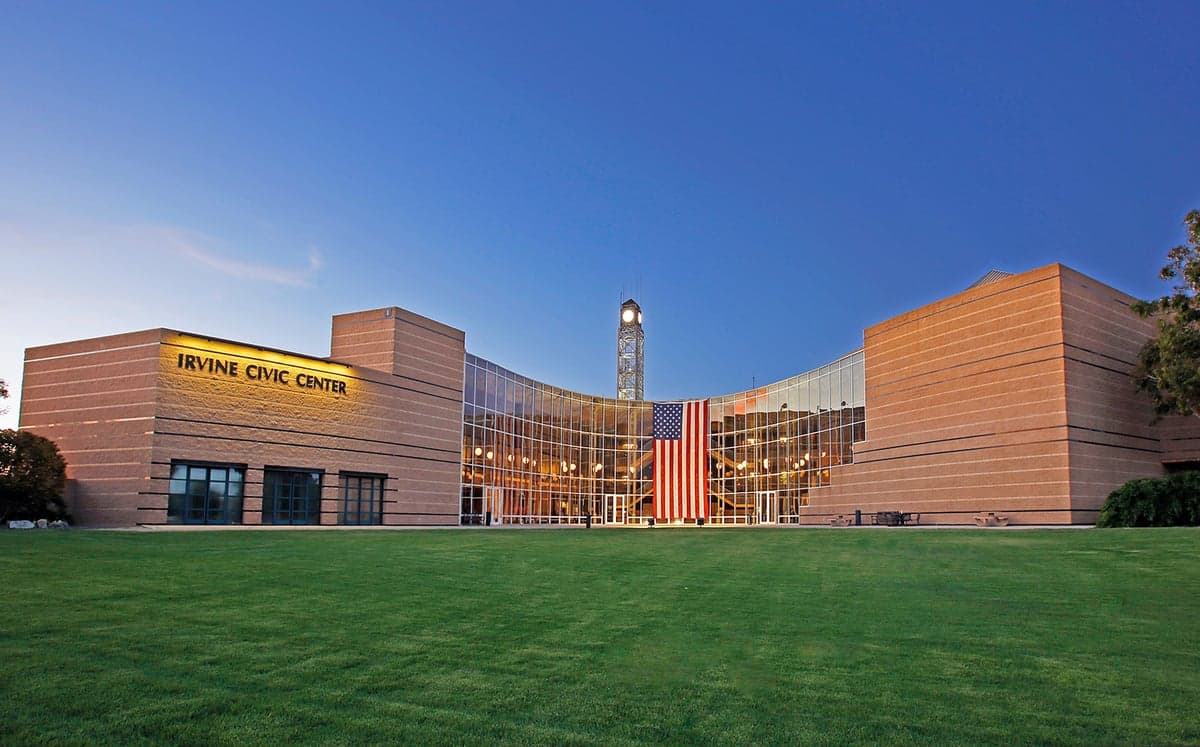
Photo: Wikipedia
Demographics of Irvine, CA
Affluence Level in Irvine, CA
An upper-middle-class area. Household wealth, education levels, and homeownership run ahead of national benchmarks.
People of Irvine, CA
Irvine, California, is a meticulously planned city of 308,160 residents defined by its high educational attainment—70.6% hold a college degree—and its distinctive racial and ethnic composition. The city is a majority-minority community where East and Southeast Asian residents form the largest single group at 35.9%, followed by non-Hispanic whites at 35.4%, Indian-subcontinent residents at 8.0%, and Hispanic residents at 11.3%. This is not a melting pot in the traditional sense but rather a collection of highly educated, often affluent enclaves shaped by decades of deliberate master-planning and targeted migration.
How the city was settled and grew
Unlike older California cities, Irvine has no colonial or 19th-century settlement history. The land was originally part of the vast 1846 Rancho San Joaquito Mexican land grant, but the city itself is a post-1960s creation. The Irvine Company, which owned the 93,000-acre Irvine Ranch, began developing the master-planned community in the 1960s. The first residents were largely white, middle-to-upper-middle-class families drawn by the promise of safe, orderly neighborhoods and top-rated schools. The earliest neighborhoods—El Camino Real and University Park—were built in the late 1960s and early 1970s, attracting professionals employed at the newly opened University of California, Irvine (UCI) and nearby aerospace and tech firms. These original areas remain predominantly white and older today, with many original homeowners aging in place.
Modern era (post-1965)
The 1965 Hart-Celler Act fundamentally reshaped Irvine's population. The city's planned expansion coincided with a surge in skilled immigration from East Asia, particularly Taiwan, China, and Korea. These families were drawn by the same factors as earlier white residents—safe streets and excellent schools—but also by the presence of established ethnic infrastructure. The Westpark and Woodbridge neighborhoods, built in the 1970s and 1980s, became early magnets for Chinese and Taiwanese professionals. By the 1990s and 2000s, the pattern intensified. The Northpark and Northwood areas saw heavy in-migration of Indian-subcontinent families, particularly from the tech and medical sectors. Today, these neighborhoods have a distinctly Indian character, with temples, grocery stores, and cultural centers. Meanwhile, Great Park Neighborhoods, the newest development on the former Marine Corps Air Station El Toro, has attracted a mix of younger East Asian and Indian families, as well as some Hispanic and white residents, though it remains heavily Asian and Indian. The Hispanic population, at 11.3%, is smaller than in surrounding cities like Santa Ana or Tustin, and is concentrated in older, less expensive apartment complexes near the I-5 corridor, such as parts of Oak Creek.
The future
Irvine's population is not homogenizing but rather solidifying into distinct, education- and income-stratified ethnic enclaves. The East/Southeast Asian share (35.9%) and Indian-subcontinent share (8.0%) are both likely to grow, driven by continued high-skill immigration and high birth rates among these groups. The white share (35.4%) is aging and declining, as younger white families are priced out or choose other Orange County suburbs. The Hispanic share (11.3%) is stable but not growing rapidly, as the city's high housing costs limit in-migration from lower-income groups. The foreign-born share (18.5%) is below the California average, but this masks a high proportion of naturalized citizens and second-generation residents. Over the next 10-20 years, Irvine will likely become even more Asian and Indian, with the white population falling below 30%. The city is not tribalizing in a conflictual sense, but the neighborhoods are becoming more ethnically homogeneous by income and origin—Northwood will remain heavily Indian, Woodbridge heavily Chinese, and University Park heavily white and older.
For a conservative-leaning individual or family moving in now, Irvine offers a stable, safe, and high-achieving environment where property values and school rankings are among the best in the state. The trade-off is that the city is increasingly a collection of parallel communities rather than a single civic culture. New arrivals should expect to find their own ethnic or lifestyle niche rather than a broad, integrated social fabric. The city's future is one of continued demographic specialization, not assimilation into a common identity.

* Values derived from national, state, county, city and local statistics and may differ in a specific area. Last updated: 2026-04-24T11:26:41.000Z
Narrative content on this page is AI-generated and may contain mistakes. Verify any details that matter before acting on them.
ReloMaps may earn a commission from affiliate links at no extra cost to you.

