 Popular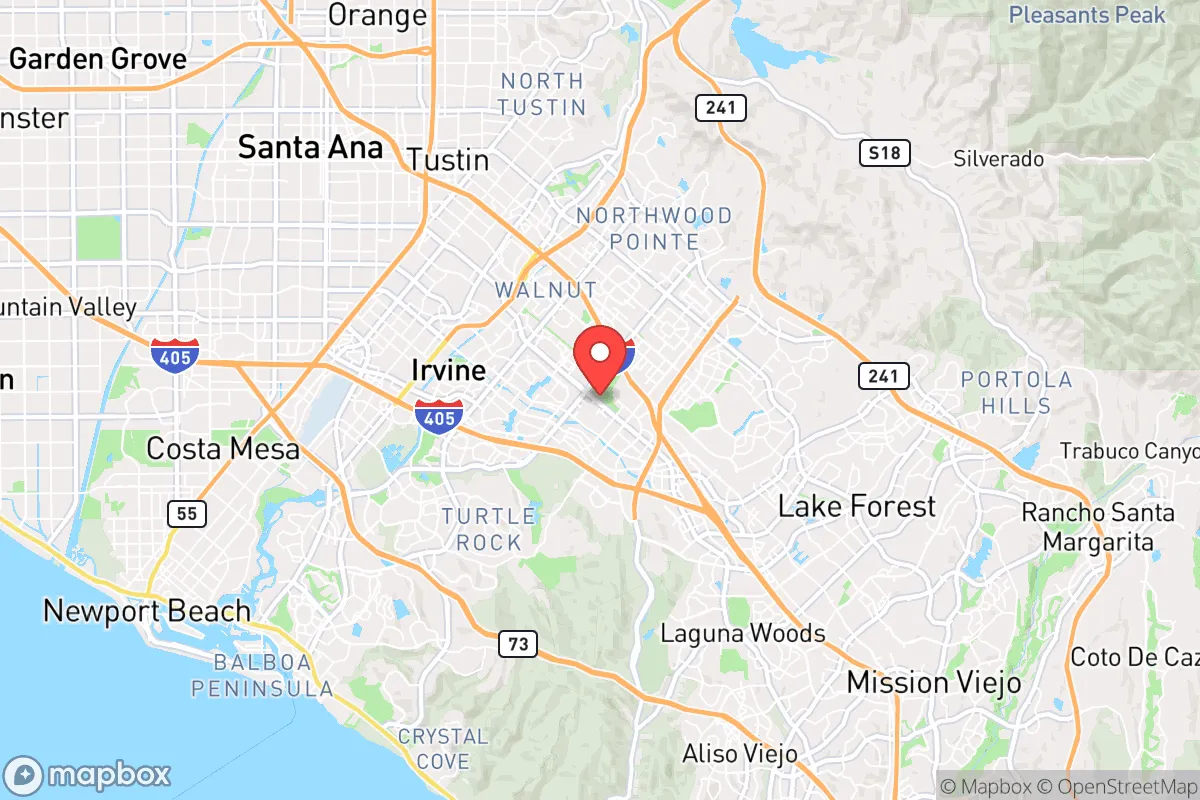
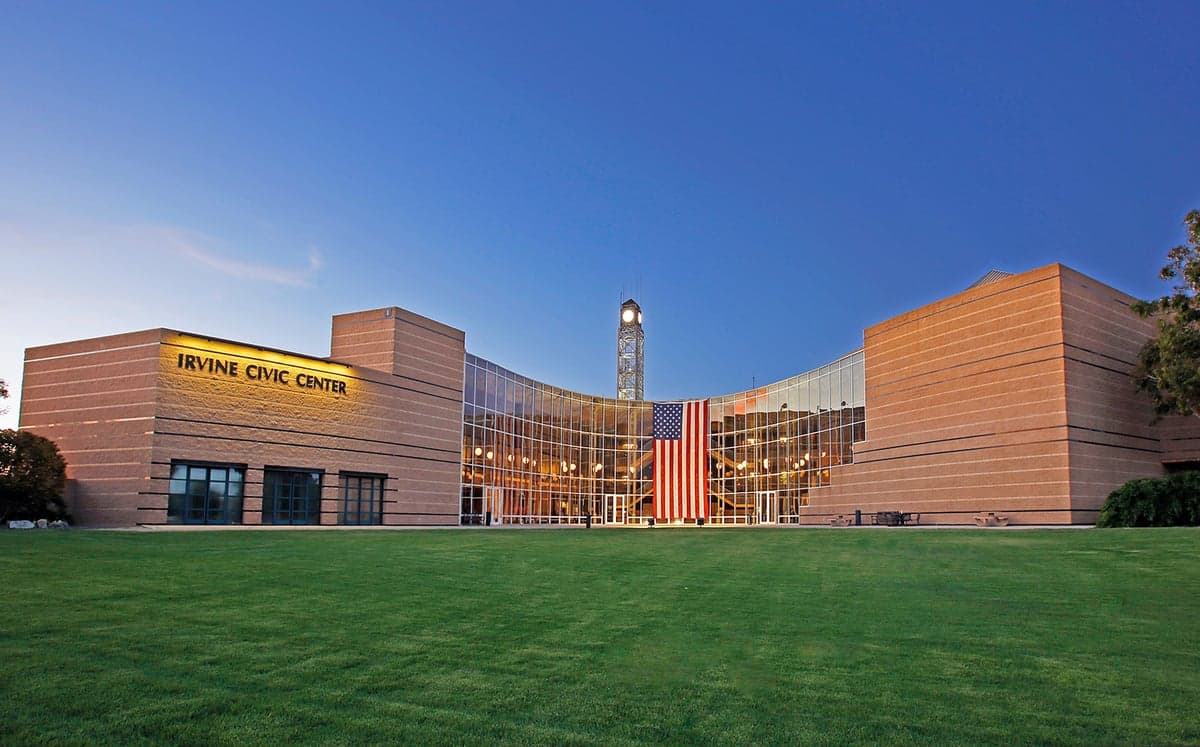
Photo: Wikipedia
Political ClimatePolitical Climate in Irvine, CA
District shown is the primary district for this city’s centroid. Cities may span multiple districts.
Local Political AnalysisPolitical Analysis of Irvine, CA
Irvine has long been a bit of an outlier in Orange County, but the political winds have shifted here in a way that gives a longtime resident pause. While the city itself has a Cook PVI of D+3, meaning it leans slightly Democratic, that number doesn't capture the full story. For decades, Irvine was a reliably conservative, master-planned community where fiscal responsibility and personal liberty were the default. Today, you're looking at a city that has become a stronghold for progressive policies, with the city council and school board increasingly pushing an agenda that feels less about freedom and more about top-down control. The trajectory is clear: what was once a bastion of common-sense governance is now a laboratory for social experiments that many of us find deeply concerning.
How it compares
To understand Irvine's shift, you have to look at the surrounding areas. Drive 15 minutes south to Laguna Niguel or Mission Viejo, and you'll find communities that still vote reliably Republican, with a focus on low taxes and limited government. Head north to Tustin or Santa Ana, and you see a different story—Santa Ana is heavily Democratic, but it's a working-class, immigrant-driven blue, not the affluent, activist blue you see in Irvine. The real contrast is with Newport Beach and Huntington Beach, which remain conservative strongholds. Irvine's political class has become increasingly disconnected from the values of those neighboring cities, embracing policies like rent control, expansive homeless services, and a school curriculum that prioritizes ideological conformity over academic excellence. It's a stark reminder that a D+3 rating doesn't mean moderate; it means the city is a beachhead for a very specific brand of progressive governance.
What this means for residents
For the average family, this shift translates into real-world consequences. The most immediate is the erosion of local control. The city council has shown a willingness to override neighborhood preferences on development, pushing high-density housing projects that change the character of established communities. The school board has been a flashpoint, with debates over critical race theory and gender ideology dominating meetings. Parents who voice concerns are often dismissed as bigots. What this means is that if you value the right to raise your children without government-mandated ideology, or if you believe your property rights should be respected, you are increasingly swimming against the tide. The city's budget, while healthy, is being directed toward programs that many residents never asked for, like a guaranteed basic income pilot program. It feels less like representation and more like a social engineering project.
Looking ahead, the near-term future is concerning. The current council majority is likely to double down on its agenda, especially as state-level mandates from Sacramento continue to push California further left. The long-term hope is that the 2026 midterms might see a backlash, as more residents wake up to the fact that their quiet, safe city is being transformed into a progressive petri dish. But for now, if you're considering a move to Irvine, you need to be aware that the political climate is not neutral. It is actively hostile to traditional values of personal responsibility, limited government, and parental rights. It's a beautiful place to live, but the price of admission is increasingly your voice.

State Political ClimatePolitical Climate in California
State Political AnalysisPolitical Environment in the State
California is a one-party Democratic state where Republicans haven’t won a statewide election since 2006, and the legislature has a supermajority that can pass taxes and override vetoes without a single GOP vote. The dominant coalition is a mix of coastal progressives, Silicon Valley tech donors, and public-sector unions, with the state’s overall partisan lean shifting from purple to deep blue over the last 20 years. In 2024, Kamala Harris carried California by 30 points, but that masks a growing internal divide: the state’s population is shrinking for the first time in modern history, and the counties that are growing—like Riverside and San Joaquin—are trending redder, while the coastal metros that drive the blue vote are losing residents.
Urban vs. rural divide
The political map of California is a story of two states. The coastal corridor from San Francisco through Los Angeles to San Diego generates about 70% of the state’s Democratic votes, with San Francisco County voting 85% for Biden in 2020 and Los Angeles County delivering 2.5 million Democratic votes. Inland, the Central Valley and most of the Sierra Nevada are solidly Republican: Bakersfield (Kern County) voted +20 for Trump, and Redding (Shasta County) is a conservative stronghold where the county GOP is openly challenging state vaccine mandates. The real action is in the suburban exurbs: places like Temecula (Riverside County) and Elk Grove (Sacramento County) have flipped from purple to light red in the last two cycles, driven by families fleeing high taxes and crime in the coastal cities. Orange County, once a GOP bastion, is now a swing county—it voted for Biden in 2020 but flipped back to supporting a Republican House majority in 2022. The urban-rural divide is so stark that some rural counties, like Modoc and Siskiyou, have passed resolutions to explore secession from the state, though none have legal teeth.
Policy environment
California’s policy environment is the most progressive in the nation, and it’s a major factor driving conservative residents out. The state income tax tops out at 13.3%, the highest in the country, and the gas tax is 68 cents per gallon—the second-highest after Pennsylvania. Proposition 13, which capped property tax increases, remains popular, but the legislature has chipped away at it with commercial property reassessments. On education, California has a universal school lunch program and a $24,000 per-pupil spending average, but test scores rank near the bottom nationally—only 33% of students are proficient in reading. The state’s healthcare system is dominated by Medi-Cal, which covers 15 million residents, and a new law (SB 525) will raise the minimum wage for healthcare workers to $25 an hour by 2028, driving up costs for private insurers. Election laws are among the most permissive: same-day voter registration, universal mail-in ballots (made permanent after 2020), and no voter ID requirement. For a conservative, the regulatory posture is suffocating—California has its own environmental review process (CEQA) that can delay any construction project for years, and the California Air Resources Board (CARB) effectively sets national auto emissions standards. The state also bans new gas stations in some cities and is phasing out new gas car sales by 2035.
Trajectory & freedom
California is becoming less free by any measure of personal liberty, especially for gun owners, parents, and taxpayers. The state has some of the strictest gun laws in the nation: a 10-day waiting period, a ban on assault weapons (upheld by the 9th Circuit), and a new law (SB 2) that bans concealed carry in most public places, including parks and churches, which is currently being challenged in court. On parental rights, California passed AB 1955 in 2024, which prohibits school districts from requiring teachers to notify parents if a child changes their gender identity—effectively making it illegal to out a student to their parents. The state also has a sanctuary law (SB 54) that bars local law enforcement from cooperating with federal immigration authorities, and in 2023, Governor Newsom signed a law allowing medical gender transition procedures for minors without parental consent in certain cases. On the economic freedom front, Proposition 22 (2020) allowed gig workers to remain independent contractors, but the legislature has since tried to overturn it. The state’s property rights are weak: rent control was expanded statewide by AB 1482, capping annual rent increases at 5% plus inflation, and local governments can impose vacancy taxes. The trajectory is clear: every session brings new restrictions on speech (a 2024 law criminalizes doxxing of abortion providers), new taxes (a wealth tax is being debated), and new mandates (a plastic bag ban took full effect in 2025).
Civil unrest & political movements
California has been a flashpoint for political movements on both sides. The 2020 George Floyd protests in Los Angeles and San Francisco caused over $1 billion in damage, and the state’s progressive district attorneys—like George Gascón in LA and Chesa Boudin in San Francisco (who was recalled in 2022)—were criticized for not prosecuting looters. The recall of Boudin and the failed recall of Governor Newsom in 2021 show that voters are willing to push back, but the Democratic machine usually prevails. Immigration politics are a constant: the state’s sanctuary law means ICE has limited ability to deport criminal illegal immigrants, and in 2023, Newsom deployed the National Guard to the border in a publicity stunt that did little to stop fentanyl trafficking. The secession movement, Calexit, has fizzled after its 2016 peak, but rural counties like Sutter and Yuba have passed “Second Amendment sanctuary” resolutions vowing not to enforce new gun laws. Election integrity is a live issue: the state’s universal mail-in voting system led to a 2021 audit that found 200,000 duplicate or invalid registrations, but the legislature refused to clean the rolls. A new resident will notice the constant protest culture—homeless encampment sweeps in San Francisco draw counter-protests, and school board meetings in places like Temecula have turned into shouting matches over critical race theory and LGBTQ curriculum.
Projection
Over the next 5-10 years, California will likely become even more progressive, but its population loss will accelerate. The state lost a congressional seat after the 2020 census for the first time in history, and projections show it could lose two more by 2030. The people leaving are disproportionately middle-class families and conservatives, heading to Texas, Arizona, and Idaho. The people arriving are mostly foreign immigrants and young progressives from other states. This demographic shift means the legislature will keep passing laws that alienate the remaining moderates—a wealth tax, single-payer healthcare, and stricter rent control are all on the table. The housing crisis will worsen: California needs 2.5 million new homes by 2030, but CEQA and local zoning make it nearly impossible to build. The state’s budget is also fragile—it relies heavily on capital gains taxes from the top 1%, and a stock market downturn could trigger a $30 billion deficit. For a conservative moving in now, expect to see more one-party rule, higher taxes, and a state government that actively works against your values on guns, education, and parental rights. The only bright spot is that the exodus of conservatives is creating redder pockets in the Central Valley and Inland Empire, but those areas will still be outvoted by the coastal cities.
For a new resident, the bottom line is this: California offers unmatched natural beauty and economic opportunity, but you will pay for it with your wallet and your freedoms. If you value low taxes, school choice, gun rights, and a government that stays out of your family decisions, this state will be a constant fight. If you can afford the cost and are willing to be a political minority, the weather is great and the job market is strong—but don’t expect the political climate to change anytime soon. The best bet for a conservative is to look at the growing exurbs like Temecula or the Central Valley towns like Clovis, where you’ll find more like-minded neighbors, but even those areas are being slowly absorbed into the state’s progressive regulatory web.
* Values derived from national, state, county, city and local statistics and may differ in a specific area. Last updated: 2026-04-24T11:26:41.000Z
Narrative content on this page is AI-generated and may contain mistakes. Verify any details that matter before acting on them.
ReloMaps may earn a commission from affiliate links at no extra cost to you.

