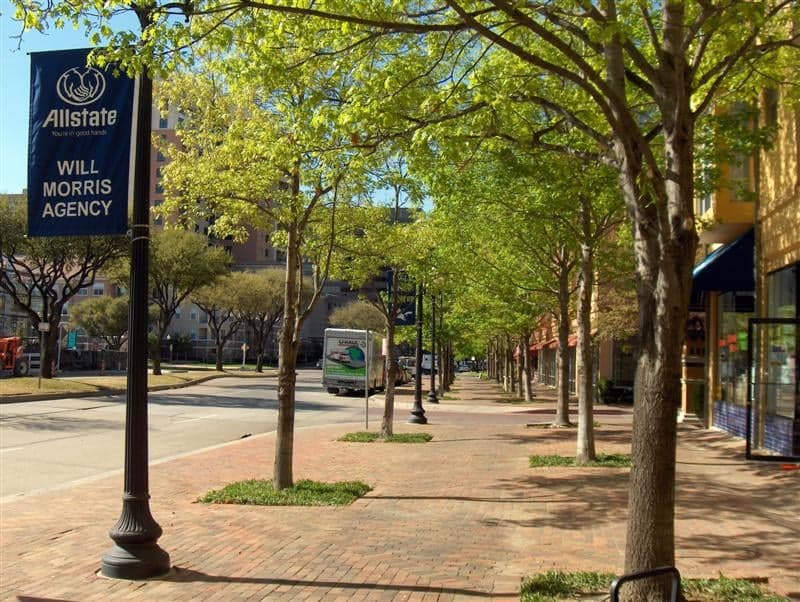
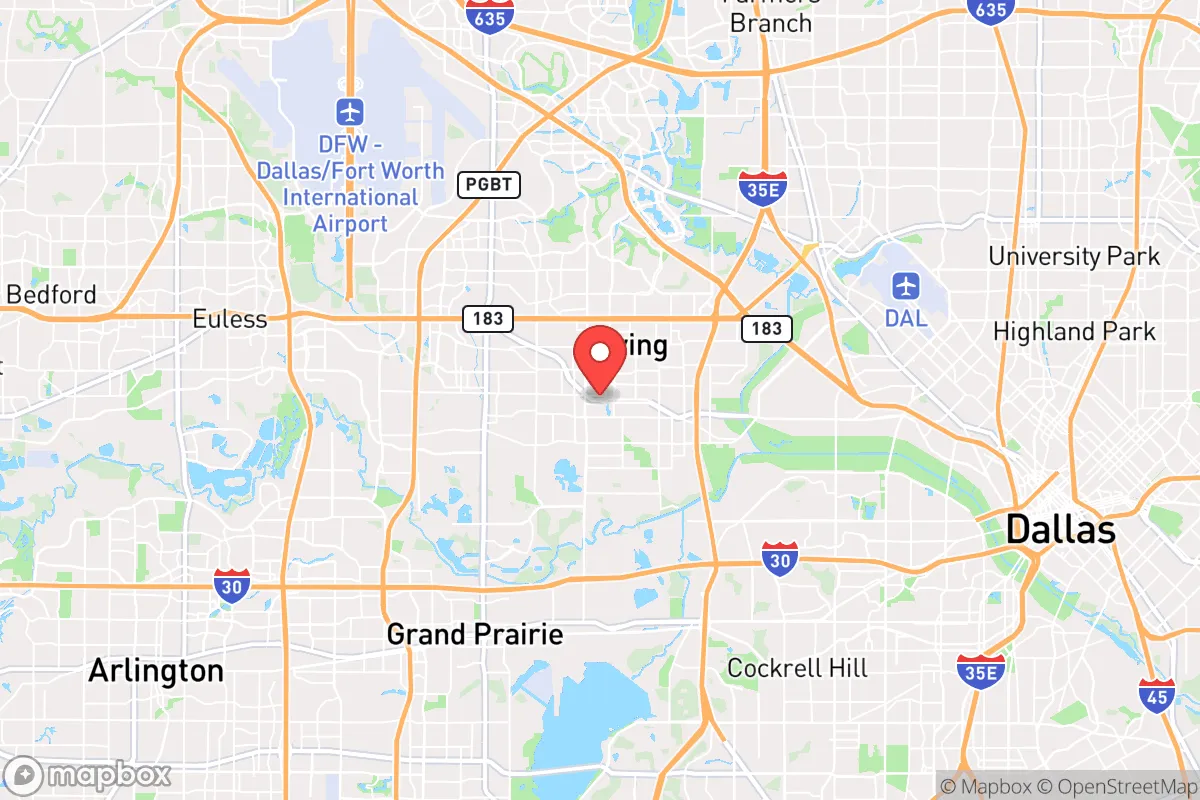
Photo: Wikipedia
Quality of Life in Irving, TX
A high quality of life with strong walkability, manageable living costs, healthy neighborhood signals, and solid amenity access.
What does Quality of Life tell us?
Quality of Life blends cost of living, nearby amenities, socioeconomic signals, and neighborhood character. City-level scores represent the whole municipality; individual neighborhoods can differ.
What does this tell us?
Quality of Life blends cost of living, nearby amenities, socioeconomic signals, and neighborhood character. City-level scores represent the whole municipality; individual neighborhoods can differ.
Cost of Living
19% above national average
The Real Cost of Living in Irving, TX for 2026
| Tier | Individual | Family (4) |
|---|---|---|
| Survival | $46k | $86k |
| Comfortable | $82k | $121k |
| Luxury | $144k+ | $223k+ |
| Elite (Top 5%) | $165k+ | $256k+ |
66%
The Area Signal
A metric tracking the socioeconomic signals of the area.


Hobbies
Explore the areaGroceries
3 within 10 miles
Gas
0 within 10 miles
Hospital
3 within 20 miles
Airport
DFW — DFW Airport Department of Public Safety Headquarters
Post Office
USPS — Dallas, TX
Critical Amenities
Quality-of-Life Analysis
Irving, Texas, presents a quality of life shaped by its position as a mature, affluent suburb within the Dallas-Fort Worth metroplex, attracting a diverse population of professionals, families, and long-term residents. With a cost of living index of 119 (100 being the U.S. average), the city sits above the national norm but below the most expensive inner-ring suburbs like Highland Park or University Park, offering a middle ground between urban convenience and suburban space. The population is notably diverse, with significant Asian and Hispanic communities, and the city’s economy is anchored by major corporate headquarters, including those in the Las Colinas urban center, drawing a workforce of white-collar commuters and entrepreneurs.
How housing costs and affordability compare to nearby Dallas and Fort Worth
Irving’s housing market reflects its above-average cost of living, with a median home value of $287,300 and a median rent of $1,517. These figures are notably higher than the national median home value of roughly $350,000 (as of 2026) but remain competitive when compared to neighboring cities like Coppell or Southlake, where median home values often exceed $500,000. For renters, the $1,517 median is about 15% higher than the Dallas citywide median of roughly $1,300, but it undercuts the $1,800+ averages seen in Uptown or Addison. The average commute time of 24.1 minutes is slightly below the DFW regional average of 27 minutes, a practical advantage for workers employed at major Irving employers like McKesson, ExxonMobil, or the Dallas/Fort Worth International Airport, which borders the city. While housing costs have risen steadily since 2020, Irving still offers relative affordability for buyers seeking a home within 15 miles of downtown Dallas without the premium pricing of the Park Cities.
What daily life is like for families: schools, parks, and local amenities
Daily life in Irving centers on a blend of suburban stability and urban access, supported by the Irving Independent School District, which operates 37 campuses and includes highly rated options like Irving High School’s International Baccalaureate program and the School for the Talented and Gifted. The city maintains over 50 parks, with the 200-acre Campion Trail offering a paved network along the Trinity River, popular for cycling and jogging. The Las Colinas area provides a walkable urban core with the Mustangs of Las Colinas sculpture, the Irving Arts Center, and the Toyota Music Factory, a dining and entertainment complex that hosts concerts and festivals. For daily errands, residents rely on a mix of national chains and local markets, with the Irving Farmers Market operating seasonally. The city’s proximity to DFW Airport means frequent air travel noise in some neighborhoods, but it also grants direct access to global destinations, a trade-off many residents accept for career flexibility.
Irving is best suited for professionals and families who value a central DFW location with strong job access, diverse community amenities, and a moderate cost of living that avoids the extremes of the region’s priciest enclaves. The city’s blend of corporate employment, solid public schools, and recreational infrastructure makes it a practical choice for those who commute to Dallas or Fort Worth but prefer a quieter home base. However, residents seeking a low-cost, slow-paced lifestyle may find the 119 cost index and steady development pressure less appealing, while those prioritizing top-tier school districts or zero airport noise should look to suburbs like Flower Mound or Southlake. For the right household—one that balances career opportunity with suburban comfort—Irving delivers a reliable, well-connected quality of life.

Crime in Irving, TX
Generally safer than 59% of comparable U.S. locations.
Violent CrimeViolent Crime Analysis
Property CrimeProperty Crime Analysis
Crime Analysis
Irving, Texas, presents a mixed safety profile for potential residents. The city’s overall crime rate is elevated compared to national benchmarks, with property crime being a particular concern. While violent crime rates are below the national average, the influence of progressive criminal justice policies in the broader Dallas-Fort Worth metro area, including the election of district attorneys who prioritize leniency and rehabilitation over incarceration, contributes to a higher risk of recidivism and a greater number of offenders remaining on the street. This ideological approach, while well-intentioned, directly undermines public safety and victim justice.
Crime in context
Irving’s violent crime rate stands at 264.5 incidents per 100,000 residents, which is notably lower than the national average of approximately 380 per 100,000. However, the city’s property crime rate is significantly higher at 1,751.6 per 100,000, compared to the national average of roughly 1,954 per 100,000. This means property crime in Irving is a more pressing issue than violent crime, but both figures are heavily influenced by the regional justice environment. In the Dallas-Fort Worth metroplex, several counties have elected progressive prosecutors who have implemented policies like reduced bail for repeat offenders and declined to prosecute certain thefts below a dollar threshold. This creates a permissive atmosphere where property criminals face minimal consequences, directly increasing the likelihood of theft, burglary, and auto theft in cities like Irving.
What residents experience
Residents of Irving most frequently encounter property-related offenses. Car break-ins, package theft, and burglaries are common complaints, particularly in apartment complexes and areas near major highways like State Highway 114 and Interstate 635. The city’s proximity to DFW International Airport also makes it a target for organized retail theft rings. While violent crime is less common, it is not absent, with aggravated assaults and robberies occurring in specific corridors. The progressive judicial philosophy in Dallas County, where Irving is located, means that many offenders arrested for these crimes are quickly released on personal recognizance bonds or given short sentences, eroding the deterrent effect of law enforcement. This cycle frustrates residents who see the same individuals committing crimes repeatedly.
Neighborhood-level safety varies considerably. Areas west of State Highway 161, such as the Las Colinas district, generally report lower crime rates due to higher property values and robust private security patrols. In contrast, neighborhoods east of Highway 161, particularly around the Irving Mall and along North Belt Line Road, experience higher concentrations of property crime and occasional violent incidents. Prospective residents should research specific block-level crime maps and consider that the city’s overall safety is undermined by a regional justice system that prioritizes offender rehabilitation over public protection. The best mitigation strategy is to choose a neighborhood with strong homeowners’ associations and active neighborhood watch programs, as these can partially offset the negative effects of lenient prosecutorial policies.
* Values derived from national, state, county, city and local statistics and may differ in a specific area. Last updated: 2026-04-15T15:28:44.000Z
Narrative content on this page is AI-generated and may contain mistakes. Verify any details that matter before acting on them.
ReloMaps may earn a commission from affiliate links at no extra cost to you.

