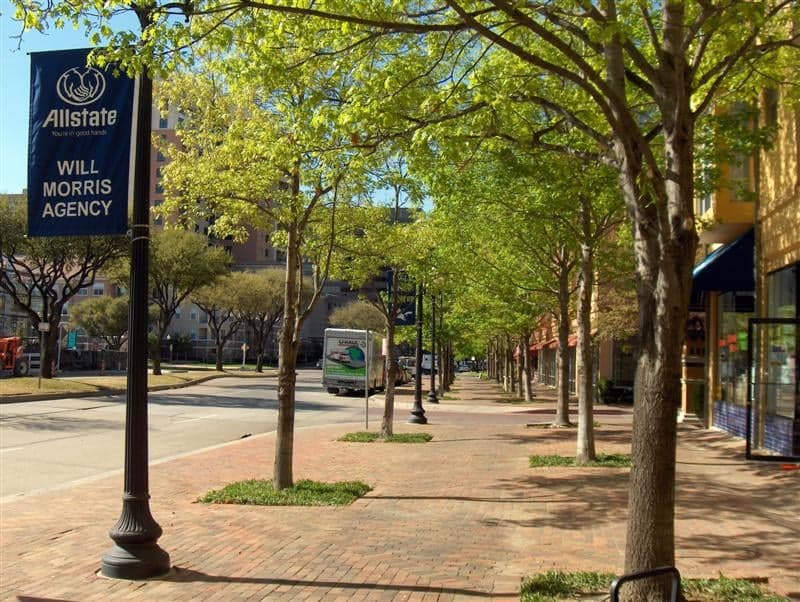
Photo: Wikipedia
Strategic Assessment of Irving, TX
Multiple tactical vulnerabilities. Population density, target proximity, or disaster risk are likely compounding. A retreat property and exit planning is required.
What does the Strategic Assessment tell us?
Our Strategic Assessment grades tactical survivability of an area. Major population centers, military targets, fallout zones, natural disasters, and border exposure all drive risk — lower exposure means a more defensible position in a crisis.
This is heavily inspired by Joel Skousen's Strategic Relocation book. Highly recommended you checkout the book ($)What does this tell us?
Our Strategic Assessment grades tactical survivability of an area. Major population centers, military targets, fallout zones, natural disasters, and border exposure all drive risk — lower exposure means a more defensible position in a crisis.
This is heavily inspired by Joel Skousen's Strategic Relocation book. Highly recommended you checkout the book ($)Strategic Pillars

Key Distances
Regional Safe Places
Below is our recommended "safe zones" in Texas and the surrounding area based on our strategic heuristics. For most people, it's unrealistic to live in a “safe zone” full-time due to work, family or other personal reasons. They tend to be more rural. However, many of these areas are perfect for second homes and retreat properties that double as a vacation home or even a short-term rental.

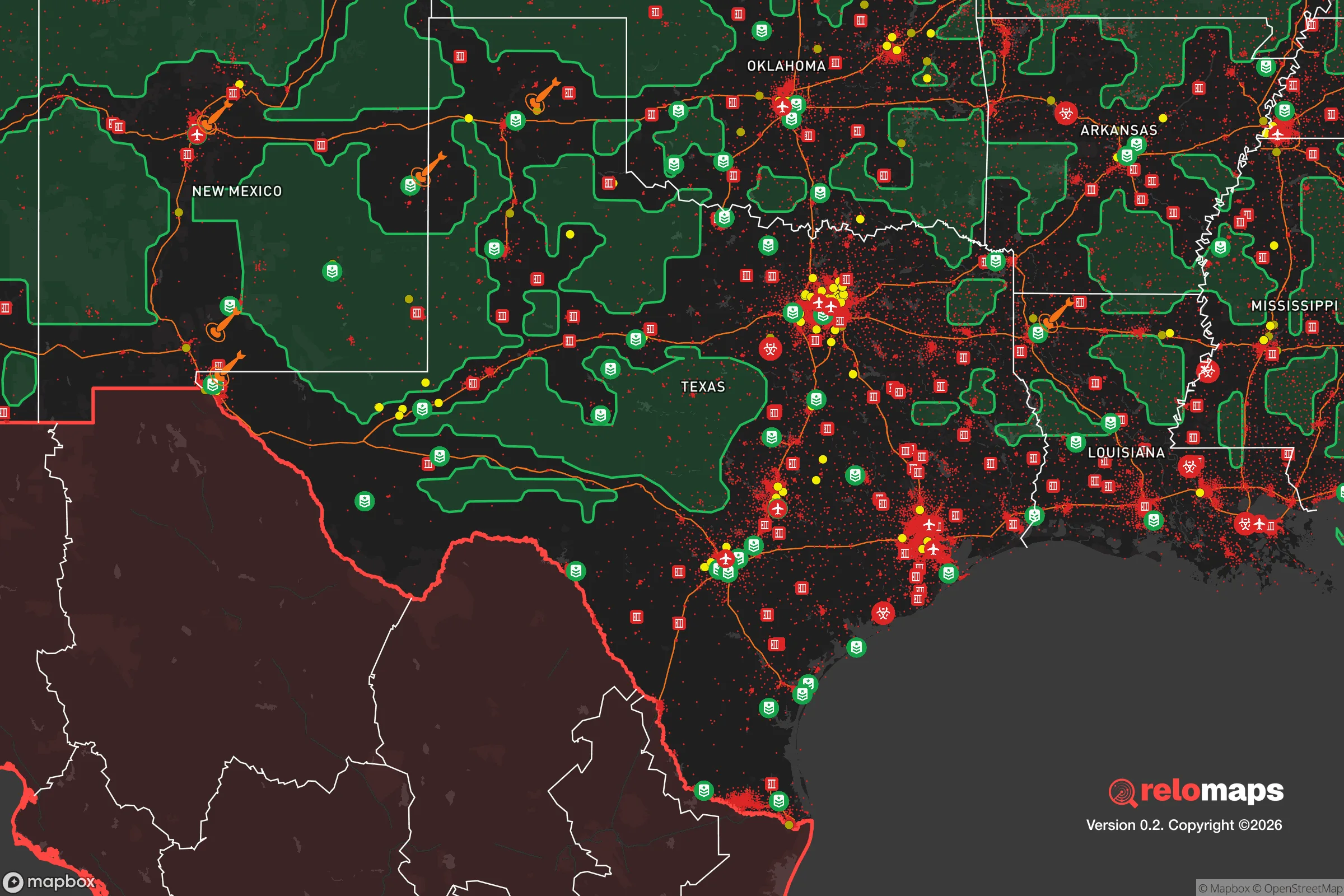


Important Note: For informational purposes only. This does not mean nothing bad ever happens in the green zones. Please use common sense. This is based on public data and modeled with AI. We tried to take a conservative approach but mistakes happen. We update this regularly as new information becomes available.
Solar Generator Recommendations
Backup power matters more here than in safer locations. We've picked three solar generators across budgets and capacity tiers — start with the budget unit if you only need a few essentials, or step up if you want to run a fridge and HVAC for days at a time.

Jackery Portable Power Station Explorer 300
Budget OptionPower on the Go: Weighing only 11 lbs, it's convenient to set up and store with book-sized foldable solar panels

BLUETTI Portable Power Station AC180
Designed for both indoor and outdoor scenarios, AC180 is highly capable as it has a robost capacity and continuous output power.

EF ECOFLOW DELTA Pro Ultra Power Station
Upgraded PickEcoFlow DELTA Pro Ultra is a whole-home energy system designed to grow with your family. Integrated with the Smart Home Panel 2, it scales to meet your evolving energy needs — keeping your home powered, intelligent, and secure through every stage of life.
We earn a commission, at no additional cost to you.
Strategic Assessment Analysis
Irving, Texas, sits in a precarious but potentially advantageous position for the strategic relocator. Its location within the Dallas-Fort Worth metroplex offers economic resilience and logistical access, but its proximity to major population centers, critical infrastructure, and potential fallout targets demands a sober assessment. For the conservative prepper or survivalist, Irving is not a retreat—it is a forward operating base with significant exposure that requires a clear-eyed plan for both daily life and crisis scenarios.
Geographic position and natural advantages for a strategic relocation
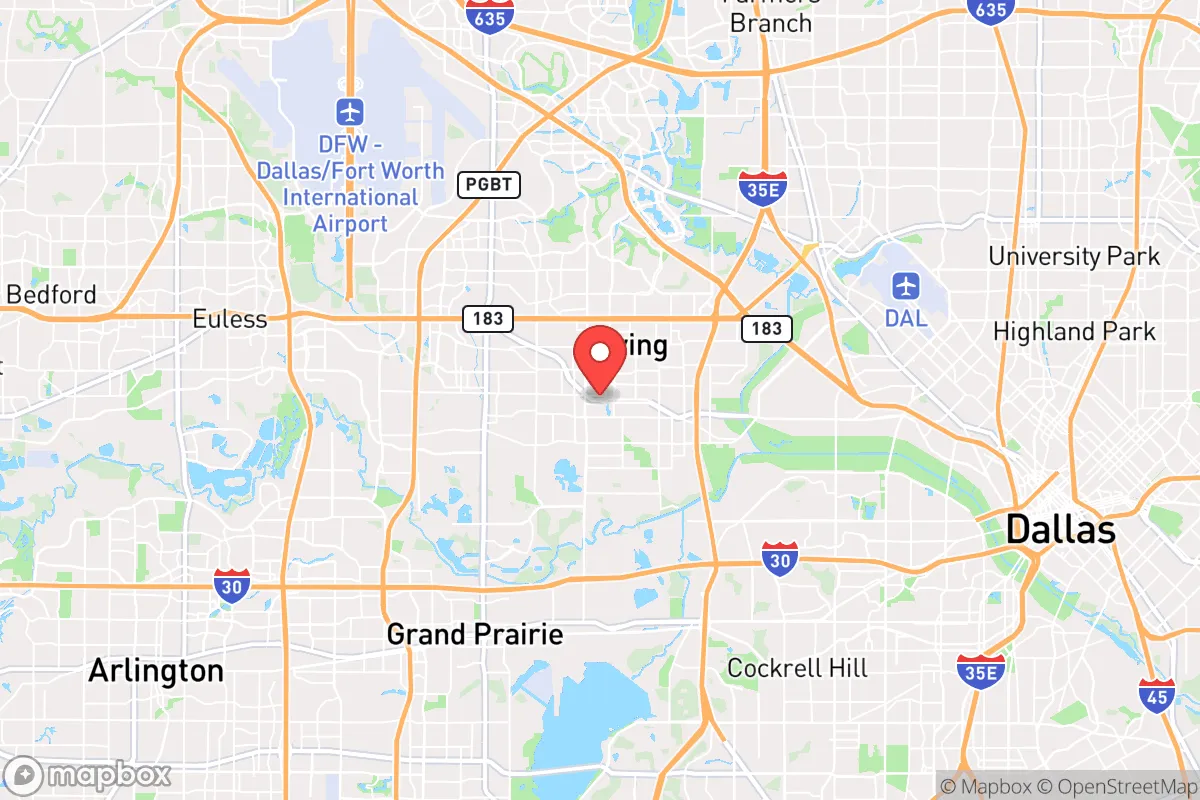
Irving’s primary strength is its location at the geographic heart of the North Texas region, roughly equidistant from Dallas and Fort Worth. This places it within a 30-minute drive of DFW International Airport, one of the busiest in the world, and along major interstate corridors like I-35E, I-635, and State Highway 183. For a relocator, this means exceptional access to supply chains, medical facilities, and transportation hubs during normal times. The area sits on the Blackland Prairie, a region with relatively stable geology—no significant earthquake risk, and while tornadoes are a seasonal threat, the terrain offers no floodplain issues in most of the city. The Trinity River runs nearby, but Irving itself is largely elevated, reducing flood risk compared to downstream communities. The climate is temperate, with four distinct seasons, which supports year-round outdoor activity and gardening, though summers are hot and dry. Water availability is a concern long-term, as the region relies on reservoirs like Lake Lewisville and Lake Ray Hubbard, but for now, municipal supply is reliable. The natural defensibility is low—flat, open terrain with limited chokepoints—but the urban grid offers multiple egress routes if one plans ahead.
Risks, exposures, and proximity to fallout-relevant landmarks
The most significant risk for Irving is its proximity to high-value targets in a major metropolitan area. DFW Airport itself is a potential target for both conventional and unconventional attacks, as are the numerous corporate headquarters in the region—including ExxonMobil’s campus in Irving, which is a visible symbol of energy infrastructure. The city is also within 15 miles of the Dallas Federal Reserve Bank, Love Field Airport, and multiple military installations like NAS Fort Worth Joint Reserve Base. In a scenario involving civil unrest or mass casualty events, Irving’s location along major highways makes it a natural chokepoint for evacuation or movement, which could become a liability during panic. The population density is moderate—about 260,000 residents—but the surrounding metroplex holds over 7 million people, meaning any cascading failure in utilities, food distribution, or public order would ripple into Irving quickly. The city’s reliance on the Texas power grid (ERCOT) is a known vulnerability; winter storms like Uri in 2021 exposed systemic fragility. For the prepper, the risk of being caught in a crowd or near a symbolic target is real, and the lack of natural barriers means that fallout from a radiological or chemical event could spread across the flat terrain with little attenuation. Proximity to the Trinity River also means that a dam failure upstream could threaten low-lying areas, though Irving’s elevation mitigates this somewhat.
Practical resilience for a relocator: food, water, energy, and defensibility
For a relocator focused on practical resilience, Irving offers a mixed bag. Food security is moderate: the city has numerous grocery chains, but they are all dependent on just-in-time logistics. During a crisis, shelves empty quickly, as seen during COVID-19. Local agriculture is limited—community gardens exist but are not scalable for a population this size. A prepper would need to stockpile at least three months of non-perishable food and have a plan for barter or local sourcing. Water is a more serious concern. The municipal supply comes from surface water reservoirs, which are vulnerable to contamination or disruption. A well is not feasible in most of Irving due to urban zoning and groundwater depth, so a relocator should invest in large-capacity water storage (50+ gallons per person) and a high-quality filtration system like a Berkey or a countertop distiller. Energy resilience is possible but requires investment. The grid is unreliable during extreme weather, but solar panels with battery backup (e.g., Tesla Powerwall or Generac) are legal and increasingly common. Natural gas is available for heating and cooking, but a backup propane tank is wise. Defensibility is the weakest point. Irving is a suburban grid with few natural chokepoints; homes are close together, and the street network is designed for cars, not standoffs. A relocator should prioritize a home on a cul-de-sac or with a fenced perimeter, and consider reinforcing doors and windows. The local police force is well-funded but would be overwhelmed in a widespread event. Community resilience is possible through church groups or neighborhood watch, but the transient nature of the population means trust must be built deliberately. For the single individual or family, the best strategy is to treat Irving as a base for work and logistics, with a secondary retreat property in a rural area within a two-hour drive—places like Jack County or the Hill Country offer better defensibility and water access.
Overall, Irving is a calculated risk for the strategic relocator. It offers economic opportunity, logistical access, and a relatively stable local government, but its position in the heart of a major metroplex means it is exposed to the same vulnerabilities that plague urban America. For the conservative prepper, the key is not to avoid Irving entirely but to use it as a hub while maintaining a low profile, building local networks, and having a clear evacuation plan. The city’s resilience depends on the individual’s preparation, not the area’s inherent safety. If you are willing to invest in storage, backup systems, and a rural bolt-hole, Irving can work as a strategic location. If you are looking for a self-sufficient retreat, look farther out. The choice is yours, but the data is clear: Irving is a high-exposure, high-opportunity environment that rewards the prepared and punishes the complacent.

* Values derived from national, state, county, city and local statistics and may differ in a specific area. Last updated: 2026-04-15T15:28:44.000Z
Narrative content on this page is AI-generated and may contain mistakes. Verify any details that matter before acting on them.
ReloMaps may earn a commission from affiliate links at no extra cost to you.

