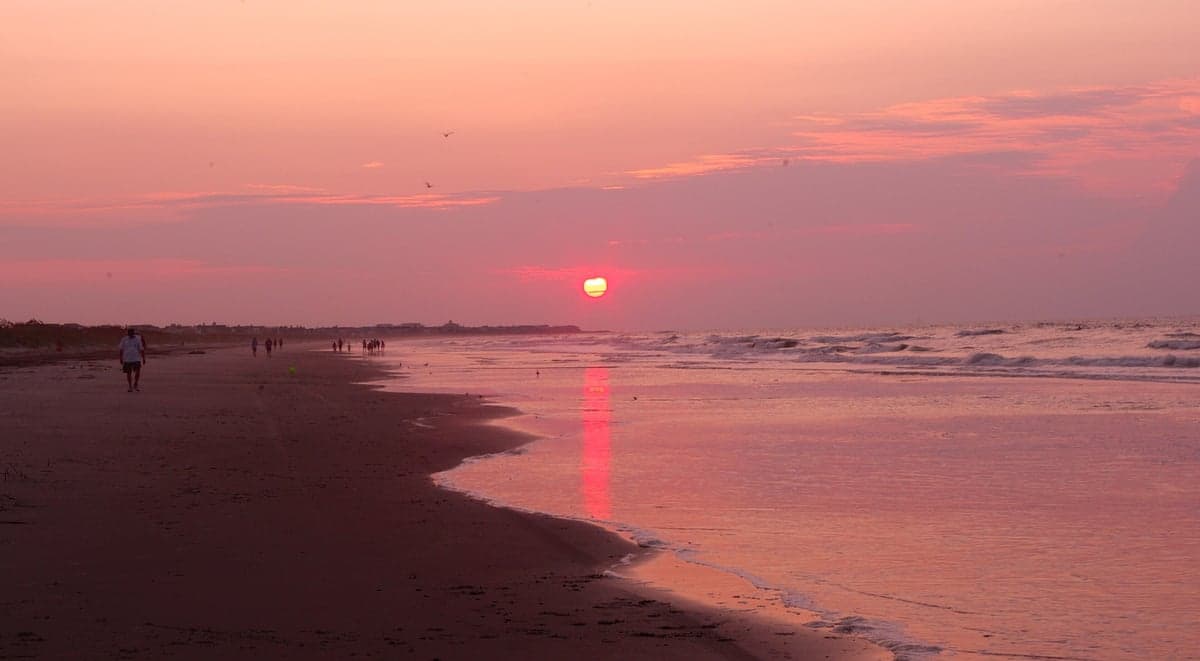
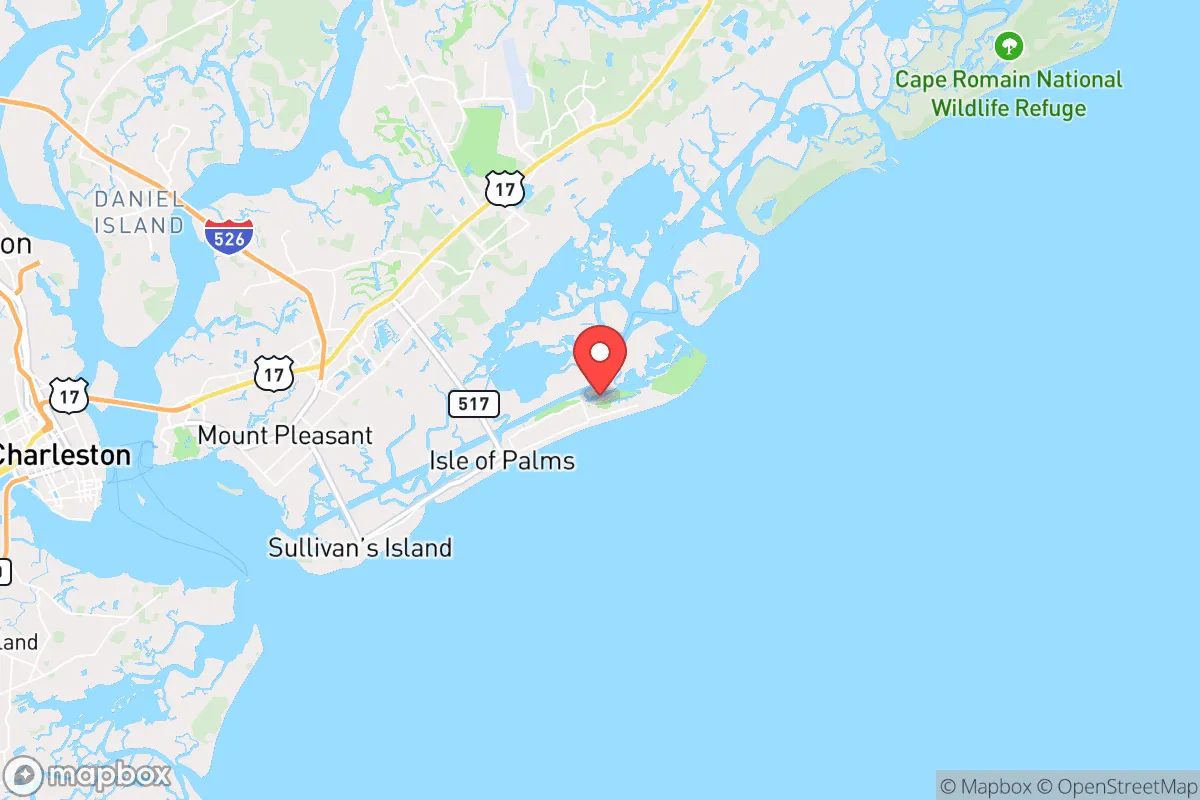
Photo: Wikipedia
Demographics of Isle of Palms, SC
Affluence Level in Isle of Palms, SC
A wealthy area with high-earning, well-educated households. Incomes, home values, and educational attainment meaningfully outpace national averages.
People of Isle of Palms, SC
Today, Isle of Palms is a predominantly white, affluent barrier-island city of 4,350 residents, with a 97.1% white population and a foreign-born share of just 0.8%. The city’s character is defined by its high educational attainment—69.7% of adults hold a college degree—and its role as a seasonal and permanent home for Charleston-area professionals, retirees, and second-home owners. The population is overwhelmingly native-born, with East/Southeast Asian residents making up the largest minority group at 2.1%, while Hispanic residents account for 0.4% and Black residents 0.0%.
How the city was settled and grew
Isle of Palms was originally part of a plantation tract on the sea island chain, but its modern settlement began in the late 19th century as a beach resort for Charlestonians escaping summer heat. The first wave of development came after 1898, when the Charleston and Seashore Railroad extended a line to the island, enabling day-trippers and seasonal renters. The original beachfront area, now known as Front Beach, became the nucleus of the community, with modest cottages and a pavilion. By the 1920s, the island was platted into lots, and the Ocean Point neighborhood—a cluster of early 20th-century homes near the eastern end—was built by middle-class families from Charleston. The city incorporated in 1938, but growth remained slow through the mid-20th century, limited by ferry access until the first bridge (the Isle of Palms Connector) opened in 1950. That bridge triggered a second wave: year-round residents, many of them white professionals from Charleston, built homes in the Palm Boulevard corridor and the 42nd Avenue area, establishing the island as a bedroom community rather than just a resort.
Modern era (post-1965)
After the 1965 Hart-Cellar Act, Isle of Palms saw virtually no immigration-driven diversification; its foreign-born population remains below 1%. Instead, domestic in-migration from other parts of the Southeast and the Northeast accelerated in the 1970s and 1980s, driven by the development of the Wild Dunes resort community on the island’s northern end. Wild Dunes, a gated golf-and-beach development, attracted affluent second-home buyers and retirees, many from outside South Carolina, and remains the island’s most exclusive enclave. The Ocean Club and Grand Pavilion condominium complexes within Wild Dunes concentrated this wave. Meanwhile, the older Ocean Point and Front Beach neighborhoods saw infill and renovation, drawing families who valued walkability to the beach. The city’s racial composition remained static: the 2020 Census recorded a white share of 97.1%, with Black residents at 0.0%—a figure that reflects both historical exclusion and the high cost of entry. The small East/Southeast Asian population (2.1%) is concentrated among professionals in the Wild Dunes area and the newer Palm Key subdivision near the island’s west end.
The future
Isle of Palms is likely to remain one of the most demographically homogeneous cities in the Charleston metro area. The population is aging—the median age is over 50—and new construction is limited by the island’s build-out and strict zoning. The city’s high property values and lack of rental housing will continue to filter for wealthy, mostly white buyers. The small East/Southeast Asian share may grow slightly as Charleston’s tech and medical sectors expand, but the foreign-born population is unlikely to rise above 2% given the lack of affordable housing and employment base on the island. No significant immigrant or minority enclave is emerging; instead, the city is homogenizing further as older cottages are replaced by larger, more expensive homes. The next decade will see a continued influx of affluent retirees and remote workers, while younger families may be priced out.
For someone moving in now, Isle of Palms offers a stable, highly educated, and overwhelmingly white community with strong beachside amenities and low crime. The trade-off is minimal ethnic or economic diversity, a high cost of entry, and a population that skews older and seasonal. It is a place where the demographic trajectory is set: affluent, insular, and largely unchanged from the patterns established in the 1980s.

* Values derived from national, state, county, city and local statistics and may differ in a specific area. Last updated: 2026-05-14T18:51:38.000Z
Narrative content on this page is AI-generated and may contain mistakes. Verify any details that matter before acting on them.
ReloMaps may earn a commission from affiliate links at no extra cost to you.

