
Photo: Wikipedia
Political ClimatePolitical Climate in Isle of Palms, SC
District shown is the primary district for this city’s centroid. Cities may span multiple districts.
Local Political AnalysisPolitical Analysis of Isle of Palms, SC
Isle of Palms has long been a conservative stronghold, with a Cook PVI of R+6 reflecting a solid Republican lean. But if you've lived here as long as I have, you've noticed the political winds shifting ever so slightly, especially compared to the rest of South Carolina which sits at R+8. We're still red, no doubt, but there's a growing tension between the old guard who value personal freedoms and a newer crowd pushing for more government involvement in how we live our lives.
How it compares
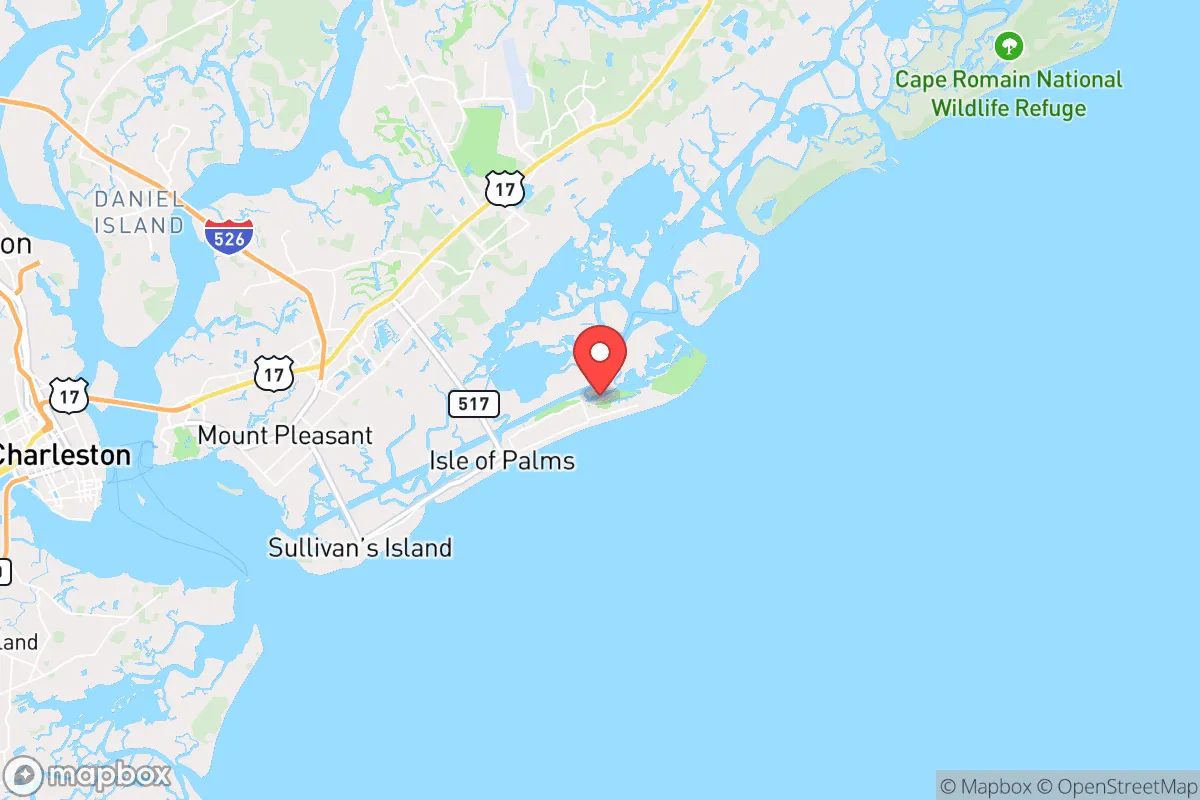
Compared to the state as a whole, Isle of Palms is actually a little less conservative than the average South Carolina town. The state's R+8 rating means most rural and suburban areas are deeply red, but here on the coast, we get a mix of retirees, second-home owners from up north, and young families who bring different perspectives. Just across the bridge, Charleston's city politics are a whole different animal – they've embraced progressive policies on everything from bike lanes to affordable housing mandates. That's not our style. We prefer less government meddling in our property rights and daily routines. Nearby Mount Pleasant leans conservative too, but it's more suburban and family-oriented, while we're a beach community where the pace of life is slower and the resistance to new regulations is stronger. The contrast with Charleston is stark: they've got a city council that often votes along party lines for more taxes and restrictions, while our local officials still prioritize keeping government small and out of the way.
What this means for residents
For residents, the political climate means we have to stay vigilant. Every election cycle, there's a push for more regulations – like limiting how many days you can rent out your beach house, imposing new fees on parking, or expanding environmental rules that restrict what you can do with your own property. It's a constant battle to keep government out of our

State Political ClimatePolitical Climate in South Carolina
State Political AnalysisPolitical Environment in the State
South Carolina has been a reliably red state for decades, with a Cook Partisan Voting Index of R+8, meaning it votes about eight points more Republican than the national average. The dominant coalition is a mix of traditional conservatives in the upstate and Lowcountry, evangelical Christians, and a growing number of transplants from the Northeast and Midwest who are drawn to lower taxes and a slower pace of life. Over the last 10–20 years, the state has shifted rightward in presidential races — from a 9-point margin for George W. Bush in 2004 to a 17-point margin for Donald Trump in 2020 — even as the suburbs around Charleston and Greenville have become more competitive. That said, the state is not monolithic: the urban cores of Columbia and Charleston are blue-leaning, and the growing Hispanic and African American populations in the Midlands and Lowcountry are slowly reshaping the electorate.
Urban vs. rural divide
The political map of South Carolina is a classic story of red rural and suburban counties surrounding blue urban islands. The Upstate — anchored by Greenville and Spartanburg — is the conservative heartland, with Greenville County itself voting about 60% Republican in recent presidential cycles. The Lowcountry, including Beaufort and Hilton Head, is also reliably red, driven by military retirees and second-home owners. The real blue pockets are Richland County (Columbia) and Charleston County, both of which have trended left as young professionals and out-of-state transplants move in. Charleston County went for Biden by 12 points in 2020, a dramatic flip from its narrow Republican lean in 2000. Meanwhile, rural counties like Allendale, Bamberg, and Marlboro remain deeply Democratic due to high African American populations, but their shrinking populations mean they carry less weight each cycle. The suburbs — places like Rock Hill and Summerville — are the true battlegrounds, where the GOP's margins have thinned as newcomers bring more moderate views.
Policy environment
South Carolina's policy landscape is broadly conservative, with a low tax burden and a regulatory climate friendly to business. The state has a flat income tax of 6.2% (phasing down to 6% by 2026) and no tax on Social Security benefits, which appeals to retirees. Property taxes are among the lowest in the country, thanks to a 2006 law that capped annual increases. On education, the state has expanded school choice through the Education Scholarship Trust Fund program, which gives state funds to families for private school tuition — a big win for parental rights. Healthcare policy is more mixed: the state did not expand Medicaid under the ACA, but it has a robust network of rural hospitals that struggle financially. Election laws are strict: voter ID is required, and the state has a 30-day residency requirement for registration. There is no early voting on Sundays, and absentee voting requires an excuse (though the law was temporarily loosened during COVID). The state legislature is firmly Republican, with a supermajority in both chambers, meaning conservative policy priorities — from abortion restrictions (a six-week heartbeat bill passed in 2023) to Second Amendment protections — tend to move quickly.
Trajectory & freedom
Over the past five years, South Carolina has moved decisively toward expanding personal freedoms in the conservative sense — especially on gun rights, parental rights, and tax relief. In 2024, the state passed constitutional carry, allowing law-abiding citizens to carry a concealed firearm without a permit. That same year, the legislature enacted a Parents' Bill of Rights, requiring schools to notify parents about curriculum changes and medical services offered to minors. On the medical freedom front, the state banned COVID-19 vaccine mandates for public employees and contractors in 2022. However, there are areas where freedom has contracted: the state's strict abortion ban (with no exceptions for rape or incest) has drawn legal challenges and may be seen by some as government overreach into personal medical decisions. Property rights remain strong, with no statewide rent control and limited zoning restrictions outside of coastal areas. The trajectory is toward more individual liberty in most domains, but the abortion issue creates a tension that could shift the political winds if moderate voters become alienated.
Civil unrest & political movements
South Carolina has not seen the kind of large-scale civil unrest that has rocked other states, but there have been notable flashpoints. The 2015 Charleston church shooting at Mother Emanuel AME Church sparked a statewide debate over the Confederate flag, which was eventually removed from the Statehouse grounds — a rare moment of bipartisan consensus. More recently, the Black Lives Matter protests in 2020 were relatively subdued compared to cities like Portland or Atlanta, but they did lead to calls for police reform in Columbia and Charleston. On the right, the state has a strong "constitutional sheriff" movement, with several sheriffs publicly refusing to enforce federal gun laws they deem unconstitutional. Immigration politics are less heated than in border states, but there is a vocal faction pushing for stricter enforcement; the state passed a law in 2023 requiring all employers to use E-Verify. There is no serious secession or nullification rhetoric at the state level, though some local GOP groups have floated "county sovereignty" resolutions. Election integrity remains a hot-button issue: after the 2020 election, the state legislature tightened absentee ballot rules and created a new election integrity unit within the State Law Enforcement Division.
Projection
Over the next 5–10 years, South Carolina will likely remain solidly red, but the margins will narrow in fast-growing suburban counties like York (Rock Hill) and Berkeley (Summerville). In-migration from blue states — especially New York, New Jersey, and California — is accelerating, and these newcomers tend to be more moderate or even left-leaning on cultural issues, even if they appreciate the low taxes. The Hispanic population is growing rapidly, particularly in the Upstate and along the coast, and while Hispanic voters are not monolithic, they lean slightly Democratic. The state's Republican Party will face internal pressure between its traditional business-friendly wing and a more populist, culturally conservative faction. If the national GOP shifts left on issues like marijuana or criminal justice reform, South Carolina may follow slowly. For a new resident, the bottom line is this: you'll find a state that respects your right to keep your earnings, raise your kids without heavy government interference, and carry a firearm — but you'll also encounter a political culture that is still wrestling with its past and its future. The freedom you gain in taxes and regulation comes with a trade-off in social policy that may feel either liberating or restrictive depending on your personal values. Either way, South Carolina is a place where your vote matters, and the direction of the state is still very much up for grabs in the suburbs.
* Values derived from national, state, county, city and local statistics and may differ in a specific area. Last updated: 2026-05-14T18:51:38.000Z
Narrative content on this page is AI-generated and may contain mistakes. Verify any details that matter before acting on them.
ReloMaps may earn a commission from affiliate links at no extra cost to you.

