
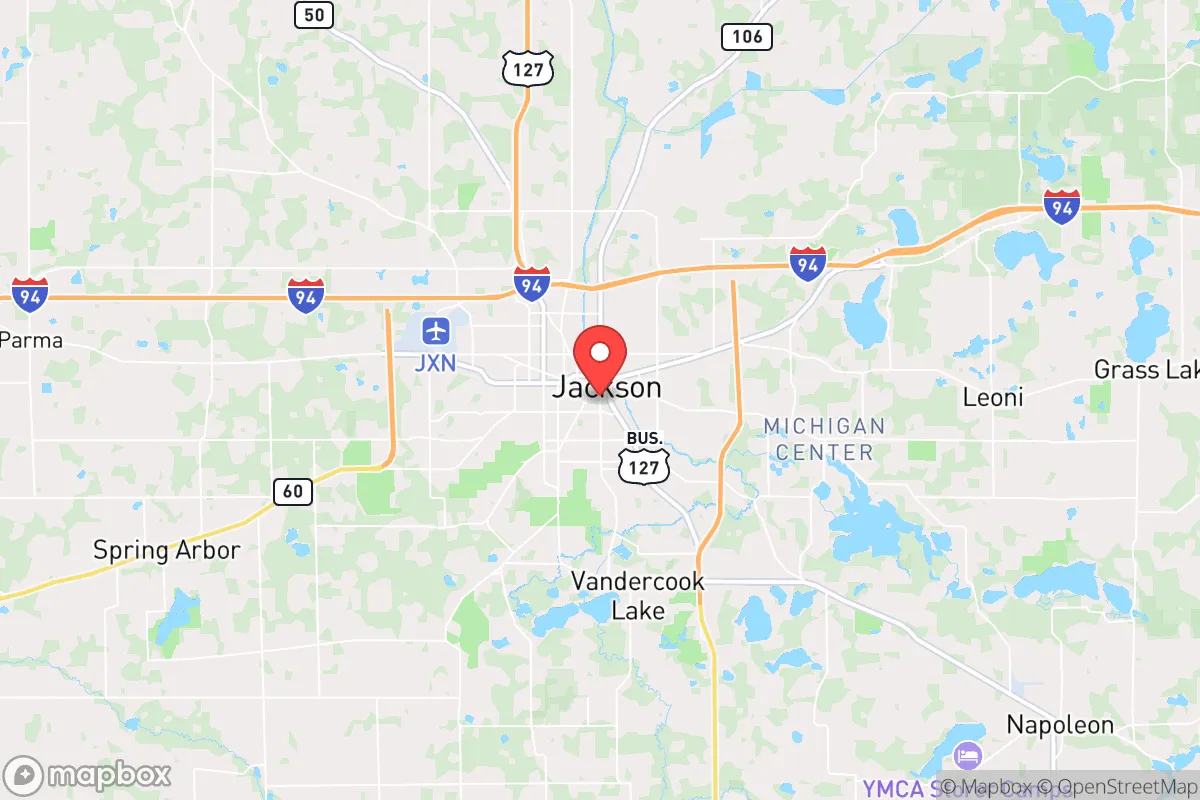
Photo: Wikipedia
Quality of Life in Jackson, MI
Above-average quality of iife. The area offers a reasonable cost of living, decent mobility, and a mix of neighborhood amenities.
What does Quality of Life tell us?
Quality of Life blends cost of living, nearby amenities, socioeconomic signals, and neighborhood character. City-level scores represent the whole municipality; individual neighborhoods can differ.
What does this tell us?
Quality of Life blends cost of living, nearby amenities, socioeconomic signals, and neighborhood character. City-level scores represent the whole municipality; individual neighborhoods can differ.
Cost of Living
41% below national average
The Real Cost of Living in Jackson, MI for 2026
| Tier | Individual | Family (4) |
|---|---|---|
| Survival | $14k | $26k |
| Comfortable | $23k | $33k |
| Luxury | $75k+ | $117k+ |
| Elite (Top 5%) | $88k+ | $137k+ |
130%
The Area Signal
A metric tracking the socioeconomic signals of the area.
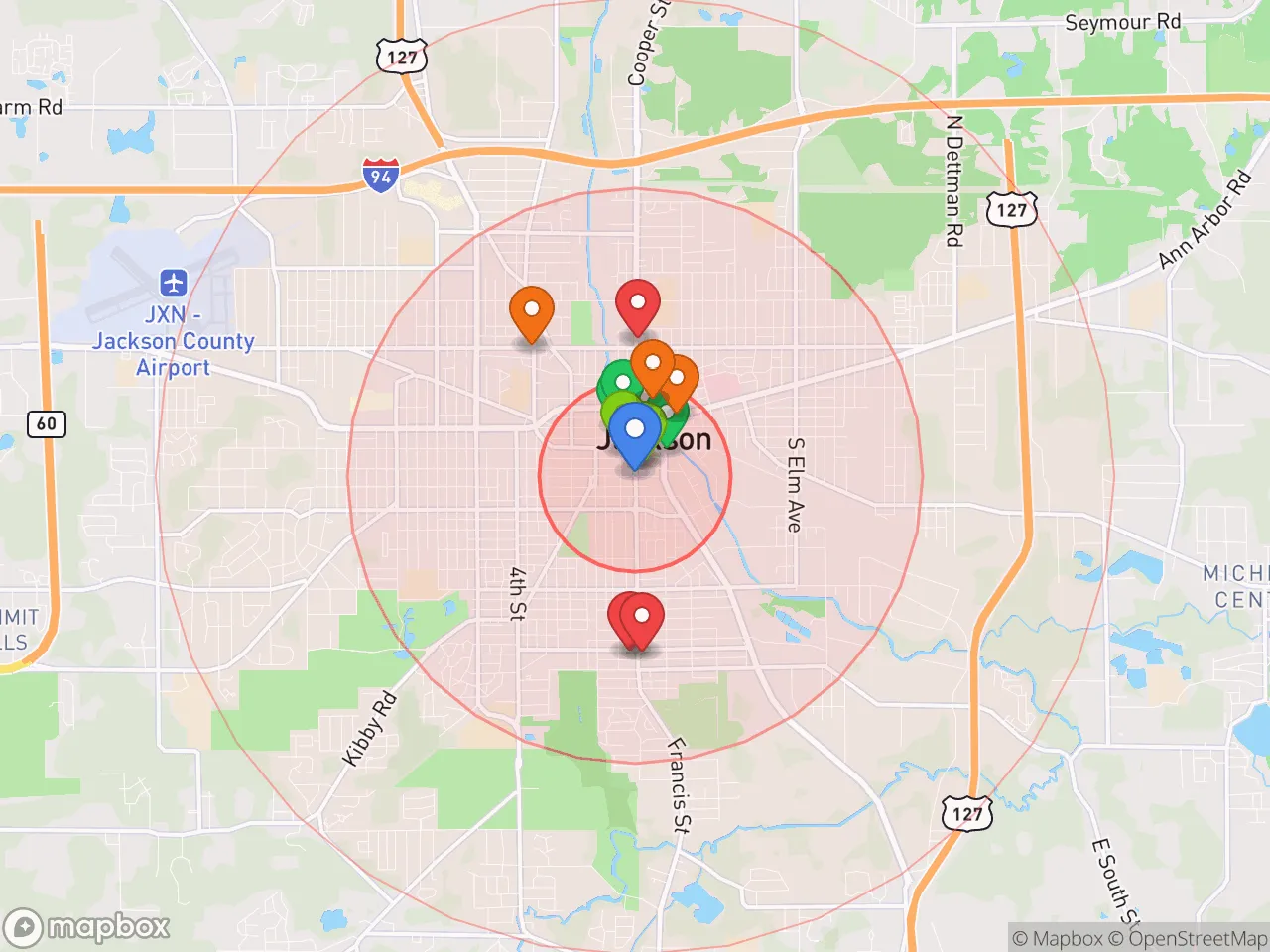
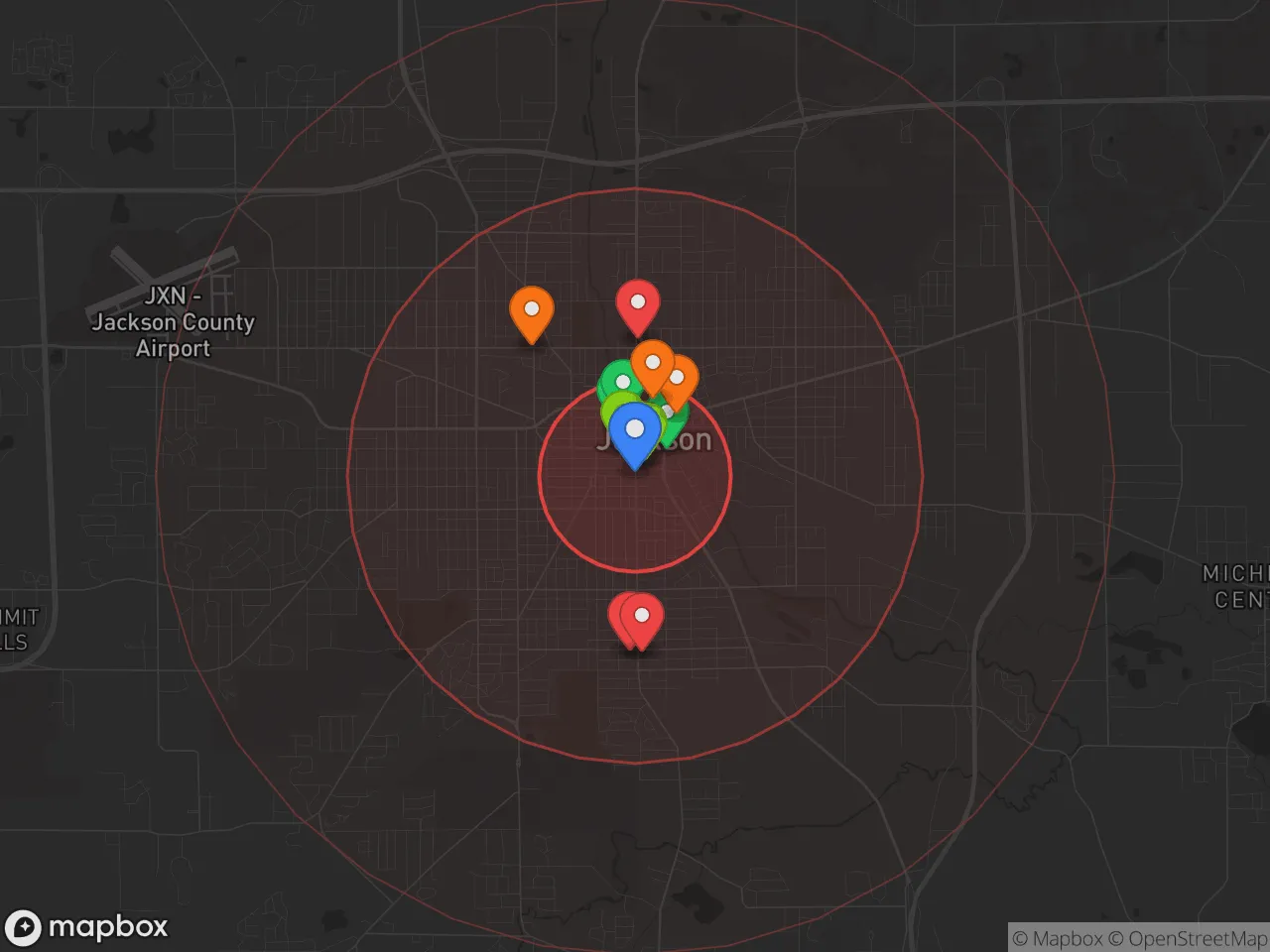
Hobbies
Explore the areaGroceries
6 within 10 miles
Gas
20 within 10 miles
Hospital
2 within 20 miles
Airport
DTW — Detroit Metropolitan Wayne County
Post Office
USPS — Jackson, MI
Critical Amenities
Quality-of-Life Analysis
Jackson, Michigan, offers a notably low cost of living that attracts a mix of working-class families, retirees, and young professionals seeking affordability over urban prestige. With a cost-of-living index of 59—far below the national average of 100—the city provides a financial cushion that is increasingly rare in the Midwest. The population skews older and more economically diverse than nearby Ann Arbor or Lansing, with a median age around 36 and a significant share of residents employed in manufacturing, healthcare, and logistics. While Jackson lacks the high-end retail and cultural cachet of wealthier Michigan cities, its practical affordability and slower pace appeal strongly to those prioritizing financial stability and space.
How housing costs and everyday expenses compare to nearby cities
Jackson’s housing market is among the most affordable in southern Michigan, with a median home value of $94,700 and a median rent of $874—roughly half the cost of comparable homes in Ann Arbor (median value ~$350,000) and significantly less than in Lansing (~$150,000). This price gap means a typical mortgage payment in Jackson is under $700 per month, even with current interest rates, while renters pay about 30% less than the national median. The average commute of 16.5 minutes is a standout advantage: it is shorter than both the national average (26 minutes) and the Michigan average (24 minutes), reducing transportation costs and freeing up time. However, property taxes in Jackson County are slightly above the state median (about 1.6% of assessed value), and utility costs are on par with the rest of the Lower Peninsula. For comparison, a household earning $50,000 annually in Jackson would need roughly $75,000 to maintain the same standard of living in Ann Arbor, based on COL index differences.
What daily life is like for families: schools, parks, and local amenities
Daily life in Jackson centers on practical, accessible amenities rather than high-end attractions. The Jackson Public Schools district serves about 5,000 students, with several elementary schools rated above average by the Michigan Department of Education, though high school graduation rates hover around 80%—below the state average of 83%. For recreation, the city maintains over 30 parks, including the 200-acre Ella Sharp Park with its golf course, museum, and walking trails. The Michigan Theatre downtown hosts live performances and film screenings, while the Cascades Falls Park offers a seasonal water-and-light show. Groceries and retail are concentrated along West Avenue and the Jackson Crossing mall, with a mix of national chains and local shops. Healthcare is anchored by Henry Ford Jackson Hospital, a 475-bed facility that is the city’s largest employer. The overall rhythm is quiet and car-dependent; public transit via Jackson Area Transportation Authority is limited to weekday routes, so most errands require a vehicle. Compared to Ann Arbor’s vibrant restaurant scene or Lansing’s state-government bustle, Jackson’s daily life is more subdued but also less stressful, with minimal traffic and ample parking.
Jackson is best suited for people who value financial breathing room over urban excitement. Homebuyers priced out of Ann Arbor or Detroit will find a median home price under $100,000 and a commute under 20 minutes—a combination almost impossible in larger Michigan cities. Retirees on fixed incomes benefit from the low rent and property costs, while manufacturing and healthcare workers can live close to major employers like CMS Energy and the Jackson County Medical Care Facility. The city is less ideal for young professionals seeking nightlife or top-tier public schools, but for those who prioritize a low-stress, affordable lifestyle with decent access to outdoor recreation and basic services, Jackson delivers a solid quality of life at a fraction of the cost of its neighbors.

Crime in Jackson, MI
Higher crime rates than 73% of comparable U.S. locations.
Violent CrimeViolent Crime Analysis
Property CrimeProperty Crime Analysis
Crime Analysis
Jackson, Michigan, reports a violent crime rate of 875.9 incidents per 100,000 residents and a property crime rate of 3,166.4 per 100,000, placing it among the higher-risk communities in the state. These figures, drawn from the most recent FBI Uniform Crime Reporting data, indicate that both violent and property offenses occur at rates significantly above national medians. The city’s safety profile is shaped by its status as a small urban center within a larger metropolitan region, where broader socioeconomic challenges and justice system policies influence public safety outcomes.
Crime in context
Jackson’s violent crime rate is roughly 2.4 times the national average of about 366 per 100,000, while its property crime rate is approximately 1.8 times the national average of 1,954 per 100,000. Compared to Michigan’s statewide violent crime rate of roughly 460 per 100,000, Jackson’s figure is nearly double. The city’s crime challenges are compounded by its proximity to larger metro areas like Detroit and Lansing, where progressive prosecutorial policies have been linked to reduced incarceration rates and increased recidivism. In Jackson County, the local district attorney’s office has adopted diversion programs and reduced sentencing guidelines for nonviolent offenders, a trend that critics argue prioritizes offender rehabilitation over public safety. This approach, while well-intentioned, can result in more criminals remaining on the street, directly impacting victim justice and community security.
What residents experience
For daily life in Jackson, property crime—particularly theft, burglary, and motor vehicle theft—is the most common concern. Residents report frequent package thefts, break-ins in older neighborhoods, and vandalism in commercial corridors like West Michigan Avenue. Violent crime, while less common, includes aggravated assault and robbery, often concentrated in areas with higher poverty rates and limited police presence. The city’s police department has implemented community policing initiatives, but staffing shortages and budget constraints limit proactive enforcement. The progressive justice philosophy in the region, which emphasizes restorative justice and reduced jail time, means that repeat offenders are more likely to cycle through the system quickly, contributing to a perception of lawlessness in some blocks.
Neighborhood-level variation is notable. Safer areas include the historic districts near the Ella Sharp Park and the newer subdivisions on the city’s west side, where crime rates are closer to the national average. Conversely, neighborhoods east of the railroad tracks and around the downtown core experience the highest concentrations of both violent and property crime. Prospective residents should research specific census tracts and consult local crime mapping tools, as block-by-block differences can be stark. Overall, Jackson requires heightened vigilance compared to smaller Michigan towns, and the influence of progressive justice policies is a factor that safety-conscious movers should weigh carefully.
* Values derived from national, state, county, city and local statistics and may differ in a specific area. Last updated: 2026-04-30T23:46:54.000Z
Narrative content on this page is AI-generated and may contain mistakes. Verify any details that matter before acting on them.
ReloMaps may earn a commission from affiliate links at no extra cost to you.

