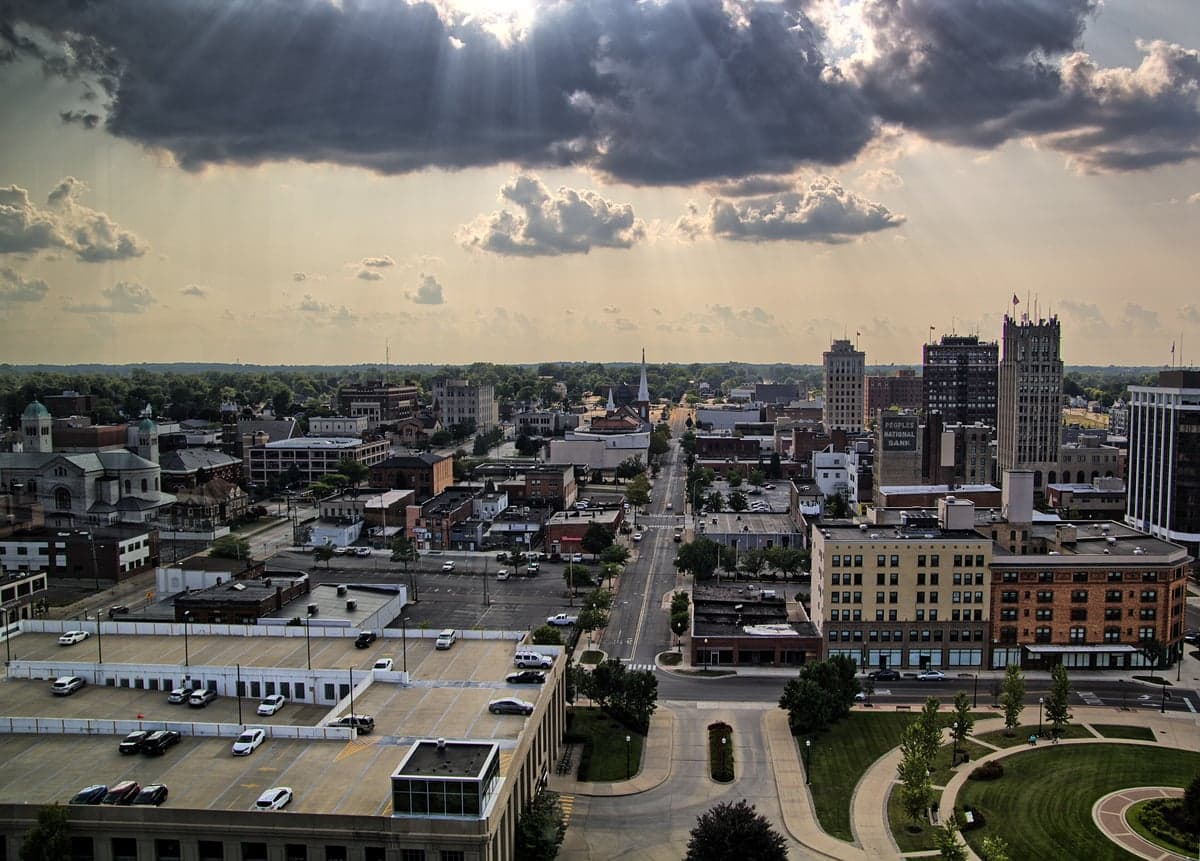
Photo: Wikipedia
Political ClimatePolitical Climate in Jackson, MI
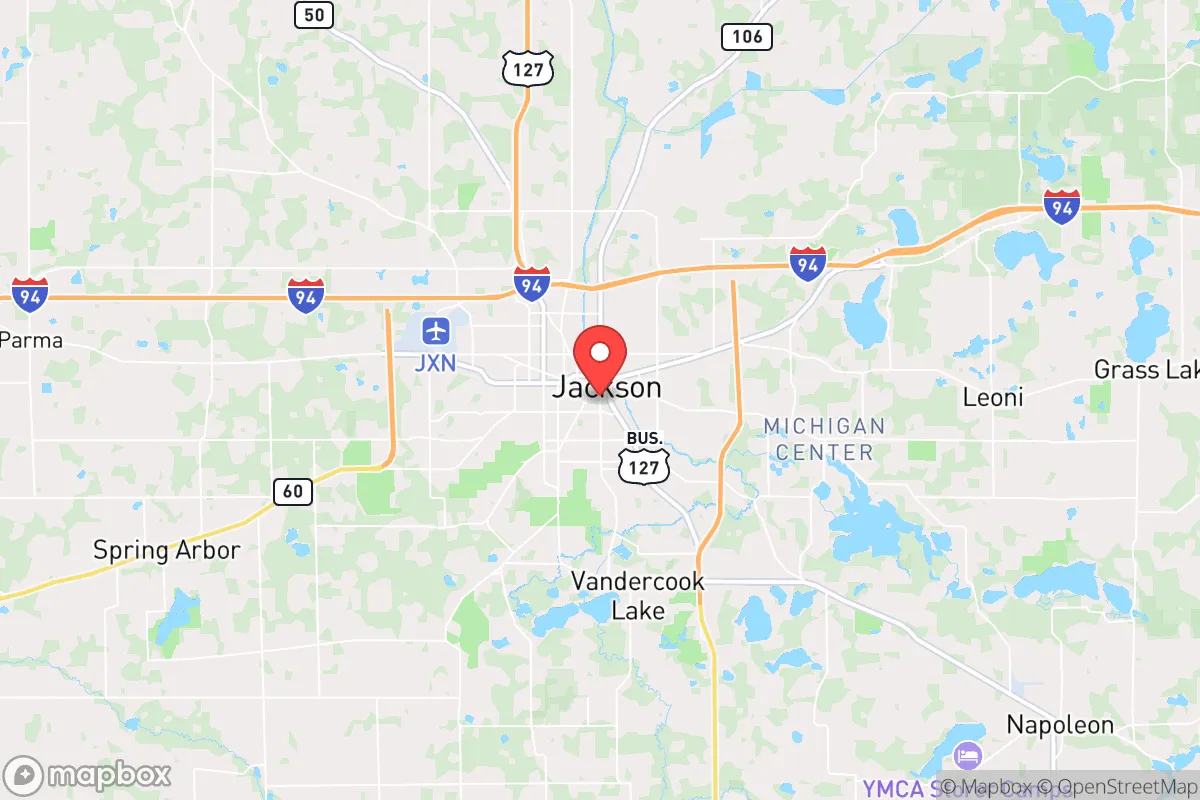
District shown is the primary district for this city’s centroid. Cities may span multiple districts.
Local Political AnalysisPolitical Analysis of Jackson, MI
Jackson, Michigan, has long been a solidly conservative area, and the numbers back that up with a Cook PVI of R+13. For decades, this was a place where folks minded their own business and expected the same from their government. You could feel it in the air—a quiet, steady trust that local leaders would keep taxes low and stay out of your personal life. But lately, there's been a noticeable shift, and not for the better. The old-school, live-and-let-live vibe is getting squeezed by a creeping progressive agenda that's starting to show up in city council meetings and county policies. It's not a full takeover yet, but the trajectory is concerning for anyone who values personal freedoms and limited government.
How it compares
Drive just 30 minutes north to Lansing, and you're in a whole different world—a deep-blue stronghold where state-level overreach feels like it's breathing down your neck. Jackson used to be the quiet counterbalance to that, a place where conservative values held firm. But now, you see the same patterns emerging: talk of zoning restrictions that feel like a backdoor way to control property rights, and school board discussions that lean toward curriculum changes nobody asked for. Compare that to smaller towns like Brooklyn or Hanover, which are still holding the line with a more traditional, hands-off approach. Jackson is becoming a battleground, and the worry is that the progressive influence from the state capital is seeping in faster than folks here can push back.
What this means for residents
For the average person living in Jackson, this political drift means you can't take your freedoms for granted anymore. Property taxes are creeping up, and there's a growing push for "equity" initiatives that sound good on paper but often translate to more bureaucracy and less personal choice. If you're a small business owner or a homeowner who just wants to be left alone, you're starting to feel the squeeze. The real concern is that these changes aren't coming from the community—they're being imported from outside, driven by grant money and activist groups that don't answer to local voters. Longtime residents are watching their town get reshaped by people who don't share their values, and it's a slow erosion of the independence that made Jackson a good place to raise a family.
Culturally, Jackson still has its roots in hunting, fishing, and church potlucks, but you can see the cracks. The old downtown hardware store that knew your name is gone, replaced by a coffee shop that hosts "community dialogue" sessions. There's a push for more bike lanes and "green" policies that sound nice but feel like a distraction from the real issues—like keeping the streets safe and the schools focused on basics. The policy distinction that matters most here is the Second Amendment: Jackson County has historically been a stronghold for gun rights, but recent local ordinances have started testing those boundaries. It's a red flag, plain and simple. If you're looking for a place where government stays small and personal liberty is respected, Jackson is still better than most, but you'd better keep an eye on the city council meetings. The fight for the soul of this town is just getting started.

State Political ClimatePolitical Climate in Michigan
State Political AnalysisPolitical Environment in the State
Michigan has shifted from a reliably purple battleground to a state where Democrats now hold unified control of the governorship, legislature, and Supreme Court, a dramatic reversal from the Republican trifecta that ended in 2018. The state’s overall partisan lean is now a narrow Democratic tilt—Joe Biden won it by 2.8 points in 2020, and Gretchen Whitmer won re-election by 10.6 points in 2022—but this masks a deep and growing urban-rural chasm. Over the last 20 years, the state has moved leftward on cultural and economic issues, driven by the consolidation of the Detroit metro area and the collapse of GOP strength in the suburbs, while rural and exurban counties have become more Republican.
Urban vs. rural divide
The political map of Michigan is a tale of two states. The Democratic stronghold is the southeast corridor anchored by Detroit, Ann Arbor, and the inner-ring suburbs of Oakland County. Wayne County (Detroit) alone delivered 68% of Biden’s margin in 2020, while Washtenaw County (Ann Arbor) gave him a 35-point win. The real story, however, is the suburban shift: Oakland County, once a Republican bastion, has voted Democratic in every presidential election since 2008 and now leans left by double digits. Meanwhile, the western side of the state—places like Grand Rapids and Holland—has become more competitive as the once-solid GOP base in Kent County has eroded, with Democrats now winning Grand Rapids city proper while the surrounding rural areas remain deeply red. The rural thumb and Upper Peninsula, historically Democratic-leaning due to union influence, have flipped hard to the GOP, with counties like Oscoda and Alpena voting +30 to +40 points Republican in 2024. The divide isn’t just geographic—it’s cultural. The urban cores are increasingly secular and progressive, while the rural areas are culturally conservative and distrustful of state government.
Policy environment
Michigan’s policy environment has shifted sharply left since Democrats took full control in 2023. The state now has a progressive income tax structure—a flat 4.25% rate, but with a new surcharge on high earners passed in 2024—and a corporate tax rate of 6%. Property taxes are capped by Proposal A (1994), but local millages have risen steadily. The regulatory posture is increasingly burdensome: the Whitmer administration has pushed aggressive renewable energy mandates requiring 100% carbon-free electricity by 2035, and new environmental regulations on agriculture and manufacturing. Education policy is a flashpoint: the state repealed its right-to-work law in 2023, re-empowering unions, and expanded collective bargaining for teachers. School choice remains robust—charter schools and inter-district open enrollment are still legal—but the state has moved to restrict for-profit charters. On healthcare, Michigan expanded Medicaid under the Affordable Care Act and has a state-run insurance exchange. Election laws have been loosened: Proposal 2 (2022) enshrined nine days of early voting, no-excuse absentee ballots, and ballot drop boxes in the state constitution. Gun laws have tightened significantly: a 2023 package requires universal background checks, safe storage requirements, and red flag orders, making Michigan one of the stricter states on firearms in the Midwest.
Trajectory & freedom
Michigan is becoming less free by any objective measure, especially for conservatives. The 2023 repeal of right-to-work was a major blow to economic freedom, forcing workers in unionized workplaces to pay dues or fees. The new gun laws—particularly the red flag law—allow courts to temporarily seize firearms from individuals deemed a threat without a criminal conviction, a policy many see as a violation of due process. Parental rights have been eroded: the state passed a comprehensive LGBTQ+ nondiscrimination law in 2023 that includes sexual orientation and gender identity, and the Department of Education has issued guidance allowing transgender students to use preferred names and pronouns without parental consent. Medical autonomy has been expanded in one direction—abortion rights were enshrined in the state constitution via Proposal 3 (2022), removing nearly all restrictions—but restricted in others: vaccine mandates for healthcare workers remain in place, and the state has not passed any religious or medical exemption expansion. Property rights are under pressure from renewable energy siting laws that allow the state to override local zoning for wind and solar projects. The overall trajectory is toward centralized control from Lansing, with less local discretion and fewer individual opt-outs.
Civil unrest & political movements
Michigan has been a national flashpoint for political activism. The 2020 lockdown protests at the state capitol, where armed demonstrators opposed Governor Whitmer’s COVID-19 restrictions, drew global attention and led to the foiled “Wolverine Watchmen” kidnapping plot. Since then, grassroots conservative movements have remained active, particularly around election integrity—the “Stop the Steal” rallies in Detroit and Lansing were large and persistent. On the left, the “Michigan Democratic Party” has been energized by the post-2020 wave, with groups like “Progress Michigan” and “Michigan United” pushing for criminal justice reform and environmental justice. Immigration politics are relatively quiet compared to border states, but the city of Detroit has declared itself a “sanctuary city,” and the state has limited cooperation with ICE. Election integrity remains a live issue: the 2020 results in Detroit were challenged by Republicans, and the state’s new voting laws have not alleviated those concerns. Visible flashpoints include the ongoing debate over the Line 5 pipeline in the Straits of Mackinac, which pits environmental activists against energy workers, and the growing tension between urban and rural school boards over curriculum and library books.
Projection
Over the next 5-10 years, Michigan is likely to continue its leftward drift, but with significant caveats. Demographic trends favor Democrats: the Detroit suburbs are becoming more diverse and educated, and the state is seeing modest in-migration from blue states like Illinois and California, particularly to Ann Arbor and Grand Rapids. However, the rural exodus to the GOP is accelerating, and the state’s population is aging and shrinking overall. The key swing will be the suburbs of Macomb County—a historically blue-collar, culturally conservative area that voted for Trump twice but has been trending toward Democrats in state races. If Macomb flips back to the GOP, the state could become competitive again. But the structural advantages for Democrats—control of the redistricting process, a friendly Supreme Court, and a well-funded party machine—make a return to Republican trifecta control unlikely before 2030. A new resident moving in now should expect higher taxes, more regulation, and a cultural environment that is increasingly hostile to traditional values, especially on family and religious liberty issues.
For a conservative individual or family considering Michigan, the bottom line is this: the state offers beautiful natural resources, a strong manufacturing economy, and relatively affordable housing, but the political climate is moving decisively against your values. You will find like-minded communities in rural areas and some exurbs, but you will be fighting an uphill battle against a state government that is actively expanding its reach into your life. If you value low taxes, gun rights, school choice, and local control, Michigan is no longer a safe bet—you’d be better off looking at Indiana, Ohio, or the Upper Peninsula’s neighboring states. If you’re willing to engage in the fight, places like Grand Rapids or Traverse City offer pockets of conservative strength, but be prepared for a long-term cultural war.
* Values derived from national, state, county, city and local statistics and may differ in a specific area. Last updated: 2026-04-30T23:46:54.000Z
Narrative content on this page is AI-generated and may contain mistakes. Verify any details that matter before acting on them.
ReloMaps may earn a commission from affiliate links at no extra cost to you.

