Photo: Wikipedia
Strategic Assessment of Jackson, MI
Meaningful friction. Expect exposure to either population pressure, blast zones, or natural disaster risk. Consider buying a retreat property.
What does the Strategic Assessment tell us?
Our Strategic Assessment grades tactical survivability of an area. Major population centers, military targets, fallout zones, natural disasters, and border exposure all drive risk — lower exposure means a more defensible position in a crisis.
This is heavily inspired by Joel Skousen's Strategic Relocation book. Highly recommended you checkout the book ($)What does this tell us?
Our Strategic Assessment grades tactical survivability of an area. Major population centers, military targets, fallout zones, natural disasters, and border exposure all drive risk — lower exposure means a more defensible position in a crisis.
This is heavily inspired by Joel Skousen's Strategic Relocation book. Highly recommended you checkout the book ($)Strategic Pillars

Key Distances
Regional Safe Places
Below is our recommended "safe zones" in Michigan and the surrounding area based on our strategic heuristics. For most people, it's unrealistic to live in a “safe zone” full-time due to work, family or other personal reasons. They tend to be more rural. However, many of these areas are perfect for second homes and retreat properties that double as a vacation home or even a short-term rental.


Important Note: For informational purposes only. This does not mean nothing bad ever happens in the green zones. Please use common sense. This is based on public data and modeled with AI. We tried to take a conservative approach but mistakes happen. We update this regularly as new information becomes available.
Solar Generator Recommendations
Backup power matters more here than in safer locations. We've picked three solar generators across budgets and capacity tiers — start with the budget unit if you only need a few essentials, or step up if you want to run a fridge and HVAC for days at a time.

Jackery Portable Power Station Explorer 300
Budget OptionPower on the Go: Weighing only 11 lbs, it's convenient to set up and store with book-sized foldable solar panels

BLUETTI Portable Power Station AC180
Designed for both indoor and outdoor scenarios, AC180 is highly capable as it has a robost capacity and continuous output power.

EF ECOFLOW DELTA Pro Ultra Power Station
Upgraded PickEcoFlow DELTA Pro Ultra is a whole-home energy system designed to grow with your family. Integrated with the Smart Home Panel 2, it scales to meet your evolving energy needs — keeping your home powered, intelligent, and secure through every stage of life.
We earn a commission, at no additional cost to you.
Strategic Assessment Analysis
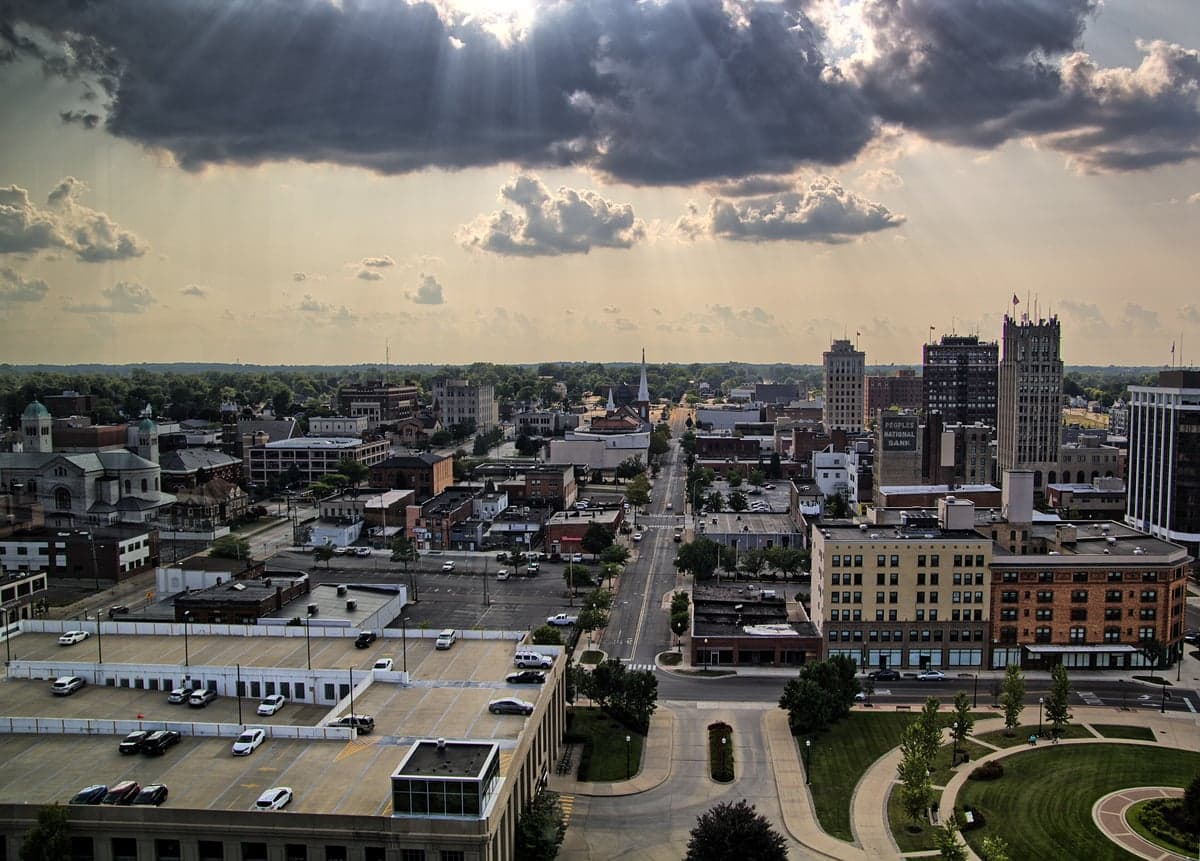
Jackson, Michigan, sits in a precarious but potentially strategic pocket of the Midwest—close enough to Detroit, Ann Arbor, and Lansing to feel the shockwaves of urban collapse, yet far enough to offer a fighting chance at self-sufficiency. Its resilience hinges on a paradox: the same rail and highway infrastructure that makes it a distribution hub also makes it a target during civil unrest or supply-chain disruptions. For a relocator thinking in terms of bug-out routes, resource stockpiling, and community cohesion, Jackson presents a mixed bag that demands careful, boots-on-the-ground evaluation before committing.
Geographic position and natural advantages for long-term survival
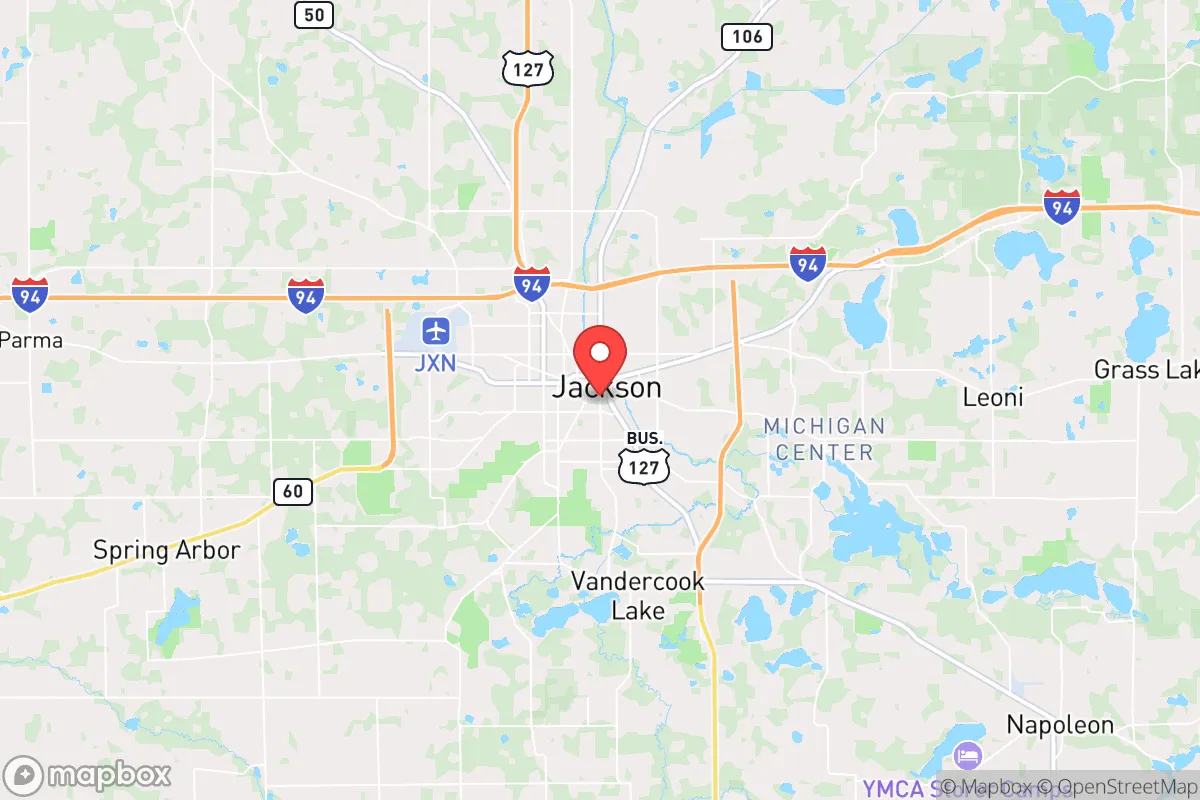
Jackson County sits at the crossroads of I-94 and US-127, roughly halfway between Detroit and Lake Michigan. That central location is a double-edged sword. On the plus side, it gives you multiple evacuation vectors: north toward the sparsely populated Huron National Forest, west toward the agricultural breadbasket of the Thumb region, or south into Indiana’s less-dense farm country. The Grand River runs through the city proper, and the county is dotted with smaller lakes and creeks—Portage Lake, Clark Lake, and the Waterloo State Recreation Area to the southeast—providing reliable surface water sources for filtration and irrigation. The terrain is mostly flat to gently rolling, with mixed hardwood forests that offer decent cover and firewood potential. Soil quality in the surrounding farmlands is good for small-scale gardening, though the growing season is short (roughly 140 frost-free days). The area’s natural advantages are real but modest: you’re not in the Rockies or the Appalachians, but you’re not in a floodplain or a desert either. Defensible terrain is limited—no mountains, no deep valleys—so your security will depend more on community networks and property-level hardening than on natural barriers.
Risks, exposures, and proximity to fallout-relevant landmarks
Jackson’s biggest vulnerability is its proximity to high-value, high-risk infrastructure. The city lies just 35 miles south of Lansing, the state capital and a likely flashpoint during any major civil unrest or federal power struggle. Detroit is 75 miles east, and Ann Arbor—home to the University of Michigan and a major research complex—is only 40 miles northeast. In a scenario involving mass casualty events, cyberattacks on the grid, or coordinated civil unrest, these urban centers would become chokepoints for refugees, looters, and government forces. Jackson’s rail yard and I-94 corridor make it a natural funnel for people fleeing those cities. The county also hosts the Consumers Energy coal plant and a major natural gas compressor station near the city limits—both potential targets for sabotage or collateral damage during a grid-down event. There are no nuclear power plants within immediate fallout range (the nearest is Fermi 2, 80 miles east near Monroe), but the Palisades nuclear plant in Covert, Michigan, is about 100 miles west—close enough to worry about prevailing westerly winds carrying fallout in a major accident. The Jackson County Airport is small and unlikely to be a military target, but it could become a staging area for FEMA or National Guard operations, which might attract unwanted attention. In short, Jackson is not a fallout-free zone, but its risks are more from human movement and infrastructure dependency than from direct blast or radiation.
Practical resilience for a relocator: food, water, energy, and defensibility
For a prepper-minded individual or family, Jackson’s practical resilience is a study in contrasts. Food security is the strongest card: the county is surrounded by working farms—corn, soybeans, dairy, and some small-scale orchards—and the Jackson Farmers Market operates year-round. You can realistically source bulk grains, eggs, and meat from local producers within a 20-minute drive of the city center. Water is less straightforward. While the Grand River and numerous lakes are present, municipal water comes from groundwater wells that are vulnerable to power outages and contamination from upstream industrial sites (there are several old manufacturing brownfields along the river). A well on your own property with a hand pump or solar-powered backup is almost mandatory for long-term independence. Energy reliability is mediocre: Jackson is served by Consumers Energy, which has a history of outages during ice storms and heat waves. Solar potential is moderate (about 4.2 peak sun hours per day), and natural gas is widely available in the city, but rural properties may rely on propane or wood. Defensibility is the weakest link. The city itself is a typical Midwestern grid layout with limited choke points—easy to enter, hard to secure. The surrounding countryside offers better options: rural properties with long driveways, tree lines, and natural water features are common and affordable (median home prices in the county are around $180,000 as of 2025). But you’ll need to invest in perimeter fencing, reinforced doors, and a good line of sight to the road. The local sheriff’s office is understaffed (about 1.2 deputies per 1,000 residents), so response times in a crisis could be measured in hours, not minutes. Community-wise, Jackson has a mix of long-time residents and newer arrivals from Detroit and Chicago, so trust networks take time to build. Churches and local gun clubs are the most reliable entry points for like-minded individuals.
Overall, Jackson offers a workable but not ideal strategic position for someone serious about preparedness. Its location near major urban centers is a liability during the initial shock of a crisis, but its agricultural base, water access, and low property costs give it a solid foundation for medium-term survival. The key is to buy outside the city limits, secure your own water and power, and build relationships with local farmers and veterans before trouble arrives. If you’re looking for a remote mountain redoubt, keep driving west. But if you need a place that’s close enough to maintain a job or family ties while still offering a realistic path to self-reliance, Jackson deserves a hard look—just don’t expect it to be a fortress without putting in the work.

* Values derived from national, state, county, city and local statistics and may differ in a specific area. Last updated: 2026-04-30T23:46:54.000Z
Narrative content on this page is AI-generated and may contain mistakes. Verify any details that matter before acting on them.
ReloMaps may earn a commission from affiliate links at no extra cost to you.

