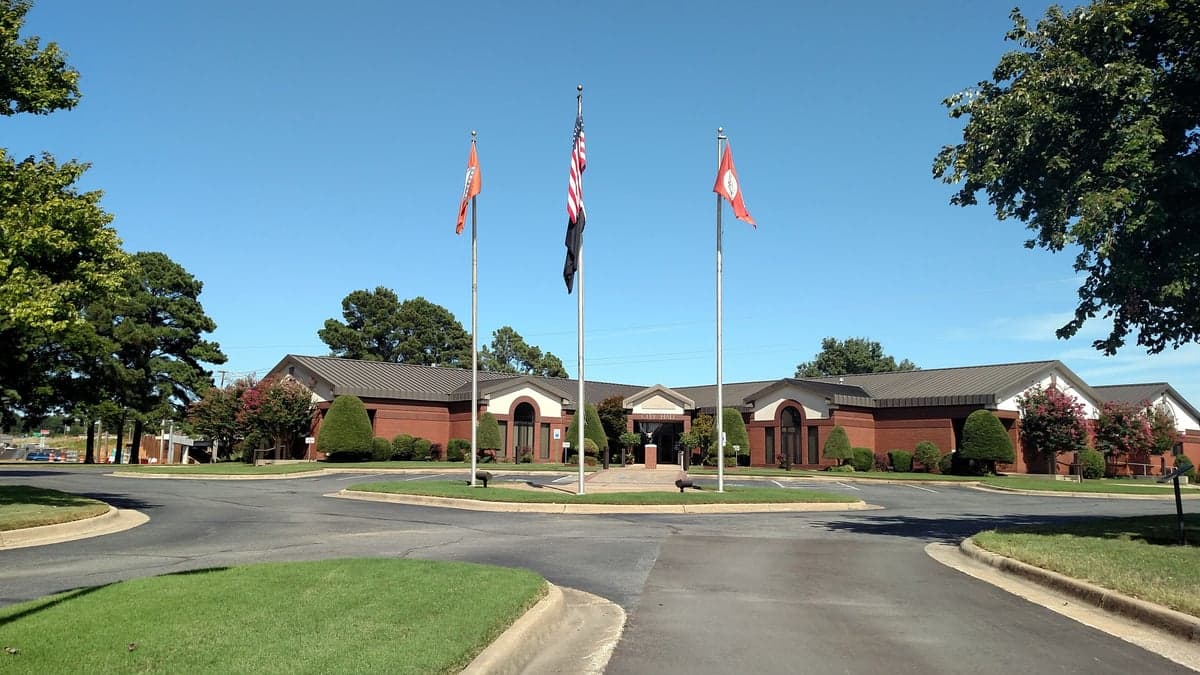
Photo: Wikipedia
Quality of Life in Jacksonville, AR
Above-average quality of iife. The area offers a reasonable cost of living, decent mobility, and a mix of neighborhood amenities.
What does Quality of Life tell us?
Quality of Life blends cost of living, nearby amenities, socioeconomic signals, and neighborhood character. City-level scores represent the whole municipality; individual neighborhoods can differ.
What does this tell us?
Quality of Life blends cost of living, nearby amenities, socioeconomic signals, and neighborhood character. City-level scores represent the whole municipality; individual neighborhoods can differ.
Cost of Living
31% below national average
The Real Cost of Living in Jacksonville, AR for 2026
| Tier | Individual | Family (4) |
|---|---|---|
| Survival | $15k | $27k |
| Comfortable | $30k | $44k |
| Luxury | $85k+ | $131k+ |
| Elite (Top 5%) | $107k+ | $166k+ |
106%
The Area Signal
A metric tracking the socioeconomic signals of the area.
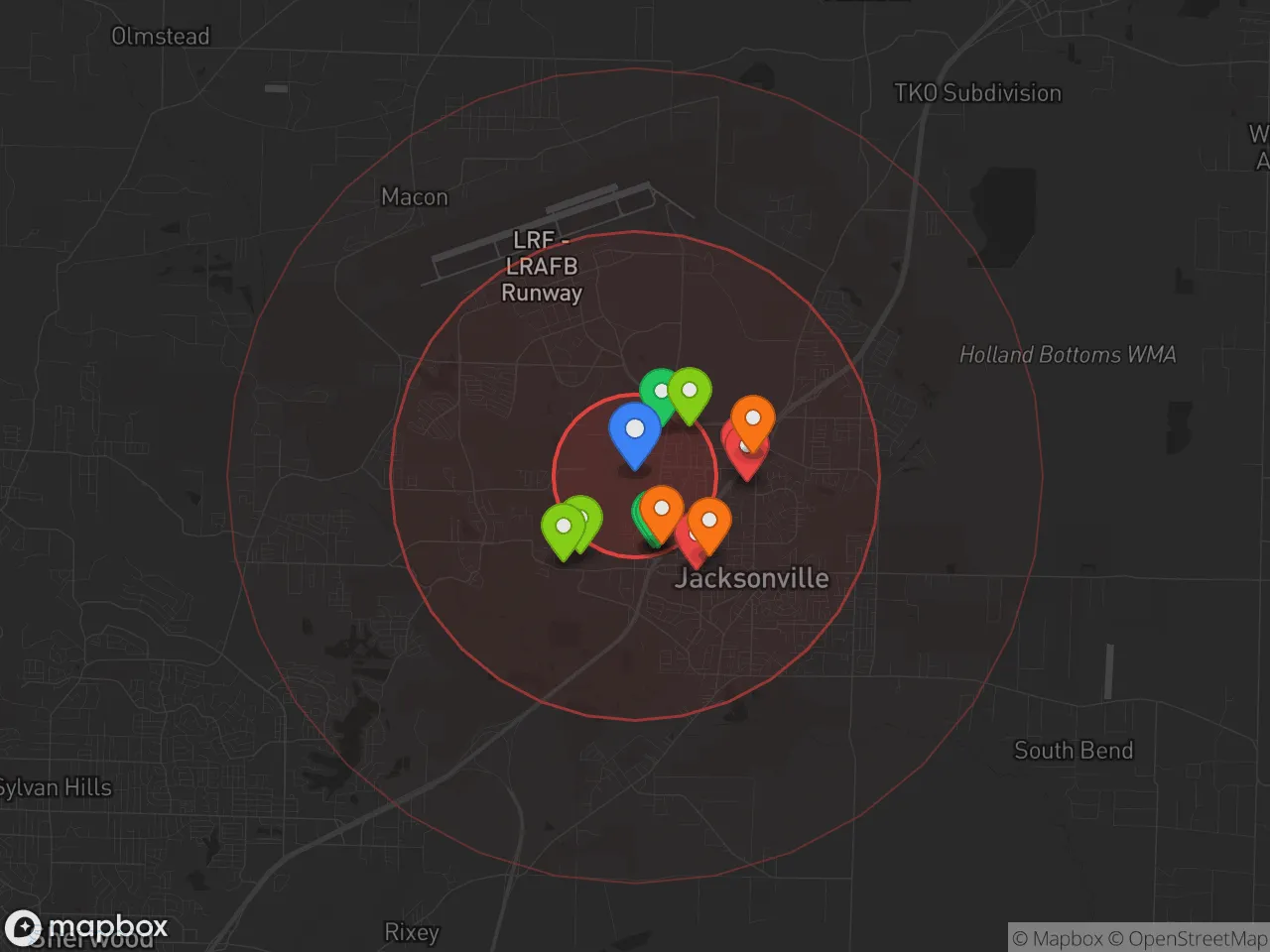
Hobbies
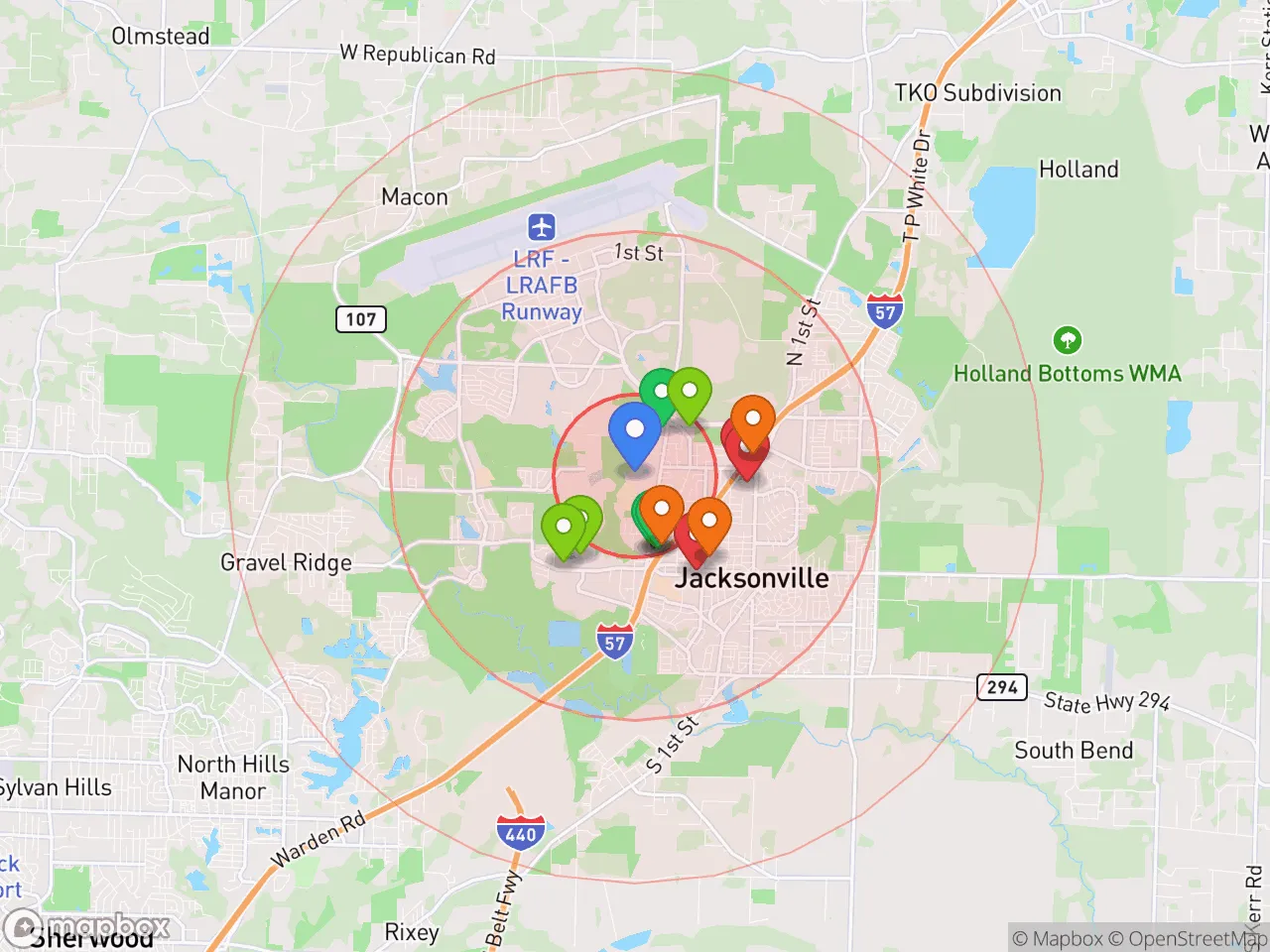
Explore the areaGroceries
6 within 10 miles
Gas
20 within 10 miles
Hospital
20 within 20 miles
Airport
DFW — Dallas/Fort Worth International
Post Office
USPS — Jacksonville, AR
Critical Amenities
Quality-of-Life Analysis
Jacksonville, Arkansas, offers a notably affordable quality of life that attracts a mix of military families, young professionals, and long-term residents seeking a lower cost of living without sacrificing proximity to a major metro area. With a cost of living index of 69 (31% below the U.S. average), the city provides a financial cushion that is increasingly rare in the post-pandemic housing market. The population skews younger and more family-oriented than the state average, largely due to the presence of Little Rock Air Force Base, which anchors the local economy and community identity.
How housing costs and affordability compare to Little Rock and central Arkansas
Jacksonville’s housing market is the primary driver of its affordability advantage. The median home value sits at $155,300, which is roughly $70,000 less than the median in nearby Little Rock and nearly $100,000 below the national median. For renters, the median monthly rent of $913 is well under the $1,200+ averages seen in the western parts of central Arkansas, such as Conway or Benton. This price gap means a typical household earning the area’s median income can afford a three-bedroom home without being cost-burdened. The average commute of 19.9 minutes is notably shorter than the national average of 26 minutes, making daily travel to jobs at the base, in North Little Rock, or along the I-40 corridor a manageable part of daily life. Property taxes in Pulaski County are moderate, and overall utility costs track below the national average, further stretching household budgets.
What daily life is like for families: schools, shopping, and recreation
Daily life in Jacksonville centers on a mix of military-base routines and small-town convenience. The Jacksonville North Pulaski School District operates several elementary schools and Jacksonville High School, with a focus on STEM and career-readiness programs tied to the base’s technical workforce needs. For shopping and dining, residents rely on the Jacksonville Crossing shopping center and a corridor of national retailers along John Harden Drive, while more extensive options—including the Park Plaza Mall and the River Market District—are a 20-minute drive into Little Rock. Outdoor recreation is anchored by the 1,200-acre Bayou Meto Wildlife Management Area for hunting and fishing, plus the Jacksonville Community Center and its adjacent sports complex. The city lacks a walkable downtown core, but the planned redevelopment of the historic Main Street area aims to add pedestrian-friendly retail and event space. Healthcare access is solid, with CHI St. Vincent North Hospital in the city and the University of Arkansas for Medical Sciences (UAMS) in Little Rock about 25 minutes away.
Jacksonville is best suited for those who prioritize financial breathing room over urban density or nightlife. Military-connected households will find the most seamless integration, given the base’s influence on local employment, housing allowances, and community events. Families with school-age children benefit from the lower housing costs and shorter commutes, while remote workers can leverage the low COL to maximize savings. However, professionals seeking a vibrant arts scene, walkable neighborhoods, or high-end retail will likely find the city’s offerings limited. For anyone whose priority is a stable, affordable home base within striking distance of a mid-sized city’s jobs and amenities, Jacksonville delivers a practical, low-stress lifestyle.

Crime in Jacksonville, AR
Significantly higher crime rates than 81% of comparable U.S. locations.
Violent CrimeViolent Crime Analysis
Property CrimeProperty Crime Analysis
Crime Analysis
Jacksonville, Arkansas, reports a violent crime rate of 967.8 per 100,000 residents and a property crime rate of 3,209.8 per 100,000, placing it well above both state and national averages. These figures signal a significant safety concern for potential residents, particularly given the city’s proximity to the larger Little Rock metro area, where progressive judicial policies have been linked to higher recidivism and reduced public safety. The combination of elevated crime rates and a regional justice system that often prioritizes offender rehabilitation over victim protection creates a challenging environment for those seeking a secure community.
Crime in context
Jacksonville’s violent crime rate is more than double the national average of roughly 380 per 100,000, while its property crime rate exceeds the U.S. median of approximately 1,950 per 100,000 by over 60%. Compared to Arkansas’s statewide violent crime rate of about 530 per 100,000, Jacksonville is nearly 83% higher. The city’s property crime rate also surpasses the state average of roughly 2,800 per 100,000. These disparities are exacerbated by the broader Pulaski County justice system, which includes Little Rock and is influenced by prosecutors and judges who have adopted progressive, offender-focused policies. Such an approach, while sympathetic to criminals, often results in lighter sentences, reduced incarceration, and more offenders returning to the streets—directly undermining justice for victims and the general public.
What residents experience
Residents of Jacksonville report a heightened sense of vulnerability, particularly regarding property crimes like burglary, theft, and motor vehicle theft, which are the most common offenses. The violent crime category includes aggravated assault, robbery, and a notable incidence of firearm-related incidents, contributing to a pervasive unease. Daily life involves constant vigilance: securing homes with alarm systems, avoiding certain areas after dark, and being cautious about leaving vehicles unattended. The presence of the Little Rock Air Force Base provides some stabilizing influence, but the city’s overall crime landscape is shaped by the same regional judicial leniency that affects the entire metro area. Progressive district attorneys in Pulaski County have implemented policies like reduced cash bail and diversion programs, which, while intended to reduce incarceration, have been criticized for releasing repeat offenders back into communities like Jacksonville without adequate supervision.
Neighborhood-level variation is significant, with areas closer to the base and newer subdivisions generally experiencing lower crime rates than older, more transient sections near Highway 67/167. However, the spillover effect from Little Rock’s crime hotspots means that no neighborhood is entirely insulated. Potential residents should research specific block-level data and consider that the regional judicial climate—focused on rehabilitation rather than accountability—directly contributes to Jacksonville’s elevated crime statistics, making it a location where safety requires constant, proactive effort.
* Values derived from national, state, county, city and local statistics and may differ in a specific area. Last updated: 2026-04-29T21:57:10.000Z
Narrative content on this page is AI-generated and may contain mistakes. Verify any details that matter before acting on them.
ReloMaps may earn a commission from affiliate links at no extra cost to you.

