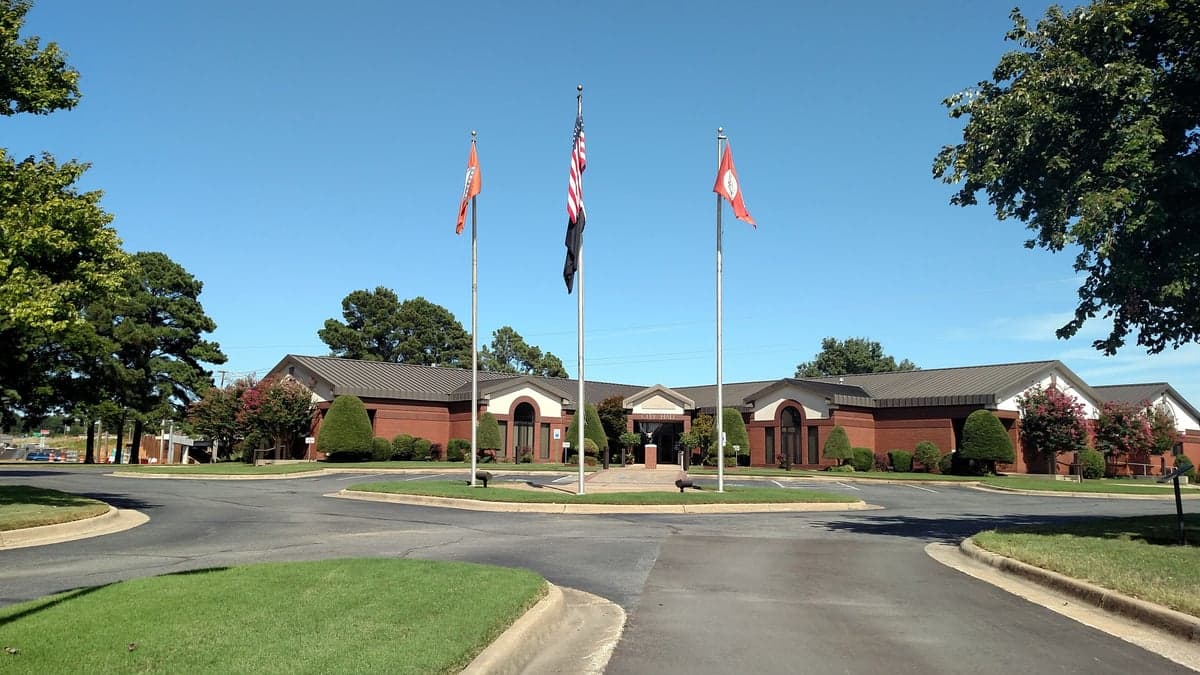
Photo: Wikipedia
Political ClimatePolitical Climate in Jacksonville, AR
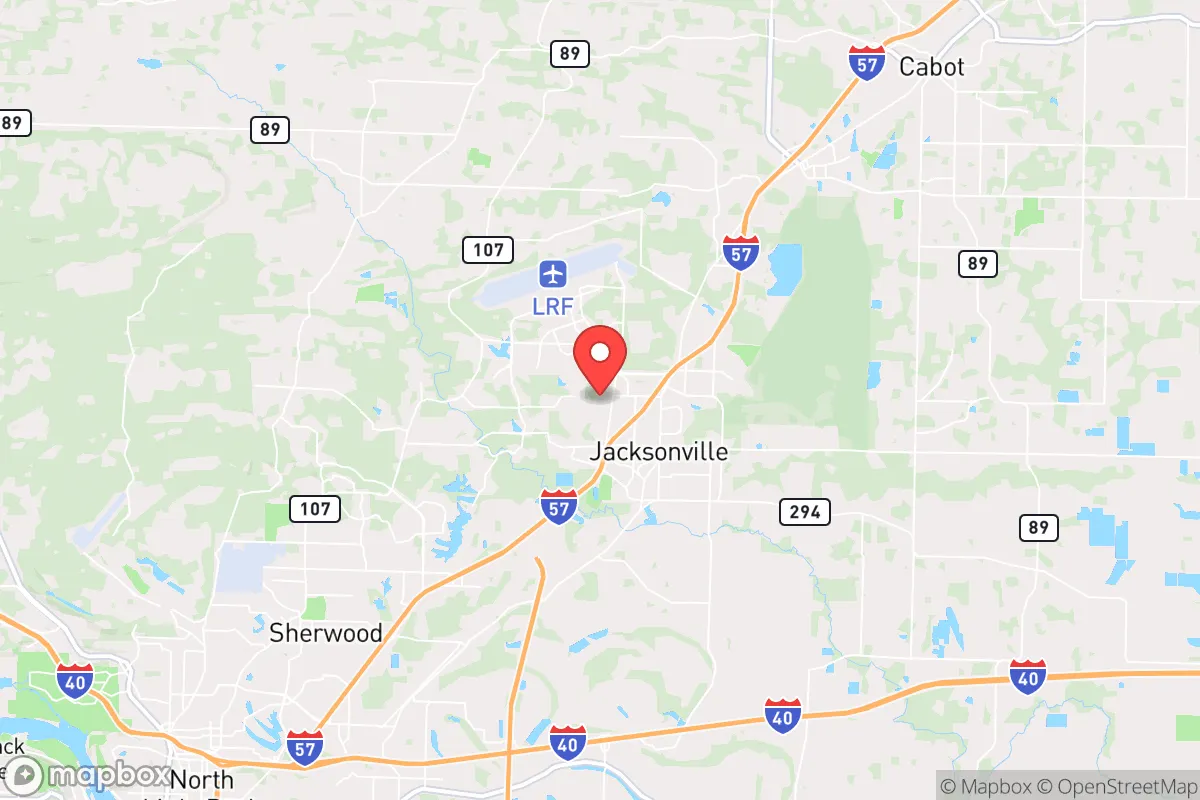
District shown is the primary district for this city’s centroid. Cities may span multiple districts.
Local Political AnalysisPolitical Analysis of Jacksonville, AR
Jacksonville, Arkansas, sits solidly in the red column, with a Cook PVI of R+8 that reflects a community where conservative values aren't just a preference—they're the baseline. For as long as I can remember, this town has leaned Republican, and the 2024 election results only reinforced that, with Pulaski County trending right of the state average in several precincts here. But I've seen the winds shift a bit over the last decade, and it's worth paying attention to where things are headed, especially if you're thinking about putting down roots.
How it compares
Drive ten miles south to Little Rock, and you're in a different world politically—a Democratic stronghold where progressive policies get a much warmer reception. The contrast is stark: Jacksonville feels like a small-town outpost of common sense compared to the capital's push for higher taxes and more government programs. North up Highway 67/167, Cabot and Beebe lean even more conservative, with Cook PVIs closer to R+15 or R+20, so Jacksonville sits right in the middle—conservative enough to feel safe, but close enough to the city to see what happens when government overreach creeps in. That proximity is a double-edged sword; we get the jobs and amenities, but we also get the occasional spillover of progressive ideas from Little Rock's city council.
What this means for residents
For folks living here, the political climate means fewer headaches with zoning overreach, property rights, and school curriculum battles. Jacksonville's city council has historically kept a lid on the kind of heavy-handed regulations you see in more liberal areas—no mask mandates that lasted forever, no overbearing business closures during the pandemic. The local schools, part of the Jacksonville North Pulaski School District, have stayed focused on basics and local control, which is a relief when you see other districts getting tangled up in DEI initiatives or critical race theory. That said, I've noticed a few younger families moving in from Little Rock, and they sometimes bring a "let's fix everything with a new ordinance" attitude. It's something to watch, because once that progressive foot is in the door, it's hard to kick it out.
One cultural distinction that stands out is the strong military presence here—Little Rock Air Force Base is the lifeblood of the town, and that tends to reinforce a no-nonsense, patriotic, and freedom-first mindset. You don't see a lot of talk about defunding the police or removing monuments; instead, it's about supporting veterans, keeping taxes low, and letting people live their lives without a government checklist. The biggest concern I hear from neighbors isn't about national politics—it's about local creep: things like proposed noise ordinances that could affect backyard projects, or talk of "affordable housing mandates" that sound like backdoor rent control. If you value personal freedom and want a place where the government stays out of your garage, your kid's classroom, and your paycheck, Jacksonville is still that place. But keep an eye on the city council meetings—because the fight to keep it that way is ongoing.

State Political ClimatePolitical Climate in Arkansas
State Political AnalysisPolitical Environment in the State
Arkansas has been a reliably red state for decades, with a strong conservative majority that has only solidified in recent cycles. The state voted for Donald Trump by a 27-point margin in 2024, and Republicans hold every statewide office and supermajorities in both legislative chambers. Over the past 20 years, the shift has been dramatic: as recently as 2006, Democrats controlled the governorship and both houses of the legislature, but a combination of national realignment and local cultural shifts has turned Arkansas into one of the most consistently conservative states in the country. For a conservative-leaning individual or family looking to relocate, the political climate here is broadly welcoming, though the picture varies significantly depending on where you land.
Urban vs. rural divide
The political map of Arkansas is a textbook example of the urban-rural split. The state's two major population centers, Little Rock and Fayetteville, are the primary blue dots in a sea of red. Pulaski County (Little Rock) has voted Democratic in every presidential election since 2008, and Washington County (Fayetteville) flipped blue in 2020 and 2024, driven by the University of Arkansas and an influx of out-of-state professionals. Outside these two metros, the state is deeply conservative. Northwest Arkansas outside Fayetteville—places like Bentonville, Rogers, and Springdale—leans Republican, though the corporate influence of Walmart and Tyson Foods brings a more moderate, business-friendly conservatism. The Arkansas River Valley, including Fort Smith and Russellville, is reliably red. The Delta region in the east, once a Democratic stronghold due to the Black vote, has trended Republican as rural white voters realigned. Jonesboro in the northeast is a conservative anchor, while Texarkana in the southwest mirrors the broader state trend. The rural counties—places like Stone County and Van Buren County—routinely deliver 80%+ Republican margins. If you're looking for a politically like-minded community, the suburbs of Little Rock (like Conway or Benton) or the smaller cities in the Ozarks are your best bets.
Policy environment
Arkansas's policy environment is a conservative's dream in many respects. The state has a flat income tax rate of 4.4%, down from 7% a decade ago, with further cuts scheduled to bring it to 3.9% by 2027. There is no state property tax on vehicles or boats, and the sales tax is 6.5% (local add-ons can push it to 9.5% or so). The regulatory climate is light: no state-level minimum wage above the federal $7.25 (though voters passed a $11/hour minimum in 2022), and occupational licensing requirements have been trimmed. On education, Arkansas has a robust school choice program: the Arkansas LEARNS Act, passed in 2023, created universal Education Freedom Accounts (EFAs) worth roughly $7,000 per student, usable for private school tuition, homeschooling materials, or tutoring. This is a major draw for parents seeking alternatives to district schools. Healthcare policy is mixed: the state expanded Medicaid under the private option model, but there are no state-level abortion restrictions beyond the trigger law that banned the procedure after Roe fell. Election laws are solid: voter ID is required, early voting is available for 15 days, and absentee ballots require an excuse. There are no sanctuary city policies—Arkansas passed a law in 2019 requiring local law enforcement to cooperate with federal immigration authorities. For a conservative, the policy environment is largely aligned with traditional values, though the Medicaid expansion and minimum wage hike are reminders that the state isn't a pure libertarian paradise.
Trajectory & freedom
Arkansas has been on a clear trajectory toward greater personal freedom over the past decade, particularly in areas that matter most to conservatives. The Arkansas LEARNS Act (2023) expanded parental rights in education, allowing parents to opt their children out of any instructional materials they find objectionable and requiring schools to post curriculum online. Gun rights are strong: Arkansas is a constitutional carry state (permitless carry for adults 18 and older, passed in 2021), and there are no state-level red flag laws. The Medical Marijuana Amendment (2016) allows for a regulated medical cannabis program, though it's tightly controlled and doesn't allow home cultivation. Property rights are generally respected, with no state-level rent control and relatively low property taxes (average effective rate around 0.6%). On the concerning side, the state has seen some overreach: the Arkansas Data Privacy Act (2023) imposes new regulations on businesses, and there have been local efforts to restrict short-term rentals in tourist areas like Eureka Springs. The biggest freedom concern for many conservatives is the state's reliance on federal funding—Arkansas receives about 40% of its budget from Washington, which creates a vulnerability to federal mandates. Overall, though, the trend is positive: the legislature has been actively rolling back regulations and expanding school choice, and the governor's office under Sarah Huckabee Sanders has prioritized tax cuts and parental rights.
Civil unrest & political movements
Arkansas is not a hotbed of civil unrest, but there have been notable flashpoints. The most visible in recent years was the 2020 Black Lives Matter protests in Little Rock, which included some property damage and clashes with police, but were smaller and less violent than in many other cities. The state has seen a rise in organized conservative activism, particularly around school board meetings and library content. The Arkansas Citizens for Liberty and local Moms for Liberty chapters have been active in pushing for book bans and curriculum transparency, especially in Bentonville and Rogers. Immigration politics are relatively quiet, but there was a controversy in Springdale in 2023 when the city council considered a "welcoming city" resolution; it was defeated after strong conservative opposition. Election integrity has been a topic of debate, with the legislature passing Act 249 (2021) to require signature verification for absentee ballots and ban ballot harvesting. There have been no major secession or nullification movements, though the state did pass a Second Amendment Preservation Act (2021) that purports to nullify federal gun laws—a largely symbolic gesture. For a new resident, the political atmosphere is generally calm, with the most visible activism being conservative parents at school board meetings rather than street protests.
Projection
Over the next 5-10 years, Arkansas is likely to become even more conservative, but with some important caveats. The in-migration pattern is a double-edged sword: the state is attracting retirees and remote workers from blue states like California and Illinois, many of whom are conservative-leaning, but the Northwest Arkansas corridor is also drawing younger, more diverse professionals who may lean moderate or left. The Fayetteville-Springdale-Rogers metro area is the fastest-growing region in the state, and its political trajectory will be crucial. If the corporate transplants continue to vote like their peers in other Sun Belt suburbs, the area will stay red but may become more moderate on social issues. Meanwhile, the rural counties are aging and depopulating, which could slowly erode the Republican base. The state's tax-cutting trajectory is likely to continue, with the flat income tax heading toward elimination. School choice will expand further, and parental rights will remain a priority. The biggest wildcard is federal policy: if the federal government imposes new mandates on Medicaid or education, Arkansas's high dependency on federal funds could create friction. For a conservative moving in now, expect the state to remain a solid red anchor in the South, with the main political battles being fought over the pace of tax cuts and the extent of school choice, not over fundamental values.
For a new resident, the bottom line is this: Arkansas offers a political environment that is broadly aligned with conservative values on taxes, guns, education, and parental rights. The state is not a libertarian utopia—there are still regulations and a significant federal footprint—but it is moving in the right direction. If you're looking for a place where your vote counts and your values are reflected in state policy, Arkansas is a strong choice. Just be aware that the urban islands of Little Rock and Fayetteville are different worlds, and your experience will depend heavily on which part of the state you choose to call home.
* Values derived from national, state, county, city and local statistics and may differ in a specific area. Last updated: 2026-04-29T21:57:10.000Z
Narrative content on this page is AI-generated and may contain mistakes. Verify any details that matter before acting on them.
ReloMaps may earn a commission from affiliate links at no extra cost to you.

