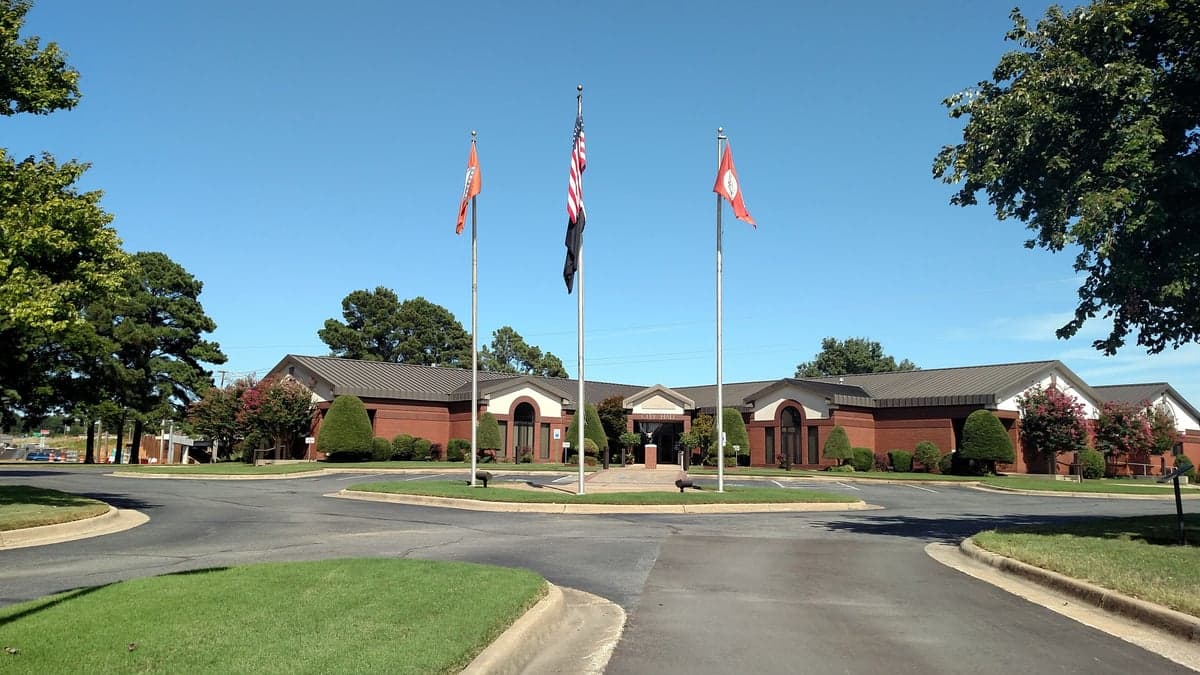
Photo: Wikipedia
Strategic Assessment of Jacksonville, AR
Workable tactical position. Some exposure to population density or targets, but generally defensible in a crisis.
What does the Strategic Assessment tell us?
Our Strategic Assessment grades tactical survivability of an area. Major population centers, military targets, fallout zones, natural disasters, and border exposure all drive risk — lower exposure means a more defensible position in a crisis.
This is heavily inspired by Joel Skousen's Strategic Relocation book. Highly recommended you checkout the book ($)What does this tell us?
Our Strategic Assessment grades tactical survivability of an area. Major population centers, military targets, fallout zones, natural disasters, and border exposure all drive risk — lower exposure means a more defensible position in a crisis.
This is heavily inspired by Joel Skousen's Strategic Relocation book. Highly recommended you checkout the book ($)Strategic Pillars

Key Distances
Regional Safe Places
Below is our recommended "safe zones" in Arkansas and the surrounding area based on our strategic heuristics. For most people, it's unrealistic to live in a “safe zone” full-time due to work, family or other personal reasons. They tend to be more rural. However, many of these areas are perfect for second homes and retreat properties that double as a vacation home or even a short-term rental.
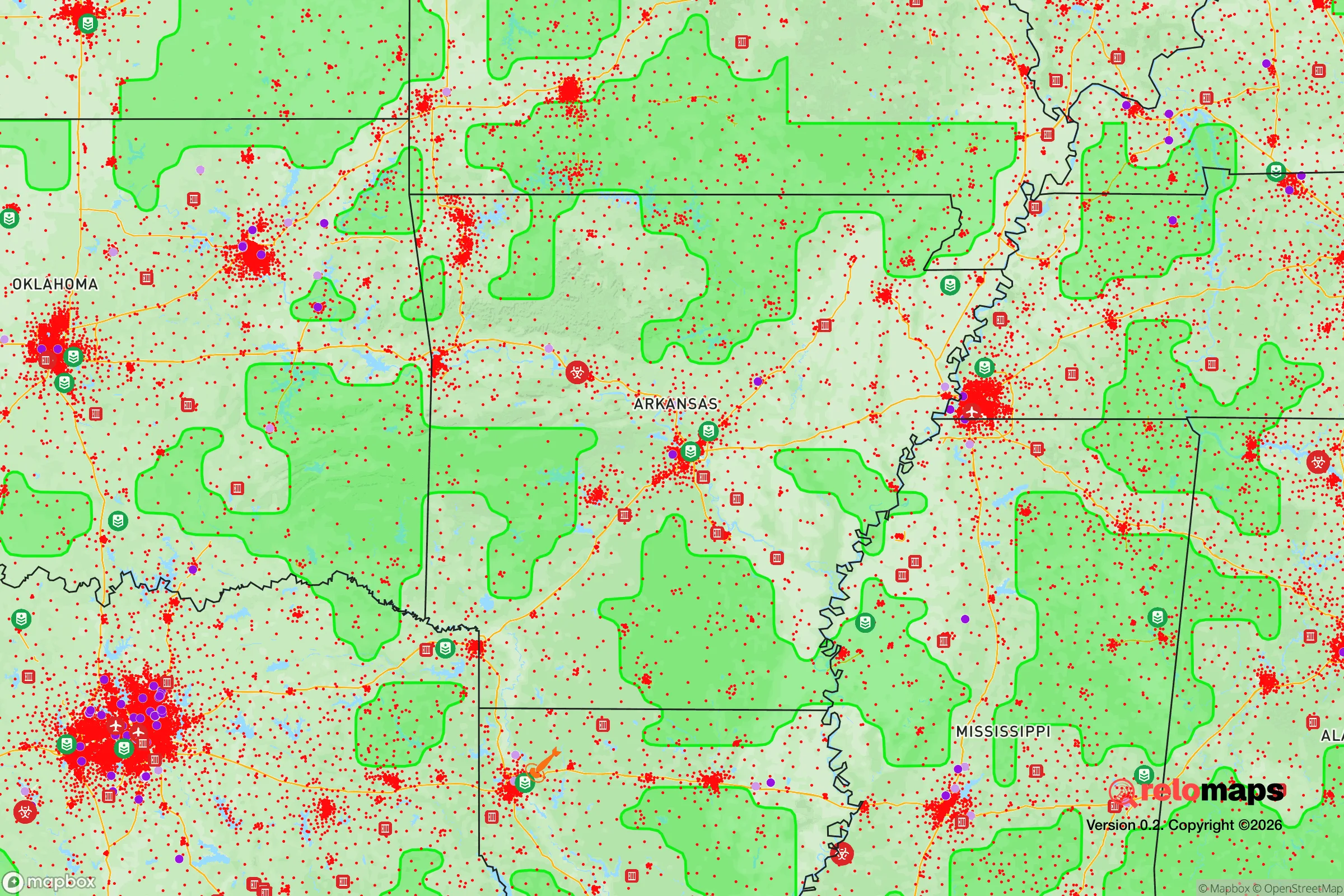
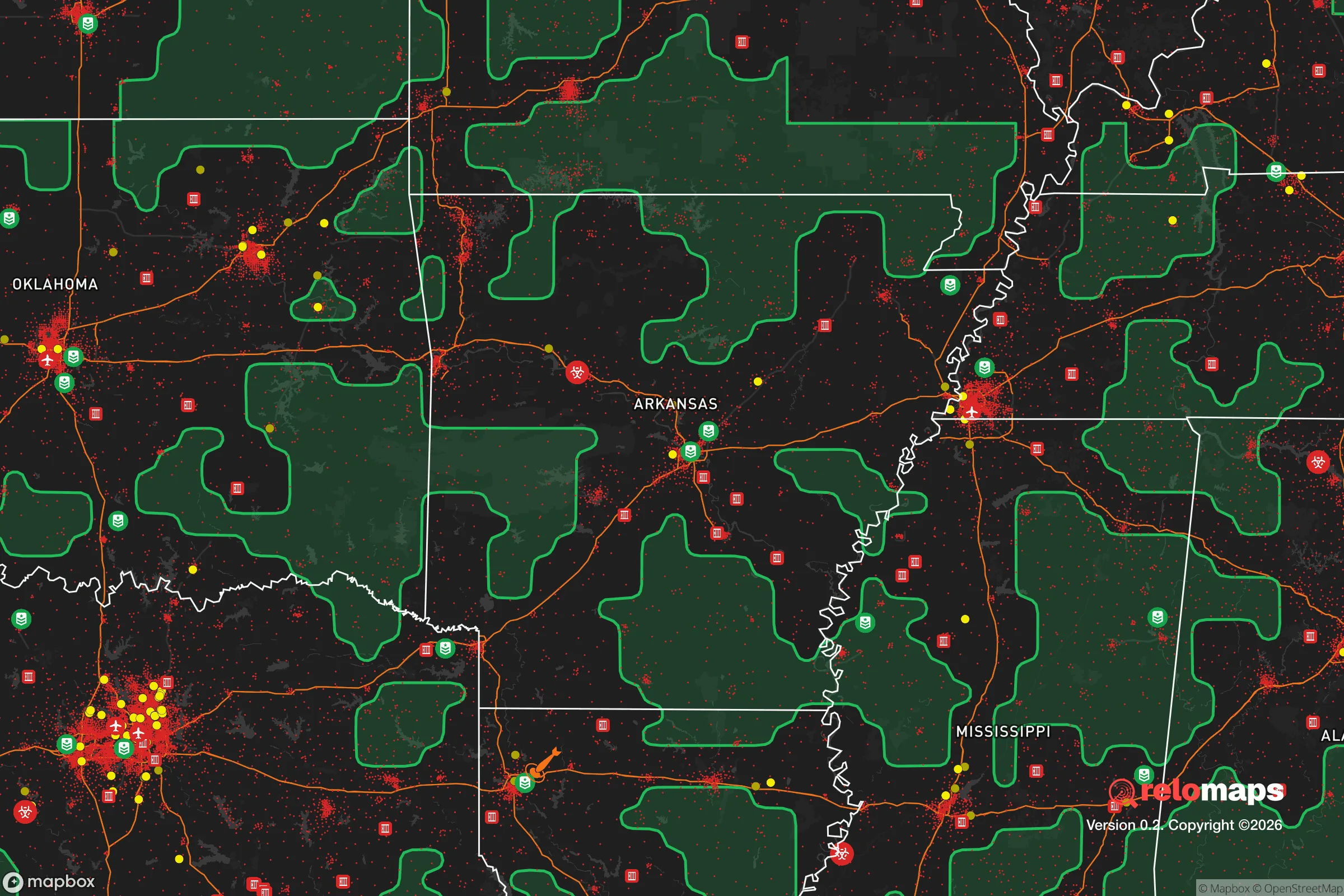


Important Note: For informational purposes only. This does not mean nothing bad ever happens in the green zones. Please use common sense. This is based on public data and modeled with AI. We tried to take a conservative approach but mistakes happen. We update this regularly as new information becomes available.
Solar Generator Recommendations
Backup power matters more here than in safer locations. We've picked three solar generators across budgets and capacity tiers — start with the budget unit if you only need a few essentials, or step up if you want to run a fridge and HVAC for days at a time.

Jackery Portable Power Station Explorer 300
Budget OptionPower on the Go: Weighing only 11 lbs, it's convenient to set up and store with book-sized foldable solar panels

BLUETTI Portable Power Station AC180
Designed for both indoor and outdoor scenarios, AC180 is highly capable as it has a robost capacity and continuous output power.

EF ECOFLOW DELTA Pro Ultra Power Station
Upgraded PickEcoFlow DELTA Pro Ultra is a whole-home energy system designed to grow with your family. Integrated with the Smart Home Panel 2, it scales to meet your evolving energy needs — keeping your home powered, intelligent, and secure through every stage of life.
We earn a commission, at no additional cost to you.
Strategic Assessment Analysis
Jacksonville, Arkansas, presents a mixed bag for the strategic relocator with a prepper mindset. Its position as a mid-sized town just northeast of Little Rock offers a degree of resilience through relative obscurity, but its proximity to a major metropolitan area and a significant military installation introduces serious vulnerabilities that cannot be ignored. For those prioritizing self-sufficiency and long-term stability, Jacksonville demands a clear-eyed assessment of its geographic assets and its exposure to the risks that come with being in the shadow of a state capital and a high-value target.
Geographic position and natural advantages for long-term stability
Jacksonville’s primary strategic advantage is its location within the Arkansas River Valley, a region known for its abundant freshwater resources and relatively mild climate. The Arkansas River itself is a major water artery, and the area sits atop the Sparta Aquifer, one of the most productive groundwater sources in the South. For a relocator concerned with water security, this is a tangible asset—wells in the region are generally reliable and deep, reducing dependence on municipal systems that could fail during a crisis. The terrain is a mix of rolling hills and flat bottomlands, offering decent drainage and arable soil for small-scale food production. The growing season is long, typically from April to October, which supports a variety of staple crops like corn, beans, and squash. Timber is plentiful in the surrounding Ouachita and Ozark foothills, providing a renewable resource for fuel and construction. The climate is less prone to the extremes of the Plains or the Gulf Coast; tornadoes are a real but manageable threat, and the area is far enough inland to avoid the worst of hurricane storm surge. For a family or individual looking to establish a semi-rural homestead within striking distance of a regional hub, the natural base here is solid, provided you secure land away from the floodplains and closer to the higher ground east of town.
Risks, exposures, and proximity to fallout-relevant landmarks
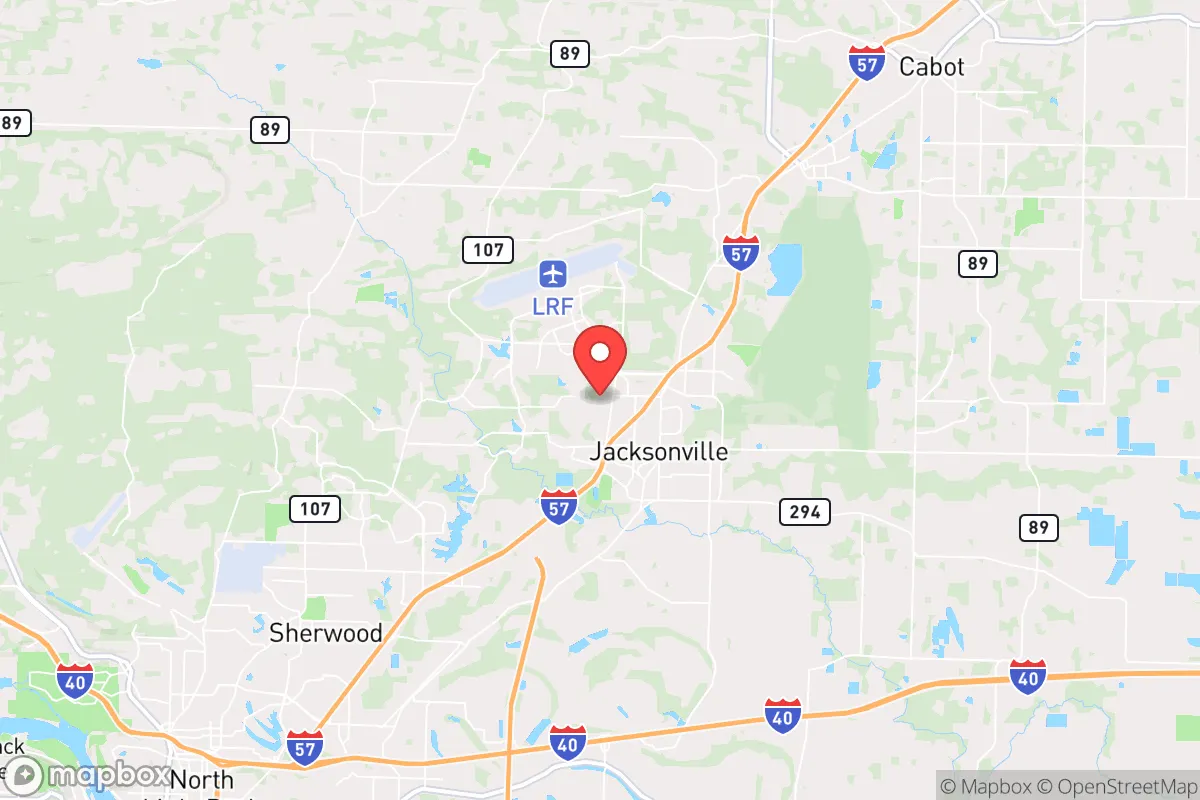
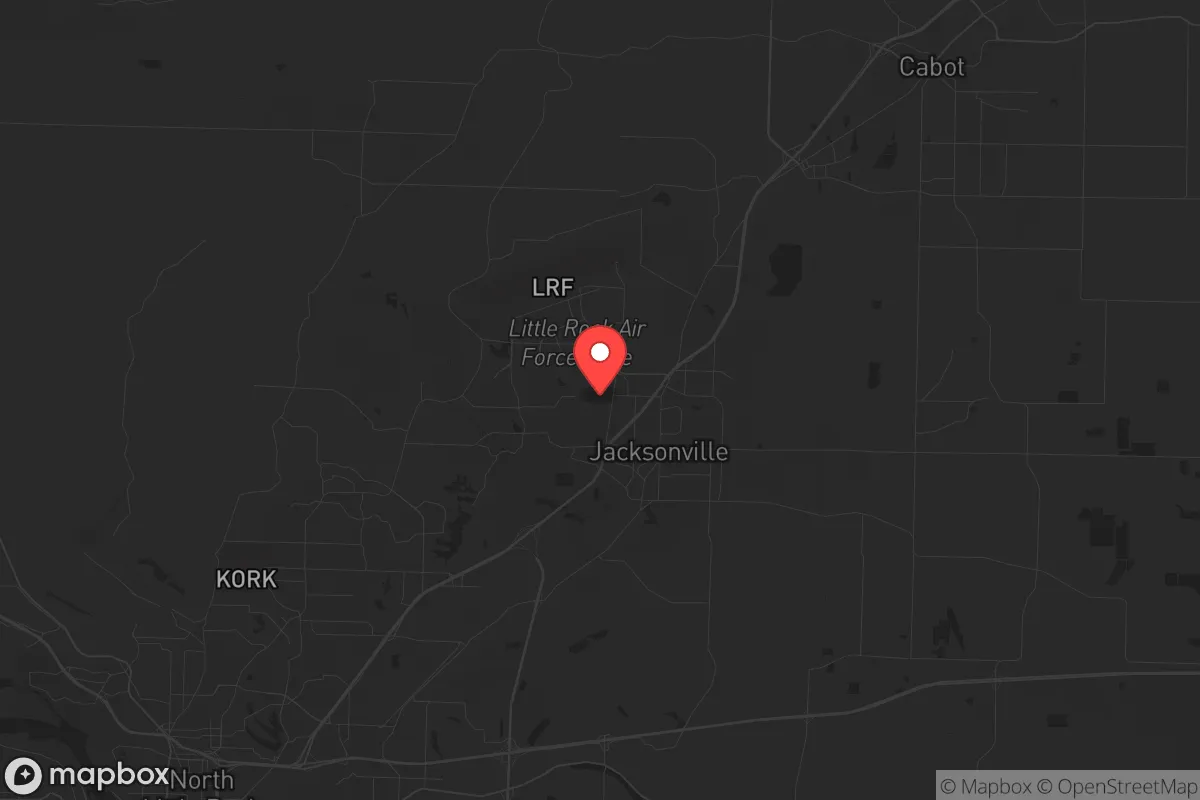
The most glaring risk for Jacksonville is its proximity to Little Rock Air Force Base, home to the 19th Airlift Wing and a fleet of C-130s. In any scenario involving major power conflict or domestic unrest, this base is a high-priority target for both kinetic and cyber attacks. The base sits directly adjacent to the city’s northern edge, meaning a significant portion of Jacksonville’s population lives within the blast and fallout radius of a potential strike. Even in a non-nuclear scenario, the base could become a focal point for civil unrest, looting, or forced evacuation if the federal government attempts to consolidate control. Additionally, Jacksonville is only about 15 miles from downtown Little Rock, a city with a history of crime and political tension. In a collapse scenario, Little Rock’s population of over 200,000 would likely push outward into suburbs like Jacksonville, creating a refugee wave that could overwhelm local resources. The Arkansas River bridges and Interstate 40 corridor are chokepoints that would become impassable during a mass evacuation, effectively trapping residents who are not already positioned with self-sufficient supplies. The presence of multiple chemical plants and rail lines running through the area also introduces the risk of industrial accidents or targeted sabotage. For the strategic relocator, the concentration of military and infrastructure targets within a 20-mile radius makes Jacksonville a high-exposure location that requires serious defensive planning.
Practical resilience for a relocator: food, water, energy, and defensibility
On the practical side, Jacksonville offers some workable options for the prepared individual, but they come with caveats. Water access is the strongest point: the aquifer is deep and clean, and many rural properties outside city limits can support a private well. Rainwater catchment is also viable given the region’s 50 inches of annual precipitation. Food production is feasible on plots of 5 acres or more, but the soil in the immediate Jacksonville area is often clay-heavy and requires amendment. Local farmers’ markets and co-ops exist but are small; for bulk supplies, you’ll need to drive to Little Rock or rely on mail-order preps. Energy resilience is moderate—solar potential is decent but not exceptional, with about 4.5 peak sun hours per day. A backup generator running on propane or diesel is a more reliable bet, and wood stoves are common in the area for winter heating. Defensibility is the weak link. Jacksonville is a sprawling, suburban-style town with few natural barriers. The flat terrain and grid-like street patterns make it difficult to secure a perimeter. Your best bet is to locate on the eastern or southern outskirts, where larger lots and tree cover provide some concealment and standoff distance. Neighborhood watch and local gun culture are strong, which is a plus for community defense, but you’ll need to vet your neighbors carefully—not everyone in a military-adjacent town shares the same survivalist priorities. Stockpiling is straightforward: there are multiple big-box stores and a Walmart Supercenter, but these will be stripped within hours of any major event. Plan to have at least a 90-day supply of food, water, and medical gear stored off-site or in a concealed location.
Overall, Jacksonville offers a strategic paradox: it has the natural resources and community grit to support a resilient lifestyle, but its location next to a major military base and a troubled city introduces risks that many preppers would consider unacceptable. For the single individual or family willing to invest in hard infrastructure—a well, a reinforced safe room, a solar array, and a solid perimeter—the area can work, especially if you choose a property on the rural fringe. But if your primary concern is avoiding fallout zones and population centers, you would be better served looking further west toward the Ozarks or south toward the timberlands of the Gulf Coastal Plain. Jacksonville is a compromise location: close enough to resources to be convenient, but close enough to danger to demand constant vigilance. It is not a retreat; it is a forward operating base with a short supply line and a high threat profile. Make your decision accordingly.

* Values derived from national, state, county, city and local statistics and may differ in a specific area. Last updated: 2026-04-29T21:57:10.000Z
Narrative content on this page is AI-generated and may contain mistakes. Verify any details that matter before acting on them.
ReloMaps may earn a commission from affiliate links at no extra cost to you.

