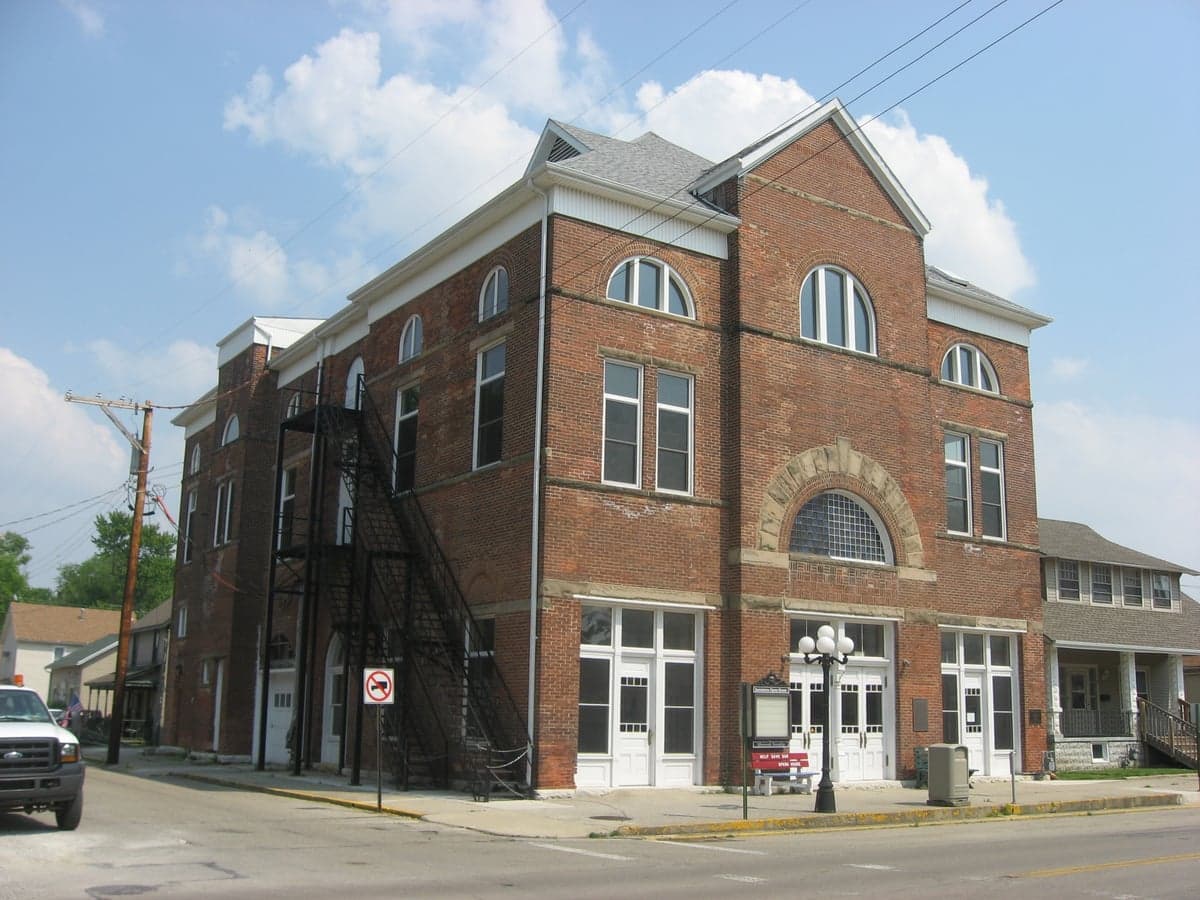
Photo: Wikipedia
Political ClimatePolitical Climate in Jamestown, OH
District shown is the primary district for this city’s centroid. Cities may span multiple districts.
Local Political AnalysisPolitical Analysis of Jamestown, OH
Jamestown, Ohio, leans reliably Republican, but it’s not the deep-red stronghold you might expect from a small village in southwest Ohio. The area’s Cook Partisan Voting Index (PVI) of R+3 is actually a couple of notches more moderate than the state of Ohio as a whole, which sits at R+5. What that means on the ground is that while Republicans consistently win local races, Democrats can and do pull a respectable 40-45% of the vote in competitive elections. I’ve seen it shift over the years—back in the 90s, this was a solidly blue-collar Democratic area, but the last two decades have seen a steady drift rightward, especially on cultural issues. The 2024 presidential race here probably looked a lot like the statewide map: Trump won, but by a narrower margin than in rural counties further north or west.
How it compares
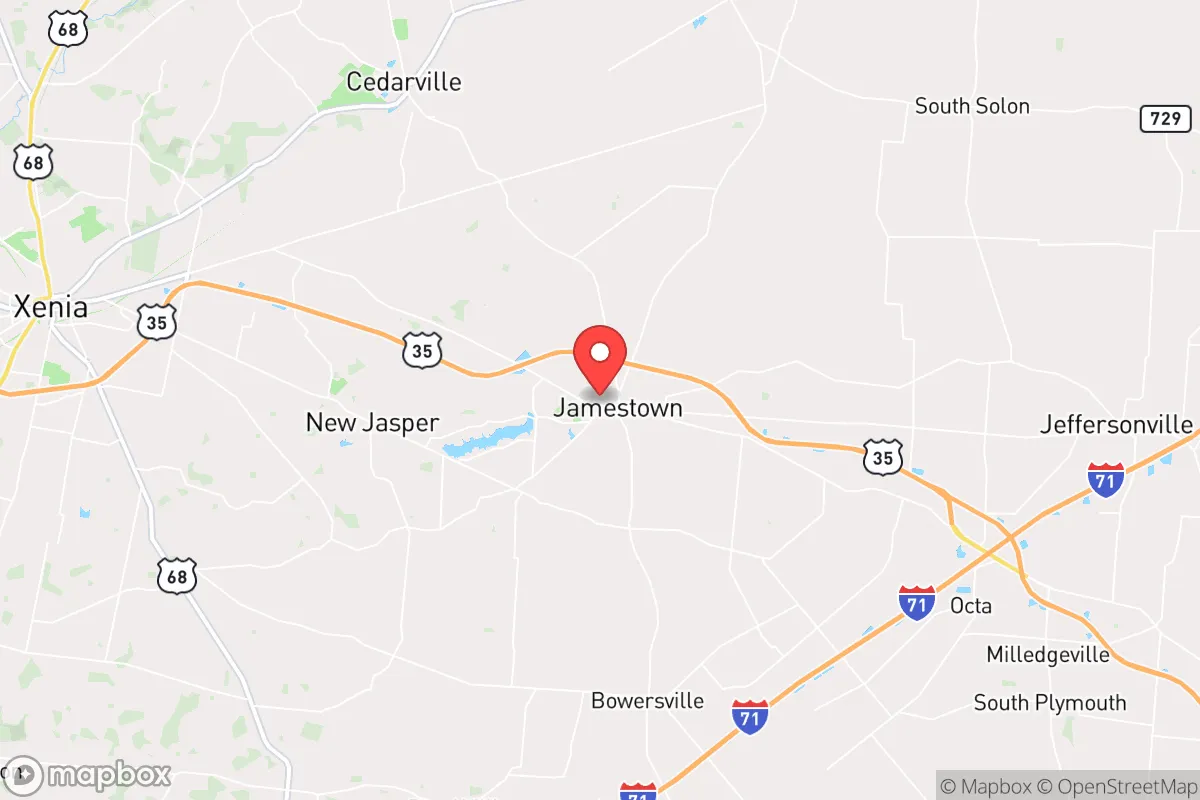
Compared to Ohio’s overall R+5 lean, Jamestown’s R+3 makes it a relative swing pocket within a redder state. Drive 15 minutes east to Xenia or 20 minutes north to Springfield, and you’ll find similar R+4 to R+6 territory—places where the GOP edge is more pronounced. But head 20 minutes south to Wilmington, which has a stronger manufacturing base and a more diverse economy, and you’ll see a slightly more competitive R+2 environment. The real contrast is with college towns like Yellow Springs (about 25 minutes northeast), which is famously liberal and votes D+20 or more. So Jamestown sits in a kind of political buffer zone: conservative enough to feel comfortable for most Republicans, but not so uniformly red that a Democrat feels like a total outsider. The local party infrastructure is active but not overwhelming—you’ll see yard signs for both sides during election season, just more of the red ones.
What this means for residents
For conservative residents, Jamestown’s political climate means their values are broadly reflected in local governance—school board meetings, county commission decisions, and zoning policies tend to lean traditional. Taxes are relatively low, and there’s little appetite for new social programs or heavy regulation. For liberal residents, it’s not hostile territory, but it can feel isolating. You’ll find like-minded folks at the library or in local volunteer groups, but you won’t see many progressive candidates on the ballot. The practical effect is that most political conversations stay civil—people know their neighbors, and the small-town dynamic discourages the kind of shouting matches you see in bigger cities. The biggest policy distinction I’ve noticed is on land use: Jamestown is more permissive with agricultural and residential development than the state average, which keeps housing costs lower but also means less investment in public transit or walkable infrastructure.
Culturally, Jamestown feels more like a traditional Midwestern farm town than a suburb of Dayton or Columbus, even though it’s within commuting distance of both. The local gun culture is strong but not militant—most folks own a rifle or shotgun for hunting, and concealed carry is common but not flaunted. Church attendance is high, with Baptist and Methodist congregations dominating, but there’s also a small but active Catholic parish. The biggest shift I’ve seen in the last decade is the rise of national issues in local conversations—things like vaccine mandates and school curriculum debates now dominate what used to be purely local concerns about road repairs and the water tower. Looking ahead, I expect Jamestown to stay R+3 to R+4 for the next few cycles, as long as the area doesn’t see major population growth from either Dayton or Columbus. If new subdivisions bring in younger families from the cities, that could nudge it slightly left; if the trend of rural outmigration continues, it’ll likely hold steady or even redden a bit.

State Political ClimatePolitical Climate in Ohio
State Political AnalysisPolitical Environment in the State
Ohio has shifted from a quintessential swing state to a solidly Republican-leaning one, carrying a Cook PVI of R+5 after voting for Donald Trump by roughly 8 points in both 2016 and 2020 and by a wider margin in 2024. The state’s political trajectory over the past two decades has been a steady march rightward, driven by the collapse of Democratic strength in rural and exurban areas and the simultaneous hollowing out of union-heavy industrial towns that once anchored the party. While Democrats still hold the three big Cuyahoga County anchors — Cleveland, Columbus, and Cincinnati — they’ve lost nearly every competitive county in between, making Ohio a reliably red state in presidential elections even as it retains pockets of blue strength in its major metros.
Urban vs. rural divide
The political map of Ohio is a textbook study in the urban-rural chasm. The three Cs — Cleveland (Cuyahoga County), Columbus (Franklin County), and Cincinnati (Hamilton County) — are Democratic strongholds, with Cuyahoga delivering roughly 65-70% of its vote to Democrats in recent cycles. Columbus, fueled by Ohio State University and a growing tech and insurance sector, has become the state’s most reliably blue major city, while Cincinnati’s Hamilton County has trended leftward as the city’s core gentrifies. Outside these islands, the landscape is overwhelmingly red. Butler County (north of Cincinnati) and Warren County (northeast of Cincinnati) are among the most Republican counties in the nation, routinely giving GOP candidates 70%+ of the vote. The rural southeast — places like Athens County (home to Ohio University) is a notable blue outlier — but most of Appalachian Ohio votes heavily Republican. The northwest, including Lucas County (Toledo), has trended redder as union membership declined, though Toledo itself remains a Democratic holdout. The key shift: counties like Mahoning County (Youngstown) and Trumbull County, once Democratic bastions thanks to steel and auto unions, have flipped to Trump by double digits, reflecting a broader realignment of working-class white voters away from the Democratic Party.
Policy environment
Ohio’s policy environment is broadly conservative, with a few notable exceptions. The state has a flat income tax rate of 3.5% (as of 2025, down from 4.0% in 2023), with a phase-out plan that could eliminate it entirely by 2030. Sales tax is 5.75% at the state level, with local add-ons. Property taxes are moderate but vary widely by district. The regulatory posture is business-friendly, with right-to-work laws not in effect (Ohio rejected a right-to-work law in a 2011 referendum), but the state has a Republican supermajority that consistently passes tort reform and deregulation measures. Education policy is a flashpoint: Ohio has a robust school voucher program (the EdChoice program) that has expanded significantly under GOP control, allowing public funds to follow students to private and religious schools. The state also passed a law in 2023 requiring schools to notify parents of any changes in a student’s health or well-being, a move that energized conservative parents. Healthcare policy is mixed: Ohio expanded Medicaid under the Affordable Care Act in 2014, and that expansion remains in place, but the state has also passed laws restricting abortion (a six-week ban that took effect after the Dobbs decision, though a 2023 ballot initiative enshrined abortion rights in the state constitution). Election laws have tightened: Ohio requires a photo ID to vote, has reduced early voting days, and has purged inactive voters from rolls, all measures that Republicans say prevent fraud and Democrats say suppress turnout.
Recent policy direction
Ohio’s recent legislative output has been a full-spectrum conservative agenda. On gun rights, the state passed permitless carry (constitutional carry) in 2022, allowing any adult who can legally own a firearm to carry it concealed without a permit. On self-defense, Ohio has a “stand your ground” law that was strengthened in 2021, removing the duty to retreat in any place where a person is lawfully present. On parental rights, the 2023 “Parents’ Bill of Rights” (HB 8) requires schools to notify parents of any changes in a student’s health or well-being and prohibits instruction on sexual orientation or gender identity in grades K-3. On speech, Ohio has no statewide shield law for journalists, but the state has not passed any major “critical race theory” bans, though local school boards have seen heated debates. On privacy and surveillance, Ohio has no comprehensive data privacy law, but a 2024 law restricts the use of facial recognition by law enforcement without a warrant. On medical and bodily autonomy, the 2023 ballot initiative (Issue 1) enshrined abortion rights up to fetal viability, overriding the six-week ban, but the state still requires parental consent for minors and a 24-hour waiting period. On property rights, Ohio is a “Dillon’s Rule” state, meaning local governments have only the powers explicitly granted by the state, which has limited local rent control and zoning restrictions. On taxation, the flat tax reduction is ongoing, with a goal of elimination by 2030. On voting and ballot access, the 2023 law (HB 458) requires a photo ID for in-person voting, shortens the absentee ballot request window, and limits drop boxes to one per county. These laws collectively point toward a state that is solidifying conservative governance on most fronts, with the notable exception of abortion rights, which were protected by direct democracy.
Civil unrest & political movements
Ohio has seen its share of political flashpoints. The 2020 protests over George Floyd’s death were intense in Columbus and Cincinnati, with some property damage and a heavy police response. The 2023 ballot initiative on abortion rights drew massive grassroots organizing on both sides, with pro-choice groups outspending anti-abortion groups but both sides mobilizing heavily. Immigration politics are less visible than in border states, but Ohio has seen a small but vocal movement against refugee resettlement, particularly in Dayton and Springfield, where Somali and other immigrant communities have grown. There are no sanctuary cities in Ohio; several cities, including Columbus and Cleveland, have “welcoming city” policies but do not actively shield undocumented immigrants from federal enforcement. Election integrity controversies have been muted compared to states like Arizona or Georgia, but the 2020 election saw Trump’s campaign challenge results in a few counties, and the 2024 election was certified without major incident. The “Ohio Freedom Alliance” and similar groups have organized around Second Amendment rights and school curriculum issues, while progressive groups like “Ohio Organizing Collaborative” focus on voting rights and criminal justice reform. A new resident would notice the prevalence of yard signs and bumper stickers, especially in suburban and rural areas, where political identity is openly displayed.
Projection
Over the next 5-10 years, Ohio is likely to remain R+5 to R+7, with the Republican lean deepening as the population continues to age and as in-migration from blue states (especially California and Illinois) remains modest. The biggest wild card is the continued growth of Columbus, which is attracting young, educated, and diverse residents who lean Democratic. If Columbus continues to grow at its current pace (adding roughly 20,000 people per year), it could eventually offset some of the rural losses, but not enough to flip the state back to purple. The flat tax phase-out will likely be completed, making Ohio even more attractive to retirees and remote workers from high-tax states. The abortion rights ballot initiative may have energized Democratic voters, but it also galvanized conservative voters who feel the state constitution was hijacked by out-of-state money. The biggest demographic shift is the continued decline of the industrial base in the northeast and the growth of the Columbus and Cincinnati suburbs, which are becoming more politically diverse. A relocator moving in now should expect a state that is reliably Republican in statewide elections, with a conservative policy environment that is unlikely to shift leftward, but with enough local variation — especially in the three Cs — to accommodate a range of political views.
For a new resident, the bottom line is straightforward: if you lean conservative, you’ll find a state that broadly aligns with your values on taxes, guns, education, and regulation. If you lean liberal, you’ll find strong communities in the major cities where your views are the norm, but you’ll be living in a state where your vote for president or senator will almost certainly be in the minority. The practical takeaway is that Ohio offers a stable, predictable political environment with a clear trajectory — more conservative, more tax-friendly, and more focused on parental rights and local control. It’s not a place where politics dominates daily life in the way it does in swing states, but it’s also not a place where you’ll be surprised by sudden policy shifts. If you’re looking for a state where the political direction is settled and the cost of living is low, Ohio is a solid bet.
* Values derived from national, state, county, city and local statistics and may differ in a specific area. Last updated: 2026-08-19T15:25:37.000Z
Narrative content on this page is AI-generated and may contain mistakes. Verify any details that matter before acting on them.
ReloMaps may earn a commission from affiliate links at no extra cost to you.

