Photo: Wikipedia
Demographics of Jefferson City, MO
Affluence Level in Jefferson City, MO
A middle-class area roughly in line with national averages across income, home values, education, and employment.
People of Jefferson City, MO
Jefferson City, Missouri, is a government-anchored capital of 42,565 residents where state employment and a stable, family-oriented culture shape daily life. The city is notably less diverse than the national average, with a population that is 71.2% white, 17.3% Black, 4.2% Hispanic, 1.4% East/Southeast Asian, and 1.3% Indian (subcontinent), while only 2.5% of residents are foreign-born. Its identity is defined by a blend of long-established German Catholic and Protestant families, a significant Black community rooted in post-Civil War migration, and a modest but growing professional class drawn by state government jobs. The city feels more like a tight-knit Midwestern town than a state capital, with a strong sense of place and a slower pace of life that appeals to conservative-leaning families and singles seeking stability.
How the city was settled and grew
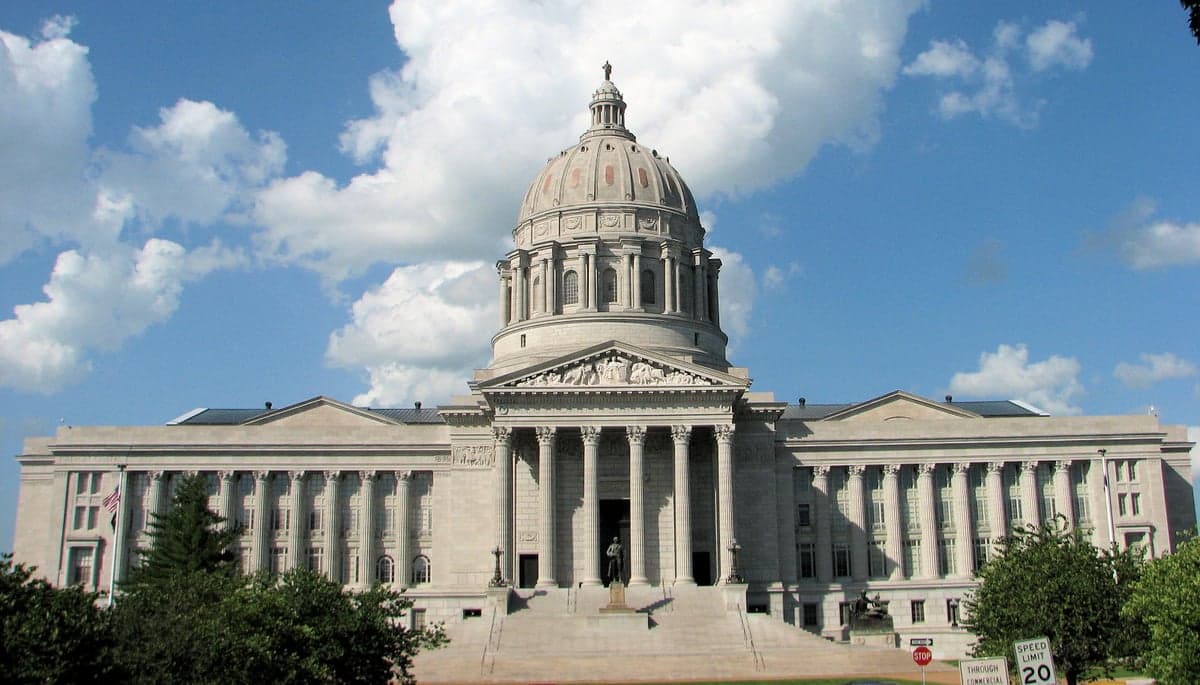
Jefferson City was founded in 1821 as the permanent seat of Missouri’s government, chosen for its bluff-top location above the Missouri River. The earliest European settlers were predominantly German immigrants, who arrived in large numbers between the 1830s and 1860s, drawn by land grants and the promise of work on the riverfront and in emerging trades. These German Catholics and Lutherans built the city’s first neighborhoods, including Old Munichburg (now the core of the historic district), where they established breweries, churches, and social halls that still anchor the community. A second wave of German and Irish laborers arrived during the construction of the Missouri State Capitol (1911–1917) and the expansion of the railroad, settling in the Moreau Drive and East Capitol Avenue corridors. The Black population grew after the Civil War, as freedmen moved from rural Boone and Callaway counties into the Ward 4 area (roughly bounded by Dunklin Street and the river), forming a distinct community centered on Lincoln University, a historically Black college founded in 1866 by the 62nd U.S. Colored Infantry. By 1900, Jefferson City was a segregated but economically stable town of about 10,000, with Germans dominating the skilled trades and government work, and Black residents concentrated in service roles and education.
Modern era (post-1965)
The post-1965 period brought gradual demographic change, though Jefferson City remained far less affected by immigration than larger Missouri cities. The Hart-Cellar Act had minimal impact here; the foreign-born share today is just 2.5%, compared to the national average of 13.7%. Instead, domestic in-migration drove growth. The expansion of state government under Governors John Ashcroft (1985–1993) and Matt Blunt (2005–2009) drew white-collar professionals from across the Midwest, many of whom settled in the West Side neighborhoods near the Capitol and along West Main Street, where newer subdivisions and apartment complexes cater to state employees. The Black population, which had been concentrated in Ward 4 for generations, began a slow suburbanization into the Southside area (south of Highway 50) and the Binder Lake corridor, though the historic core remains a cultural anchor. The Hispanic population, now 4.2%, grew modestly from the 1990s onward, driven by agricultural and construction work, with families settling in the East Side near the river and along Industrial Drive. The East/Southeast Asian community (1.4%) is small and largely professional, with families drawn by medical and university jobs, while the Indian-subcontinent population (1.3%) is similarly concentrated among healthcare workers at SSM Health St. Mary’s Hospital and faculty at Lincoln University. Notably, Jefferson City has not experienced the rapid ethnic enclave formation seen in St. Louis or Kansas City; instead, newer groups have dispersed into existing neighborhoods, with little spatial segregation beyond the historic Black-white divide.
The future
Jefferson City’s population is projected to remain stable or grow slowly, with the state government sector providing a buffer against economic downturns. The city is likely to become slightly more diverse, but the pace will be gradual. The Hispanic share may rise to 6–7% by 2035, driven by natural increase and continued labor demand, while the East/Southeast Asian and Indian populations will likely plateau at current levels unless a major employer (e.g., a new hospital or tech firm) relocates to the area. The Black population, which has held steady at around 17% for decades, is not expected to grow significantly, as younger Black residents often leave for larger cities with more job opportunities. The white population, while still the majority, is aging; the median age in Jefferson City is 39.5, slightly above the national average, and younger white families are increasingly choosing suburbs of Columbia or St. Louis. The city is not tribalizing into distinct enclaves—rather, it is slowly homogenizing into a predominantly white, middle-class, government-worker culture, with small minority communities that are well-integrated but not growing. The biggest wildcard is whether remote work will allow more out-of-state professionals to move in, attracted by low crime and low cost of living, which could modestly increase the college-educated share (currently 36.9%) and bring new cultural diversity.
For someone moving to Jefferson City today, the bottom line is this: you are joining a stable, conservative-leaning capital where government employment anchors the economy and community life revolves around church, school, and family. The city is not a melting pot in the traditional sense—it is a predominantly white, Midwestern town with a historic Black community and small, dispersed minority populations. If you value predictability, low crime, and a strong sense of local identity, Jefferson City offers a reliable foundation. If you seek rapid demographic change or a vibrant multicultural scene, you will find it elsewhere.

* Values derived from national, state, county, city and local statistics and may differ in a specific area. Last updated: 2026-04-16T00:40:04.000Z
Narrative content on this page is AI-generated and may contain mistakes. Verify any details that matter before acting on them.
ReloMaps may earn a commission from affiliate links at no extra cost to you.

