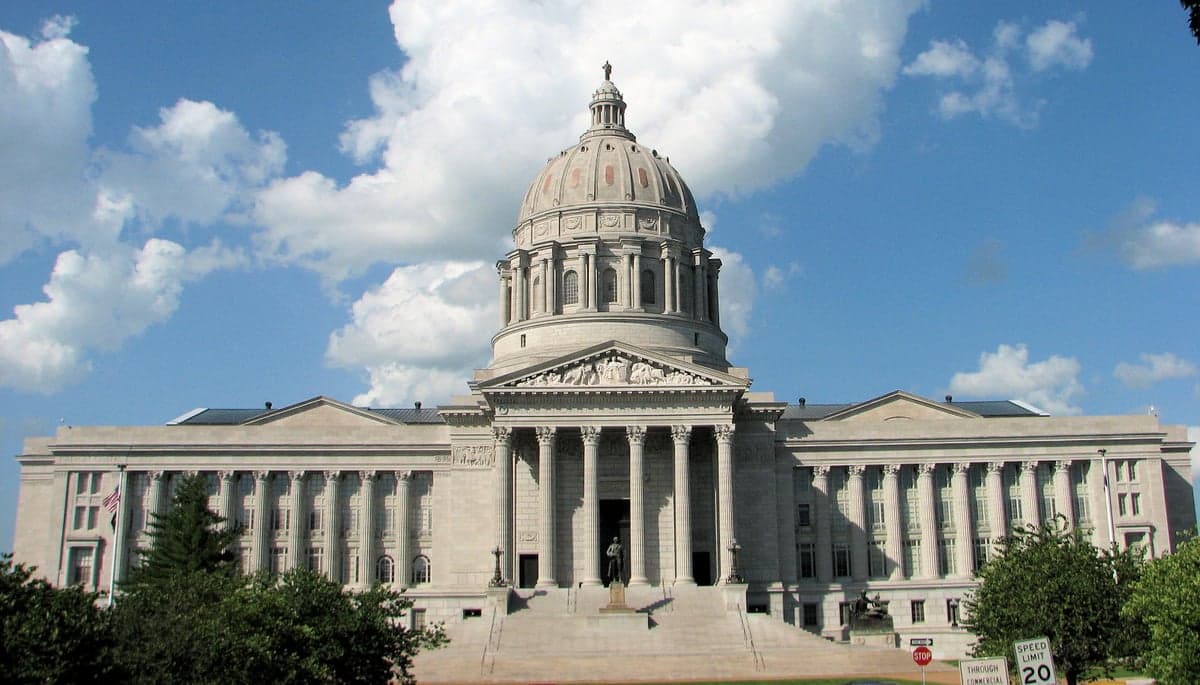
Photo: Wikipedia
Political ClimatePolitical Climate in Jefferson City, MO
District shown is the primary district for this city’s centroid. Cities may span multiple districts.
Local Political AnalysisPolitical Analysis of Jefferson City, MO
Jefferson City is about as solidly conservative as a state capital gets, with a Cook PVI of R+13 that tells you the political lean hasn't budged much over the years. The city itself has a strong Republican tilt, but it's not a monolith—you'll find a mix of state government workers, retirees, and working-class families who mostly vote red, though the local influence of state employees can sometimes soften the edges. The trajectory here is steady: the area has resisted the leftward shift seen in places like Columbia or St. Louis, and most folks I know are relieved that the core values of personal responsibility and limited government still hold strong. That said, there's a growing unease about national trends creeping in, especially with younger transplants from more progressive cities, but so far the local culture has held the line.
How it compares
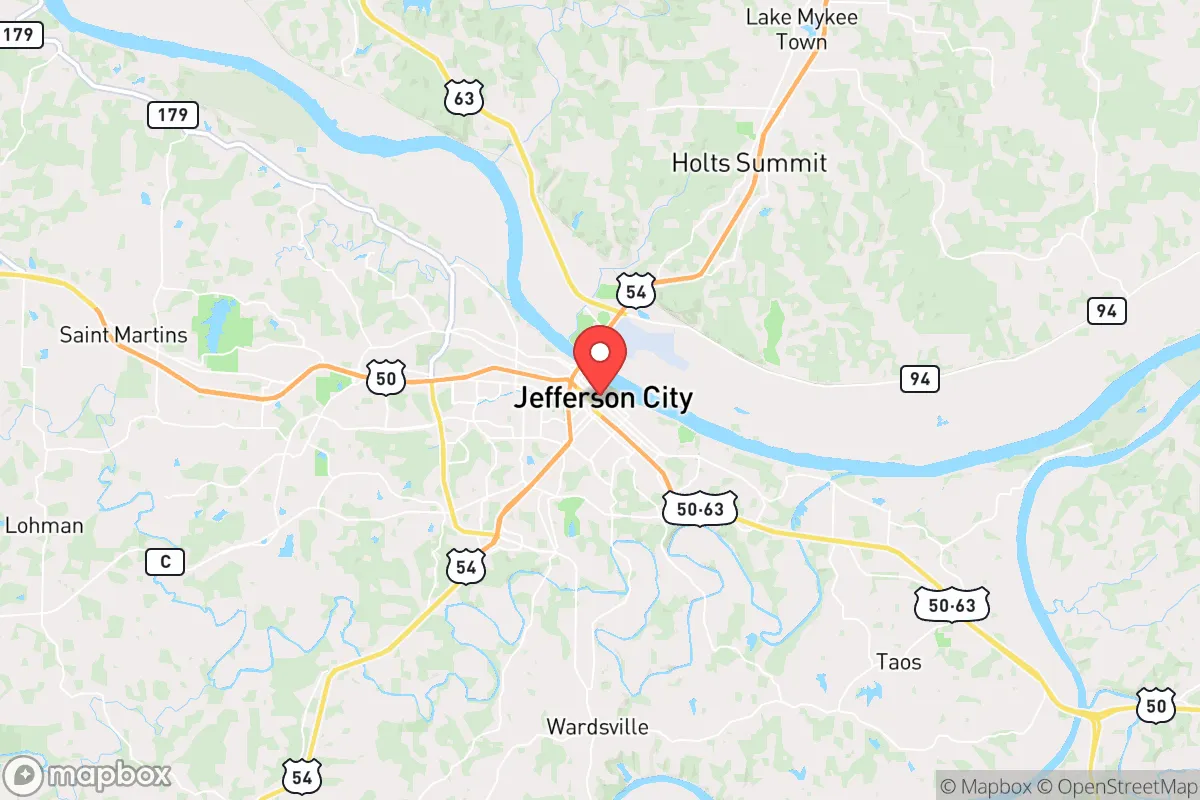
Drive 30 minutes east to Columbia, and you're in a completely different world—a college town that votes blue and pushes policies that feel like they're from another state. Jefferson City, by contrast, feels grounded in traditional Midwestern conservatism, where the Second Amendment is respected and property rights aren't up for debate. Surrounding towns like Holts Summit and Wardsville lean even more conservative, often voting +20 or more for Republican candidates, while the rural areas around the city are deep red. The contrast is stark: in Jefferson City, you can still have a conversation about taxes and personal freedoms without someone calling for a new government program to fix it. The R+13 rating reflects a community that's wary of federal overreach and values local control, which is a big reason why the area hasn't followed the progressive drift of larger Missouri cities.
What this means for residents
For daily life, the conservative climate means fewer headaches over government mandates and more trust in individual choices. You won't see the kind of zoning overhauls or social experiments that pop up in places like Kansas City or St. Louis—Jefferson City keeps things simple. Property taxes are reasonable, and there's a general sense that the city council and county commissioners are more interested in keeping the streets safe and the budget balanced than in pushing a social agenda. That said, there's a quiet concern among longtime residents about the long-term trajectory: as state government grows, so does the temptation for overreach, and some worry that the capital's own bureaucracy could start mirroring the very federal overreach they oppose. For now, though, the political climate here means you can raise a family without feeling like your values are under constant attack, and that's a rare thing in 2026.
Culturally, Jefferson City stands out for its emphasis on community self-reliance—there's a strong tradition of church involvement, volunteer fire departments, and local charities stepping in where government might try to fill the gap. Policy-wise, the city has resisted the push for sanctuary city status and kept its law enforcement focused on public safety rather than social engineering. The biggest distinction from nearby progressive areas is the respect for personal freedom: you're not going to get a lecture on your carbon footprint or face a new tax for driving a gas-powered car. It's a place where the political climate still feels like a reflection of the people, not the other way around, and that's something worth holding onto as the rest of the country drifts left.

State Political ClimatePolitical Climate in Missouri
State Political AnalysisPolitical Environment in the State
Missouri has long been a bellwether state, but over the past 20 years it has shifted from a classic purple battleground to a solidly red state, with Republicans holding supermajorities in both legislative chambers and every statewide office except the governorship (which flipped back to Republican in 2024). The state’s overall partisan lean is roughly +15 to +18 points Republican in federal races, driven by a massive rural and exurban base that has grown more conservative as the St. Louis and Kansas City metros have become increasingly Democratic. The trajectory is unmistakable: Missouri is getting redder, not bluer, and that trend accelerated after 2020.
Urban vs. rural divide
The political map of Missouri is a textbook case of the urban-rural chasm. The two major metros—St. Louis City and County, and Kansas City (Jackson County)—are deep blue islands, with St. Louis City routinely voting 80%+ Democratic and Kansas City around 70%. But the rest of the state is overwhelmingly red. The I-70 corridor from Kansas City to St. Louis passes through counties like Boone (Columbia, home to the University of Missouri) which is a purple-to-blue outlier, and then into deep red rural counties like Cooper, Moniteau, and Callaway. The Ozarks region, anchored by Springfield and Branson, is among the most conservative areas in the country, with Greene County voting +35 R in 2024. The southeastern Bootheel—Cape Girardeau, Poplar Bluff, Sikeston—is reliably red, driven by agriculture and evangelical churches. The northwest corner, including St. Joseph, has trended redder as manufacturing jobs have declined. The key suburban counties that flipped from purple to red in the 2010s—St. Charles (west of St. Louis), Jefferson (south of St. Louis), and Cass (south of Kansas City)—are now solidly Republican, and they’re growing fast. These are the places where new conservative transplants from Illinois and California are landing.
Policy environment
Missouri’s policy environment is aggressively conservative. The state has a flat income tax rate of 4.95% (down from 5.4% in 2022, with further cuts triggered by revenue triggers), no estate tax, and a low property tax burden. The legislature passed a right-to-work law in 2017 (later repealed by ballot measure in 2018, but the political will remains). Education policy is a major battleground: Missouri has a robust school choice movement, with a tax-credit scholarship program (MOScholars) that expanded in 2023 to allow state funds to follow students to private schools. The state also passed a “Parents’ Bill of Rights” in 2022 (HB 2414), requiring schools to notify parents of any curriculum changes involving sexuality or gender identity. On healthcare, Missouri did not expand Medicaid until 2021, and only after a voter-initiated ballot measure forced the issue—the legislature had resisted for years. Election laws have tightened: voter ID is required, and the 2022 law (SB 631) banned ballot drop boxes and limited absentee voting. The state also passed a “Second Amendment Preservation Act” (SAPA) in 2021, which attempts to nullify federal gun laws—a move that has sparked federal litigation but signals the state’s posture on federal overreach.
Trajectory & freedom
Missouri is clearly trending toward more personal freedom, at least as defined by conservative priorities. The 2021 SAPA law was a direct challenge to federal gun control, and while parts of it were struck down in court, the legislature re-passed a revised version in 2023. In 2023, the state enacted a near-total abortion ban (trigger law) after Dobbs, with no exceptions for rape or incest—only medical emergencies. This was a major expansion of what the state considers “life” freedom. On parental rights, the 2022 law (HB 2414) gave parents explicit authority over their children’s education and medical decisions, including the right to opt out of any curriculum they find objectionable. The state also passed a “Save Women’s Sports” law in 2023, banning transgender athletes from female sports. On taxes, the 2022 income tax cut was the largest in state history, and further cuts are triggered automatically if revenue grows. The overall direction is clear: less government intrusion on guns, education, and taxes; more government restriction on abortion and transgender issues. For a conservative, this is a state that is becoming freer in the areas that matter most.
Civil unrest & political movements
Missouri has seen its share of political flashpoints. The 2014 Ferguson protests (in the St. Louis suburb of Ferguson) were a national story, sparking the Black Lives Matter movement and leading to the “Ferguson Commission” reforms, but the backlash also galvanized conservative voters across the state. In 2020, protests in Kansas City and St. Louis turned violent, with looting and arson, and the state’s Republican governor deployed the Highway Patrol and National Guard. The “sanctuary city” debate is active: St. Louis City and Kansas City have declared themselves “sanctuary” jurisdictions, refusing to cooperate with federal immigration enforcement, which has led to legislative efforts to preempt those policies (HB 1262 in 2023, which would strip state funding from sanctuary cities). The “election integrity” movement is strong here: the 2020 election saw widespread claims of irregularities in St. Louis City, and the 2022 law (SB 631) was a direct response. There’s also a growing “county supremacy” movement in rural areas, with some counties passing resolutions declaring themselves “Second Amendment sanctuaries” and “constitutional counties.” The state’s politics are visibly polarized: you’ll see Trump flags and “Let’s Go Brandon” signs in rural areas, while St. Louis and Kansas City have “Black Lives Matter” murals and Pride flags. A new resident will notice the cultural divide immediately.
Projection
Over the next 5-10 years, Missouri will likely get even redder. The in-migration pattern is heavily conservative: people are moving from blue states (Illinois, California, Colorado) to the suburbs of St. Charles, Jefferson County, and the Springfield area. These new arrivals are often fleeing high taxes, crime, and progressive policies, and they reinforce the existing conservative majority. The Democratic strongholds in St. Louis and Kansas City are losing population, while the red suburbs and exurbs are growing. The state’s rural areas are aging but remain deeply conservative. The biggest wildcard is the St. Louis City/County area: if the city continues to lose population and the county continues to suburbanize, the Democratic vote share will shrink. The 2024 election results showed that even Boone County (Columbia) is trending redder, with Trump improving his margin there. The state’s political future is one of continued conservative dominance, with potential for further tax cuts, school choice expansion, and more aggressive preemption of local progressive ordinances. The only real threat to this trajectory is if the St. Louis and Kansas City metros somehow reverse their population decline, but that seems unlikely given the current crime and tax environment.
Bottom line for a new resident: If you’re a conservative looking for a state that respects gun rights, parental authority, and low taxes, Missouri is a strong bet. You’ll find a welcoming environment in the suburbs and rural areas, but you’ll need to accept that the two major cities are politically hostile to your values. The state is moving in the right direction on freedom, but you’ll still have to deal with the occasional blue island. If you’re moving from a high-tax state like Illinois or California, you’ll feel the difference immediately—and you’ll likely be part of the wave that keeps Missouri red for the foreseeable future.
* Values derived from national, state, county, city and local statistics and may differ in a specific area. Last updated: 2026-04-16T00:40:04.000Z
Narrative content on this page is AI-generated and may contain mistakes. Verify any details that matter before acting on them.
ReloMaps may earn a commission from affiliate links at no extra cost to you.

