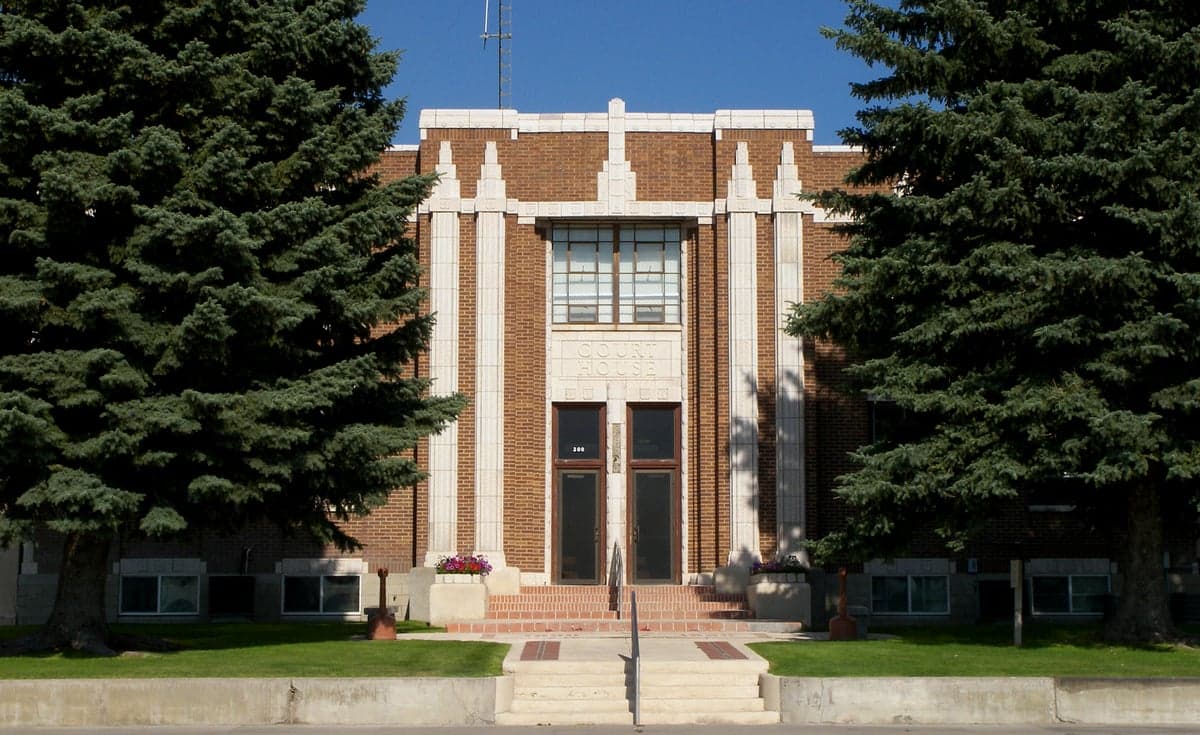
Photo: Wikipedia
Personal Sovereignty in Jerome, ID
Moderate friction. Expect trade-offs in some aspect of personal liberty and independence.
What does Personal Sovereignty tell us?
Personal Sovereignty measures your capacity for self-reliance and independence with minimal government friction. Higher scores mean fewer barriers between you and the way you want to live... but it assumes you have the space you need and good neighbors.
What does this tell us?
Personal Sovereignty measures your capacity for self-reliance and independence with minimal government friction. Higher scores mean fewer barriers between you and the way you want to live... but it assumes you have the space you need and good neighbors.
State Policy
Energy independence: Importer (25% of energy produced in-state)
Personal Liberty
Homesteading

Personal Liberty Analysis
Jerome, Idaho, offers a notably high degree of personal sovereignty compared to many regions in the Pacific Northwest and the Intermountain West, largely due to Idaho’s strong state-level preemption laws and a cultural ethos that prizes individual responsibility over collective mandates. For a conservative-leaning individual or family concerned with government overreach, this small city in the Magic Valley represents a strategic outpost where local governance is constrained by state statutes that protect gun rights, parental authority, and property autonomy. While no location is immune from federal overreach, Jerome’s legal framework and community norms create an environment where a survivalist or prepper mindset can operate with fewer bureaucratic obstacles than in coastal states.
Tax burden and regulatory posture: How Idaho’s fiscal policies protect your wallet and choices
Idaho’s tax structure is deliberately designed to minimize the state’s footprint on personal income and property, which directly supports individual sovereignty. The state levies a flat income tax rate of 5.8% (as of 2025), with ongoing legislative pressure to reduce it further, and property taxes in Jerome County average around 0.69% of assessed value—well below the national average. There is no state-level estate or inheritance tax, meaning wealth you build can pass to heirs without the government taking a cut. More critically for the autonomy-minded, Idaho has strong regulatory preemption laws that prevent cities like Jerome from enacting their own stricter building codes, energy mandates, or business licensing requirements that exceed state standards. This means you won’t face local ordinances banning natural gas hookups, mandating solar panels, or imposing rent control—common overreaches in blue states. The state’s “right-to-farm” laws also shield agricultural operations from nuisance lawsuits, which is relevant if you plan to keep livestock or grow food on your property. For a prepper, this regulatory predictability means you can invest in self-sufficient infrastructure—like a backup generator, water storage, or a workshop—without worrying about a city council changing the rules mid-stream.
Self-defense and gun law specifics: What Idaho’s constitutional carry means for your family’s security
Idaho is one of the strongest Second Amendment states in the nation, and Jerome residents benefit directly from that posture. The state enacted permitless (constitutional) carry for both residents and non-residents in 2016, meaning any law-abiding adult can carry a concealed firearm without a permit, background check, or training requirement. There is no state-level registry for firearms, no waiting periods, and no ban on standard-capacity magazines or common rifle platforms like AR-15s. The “stand your ground” law is fully in effect, with no duty to retreat in any place you have a legal right to be. For parents, this extends to school zones—while federal law restricts firearms near K-12 schools, Idaho has a preemption statute that nullifies local school district gun bans, and the state allows concealed carry on school property with an enhanced permit (which requires a background check and training). Castle doctrine protections are robust: deadly force is presumed justified if someone unlawfully enters your home or vehicle. For the survivalist, this legal environment means you can maintain a comprehensive defensive capability—firearms, ammunition storage, and training—without fear of sudden legislative bans or local confiscation orders. The nearest major city with anti-gun politics is Boise, but state preemption prevents Boise from enforcing its own magazine bans or waiting periods within city limits, and Jerome is far enough removed to feel insulated from that urban pressure.
Self-reliance and homesteading viability: Lot sizes, zoning, and off-grid feasibility in Jerome
Jerome’s zoning and land-use policies are generally favorable for those seeking a self-reliant lifestyle, though the city itself is more suburban than rural. Within city limits, standard residential lots range from 6,000 to 12,000 square feet, which is enough for a substantial garden, a small chicken coop, and a workshop, but not for large livestock or extensive off-grid systems. The real opportunity lies in the unincorporated areas of Jerome County, where zoning is minimal and lot sizes can be as small as one acre in some subdivisions or as large as 20+ acres in agricultural zones. County regulations do not require building permits for structures under 200 square feet (like sheds or greenhouses), and there are no county-level bans on rainwater collection—though Idaho water law requires a permit for large-scale capture. Off-grid solar is fully legal, and net metering is available through Idaho Power, but the state does not mandate that utilities buy back excess power at retail rates, so true energy independence is more practical than profitable. Septic systems are permitted for properties without sewer access, and well drilling is allowed with a state water right permit, which is generally straightforward for domestic use. For the prepper, the key limitation is that Jerome County does not allow permanent habitation in RVs or tiny homes on wheels without a conditional use permit, so a stick-built or manufactured home on a foundation is the standard path. Overall, the area is viable for a “homestead-lite” approach—enough land for food production, water independence, and energy backup—without the extreme isolation of northern Idaho.
Personal liberties: Parental rights, medical autonomy, speech, and property protections
Idaho has become a national leader in protecting parental rights, which directly impacts family sovereignty. The state’s “Parental Rights in Education” law (often called the “Don’t Say Gay” bill) prohibits classroom instruction on sexual orientation and gender identity in K-3, and a 2024 law requires schools to obtain parental consent before a child can change their name or pronouns in school records. Medical autonomy is also strongly protected: Idaho has banned nearly all abortions (with narrow exceptions for rape, incest, and life of the mother), and the state does not require COVID-19 or other experimental vaccines for school attendance—parents can claim a religious or philosophical exemption. For the survivalist concerned with medical freedom, Idaho also has no state-level mandate for health insurance to cover specific treatments, and direct primary care (subscription-based doctor access) is legal and growing. Free speech protections are robust, with no state hate speech laws that could be used to silence political or religious expression, and property rights are reinforced by Idaho’s “private property protection act,” which requires the government to compensate landowners for any regulatory taking that reduces property value by more than 20%. The downside for the autonomy-minded is that Idaho’s state government has been aggressive in enforcing drug laws—marijuana remains fully illegal, with no medical or recreational exceptions—so self-medication or alternative therapies involving cannabis are not an option without legal risk. For a conservative family, however, this trade-off is often seen as a feature, not a bug.
In the broader landscape of personal sovereignty, Jerome, Idaho, ranks among the top-tier locations in the continental United States for individuals and families who prioritize freedom from government overreach. The combination of constitutional carry, parental rights laws, low taxes, and minimal zoning creates a legal environment where a prepper or survivalist can build a resilient lifestyle without constant legal friction. Compared to states like Oregon, Washington, or Colorado—where local governments routinely preempt state protections—Jerome’s position within Idaho’s strong preemption framework means your rights are relatively insulated from urban political shifts. The trade-offs are real: you’re in a semi-arid agricultural valley with limited water resources, and the nearest major city (Boise) is two hours away, which can feel isolating for some. But for those who see isolation as a buffer against federal overreach and cultural decay, Jerome offers a strategic balance of legal protection, affordability, and community self-reliance that is increasingly rare in the modern United States.

* Values derived from national, state, county, city and local statistics and may differ in a specific area. Last updated: 2026-04-21T11:06:30.000Z
Narrative content on this page is AI-generated and may contain mistakes. Verify any details that matter before acting on them.
ReloMaps may earn a commission from affiliate links at no extra cost to you.

