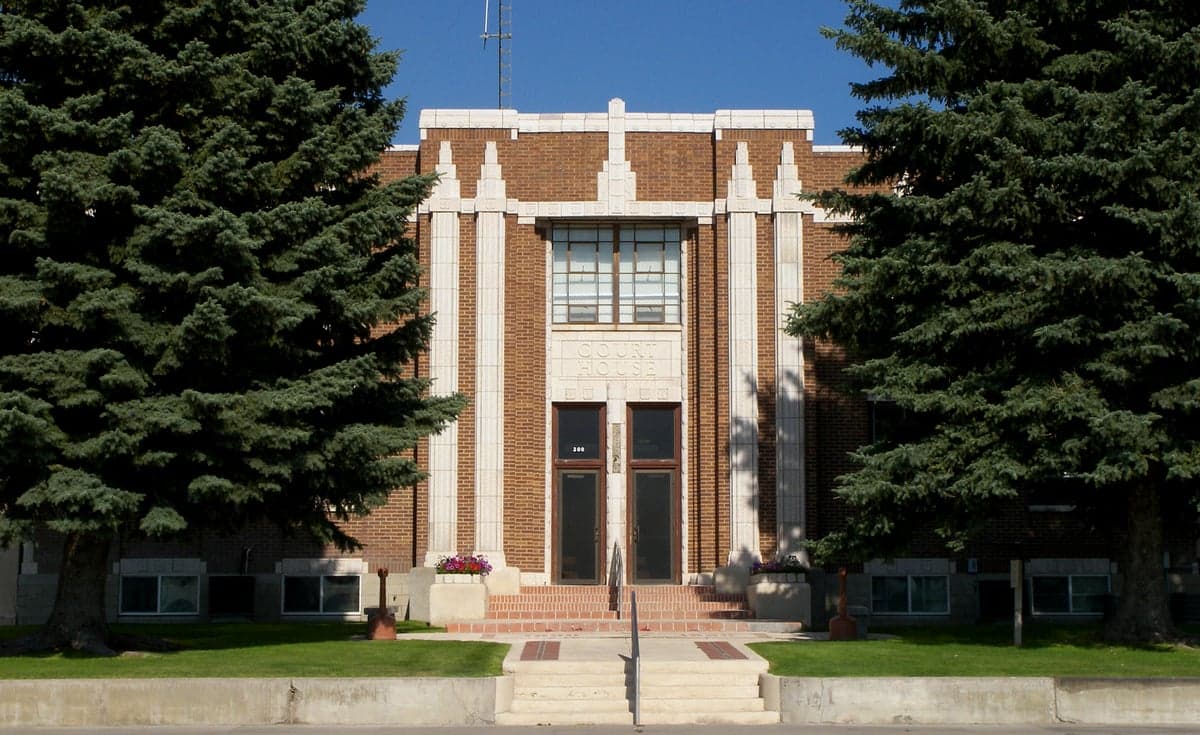
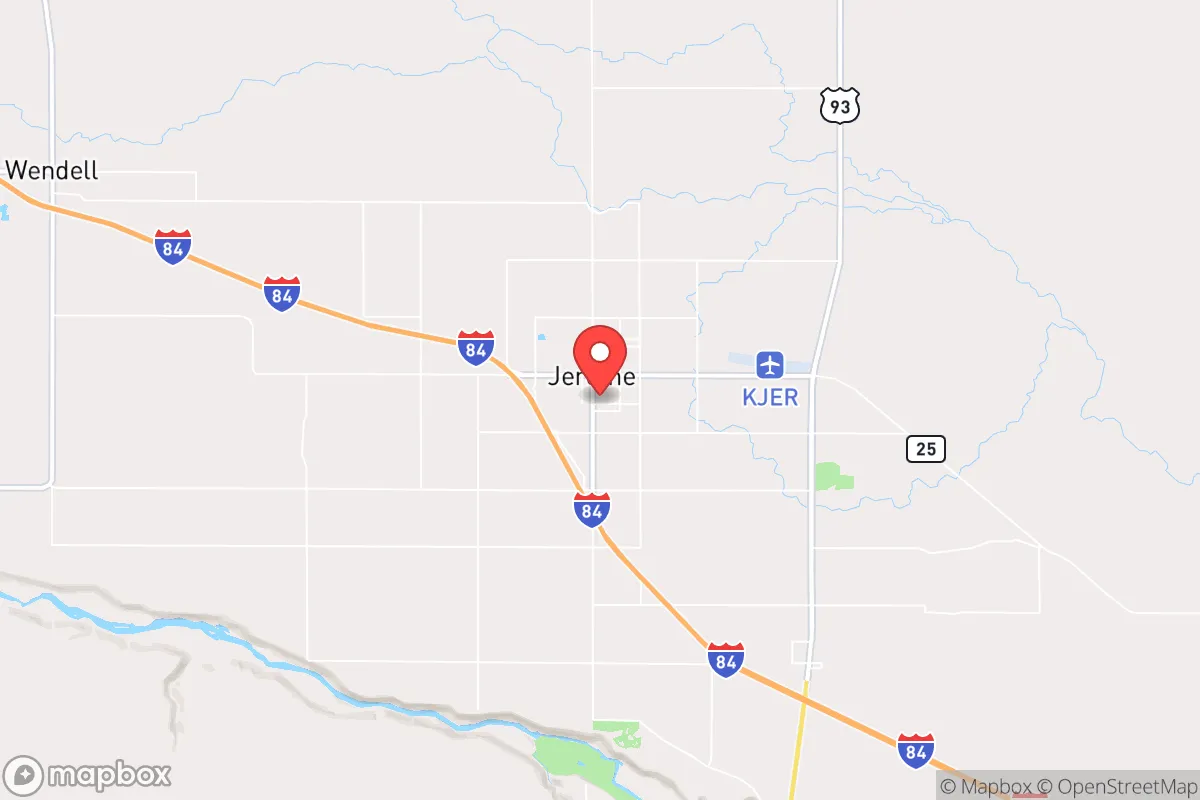
Photo: Wikipedia
Demographics of Jerome, ID
Affluence Level in Jerome, ID
A middle-class area roughly in line with national averages across income, home values, education, and employment.
People of Jerome, ID
The people of Jerome, Idaho, today form a nearly evenly split community between White (47.4%) and Hispanic (48.5%) residents, a demographic balance that makes it one of the most ethnically integrated small cities in the Magic Valley. With a population of 12,689 and a foreign-born share of 18.7%, Jerome is a working-class town defined by its agricultural roots and a growing Latino majority that has reshaped its neighborhoods and civic life. The city’s identity is distinctly blue-collar, with only 9.7% of adults holding a college degree, and its residents are concentrated in older core neighborhoods and newer subdivisions that reflect two distinct waves of settlement.
How the city was settled and grew
Jerome was founded in 1907 as a railroad town on the Oregon Short Line, named after Jerome Hill, a vice president of the Union Pacific Railroad. The original population was almost entirely White, drawn by the promise of irrigated farmland following the Minidoka Project, which opened the Snake River Plain to intensive agriculture. The first settlers clustered around the original townsite, now the Historic Downtown Jerome district, where wooden storefronts and modest homes housed railroad workers, merchants, and farmers. By the 1920s, a small wave of Basque sheepherders and Japanese laborers arrived to work the sugar beet fields and potato farms, settling in what became known as the South Side neighborhood, south of Main Street near the railroad tracks. The Japanese community, though small, established a lasting presence through truck farming and later dispersed after World War II internment. Through the mid-20th century, Jerome remained a predominantly White, agricultural service center, with population hovering around 4,000 until the 1970s.
Modern era (post-1965)
The post-1965 Hart-Cellar Act and the expansion of the H-2A guest worker program triggered a fundamental demographic shift. Mexican and Central American laborers, initially seasonal workers in the potato and dairy industries, began settling permanently in the 1980s and 1990s. They concentrated in the West End neighborhood, west of Lincoln Avenue, where older, affordable housing stock and proximity to packing plants made it a natural landing zone. By 2000, the Hispanic share had risen to roughly 30%, and by 2020 it had reached 48.5%, while the White share fell to 47.4%. The Northgate subdivision, built in the 1990s and 2000s north of Highway 50, became a destination for upwardly mobile Hispanic families seeking newer homes, while the Eastside neighborhood, east of the railroad tracks, remained predominantly White and older. The Asian population (East/Southeast Asian) is negligible at 0.2%, and the Indian-subcontinent population is 0.0%, reflecting Jerome’s lack of the tech-driven diversity seen in Boise. The Black population is 0.1%. The foreign-born share of 18.7% is nearly all Hispanic, with many residents holding dual citizenship or legal permanent residency.
The future
Jerome’s population is projected to continue growing, driven by natural increase among the Hispanic population and ongoing in-migration from Mexico and Central America. The city is not homogenizing; rather, it is tribalizing into distinct enclaves. The West End and South Side remain heavily Hispanic and working-class, while the Eastside and newer subdivisions like Meadowbrook (built in the 2010s) attract a mix of White and Hispanic families, though with less ethnic concentration. The Hispanic population is plateauing in share—it has held near 48-49% since 2020—suggesting that assimilation and out-migration of second-generation residents to larger cities like Twin Falls or Boise may be slowing growth. The White population is aging and declining slightly, as younger White families leave for college or higher-paying jobs. Over the next 10-20 years, Jerome will likely remain a majority-minority city with a stable Hispanic majority, a shrinking White minority, and very little Asian, Black, or Indian presence. The city’s character will stay agricultural and blue-collar, with a growing bilingual workforce and a political landscape that leans conservative but is increasingly influenced by Latino voters.
For someone moving in now, Jerome offers a tight-knit, affordable community where the dominant cultural divide is not between native-born and immigrant but between older White residents and a younger, growing Hispanic population that is reshaping schools, churches, and local government. The city is becoming a place where two distinct communities coexist with minimal friction, each anchored in its own neighborhoods and institutions. It is not a melting pot, but a stable dual-community town—a reality that prospective residents should understand before arriving.

* Values derived from national, state, county, city and local statistics and may differ in a specific area. Last updated: 2026-04-21T11:06:30.000Z
Narrative content on this page is AI-generated and may contain mistakes. Verify any details that matter before acting on them.
ReloMaps may earn a commission from affiliate links at no extra cost to you.

