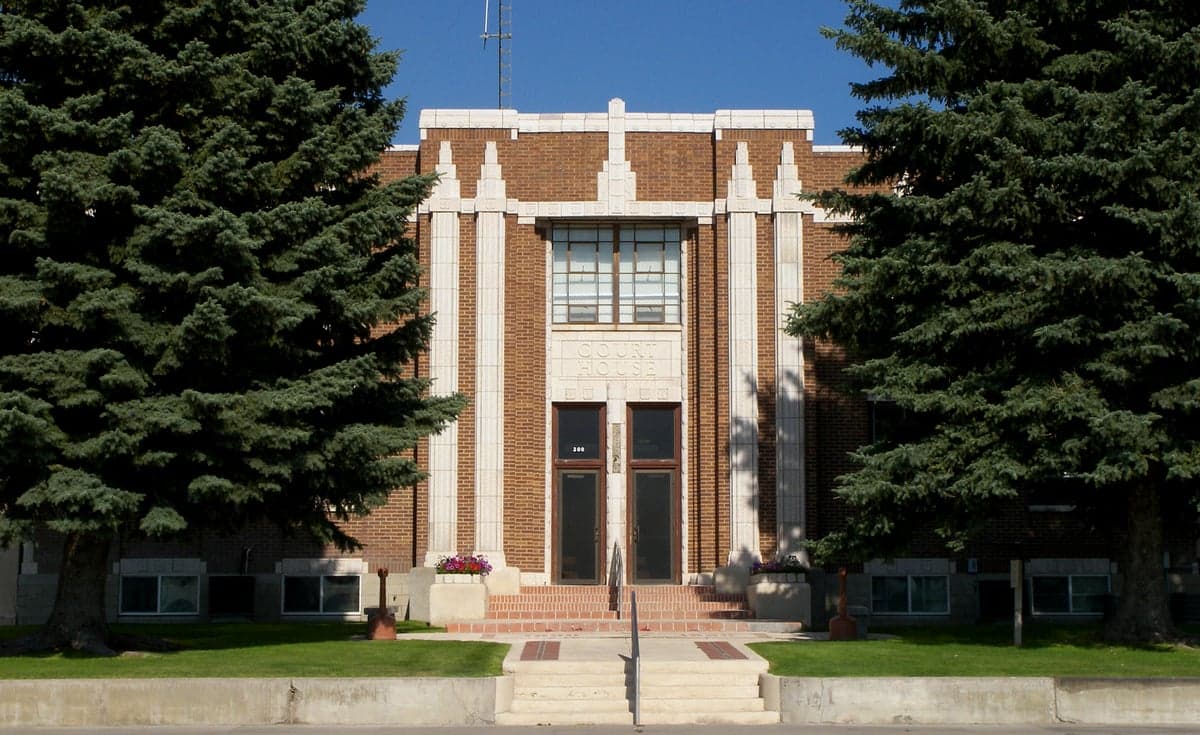
Photo: Wikipedia
Political ClimatePolitical Climate in Jerome, ID
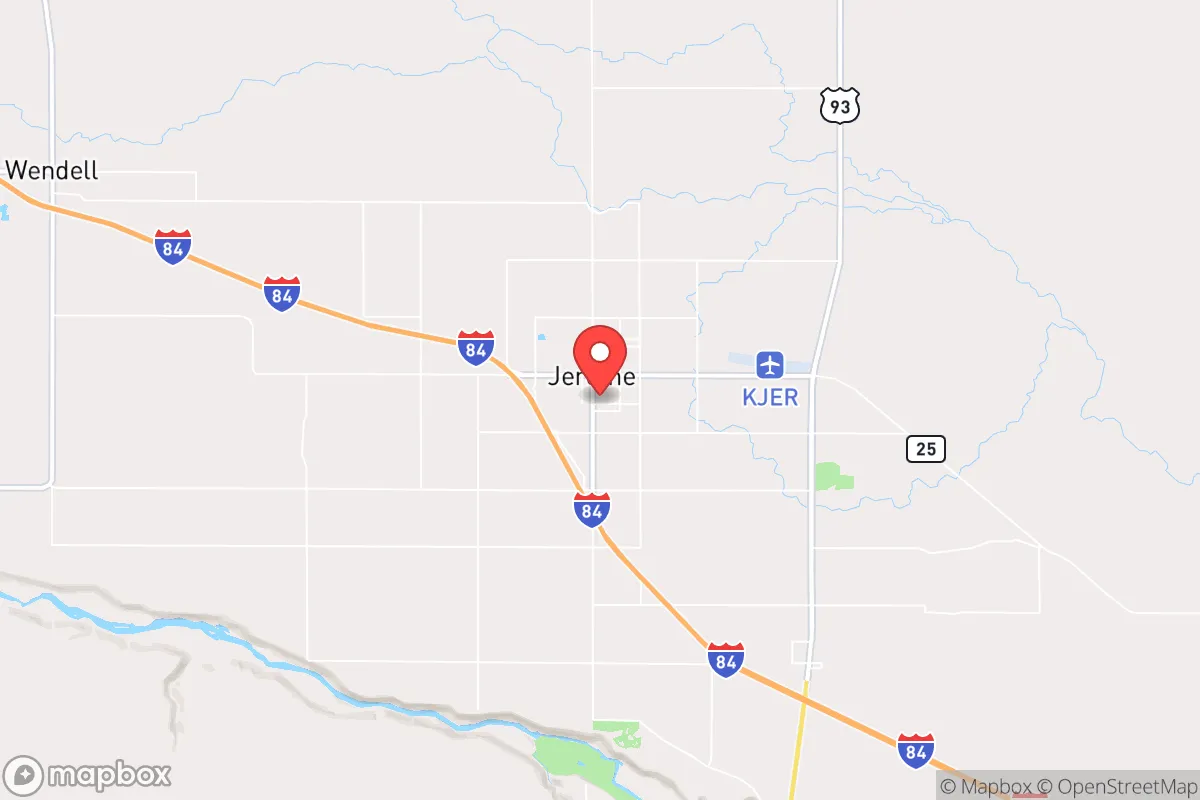
District shown is the primary district for this city’s centroid. Cities may span multiple districts.
Local Political AnalysisPolitical Analysis of Jerome, ID
Jerome, Idaho, sits solidly in conservative territory, with a Cook PVI of R+13 that reflects the deep-rooted Republican lean of the Magic Valley region. If you’ve been around here long enough, you’ve seen the community hold the line on personal freedoms and local control, even as some neighboring towns like Twin Falls or Boise start drifting toward more progressive policies. The political climate here isn’t just about party registration—it’s about a way of life that values limited government, Second Amendment rights, and the belief that local folks know what’s best for their own families. That said, there’s a growing unease among long-time residents about outside influences creeping in, especially from the west, where county-level shifts toward blue voting patterns have been noticeable in recent cycles.
How it compares
Compared to the rest of Idaho, Jerome County is reliably red, but it’s not the most conservative pocket in the state. Neighboring Gooding County to the east leans even harder right, while Blaine County—home to Sun Valley and Ketchum—is a stark contrast, voting reliably blue and pushing policies that many here see as government overreach. Twin Falls, just 15 minutes west, has seen a slight uptick in progressive candidates for city council, which raises eyebrows among Jerome residents who worry about that trend spreading. The real contrast, though, is with Boise, where the state’s largest city has embraced zoning changes, mask mandates, and other top-down measures that would never fly in Jerome. Locals here take pride in the fact that their county commissioners and school board members still prioritize individual rights over bureaucratic control, but the pressure is mounting as more Californians and urban transplants move into the area, bringing their voting habits with them.
What this means for residents
For someone living in Jerome, the political climate translates directly into daily life—lower taxes, fewer regulations on property use, and a school system that hasn’t yet been taken over by progressive curriculum mandates. You can still build a shop on your land without jumping through endless hoops, and your kids aren’t being taught critical race theory or gender ideology in the classroom. The local sheriff’s office has made it clear they won’t enforce federal overreach on gun laws, and the city council has resisted pressure to adopt sanctuary city policies for illegal immigration. That said, the 2024 election cycle brought some close races in the county, and there’s a real concern that if the trend toward suburbanization continues, we could see a repeat of what happened in places like Bend, Oregon—where a once-conservative community got flipped by an influx of out-of-state money and voters. The long-term outlook depends on whether current residents stay engaged and keep voting for candidates who respect local autonomy.
Culturally, Jerome still feels like a place where neighbors look out for each other and the government stays out of your business. The annual county fair, the strong presence of the LDS Church, and the agricultural backbone of potato and dairy farming reinforce a conservative ethos that’s been here for generations. But there’s a quiet tension: the new housing developments popping up on the outskirts are bringing in families who don’t share those values, and the school board has already faced debates over library books and parental rights. If you’re considering a move here, know that Jerome is still a safe bet for anyone who values freedom over government control—but keep an eye on local elections, because the fight to keep it that way is just getting started.

State Political ClimatePolitical Climate in Idaho
State Political AnalysisPolitical Environment in the State
Idaho is one of the most reliably Republican states in the nation, with a deep-red partisan lean that has only intensified over the past two decades. The state has not voted for a Democratic presidential candidate since 1964, and in 2024, Donald Trump carried Idaho by roughly 30 points, reflecting a dominant coalition of rural conservatives, Mormon cultural influence, and a growing wave of out-of-state transplants seeking lower taxes and fewer restrictions. Over the last 10-20 years, the political trajectory has been a steady march rightward, driven by rapid population growth in the Treasure Valley and a backlash against coastal progressive policies, though recent in-migration from California and Washington has begun to introduce subtle tensions in a few suburban pockets.
Urban vs. rural divide
The political map of Idaho is starkly divided between its few urban centers and the vast rural expanse. The state’s largest metro, the Boise-Nampa area (Ada and Canyon counties), is the engine of Republican dominance, but it’s not monolithic. Boise proper has trended slightly more moderate in recent cycles, with Ada County voting about 55% Republican in 2024, down from 60% a decade ago, as younger professionals and tech workers move in. However, the surrounding suburbs like Meridian and Eagle remain reliably red, with Eagle often hitting 70%+ GOP. The real firepower comes from rural counties: places like Bonneville (Idaho Falls), Kootenai (Coeur d’Alene), and Madison (Rexburg) routinely deliver 75-80% Republican margins. The only notable blue dot is Blaine County (Sun Valley/Ketchum), a wealthy ski resort area that votes Democratic by about 20 points, but it’s an outlier. The divide is less about urban vs. rural in the traditional sense and more about the Treasure Valley’s suburban sprawl versus the deeply conservative agricultural and mountain communities in the rest of the state.
Policy environment
Idaho’s policy environment is a model of limited government, with a flat income tax rate of 5.8% (recently cut from 6%), no corporate income tax on pass-through entities, and a sales tax of 6% that exempts groceries. The state legislature, dominated by the conservative Idaho Freedom Caucus, has aggressively pursued school choice, passing a $50 million education savings account program in 2024 that allows parents to use public funds for private or homeschool expenses. Healthcare policy is minimal—Idaho has not expanded Medicaid under traditional rules (though it did via a 2019 ballot initiative), and the state maintains a strict pro-life law banning abortion at all stages with narrow exceptions. Election laws are among the most secure in the nation: voter ID is required, same-day registration is not allowed, and the state uses paper ballots with hand-count audits in many counties. The regulatory posture is business-friendly, with no state-level minimum wage above the federal $7.25 and a right-to-work law that keeps unions weak. For a conservative, this is a state that largely stays out of your wallet and your life.
Trajectory & freedom
Idaho is becoming more free in several key areas, but there are warning signs. On the positive side, the 2024 legislative session passed the Idaho Firearms Freedom Act, which prohibits state and local enforcement of any future federal gun bans or registration schemes—a direct nullification move that signals a commitment to Second Amendment rights. Parental rights were strengthened with the Parental Rights in Education Act (2023), which requires schools to notify parents of any curriculum involving sexuality or gender identity and bans transgender athletes from female sports. Medical autonomy has been expanded via the Medical Freedom Act (2023), which prohibits vaccine mandates by private employers and government entities. However, property rights are under pressure from rapid growth: cities like Boise and Coeur d’Alene have imposed stricter zoning and impact fees, and there’s a growing tension between long-time residents and newcomers over land use. The state also passed a constitutional carry law in 2016, allowing permitless concealed carry. Overall, the trajectory is toward more personal liberty, but the influx of people is straining the infrastructure and testing the state’s small-government ethos.
Civil unrest & political movements
Idaho has seen relatively little civil unrest compared to coastal states, but there are active political movements on both sides. The most visible is the Idaho Freedom Foundation, a conservative think tank that has successfully pushed for tax cuts, school choice, and anti-mandate legislation. On the far right, groups like the People’s Rights (founded by Ammon Bundy) have organized protests against mask mandates and vaccine passports, particularly in 2020-2021, with large rallies at the Idaho Statehouse. Immigration politics are a flashpoint: the state passed a 2024 law allowing local law enforcement to enforce federal immigration laws, and there have been protests in Twin Falls over the growing refugee resettlement program (Idaho resettles about 1,000 refugees annually, mostly from Congo and Afghanistan). Election integrity controversies are minimal—the state’s paper ballot system is widely trusted—but there was a brief kerfuffle in 2022 when a Democratic candidate for governor claimed voter suppression in rural counties. No sanctuary cities exist; in fact, the legislature preempted any such policies in 2020. A new resident would notice a general civility in daily life, but the political temperature rises during legislative sessions, especially around education and land use.
Projection
Over the next 5-10 years, Idaho will likely become more conservative in policy but more diverse in population, creating a fascinating tension. The Treasure Valley is expected to add another 200,000 residents by 2030, many from California, Oregon, and Washington. These newcomers tend to be fiscally conservative but socially moderate, which could shift Ada County to a 50-50 swing county by 2032. However, the rural counties will remain deeply red, and the legislature will continue to pass preemptive laws to lock in conservative policies before the demographics shift too far. Expect more school choice expansion, further tax cuts (possibly a flat tax of 4-5%), and stronger nullification measures against federal overreach. The wildcard is housing: if prices continue to skyrocket (Boise’s median home price hit $550,000 in 2025), younger conservatives may be priced out, and the state could see a backlash against growth. For someone moving in now, expect a state that is still very free but increasingly crowded, with a political culture that is fighting to stay ahead of the curve.
Bottom line for a new resident: Idaho is a safe bet if you value low taxes, gun rights, parental control over education, and a government that mostly leaves you alone. The political climate is stable and conservative, but the rapid growth is introducing new pressures—especially in Boise and Coeur d’Alene—that could shift the vibe over the next decade. If you’re looking for a place where your freedoms are protected and your neighbors share your values, Idaho is still one of the best options in the West, just keep an eye on the Treasure Valley’s trajectory.
* Values derived from national, state, county, city and local statistics and may differ in a specific area. Last updated: 2026-04-21T11:06:30.000Z
Narrative content on this page is AI-generated and may contain mistakes. Verify any details that matter before acting on them.
ReloMaps may earn a commission from affiliate links at no extra cost to you.

