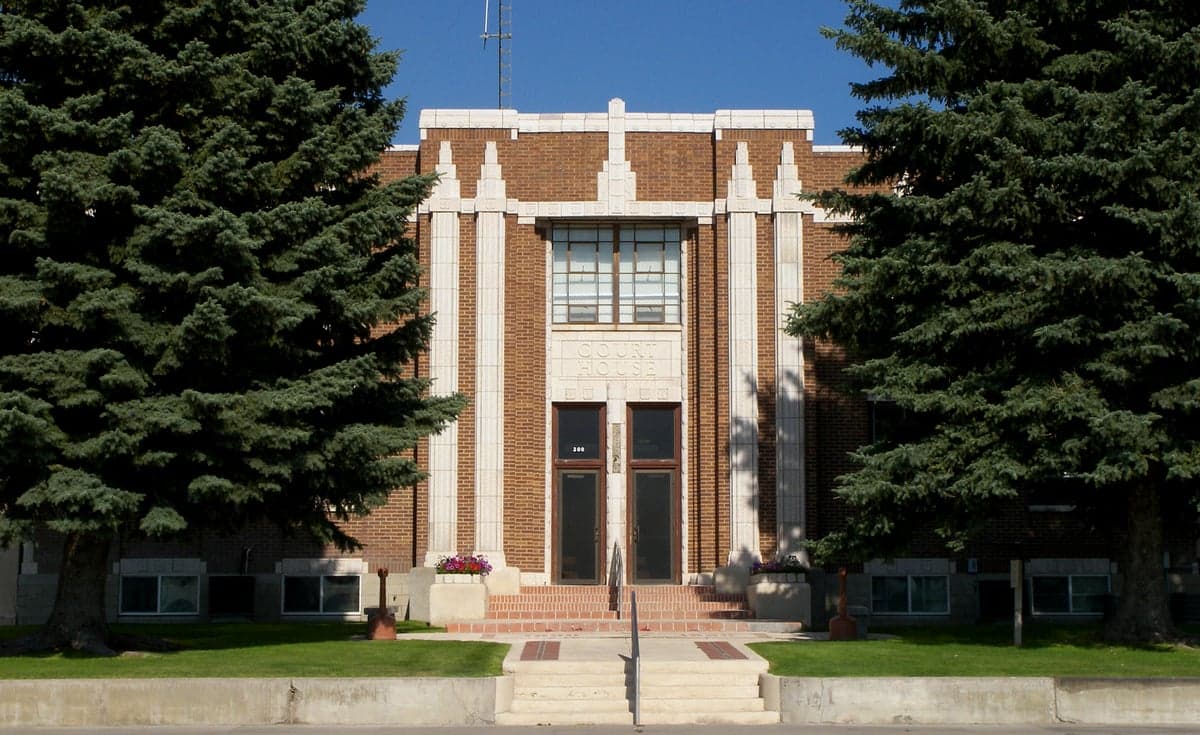
Photo: Wikipedia
Strategic Assessment of Jerome, ID
Strong survivability profile. Good buffer from population centers, with manageable environmental and tactical risks.
What does the Strategic Assessment tell us?
Our Strategic Assessment grades tactical survivability of an area. Major population centers, military targets, fallout zones, natural disasters, and border exposure all drive risk — lower exposure means a more defensible position in a crisis.
This is heavily inspired by Joel Skousen's Strategic Relocation book. Highly recommended you checkout the book ($)What does this tell us?
Our Strategic Assessment grades tactical survivability of an area. Major population centers, military targets, fallout zones, natural disasters, and border exposure all drive risk — lower exposure means a more defensible position in a crisis.
This is heavily inspired by Joel Skousen's Strategic Relocation book. Highly recommended you checkout the book ($)Strategic Pillars

Key Distances
Regional Safe Places
Below is our recommended "safe zones" in Idaho and the surrounding area based on our strategic heuristics. For most people, it's unrealistic to live in a “safe zone” full-time due to work, family or other personal reasons. They tend to be more rural. However, many of these areas are perfect for second homes and retreat properties that double as a vacation home or even a short-term rental.
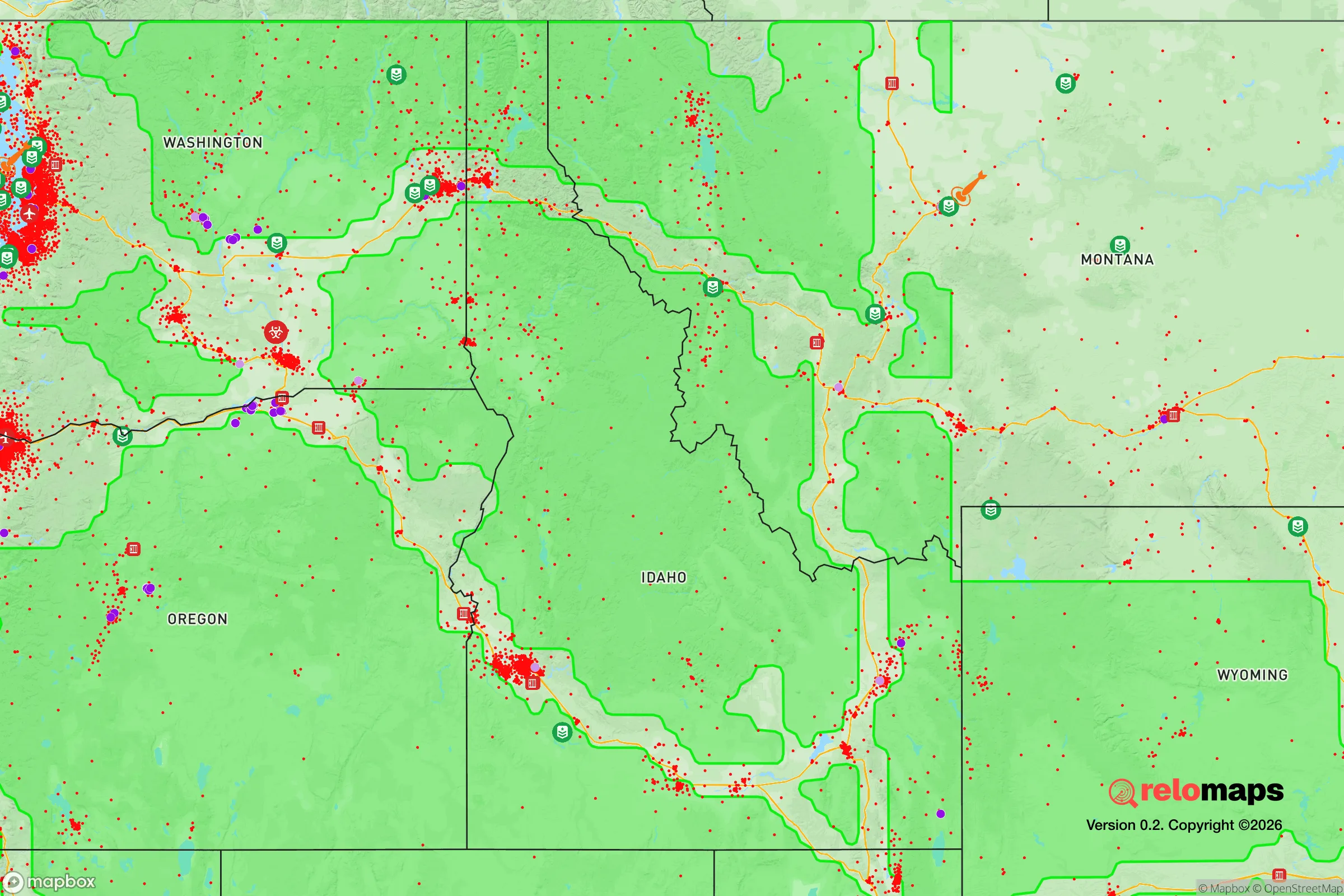
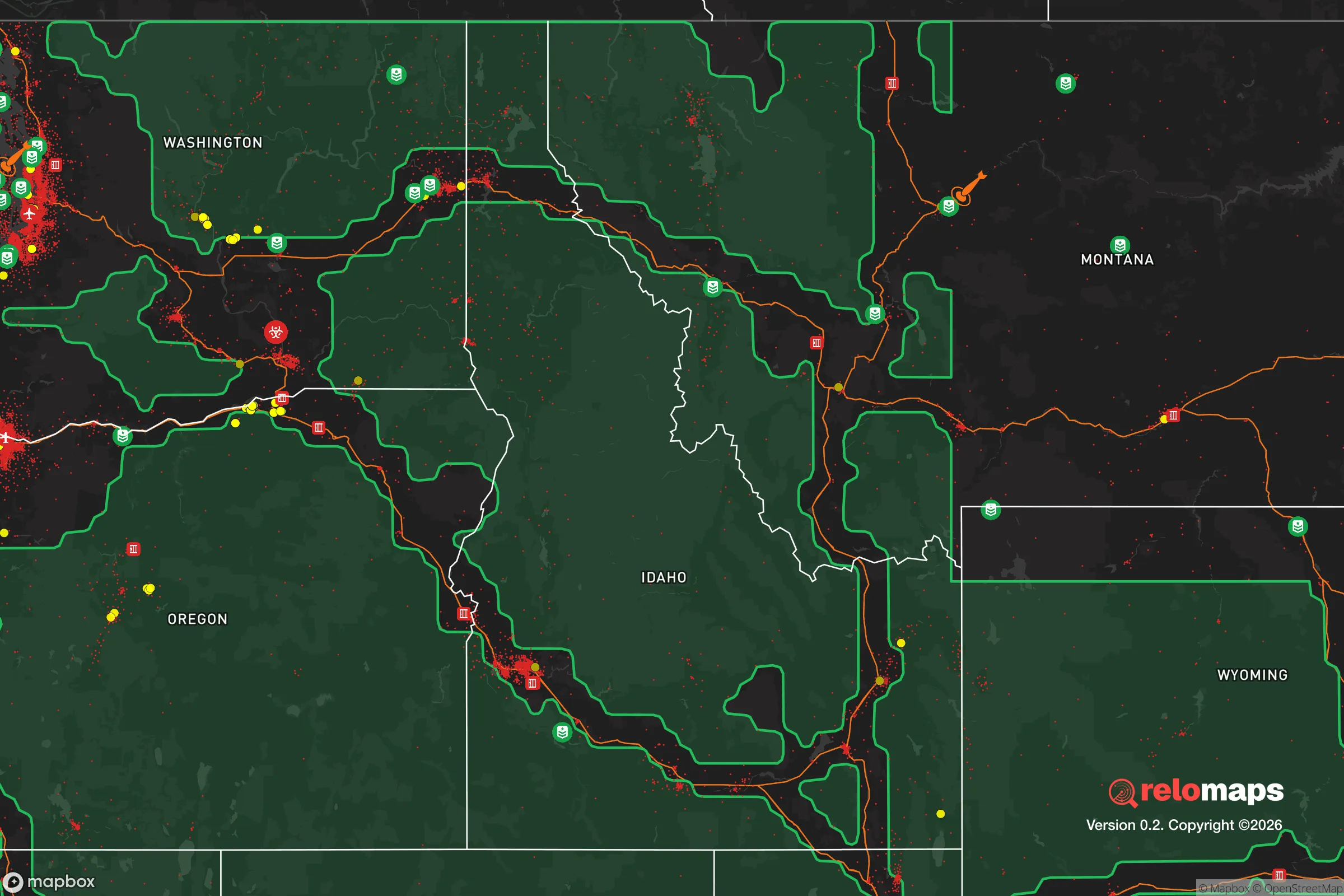


Important Note: For informational purposes only. This does not mean nothing bad ever happens in the green zones. Please use common sense. This is based on public data and modeled with AI. We tried to take a conservative approach but mistakes happen. We update this regularly as new information becomes available.
Solar Generator Recommendations
Backup power matters more here than in safer locations. We've picked three solar generators across budgets and capacity tiers — start with the budget unit if you only need a few essentials, or step up if you want to run a fridge and HVAC for days at a time.

Jackery Portable Power Station Explorer 300
Budget OptionPower on the Go: Weighing only 11 lbs, it's convenient to set up and store with book-sized foldable solar panels

BLUETTI Portable Power Station AC180
Designed for both indoor and outdoor scenarios, AC180 is highly capable as it has a robost capacity and continuous output power.

EF ECOFLOW DELTA Pro Ultra Power Station
Upgraded PickEcoFlow DELTA Pro Ultra is a whole-home energy system designed to grow with your family. Integrated with the Smart Home Panel 2, it scales to meet your evolving energy needs — keeping your home powered, intelligent, and secure through every stage of life.
We earn a commission, at no additional cost to you.
Strategic Assessment Analysis
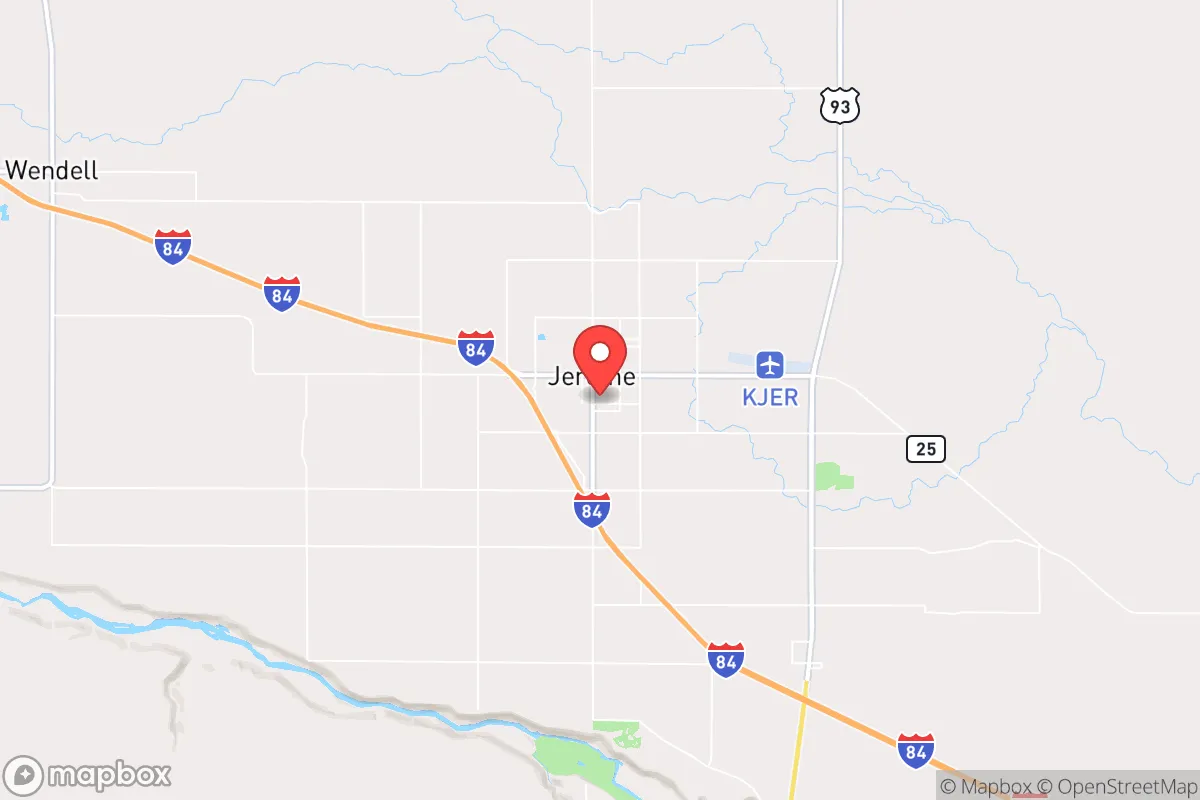
Jerome, Idaho, sits in a sweet spot that few relocators fully appreciate until they map out the concentric rings of risk around America’s vulnerable zones. Tucked into the Magic Valley along the Snake River, this town of roughly 12,000 offers a blend of agricultural self-sufficiency, distance from major population centers, and access to critical infrastructure that makes it a serious contender for anyone thinking long-term about resilience. The area’s economic anchor is dairy and food processing—think Chobani and Lamb Weston—which means local employment isn’t tied to the boom-and-bust cycles of coastal tech or finance. More importantly, Jerome’s position roughly 90 miles southeast of Boise and 150 miles northwest of Salt Lake City places it outside the immediate blast radius of any major metropolitan target, while still being close enough to tap those cities’ medical and supply chains in normal times. For a conservative-minded individual or family weighing the odds of civic unrest, supply chain disruptions, or larger-scale disasters, Jerome checks boxes that most suburban ZIP codes simply cannot.
Geographic position and natural advantages for long-term security
Jerome’s geography is its first and strongest asset. The town sits on the Snake River Plain, a broad, fertile basin that produces a staggering volume of food—Idaho is the nation’s top potato producer, and the Magic Valley is the heart of that industry. For a prepper, that means local food supply isn’t theoretical; it’s the dominant economic activity. The Snake River itself provides a reliable surface water source, and the underlying Eastern Snake River Plain Aquifer is one of the largest groundwater reserves in the western U.S., meaning water scarcity is far less of a concern here than in the desert Southwest or even parts of the Front Range. The surrounding terrain is a mix of irrigated farmland and sagebrush-covered hills, offering multiple egress routes if a situation demands movement. Unlike the narrow canyons of northern Idaho or the congested Wasatch Front, Jerome’s landscape allows for dispersed settlement and multiple approaches to any given location. The climate is semi-arid with cold winters and hot summers—not paradise, but manageable with proper preparation, and the growing season is long enough for serious gardening and small-scale farming. For someone looking to establish a property with solar panels, a well, and a root cellar, the combination of sun exposure, available land, and water access is hard to beat in the lower 48.
Risks, exposures, and proximity to fallout-relevant landmarks
No location is without vulnerabilities, and Jerome has a few that deserve honest assessment. The most obvious risk is the Idaho National Laboratory (INL), about 90 miles northeast near Idaho Falls. INL is a major nuclear research and waste storage facility, including spent fuel from the former Experimental Breeder Reactor II and other test reactors. While the site has a strong safety record, a catastrophic event—whether from accident, sabotage, or a larger conflict—could theoretically release radioactive material that drifts southwest across the Snake River Plain. Prevailing winds in the region are generally from the west and southwest, which pushes INL’s plume risk more toward eastern Idaho and Wyoming, but a shift during a release event could affect the Magic Valley. That’s a low-probability, high-consequence scenario, but it’s worth noting for anyone building a fallout shelter or planning a long-term retreat. More immediate risks are natural: the area sits in a seismically active region, with the nearby Lost River Fault capable of producing magnitude 7+ earthquakes. The 1983 Borah Peak quake (magnitude 6.9) caused damage in the region, and a repeat event could disrupt power, water, and transportation corridors. Flooding along the Snake River is a periodic concern, though Jerome itself sits on a bench above the river floodplain, so the risk is primarily to low-lying farmland rather than the town core. Wildfire risk is moderate, with the surrounding sagebrush steppe capable of carrying fast-moving fires during dry, windy conditions. For a relocator, the key takeaway is that Jerome’s risks are manageable with standard preparedness—unlike coastal hurricane zones or California wildfire corridors—but they are not zero.
Practical resilience for a relocator: food, water, energy, and defensibility
For someone serious about self-sufficiency, Jerome’s practical infrastructure is encouraging. The local food system is robust: in addition to the large processors, there are numerous small farms, farmers’ markets, and a strong culture of home gardening and livestock keeping. Zoning in the surrounding county is generally permissive for chickens, goats, and even larger animals on modest acreage, which is a significant advantage over more restrictive suburban areas. Water rights are a complex topic in Idaho, but a properly permitted well on agricultural land can provide a reliable independent water source. The region’s electrical grid is served by Idaho Power, which draws heavily from hydroelectric dams on the Snake River—a relatively stable source compared to the fragile grids of California or Texas. Solar potential is good, with over 200 sunny days per year, and net metering policies are favorable for grid-tied systems. For off-grid energy, the combination of solar and a small wind turbine can cover most household needs, though winter cloud cover can reduce solar output for stretches. Defensibility is a mixed picture. Jerome’s layout is typical of a small agricultural town: a compact downtown surrounded by scattered subdivisions and rural parcels. The terrain offers good visibility in most directions, and the lack of dense forest means fewer concealment opportunities for threats. However, the town is bisected by Interstate 84 and U.S. Highway 93, which are major regional corridors. In a crisis, these roads could become chokepoints or vectors for displaced populations moving through the area. A relocator would be wise to choose a property with a secondary access route—ideally a county road or gravel track that doesn’t funnel through the interstate interchange. The local population is predominantly conservative, Mormon, and Basque-heritage, with a strong sense of community and self-reliance. That cultural fabric is itself a resilience asset: neighbors tend to know each other, church and community networks are active, and the general attitude toward preparedness is positive rather than dismissive.
Overall, Jerome presents a compelling strategic picture for someone who wants to be out of the blast zone but not so remote that everyday life becomes a survival exercise. It’s far enough from Boise and Salt Lake City to avoid the worst of urban collapse scenarios, yet close enough to access specialized medical care, major airports, and supply chains when things are stable. The agricultural base, water availability, and permissive land-use culture make it one of the more practical locations in the Intermountain West for building a resilient homestead. The trade-offs are real—the INL risk, the seismic exposure, and the potential for corridor congestion during a crisis—but they are calculable and mitigable with proper planning. For a conservative relocator who wants to live in a place that still feels like America, where the local economy is grounded in food production rather than software subscriptions, and where the nearest major city is a deliberate drive rather than an encroaching suburb, Jerome deserves a hard look. It’s not a bug-out bunker in the wilderness; it’s a working town with working people and a working landscape. That might be exactly the kind of foundation a prepared family needs.

* Values derived from national, state, county, city and local statistics and may differ in a specific area. Last updated: 2026-04-21T11:06:30.000Z
Narrative content on this page is AI-generated and may contain mistakes. Verify any details that matter before acting on them.
ReloMaps may earn a commission from affiliate links at no extra cost to you.

