Photo: Wikipedia
Political ClimatePolitical Climate in Johnston, IA
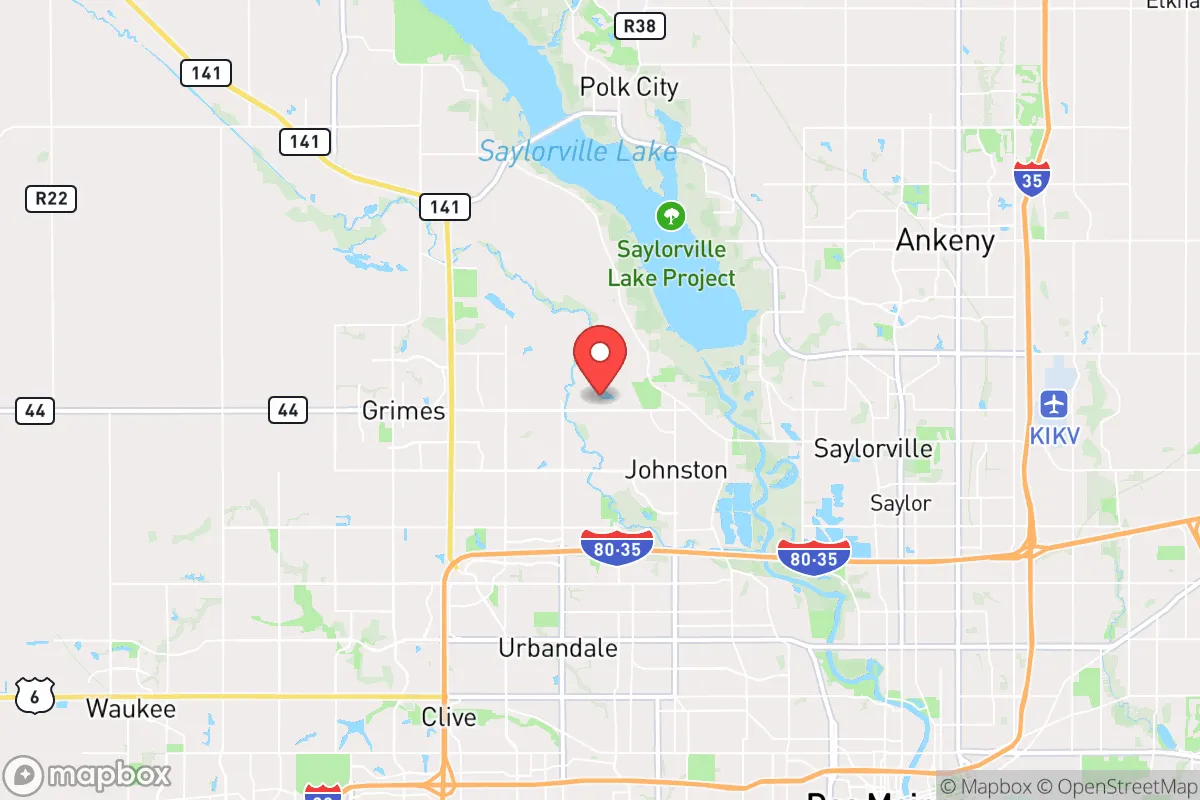
District shown is the primary district for this city’s centroid. Cities may span multiple districts.
Local Political AnalysisPolitical Analysis of Johnston, IA
Johnston, Iowa, sits in a politically interesting spot. The Cook PVI rating of R+2 tells you the district leans slightly Republican, but honestly, that number feels like it’s hanging on by a thread. For a long time, this was a reliably conservative area—folks minded their own business, kept taxes low, and didn’t expect the government to poke its nose into every corner of daily life. But over the last five to ten years, you’ve seen a real shift, especially as more people move up from Des Moines and bring that big-city, progressive mindset with them. The local school board and city council races have gotten tighter, and there’s a growing push for policies that feel less about freedom and more about control—zoning rules that make it harder to build a workshop on your own property, or talk about “equity” initiatives that sound an awful lot like picking winners and losers. It’s not a full-blown blue wave yet, but the trajectory is concerning if you value personal liberty and limited government.
How it compares
Drive ten minutes south into Des Moines proper, and you’re in a completely different world—solidly blue, with all the overreach that comes with it: higher taxes, more regulations on small businesses, and a school system that’s more focused on social engineering than reading and math. Head west to Waukee or Adel, and you’ll find communities that still lean conservative, where the local government mostly stays out of your way. Johnston sits right in the middle, and that’s what makes it tricky. You get the suburban amenities—good schools, safe streets—but you also get the creeping influence of Des Moines’ politics. The county-level votes still favor Republicans, but the city council has a few members who seem eager to copy the progressive playbook from the capital. It’s a contrast that keeps you on your toes, wondering which direction the next election will tip.
What this means for residents
For someone who values personal freedoms, the biggest concern here is the slow erosion of local control. You see it in things like the push for more restrictive housing codes or the school board’s flirtation with curriculum changes that prioritize ideology over academics. Property taxes have crept up, too, as the city adds more programs and staff that don’t always align with what residents actually want. If you’re the type who believes your home and your family are your own business, not the government’s, Johnston still works—but you have to stay engaged. Show up to those city council meetings. Vote in every local election. The margin for keeping this place from sliding into the same overreach you see in Des Moines is getting thinner every cycle.
One thing that still sets Johnston apart is its strong sense of community—neighbors help neighbors without needing a government program to do it. The local churches and civic groups are active, and there’s a real “live and let live” attitude among the older residents. But the newer arrivals, especially the young professionals commuting to Des Moines, tend to push for more government involvement in everything from housing to schools. If that trend continues, you could see Johnston start to mirror the policies of the city to its south. For now, it’s still a decent place to raise a family without too much hassle from the authorities, but keep your eye on the next few elections. That R+2 rating might not hold forever.

State Political ClimatePolitical Climate in Iowa
State Political AnalysisPolitical Environment in the State
Iowa has long been a reliably Republican state in presidential elections, voting for the GOP candidate in every cycle since 2000 except for the narrow 2008 and 2012 wins by Barack Obama. However, the state’s political landscape is more nuanced than its red-state label suggests, with a strong populist-conservative tilt in rural areas and a growing progressive influence in its urban centers. Over the past decade, the state has shifted rightward on cultural and economic issues, driven by a backlash against COVID-era mandates and a surge of conservative activism in the suburbs and small towns.
Urban vs. rural divide
The political map of Iowa is a classic tale of two Iowas. The urban corridors—Des Moines, Cedar Rapids, Iowa City, and Ames—are the state’s blue islands, powered by younger voters, university populations, and a growing professional class. Polk County (Des Moines) and Johnson County (Iowa City) are reliably Democratic, often delivering 60%+ margins for the party. In contrast, the vast rural expanse—counties like Sioux, Plymouth, and Lyon in the northwest, and Decatur and Ringgold in the south—vote Republican by 30-40 points. The real battleground is the suburban ring around Des Moines, particularly Dallas County (Waukee, West Des Moines) and Warren County (Indianola). These areas flipped from blue-leaning to solidly red in 2020 and 2022, driven by parental rights concerns and frustration with school closures. The 2024 election saw Dallas County vote +12 Republican, a stark shift from its 2016 margin of just +2.
Policy environment
Iowa’s policy environment has become a national model for conservative governance. The state enacted a flat income tax of 3.8% in 2023, down from a progressive top rate of 8.53% just a decade ago, with a plan to reach 3.5% by 2026. Property taxes are capped at 2% annual growth for residential properties, a relief for homeowners. On education, Governor Kim Reynolds signed a universal school choice program in 2023, allowing any family to use state funds for private or homeschool expenses—a major win for parental rights. The state also banned abortion at roughly six weeks (fetal heartbeat) in 2023, with no exceptions for rape or incest, and passed a law requiring schools to notify parents if a student requests a name or pronoun change. Election integrity measures include strict voter ID laws, a ban on ballot drop boxes, and a 2021 law shortening the absentee ballot window. Healthcare remains a mixed bag: Iowa expanded Medicaid under the Affordable Care Act but has since privatized the system, leading to complaints about provider access in rural areas.
Trajectory & freedom
Iowa is clearly trending more free on economic and cultural fronts, but with some caveats. The 2021 “Back the Blue” law expanded qualified immunity for police, which civil libertarians argue limits accountability. However, the state also passed a constitutional carry law in 2021, allowing permitless carry of firearms—a major expansion of Second Amendment rights. On medical freedom, Iowa banned COVID-19 vaccine mandates for state employees and contractors in 2022, and a 2023 law prohibits employers from requiring the vaccine as a condition of employment. The “Parental Rights in Education” law (2023) requires schools to get parental consent before teaching about sexual orientation or gender identity in K-6, and it bans instruction on these topics entirely in grades K-3. Property rights were strengthened in 2022 with a law limiting eminent domain for carbon capture pipelines, a hot-button issue in rural counties like Humboldt and Wright. The biggest red flag for freedom hawks is the state’s continued reliance on property taxes for school funding, though the 2% cap helps.
Civil unrest & political movements
Iowa has seen its share of political flashpoints. The 2020 Black Lives Matter protests in Des Moines and Iowa City were large but largely peaceful, though a statue of a Union soldier was toppled at the Iowa State Capitol. The most sustained activism has been on the right: the “Parents’ Rights” movement exploded in 2021-2022, with thousands attending school board meetings in Ankeny, Johnston, and Waukee to protest mask mandates and critical race theory. The 2023 “Moms for Liberty” chapter in Polk County became one of the state’s most active. Immigration politics are less heated than in border states, but Governor Reynolds deployed the Iowa National Guard to Texas in 2024 as part of a border security mission. Election integrity remains a live issue: the 2020 election saw Trump win Iowa by 8 points, but a 2021 audit of Linn County (Cedar Rapids) found no evidence of widespread fraud, despite ongoing skepticism from some GOP activists. No serious secession or nullification rhetoric exists, though a 2023 bill to nullify federal gun laws passed the House but died in the Senate.
Projection
Over the next 5-10 years, Iowa will likely become more conservative on cultural issues but may face economic headwinds. The in-migration pattern is telling: people are moving to Dallas County and Johnson County for jobs, but the rural population is aging and shrinking. The state’s population grew only 0.3% from 2020-2024, with net domestic out-migration to warmer states like Florida and Texas. However, the influx of remote workers from Chicago and the West Coast is accelerating in suburbs like Waukee and Norwalk, and these newcomers tend to be more moderate. The GOP’s dominance in the legislature (supermajorities in both chambers) means the policy direction will stay conservative for the foreseeable future, but the 2026 gubernatorial race could be competitive if a moderate Democrat emerges. The biggest wildcard is the state’s aging farm economy: if commodity prices drop, rural resentment could fuel a populist backlash against the GOP establishment. For now, expect continued expansion of school choice, further tax cuts, and a hardening of the state’s cultural conservatism.
Bottom line for a new resident: If you’re a conservative looking for a state that respects your wallet, your guns, and your parental rights, Iowa is a solid bet. The cost of living is low, the schools are decent (especially in the suburbs), and the political climate is stable. But don’t expect a libertarian paradise—the state still has a heavy hand in alcohol sales (state-run liquor stores) and property taxes are high relative to income. The urban-rural divide means you’ll need to choose your county carefully: stick to Dallas, Warren, or Sioux counties for a reliably conservative environment, or Johnson County if you prefer a blue bubble. Just know that the state’s trajectory is firmly red, and the culture wars are only getting hotter.
* Values derived from national, state, county, city and local statistics and may differ in a specific area. Last updated: 2026-04-29T20:34:54.000Z
Narrative content on this page is AI-generated and may contain mistakes. Verify any details that matter before acting on them.
ReloMaps may earn a commission from affiliate links at no extra cost to you.

