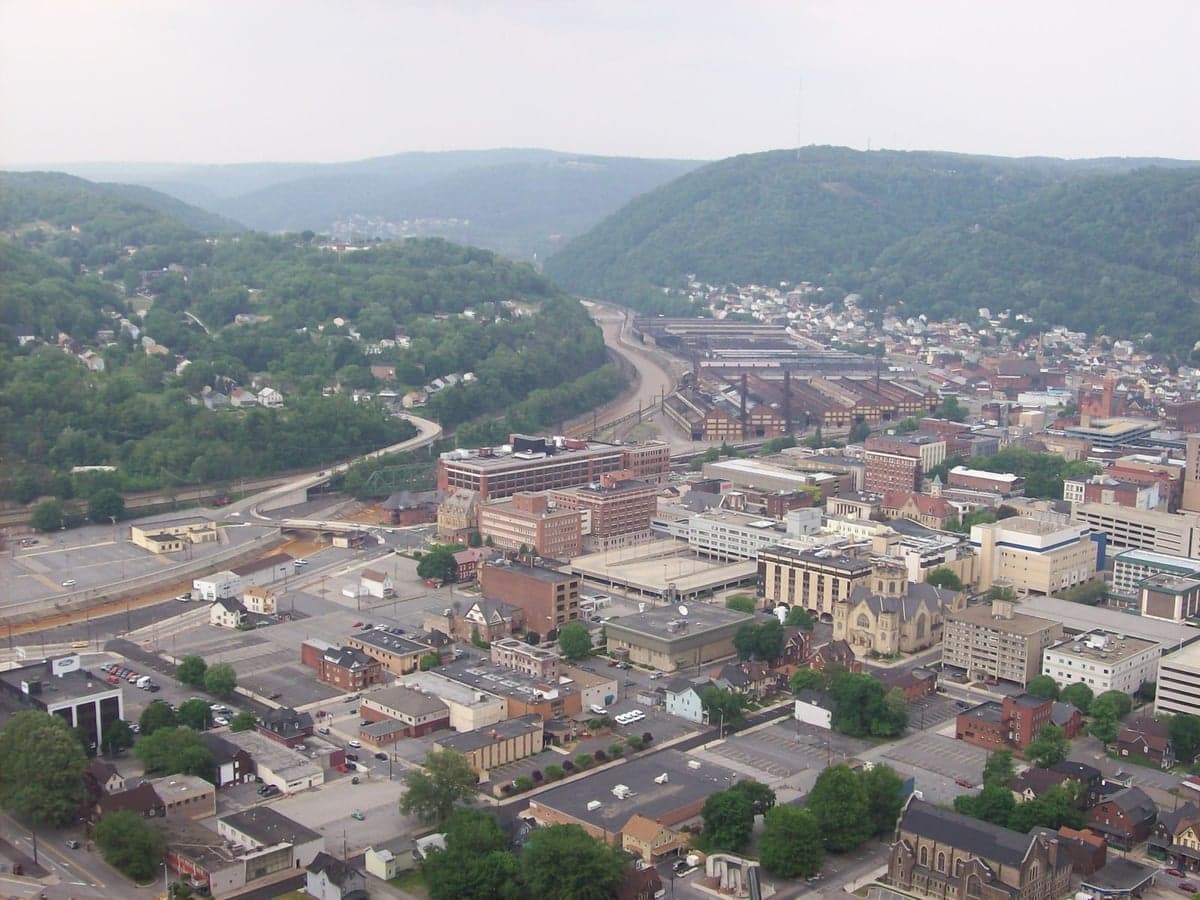
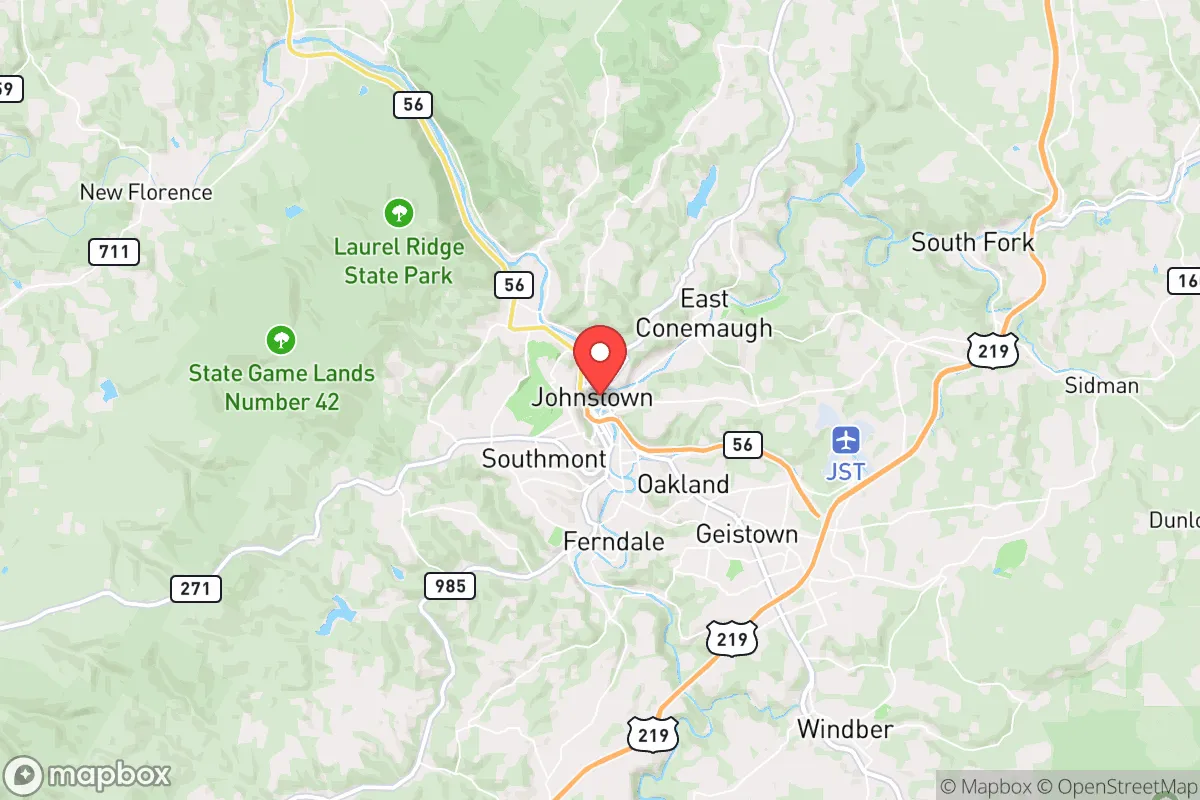
Photo: Wikipedia
Quality of Life in Johnstown, PA
A high quality of life with strong walkability, manageable living costs, healthy neighborhood signals, and solid amenity access.
What does Quality of Life tell us?
Quality of Life blends cost of living, nearby amenities, socioeconomic signals, and neighborhood character. City-level scores represent the whole municipality; individual neighborhoods can differ.
What does this tell us?
Quality of Life blends cost of living, nearby amenities, socioeconomic signals, and neighborhood character. City-level scores represent the whole municipality; individual neighborhoods can differ.
Cost of Living
62% below national average
The Real Cost of Living in Johnstown, PA for 2026
| Tier | Individual | Family (4) |
|---|---|---|
| Survival | $10k | $18k |
| Comfortable | $16k | $24k |
| Luxury | $62k+ | $96k+ |
| Elite (Top 5%) | $73k+ | $113k+ |
144%
The Area Signal
A metric tracking the socioeconomic signals of the area.
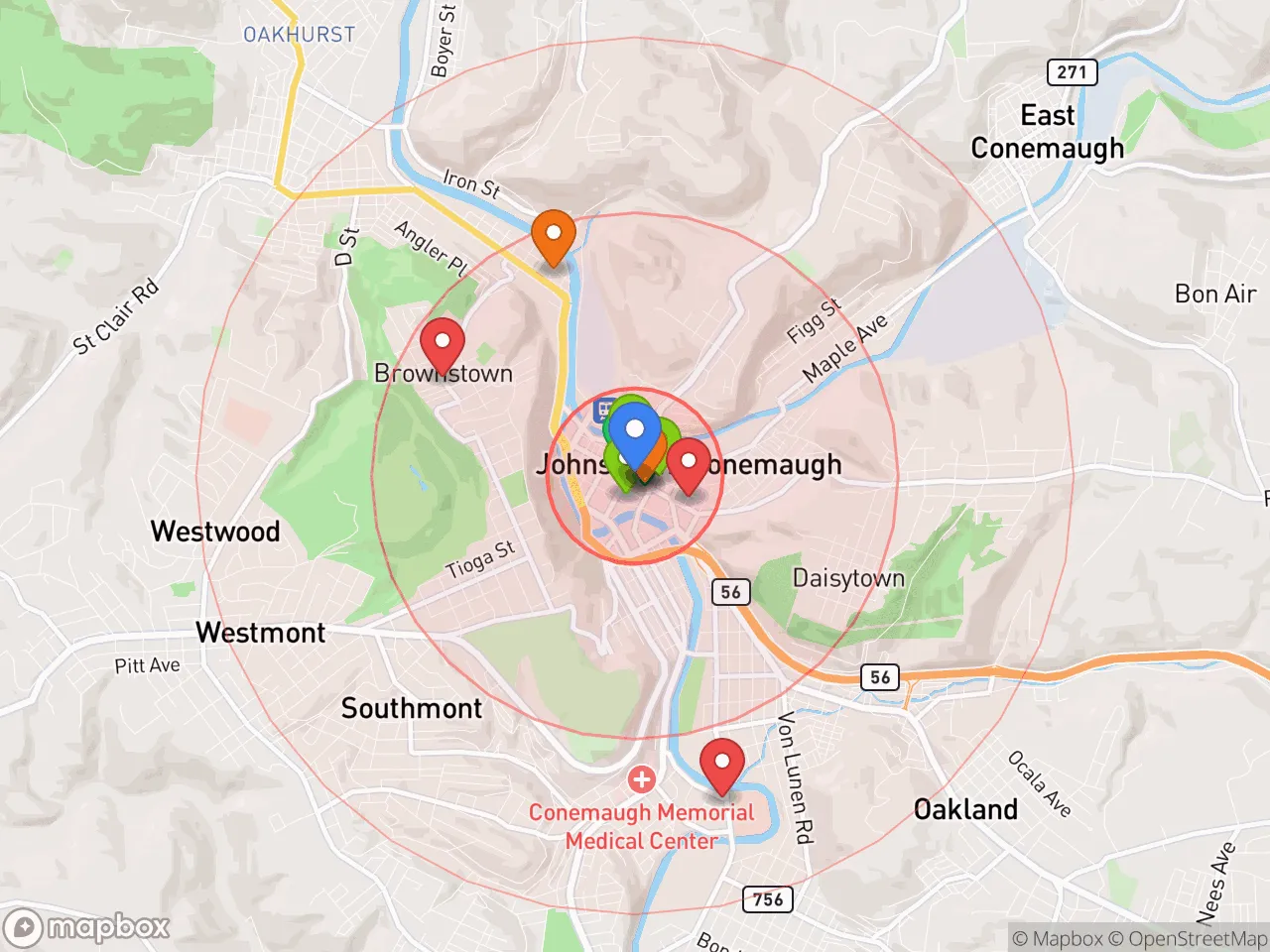
Hobbies
Explore the areaGroceries
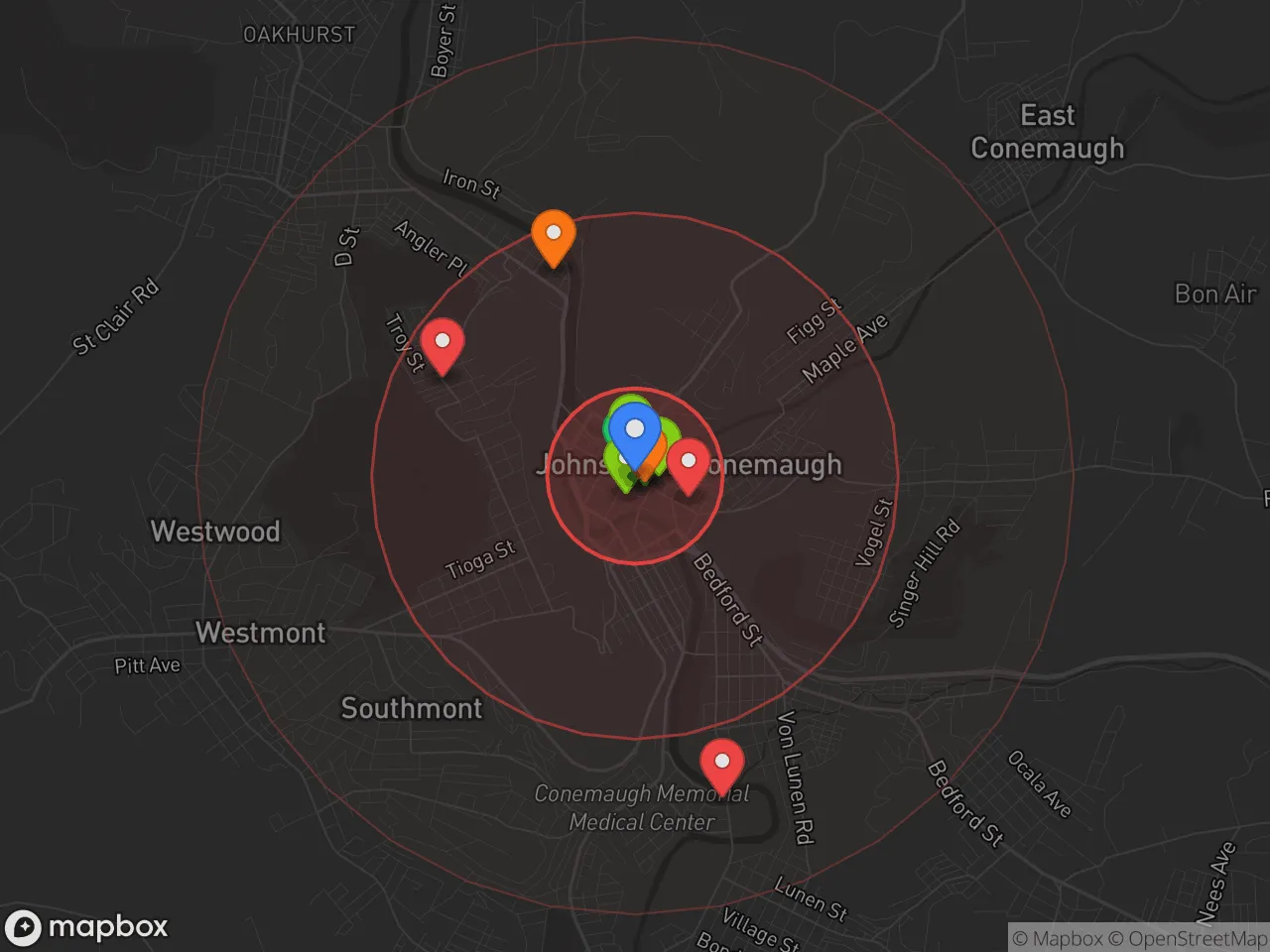
3 within 10 miles
Gas
19 within 10 miles
Hospital
5 within 20 miles
Airport
Pittsburgh International Airport
Post Office
USPS — Johnstown, PA
Critical Amenities
Quality-of-Life Analysis
Johnstown, Pennsylvania, presents a quality of life defined by extreme affordability and a working-class resilience that shapes daily existence. With a cost of living index of just 38—far below the national average of 100—the city attracts residents who prioritize financial breathing room over metropolitan polish. The population skews older and more economically stable than the national median, with many long-term residents rooted in the region's industrial heritage, alongside newcomers drawn by the chance to own a home outright for the price of a used car.
How housing costs and daily expenses compare to nearby cities
Johnstown’s housing market is among the most affordable in Pennsylvania, with a median home value of just $42,100 and a median rent of $616 per month. This places the city well below nearby Altoona (median home value ~$85,000) and far under Pittsburgh (median home value ~$200,000). For context, a typical mortgage payment on a median-priced Johnstown home can be under $300 per month, even with current interest rates. The average commute of 21.7 minutes is notably shorter than the national average of 26 minutes, reflecting the area’s compact geography and limited congestion. Groceries, utilities, and transportation costs all track below state averages, meaning a household earning $40,000 annually can live more comfortably here than one earning $70,000 in many suburban Philadelphia or Pittsburgh communities. However, this low cost comes with trade-offs: property appreciation is minimal, and resale markets can be slow, making Johnstown better suited for long-term residents than short-term investors.
What daily life is like for families and professionals
Daily life in Johnstown revolves around a modest but functional set of amenities. The Greater Johnstown School District serves most families, though enrollment has declined steadily since the 1990s, and some residents opt for parochial or charter options in neighboring Westmont or Richland. The city’s healthcare anchor is Conemaugh Memorial Medical Center, a Level I trauma center that provides employment and services rare for a town of this size. Outdoor recreation is a genuine strength: the 36-mile Jim Mayer Riverswalk Trail follows the Conemaugh and Stonycreek rivers, and the nearby Laurel Highlands offer hiking, skiing at Blue Knob, and whitewater rafting. Dining and retail are limited—chain restaurants dominate, and the downtown core has struggled with vacancy for decades—but the annual Johnstown Flood Commemoration and the Thunder in the Valley motorcycle rally draw regional crowds. The rhythm is slow and neighborly, with a strong sense of community identity tied to the city’s industrial past and flood history.
Johnstown is best suited for those who value extreme affordability, a slower pace, and proximity to outdoor recreation over urban nightlife or career mobility. Retirees on fixed incomes, remote workers with stable salaries, and tradespeople in manufacturing or healthcare will find the most to appreciate. Professionals seeking rapid career growth or diverse cultural amenities will likely feel constrained. For anyone willing to trade prestige for financial freedom, Johnstown offers a rare chance to live debt-free in a region with genuine natural beauty and a tight-knit community fabric.

Crime in Johnstown, PA
Higher crime rates than 70% of comparable U.S. locations.
Violent CrimeViolent Crime Analysis
Property CrimeProperty Crime Analysis
Crime Analysis
Johnstown, Pennsylvania, reports a violent crime rate of 589.2 incidents per 100,000 residents and a property crime rate of 2,072.3 per 100,000, placing it well above both state and national averages for safety. These figures indicate that the city faces significant public safety challenges, particularly when compared to the broader Cambria County region and similarly sized communities across Pennsylvania. The data suggests that residents and prospective movers should approach the city with a clear understanding of its elevated risk profile.
Crime in context
Johnstown’s violent crime rate is roughly 60% higher than the national average and more than double the Pennsylvania state average of approximately 280 per 100,000. Property crime in the city also exceeds national benchmarks, with a rate about 10% above the U.S. median. These disparities are especially pronounced when compared to smaller, more rural communities in the surrounding area, which typically report far lower rates. The city’s status as a small urban center within a larger metropolitan orbit—Pittsburgh is roughly 70 miles west—means it faces crime pressures similar to those of larger jurisdictions, including the influence of regional crime networks and drug trafficking corridors along routes like U.S. Route 219 and the Pennsylvania Turnpike.
What residents experience
For those living in Johnstown, the elevated crime statistics translate into tangible daily concerns. Violent offenses, including aggravated assault and robbery, occur at a frequency that makes neighborhood vigilance a practical necessity. Property crimes such as burglary, theft, and motor vehicle theft are the most common, often concentrated in areas with lower economic opportunity and higher population density. Residents frequently report that property crime, particularly vehicle break-ins and package theft, is a recurring nuisance in both downtown and residential zones. The local criminal justice system, operating under Pennsylvania’s broader legal framework, has faced criticism from some residents for policies perceived as lenient, including the use of diversion programs and reduced sentencing for nonviolent offenders. Critics argue that such progressive approaches, while intended to reduce recidivism, can result in repeat property offenders cycling through the system without meaningful deterrence, undermining public confidence in safety outcomes.
Neighborhood-level variation
Safety conditions in Johnstown are not uniform across the city. The West End and parts of the Moxham neighborhood have historically reported higher concentrations of violent incidents, while areas like the West Hills and Richland Township—technically outside city limits—see significantly lower crime rates. Prospective residents should examine block-level data from the Johnstown Police Department or local crime mapping tools before choosing a specific area. The city’s geography, divided by the Conemaugh River and steep hillsides, creates distinct micro-neighborhoods where safety can vary dramatically within a few blocks. Overall, while Johnstown offers affordable housing and a tight-knit community feel, its crime statistics demand a cautious, informed approach from anyone considering relocation.
* Values derived from national, state, county, city and local statistics and may differ in a specific area. Last updated: 2026-05-01T07:24:42.000Z
Narrative content on this page is AI-generated and may contain mistakes. Verify any details that matter before acting on them.
ReloMaps may earn a commission from affiliate links at no extra cost to you.

