Photo: Wikipedia
Strategic Assessment of Johnstown, PA
Meaningful friction. Expect exposure to either population pressure, blast zones, or natural disaster risk. Consider buying a retreat property.
What does the Strategic Assessment tell us?
Our Strategic Assessment grades tactical survivability of an area. Major population centers, military targets, fallout zones, natural disasters, and border exposure all drive risk — lower exposure means a more defensible position in a crisis.
This is heavily inspired by Joel Skousen's Strategic Relocation book. Highly recommended you checkout the book ($)What does this tell us?
Our Strategic Assessment grades tactical survivability of an area. Major population centers, military targets, fallout zones, natural disasters, and border exposure all drive risk — lower exposure means a more defensible position in a crisis.
This is heavily inspired by Joel Skousen's Strategic Relocation book. Highly recommended you checkout the book ($)Strategic Pillars

Key Distances
Regional Safe Places
Below is our recommended "safe zones" in Pennsylvania and the surrounding area based on our strategic heuristics. For most people, it's unrealistic to live in a “safe zone” full-time due to work, family or other personal reasons. They tend to be more rural. However, many of these areas are perfect for second homes and retreat properties that double as a vacation home or even a short-term rental.
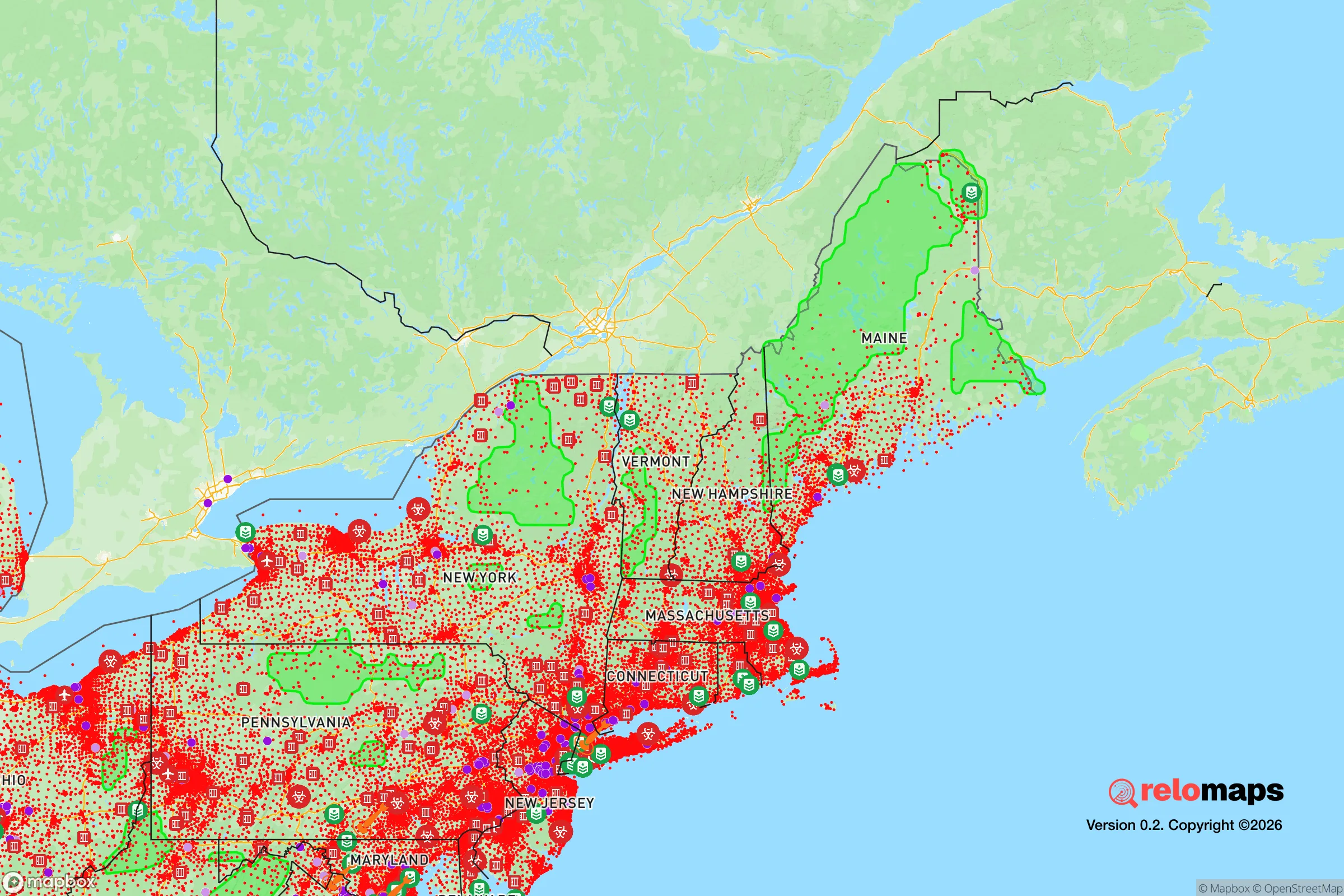
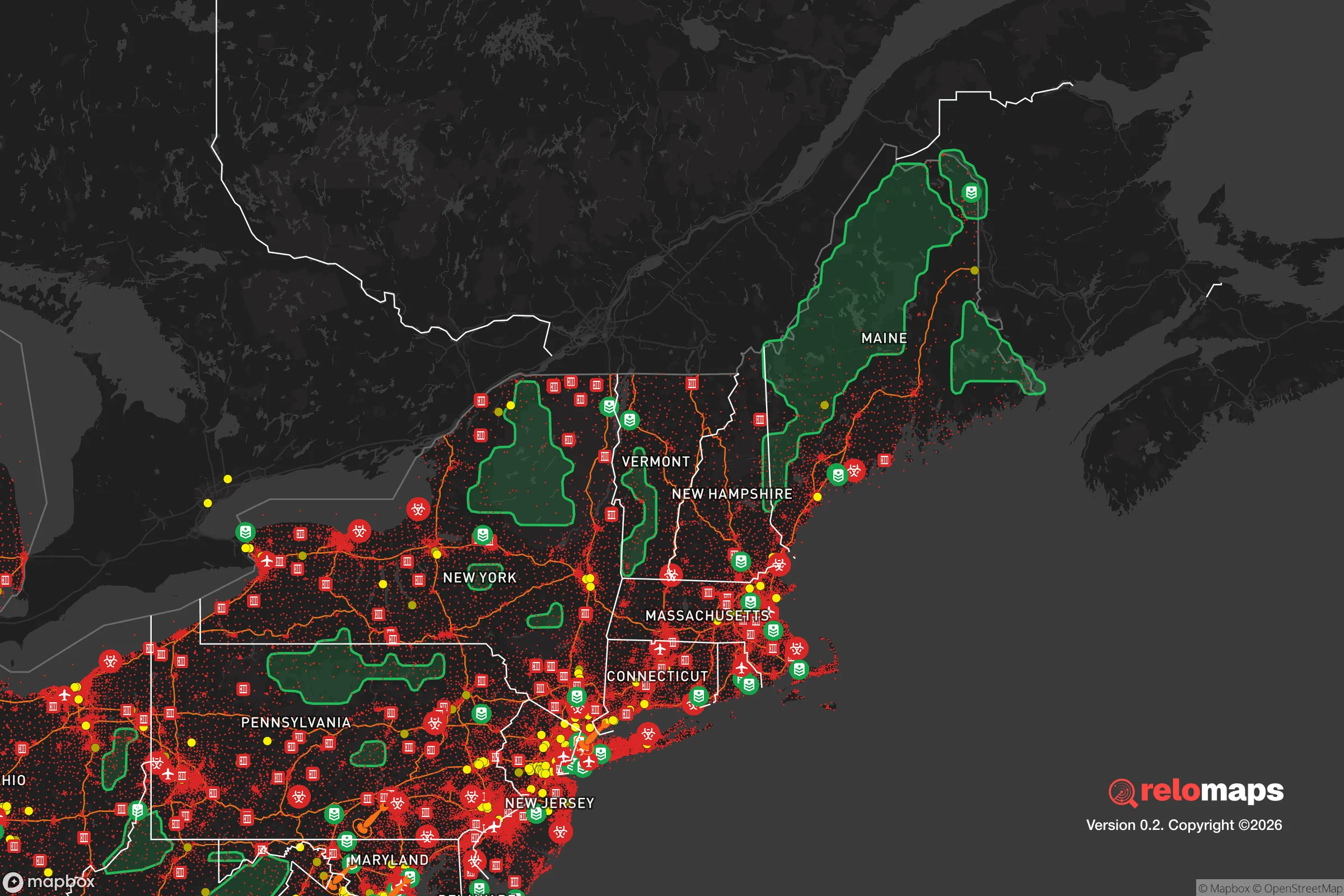


Important Note: For informational purposes only. This does not mean nothing bad ever happens in the green zones. Please use common sense. This is based on public data and modeled with AI. We tried to take a conservative approach but mistakes happen. We update this regularly as new information becomes available.
Solar Generator Recommendations
Backup power matters more here than in safer locations. We've picked three solar generators across budgets and capacity tiers — start with the budget unit if you only need a few essentials, or step up if you want to run a fridge and HVAC for days at a time.

Jackery Portable Power Station Explorer 300
Budget OptionPower on the Go: Weighing only 11 lbs, it's convenient to set up and store with book-sized foldable solar panels

BLUETTI Portable Power Station AC180
Designed for both indoor and outdoor scenarios, AC180 is highly capable as it has a robost capacity and continuous output power.

EF ECOFLOW DELTA Pro Ultra Power Station
Upgraded PickEcoFlow DELTA Pro Ultra is a whole-home energy system designed to grow with your family. Integrated with the Smart Home Panel 2, it scales to meet your evolving energy needs — keeping your home powered, intelligent, and secure through every stage of life.
We earn a commission, at no additional cost to you.
Strategic Assessment Analysis
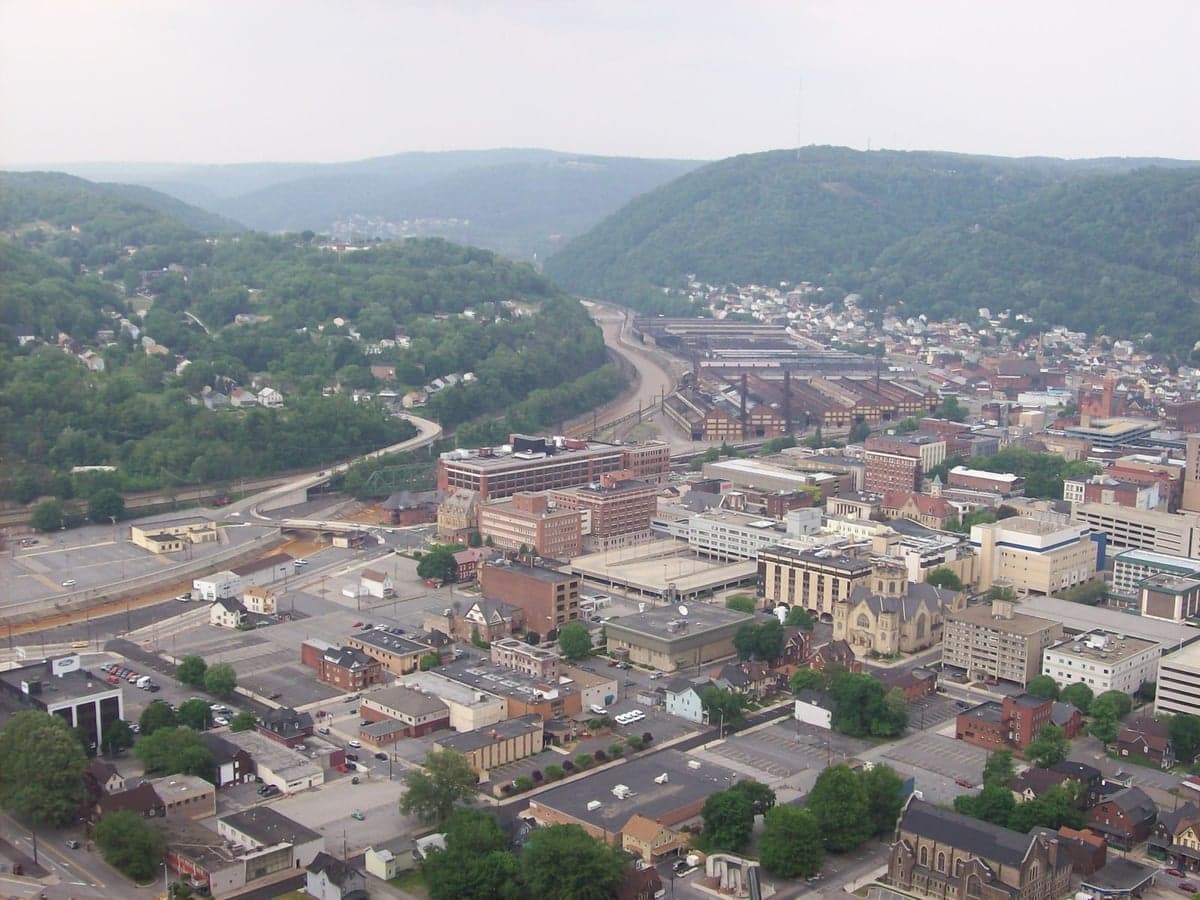
Johnstown, Pennsylvania, presents a mixed strategic picture for the conservative prepper or survivalist, offering genuine resilience advantages in its geography and infrastructure while carrying significant liabilities due to its proximity to major population centers and industrial targets. The city’s history of surviving catastrophic floods and economic collapse demonstrates a hard-won community toughness, but the same topography that once made it an industrial powerhouse now creates choke points and exposure zones that demand careful planning. For the relocator weighing long-term security against daily practicality, Johnstown is a location that rewards thorough reconnaissance and a clear-eyed understanding of both its natural defenses and its vulnerabilities.
Geographic position and natural advantages for long-term security
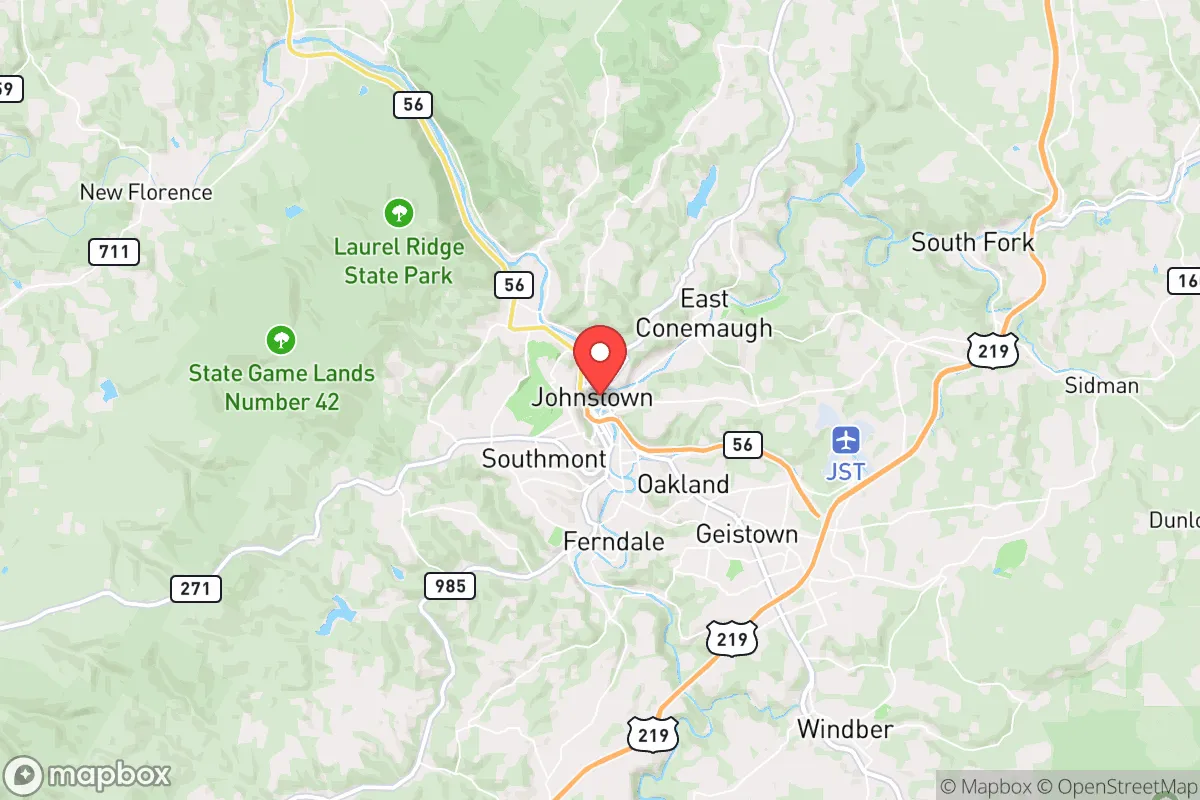
Johnstown sits in the Conemaugh Valley, surrounded by the Allegheny Mountains, which provide a natural barrier against the sprawl of the East Coast megalopolis. The city is roughly 70 miles east of Pittsburgh and 180 miles west of Harrisburg, placing it outside the immediate blast and fallout zones of those major metro areas while still being within a day’s drive for supply runs or evacuation. The surrounding terrain is steep, forested, and sparsely populated, offering numerous off-grid homesteading opportunities in the adjacent counties of Cambria, Somerset, and Bedford. The region’s elevation—around 1,200 feet in the city proper, with ridges topping 2,500 feet—means cooler summers and significant snowfall, which can be both a water resource and a logistical challenge. For the prepper, the key advantage is the abundance of fresh water: the Stonycreek, Little Conemaugh, and Conemaugh rivers converge here, and the area is dotted with small streams and springs. The soil in the valley bottoms is fertile enough for small-scale agriculture, though the growing season is short (roughly 140 days). The mountains also provide excellent radio communications relay points for ham operators, and the dense forest cover offers concealment from aerial observation. However, the same valleys that channel water also channel wind and, critically, fallout particles, so any long-term retreat must account for prevailing weather patterns.
Risks, exposures, and proximity to fallout-relevant landmarks
The most glaring vulnerability for Johnstown is its proximity to the Pittsburgh metropolitan area, which includes multiple potential high-value targets: the Pittsburgh International Airport, the Brentwood nuclear facility (though decommissioned, its spent fuel remains), and the sprawling industrial complexes along the Ohio River. In a major conflict or terrorist event, prevailing westerly winds would carry fallout from Pittsburgh directly into the Conemaugh Valley. Additionally, the Johnstown area itself hosts the Johnstown Flood National Memorial and the remains of the South Fork Dam—a reminder that infrastructure failure can be as deadly as any attack. The city’s location along the Pennsylvania Turnpike (I-76) and U.S. Route 219 makes it a natural chokepoint for refugee flow from the East Coast, which could turn the valley into a funnel for desperate populations during a collapse scenario. The nearby Johnstown-Cambria County Airport is a small regional field, but it could become a contested asset. For the survivalist, the biggest concern is the Lackawanna River watershed and the proximity to the New York City-Philadelphia corridor: a mass evacuation from those cities would likely push hundreds of thousands of people through the Pennsylvania mountains, and Johnstown sits directly along the most logical westward route. The city’s own population of roughly 18,000 is small enough to avoid the worst of urban chaos, but the surrounding county (Cambria) has over 130,000 residents, many of whom would converge on the same rural resources.
Practical resilience for a relocator: food, water, energy, and defensibility
For the relocator willing to invest in preparation, Johnstown offers several concrete advantages. Water is abundant and generally clean—the municipal supply comes from the Quemahoning Reservoir, which is fed by mountain streams and has a large capacity. For off-grid setups, shallow wells are viable in the valley, and rainwater collection is straightforward given the region’s average 40 inches of annual precipitation. The local food scene is anchored by the Johnstown Farmers Market and a handful of small-scale producers, but the real opportunity lies in the surrounding farmland: Somerset County to the south is a major dairy and crop region, and deer hunting is excellent in the state game lands that cover much of the surrounding ridges. Energy resilience is mixed: the grid is aging and prone to outages from winter storms and summer thunderstorms, but natural gas is plentiful (the Marcellus Shale play extends into the region), and propane delivery is common. Solar potential is moderate due to the valley’s cloud cover and shading from the mountains, but micro-hydro from the many streams is a viable alternative for those with creek frontage. Defensibility is the area’s strongest suit: the valley has only a few road entrances, and the surrounding ridges provide natural observation posts. A small, well-armed group could effectively control access to a homestead on the higher slopes. The local population is predominantly working-class, with a strong union and military veteran presence, meaning that community trust is earned slowly but is genuine once established. The biggest practical challenge is the lack of specialized medical care—the nearest Level 1 trauma center is in Pittsburgh, and the local Conemaugh Memorial Medical Center is a community hospital that would be overwhelmed in a mass casualty event.
The overall strategic picture for Johnstown is one of calculated trade-offs. It offers genuine natural defenses, abundant water, and a location that is close enough to resources but far enough from the worst targets. The risks from Pittsburgh fallout, refugee flow along the turnpike, and the valley’s inherent choke points are real and demand mitigation—whether through elevation, stockpiling, or community alliances. For the conservative relocator who values self-reliance and is willing to put in the work of hardening a property and building local relationships, Johnstown can be a solid base of operations. It is not a bug-out paradise, nor is it a doomed location. It is a place where preparation, not luck, will determine outcomes. The mountains will not save you, but they will give you a fighting chance if you know how to use them.

* Values derived from national, state, county, city and local statistics and may differ in a specific area. Last updated: 2026-05-01T07:24:42.000Z
Narrative content on this page is AI-generated and may contain mistakes. Verify any details that matter before acting on them.
ReloMaps may earn a commission from affiliate links at no extra cost to you.

