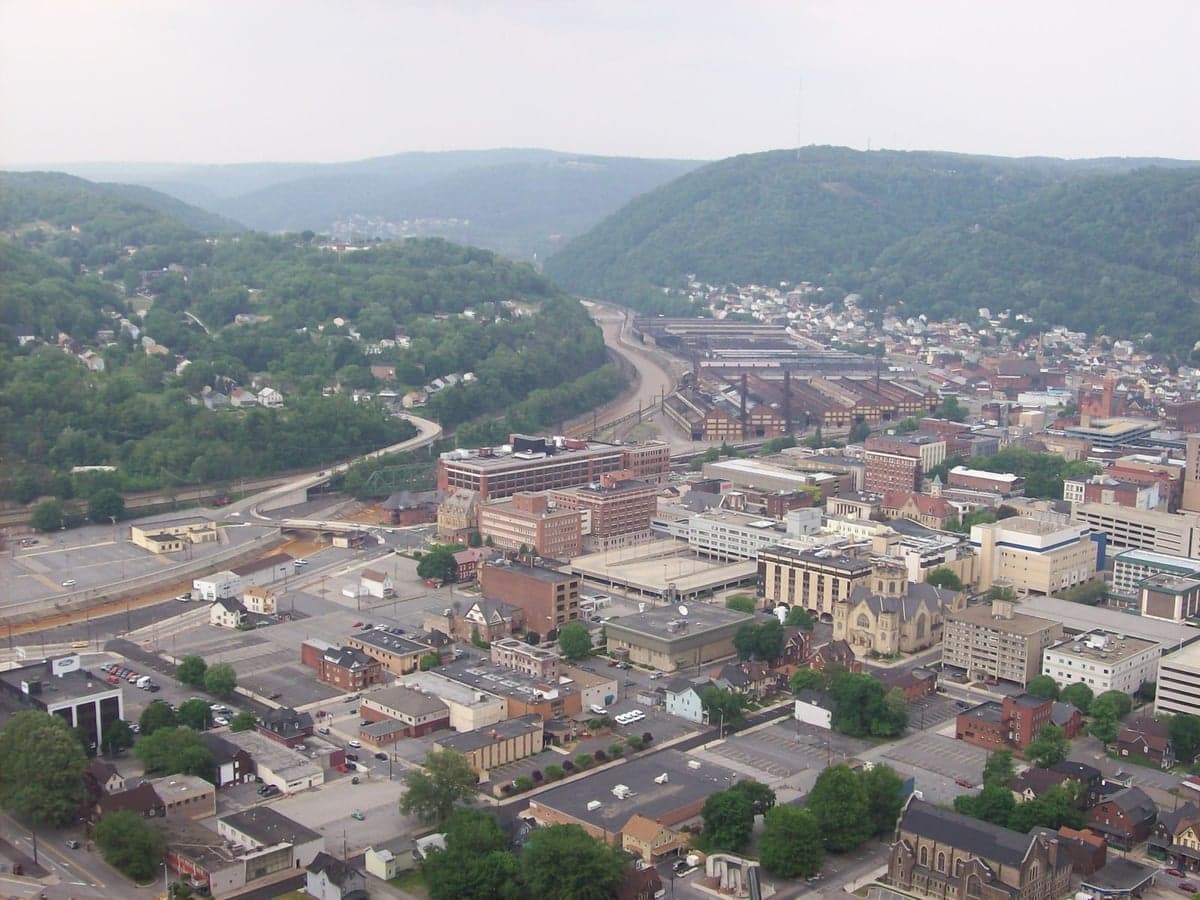
Photo: Wikipedia
Political ClimatePolitical Climate in Johnstown, PA
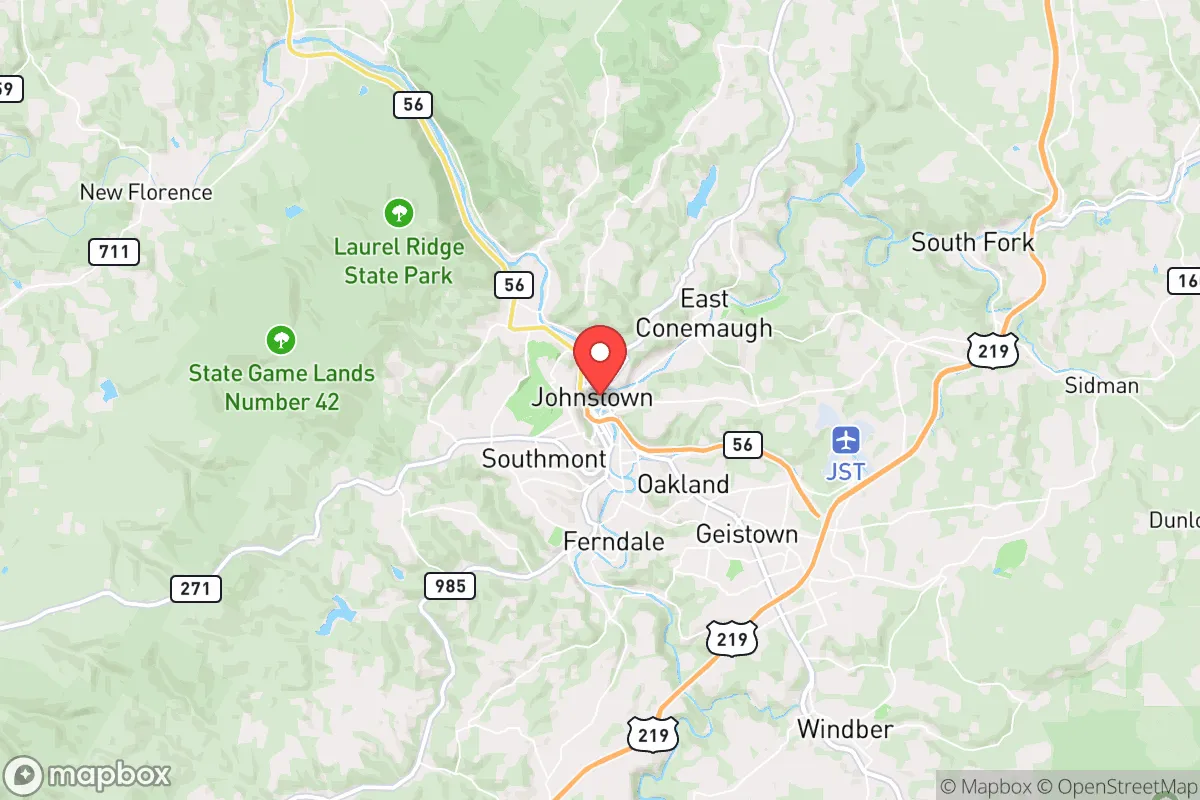
District shown is the primary district for this city’s centroid. Cities may span multiple districts.
Local Political AnalysisPolitical Analysis of Johnstown, PA
Johnstown, Pennsylvania, sits solidly in the red column, with a Cook PVI of R+23 that reflects a deep, longstanding conservative tradition. This isn't a recent shift; it's the bedrock of the community, rooted in the working-class values of the steel and coal era. While the national winds have blown leftward in many places, Johnstown has held its ground, and if anything, the local sentiment has hardened against the progressive tide washing over bigger cities. You see it in the local elections, the conversations at the diner, and the general skepticism of government overreach that's always been a point of pride here.
How it compares
Drive an hour north to State College, and you're in a different world—a college town bubble where progressive politics dominate and the local culture feels disconnected from the rest of the region. Head south to the Pittsburgh suburbs, and you'll find a mix, but places like Murrysville and Greensburg still lean conservative, though not as overwhelmingly as Johnstown. The real contrast is with Philadelphia or even Harrisburg, where the state government's push for stricter regulations and social policies feels like a direct affront to the way things are done here. Johnstown's R+23 rating isn't just a number; it's a firewall against the kind of top-down mandates that threaten personal freedoms, from Second Amendment rights to local control over schools and land use.
What this means for residents
For folks living here, the political climate means a government that largely stays out of your business. You're not dealing with the kind of overreach you hear about in blue states—no heavy-handed zoning that stifles small businesses, no aggressive tax hikes to fund pet projects, and no pressure to adopt every new social trend that comes down the pike. The local schools still teach traditional values, and the police are supported, not vilified. That said, there's a growing concern about the long-term trajectory. As younger people move away for jobs, the population ages, and there's a risk that outside money and influence—from state grants to activist groups—could start chipping away at the local culture. The shift is slow, but it's something to watch, especially if the state legislature in Harrisburg keeps pushing its agenda.
What this means for residents
On a practical level, this political stability means lower taxes and fewer headaches. Property taxes here are manageable compared to places like Philadelphia or even Pittsburgh, and there's no city income tax to eat into your paycheck. The local government is lean, and there's a general distrust of expanding bureaucracy. You won't find the kind of "progressive" policies that drive up costs and complicate daily life—no plastic bag bans, no sanctuary city status, no defunding the police talk. The trade-off is that some services are limited, and the economy hasn't bounced back like it has in more dynamic areas. But for those who value freedom over convenience, it's a fair price to pay. The cultural identity here is still rooted in self-reliance, hard work, and a healthy skepticism of anyone who thinks they know better than you how to live your life.
One cultural distinction worth noting is the strong union history, which might seem at odds with the conservative politics. But in Johnstown, that's not a contradiction. The unions here were about protecting the worker's right to a fair wage and safe conditions, not about pushing a broader political agenda. That's changing in some national unions, but locally, the sentiment remains: support the working man, but keep the government out of the church, the family, and the gun safe. The long-term outlook is cautious. If the progressive wave continues to wash over the state, Johnstown could become more of an island, fighting to preserve its way of life. But for now, it's a place where you can still breathe free, and that's worth holding onto.

State Political ClimatePolitical Climate in Pennsylvania
State Political AnalysisPolitical Environment in the State
Pennsylvania is a classic purple state that has been drifting leftward over the past two decades, with Democrats dominating the Philadelphia and Pittsburgh metros while Republicans hold a structural advantage in the vast rural and exurban regions. The state has voted Democratic in every presidential election since 1992 except 2016 and 2024, when Donald Trump narrowly flipped it back, but the margins have been razor-thin — within 1-2 points in recent cycles. The real story is the slow erosion of the GOP’s rural firewall as population shifts and suburban realignment chip away at the old coal-and-steel coalition, leaving the state in a perpetual tug-of-war that feels increasingly tilted toward the urban centers.
Urban vs. rural divide
The political map of Pennsylvania is a tale of two worlds. Philadelphia and its collar counties — Montgomery, Delaware, Chester, and Bucks — are the engine of the Democratic vote, delivering margins of 60-80% in the city itself. Pittsburgh and Allegheny County are similarly blue, though less extreme, with the city voting around 65% Democratic while the surrounding suburbs have become competitive. The real Republican strongholds are the vast rural stretches of the north-central and southwestern parts of the state: places like Lycoming County (Williamsport), Bedford County, and Franklin County (Chambersburg) routinely vote 70-75% Republican. The I-80 corridor across the northern tier is deeply red, as is the southwestern corner around Washington and Greene counties. The key battlegrounds are the suburban counties that have been trending blue: Bucks County (north of Philadelphia) flipped from red to blue in the 2010s and now votes Democratic by 5-10 points, while Lancaster County — once a GOP lock — has seen its margins shrink as the city of Lancaster grows more progressive. The Lehigh Valley (Allentown, Bethlehem, Easton) is a bellwether: it voted for Obama twice, then Trump in 2016, then Biden in 2020, and Trump again in 2024, reflecting the national swing. If you’re looking for a reliably conservative area, the rural north and west are your best bet, but the suburbs are increasingly dicey.
Policy environment
Pennsylvania’s policy landscape is a mixed bag that leans moderately conservative on some fronts but has significant progressive encroachments. The state income tax is a flat 3.07%, one of the lowest in the Northeast, and property taxes are high but vary wildly by district — expect $2,000-$4,000 annually on a median home. There is no state sales tax on groceries or clothing, but the general rate is 6%. On education, Pennsylvania has a robust school choice system: the Educational Improvement Tax Credit (EITC) and Opportunity Scholarship Tax Credit (OSTC) provide scholarships for low-income students to attend private or parochial schools, and the state has no school mask or vaccine mandates for attendance. However, the state’s Act 77 (2019) expanded no-excuse mail-in voting, which conservatives view as a vulnerability — it was the center of election integrity debates in 2020 and 2024. Healthcare is a mixed bag: the state expanded Medicaid under Obamacare, but private insurance markets are relatively free. The regulatory environment is moderate — not as heavy as New York or New Jersey, but not as light as Texas or Florida. The Pennsylvania Department of Environmental Protection has become more aggressive under Governor Josh Shapiro, particularly on natural gas drilling, which is a major industry in the Marcellus Shale region around Pittsburgh and Williamsport. Shapiro’s proposed carbon pricing scheme (the Regional Greenhouse Gas Initiative, or RGGI) was blocked by the state legislature, but the fight continues.
Trajectory & freedom
Pennsylvania is trending in a concerning direction on personal liberty, with several recent laws expanding government overreach. The most alarming is the 2024 expansion of Act 120, which created a statewide database for firearm purchases that critics argue is a backdoor to universal background checks — a clear infringement on Second Amendment rights. On the positive side, the state passed Constitutional Carry in 2022 (Act 79), allowing permitless carry of concealed firearms for law-abiding adults, which was a major win. Parental rights have taken a hit: the 2023 “Safe Schools” law mandated that schools adopt policies for LGBTQ+ student support groups, which some parents see as undermining their authority. Medical freedom is under pressure — the state’s COVID-19 vaccine mandate for healthcare workers was struck down in court, but the 2024 “Medical Freedom” bill (HB 100) that would have banned vaccine mandates for employment died in committee. Property rights are relatively strong, with no statewide rent control or zoning overrides, but local municipalities — especially in Philadelphia and Pittsburgh — have imposed strict land-use regulations that drive up housing costs. The biggest freedom concern is the 2020 election law changes (Act 77), which created a permanent mail-in ballot system that conservatives argue is ripe for fraud. The state’s Voter ID law is weak — you only need to show ID the first time you vote, after which it’s not required. This is a major red flag for election integrity.
Civil unrest & political movements
Pennsylvania has seen its share of political flashpoints. The 2020 election integrity protests in Philadelphia and Harrisburg drew thousands, with activists demanding audits and recounts. The “Stop the Steal” movement was particularly active in York County and Lancaster County, where local GOP officials pushed for forensic audits. On the left, the Black Lives Matter protests in Philadelphia in 2020 turned violent, with looting and arson in Center City, and the city’s progressive district attorney Larry Krasner has been a lightning rod for criticism over soft-on-crime policies. Immigration politics are relatively quiet compared to border states, but Philadelphia is a sanctuary city, refusing to cooperate with ICE detainers — a policy that has drawn federal scrutiny. The “Second Amendment Sanctuary” movement has been strong in rural counties: over 30 counties have passed resolutions declaring themselves sanctuaries from state gun laws they deem unconstitutional. The 2024 election saw intense scrutiny of mail-in ballots in Allegheny County and Bucks County, with Republican poll watchers alleging irregularities. The Pennsylvania Freedom Caucus in the state legislature has been a vocal force, pushing for election reform, school choice expansion, and parental rights legislation. You’ll see “Don’t Tread on Me” flags and Trump signs in rural areas, while “Defund the Police” signs are common in Philadelphia’s liberal wards.
Projection
Over the next 5-10 years, Pennsylvania is likely to continue its slow leftward drift, driven by in-migration from New York and New Jersey into the Philadelphia suburbs and the Lehigh Valley. These transplants tend to be moderate-to-liberal and are shifting counties like Bucks and Montgomery further blue. The rural population is aging and shrinking, while the urban centers are growing. The 2024 election was a temporary reprieve for conservatives, but the underlying demographics are unfavorable. Expect continued battles over election integrity — the push for stricter voter ID and elimination of no-excuse mail-in voting will be a perennial fight. On the freedom front, the next governor (Shapiro is term-limited in 2030) could be more conservative if the GOP can win back the executive mansion, but the state legislature is likely to remain divided. The Marcellus Shale natural gas industry will be a key battleground — if the state imposes a severance tax or carbon pricing, it could drive energy jobs out of the state. The school choice movement is gaining momentum, with a proposed “Lifeline Scholarship” program that would give every student a state-funded education savings account — this could be a major win for parental freedom if it passes. Realistically, Pennsylvania will remain a purple state, but the purple is getting bluer. A conservative moving here should target the rural north or the south-central region (Adams, Franklin, Cumberland counties) for the most stable political environment.
For a new resident, the bottom line is this: Pennsylvania offers a relatively low tax burden and strong gun rights compared to its Northeast neighbors, but the political winds are shifting left. If you’re looking for a state where your vote will reliably count for conservative values, the rural counties are your best bet, but you’ll be fighting an uphill battle in statewide elections. The school choice options are a genuine bright spot, and the energy sector provides good jobs. But be prepared for ongoing fights over election integrity, parental rights, and Second Amendment protections — and keep an eye on the Philadelphia suburbs, because that’s where the state’s future is being decided.
* Values derived from national, state, county, city and local statistics and may differ in a specific area. Last updated: 2026-05-01T07:24:42.000Z
Narrative content on this page is AI-generated and may contain mistakes. Verify any details that matter before acting on them.
ReloMaps may earn a commission from affiliate links at no extra cost to you.

