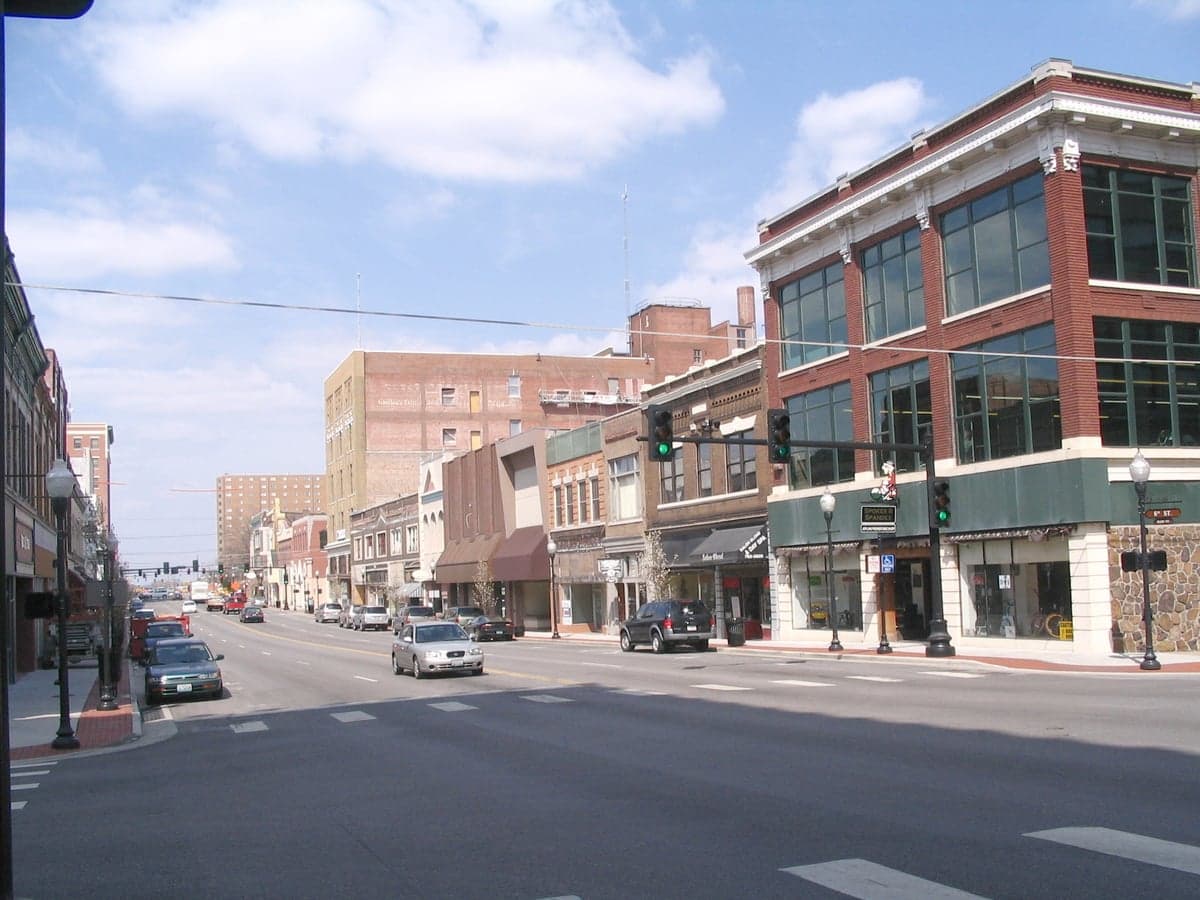
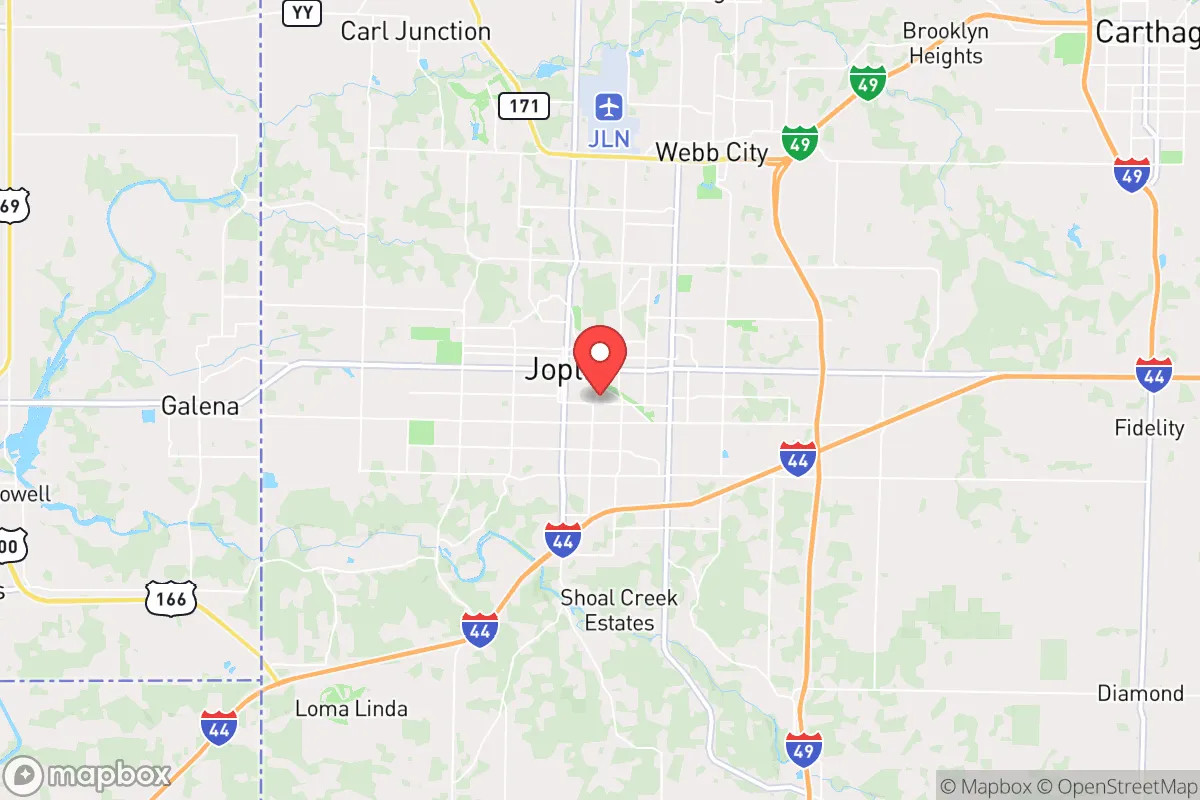

Photo: Wikipedia
Political ClimatePolitical Climate in Joplin, MO
District shown is the primary district for this city’s centroid. Cities may span multiple districts.
Local Political AnalysisPolitical Analysis of Joplin, MO
Joplin, Missouri, sits deep in conservative country, and it’s been that way for as long as anyone around here can remember. The Cook PVI of R+21 tells you the math is solid, but the real story is in the feel of the place—folks here still believe in local control, the Second Amendment, and keeping government out of your business. That said, you can sense a subtle shift in the air over the last five or six years, especially as younger families move in from places like Springfield or even Kansas City, bringing with them a more progressive outlook on things like zoning, school policies, and public spending. It’s not a blue wave by any stretch, but it’s a slow erosion of the old guard’s grip, and that has some of us watching the city council meetings a little closer.
How it compares
Drive thirty minutes north to Webb City or Carthage, and you’ll find the same R+21 DNA—maybe even a touch redder, with fewer transplants and more generational roots in farming and manufacturing. Head south to Neosho or west into Oklahoma, and the politics stay just as conservative, with a strong libertarian streak that resists any hint of federal overreach. The real contrast comes if you go east to Springfield, which has a more mixed political scene thanks to its university and healthcare sectors; Joplin, by comparison, feels like a fortress of traditional values, but one that’s starting to see cracks in the wall. The surrounding rural counties—Jasper, Newton, McDonald—vote even heavier Republican than Joplin itself, so the city’s R+21 actually gets diluted by a small but growing number of younger, college-educated residents who lean left on social issues like LGBTQ+ rights and environmental regulations.
What this means for residents
For those of us who’ve lived here a while, the political climate means you can still count on low taxes, minimal gun restrictions, and a school board that hasn’t gone full progressive—yet. But there’s a growing unease about how much the city government is willing to take on. Recent debates over mask mandates during the pandemic and a push for more “equity” training in the school district raised red flags for a lot of folks who see that as the thin end of the wedge. The real concern is that as Joplin grows—new housing developments, more retail, a bigger hospital system—the pressure to adopt policies from bigger cities will only increase. If you value personal freedom and want to keep government out of your wallet and your home, you’re still in a good spot, but you’d better stay engaged at the local level, because that’s where the real fights are happening now.
Culturally, Joplin still holds onto its independent, don’t-tread-on-me character, but you can see the influence of outside money and ideas creeping in. The city’s response to the 2011 tornado was a masterclass in community self-reliance, and that spirit still defines the place. But there’s a new push for more public art, bike lanes, and “inclusive” events that rub some of the old-timers the wrong way—not because they’re against progress, but because it feels like a slow-motion takeover by people who don’t share the same values. The bottom line: Joplin is still a great place to raise a family if you want good schools, safe streets, and a government that mostly stays out of your way. Just keep an eye on the city council agenda, because the next few years will tell you whether this town stays true to its roots or starts drifting toward the kind of overreach we moved here to escape.

State Political ClimatePolitical Climate in Missouri
State Political AnalysisPolitical Environment in the State
Missouri has long been considered a bellwether state, but over the past 15 years it has shifted decisively from a purple swing state to a solidly red one. The Show-Me State voted for Donald Trump by 15 points in 2020 and by an even wider margin in 2024, a stark contrast from 2008 when it narrowly backed John McCain. This rightward march is driven by a powerful coalition of rural conservatives, suburban families fleeing progressive policies in places like St. Louis and Kansas City, and a growing population of transplants from blue states seeking lower taxes and fewer regulations. The state’s political center of gravity has moved from the I-70 corridor to the fast-growing southwestern corner, anchored by Springfield and Branson, where conservative values are not just dominant but defining.
Urban vs. rural divide
The political map of Missouri is a textbook study in the urban-rural chasm. The two major metros—St. Louis and Kansas City—are deep blue islands in a sea of red. St. Louis City and County, along with Jackson County (Kansas City), reliably deliver 60-70% of their votes to Democrats, driven by union households, university faculty, and a growing progressive activist class. But the real story is the suburban exodus. St. Charles County, just northwest of St. Louis, was once a swing area; it now votes +20 Republican. Similarly, Clay and Platte counties north of Kansas City have shifted right as families move out of the urban core. The rural expanse—from the Bootheel to the northern plains—votes 75-80% Republican. The Ozarks region, including Springfield, Branson, and Joplin, is the state’s most reliably conservative stronghold, with Greene County often voting +30 points red. The only real blue outliers are college towns like Columbia (home to Mizzou) and Rolla (Missouri S&T), but their influence is dwarfed by the rural vote.
Policy environment
Missouri’s policy environment is a conservative’s dream compared to neighboring Illinois or Kansas. The state has a flat income tax rate of 4.8%, which is being phased down to 4.5% by 2027 under a law signed by Governor Mike Parson. There is no estate tax, and property taxes are among the lowest in the Midwest—roughly 0.8% of assessed value. The regulatory climate is business-friendly, with a right-to-work law (repealed by ballot in 2018 but still reflecting the state’s pro-business tilt) and minimal permitting hurdles for new construction. On education, Missouri has a robust charter school presence in St. Louis and Kansas City, and a growing school choice movement that has expanded open enrollment and tax-credit scholarships. The state’s election laws have tightened: voter ID is required, and the 2022 law eliminated no-excuse absentee voting and shortened the window for mail-in ballots. Healthcare policy is mixed—Missouri expanded Medicaid under a 2020 ballot initiative, but the state legislature has resisted further expansion of government-run programs. The Second Amendment is treated as sacred: permitless carry was signed into law in 2016, and there are no firearm registration requirements or magazine capacity limits.
Trajectory & freedom
Missouri is trending toward more personal freedom, especially on gun rights, parental rights, and tax policy. The 2021 Second Amendment Preservation Act (SAPA) was a landmark law that declared federal gun laws that violate the Second Amendment to be unenforceable in Missouri—a direct challenge to federal overreach that has sparked legal battles but remains popular. In 2023, the legislature passed the Parental Bill of Rights, which requires schools to notify parents of any medical or mental health services offered to their child and prohibits instruction on sexual orientation in grades K-3. On the medical autonomy front, Missouri banned nearly all abortions after eight weeks in 2019, with no exceptions for rape or incest, and the law remains in effect post-Dobbs. However, there are warning signs: a 2024 ballot initiative to enshrine abortion rights in the state constitution is gathering signatures, and if it passes, it would override the legislature’s work. Property rights are strong, with no statewide rent control and minimal eminent domain abuse. The tax burden is falling, but local sales taxes can be high—some cities like Branson push combined rates above 9%.
Civil unrest & political movements
Missouri has seen its share of political flashpoints. The 2014 Ferguson protests, sparked by the Michael Brown shooting, were a national turning point for the Black Lives Matter movement and left deep scars in the St. Louis region. Since then, the state has seen a rise in organized conservative activism, particularly around school board elections and library policies. The Missouri Freedom Caucus, a group of hardline state legislators, has pushed for further restrictions on immigration (including a 2024 bill to require local law enforcement to cooperate with ICE) and has fought against any form of sanctuary city policies. St. Louis remains a flashpoint: the city’s progressive prosecutor, Kim Gardner, resigned in 2023 amid criticism over rising crime, and her successor has taken a tougher line. In Kansas City, the 2023 Super Bowl parade shooting reignited debates about urban crime and gun control. Election integrity remains a hot topic; the 2020 audit of St. Louis’s election results found no widespread fraud, but conservative activists continue to push for hand-counting of ballots and stricter chain-of-custody rules. Immigration politics are less visible than in border states, but the influx of migrants to Springfield (a growing hub for refugee resettlement) has sparked local tensions and legislative proposals to limit state funding for resettlement agencies.
Projection
Over the next 5-10 years, Missouri is likely to become even more conservative, but not without a fight. The biggest wildcard is in-migration: tens of thousands of people are moving from Illinois, California, and New York to the suburbs of St. Louis and Kansas City, as well as to the Ozarks. These transplants tend to be fiscally conservative but socially moderate, which could soften the state’s hard-right edge on issues like abortion and marijuana legalization (Missouri legalized recreational cannabis in 2022). The rural population is aging and shrinking, while the suburbs are growing—this could shift the balance of power in the state legislature away from the most rural districts. However, the Republican supermajority in Jefferson City is likely to hold, and the state will continue to pass tax cuts, school choice expansions, and Second Amendment protections. The real battleground will be the courts: the Missouri Supreme Court has struck down several conservative laws in recent years, including parts of the SAPA and a 2023 law restricting transgender care for minors. If the court becomes more conservative through gubernatorial appointments, expect even bolder legislation. For a new resident, the bottom line is this: Missouri is a state where your personal freedoms—to own guns, to choose your child’s education, to keep more of your paycheck—are expanding, but you’ll need to be vigilant about local ballot initiatives that could reverse that progress.
For someone moving to Missouri today, the practical takeaway is that you’re getting a state that respects individual liberty more than most of its neighbors, but it’s not a libertarian paradise. You’ll find low taxes, strong gun rights, and a government that mostly stays out of your business—especially if you settle in the Ozarks or the outer suburbs. But you’ll also encounter pockets of progressive governance in the cities, a court system that sometimes pushes back, and a growing population of newcomers who may not share all your values. If you’re looking for a place where your voice matters and your rights are protected, Missouri is a solid bet—just keep an eye on Jefferson City and the ballot box.
* Values derived from national, state, county, city and local statistics and may differ in a specific area. Last updated: 2026-04-30T04:56:16.000Z
Narrative content on this page is AI-generated and may contain mistakes. Verify any details that matter before acting on them.
ReloMaps may earn a commission from affiliate links at no extra cost to you.

