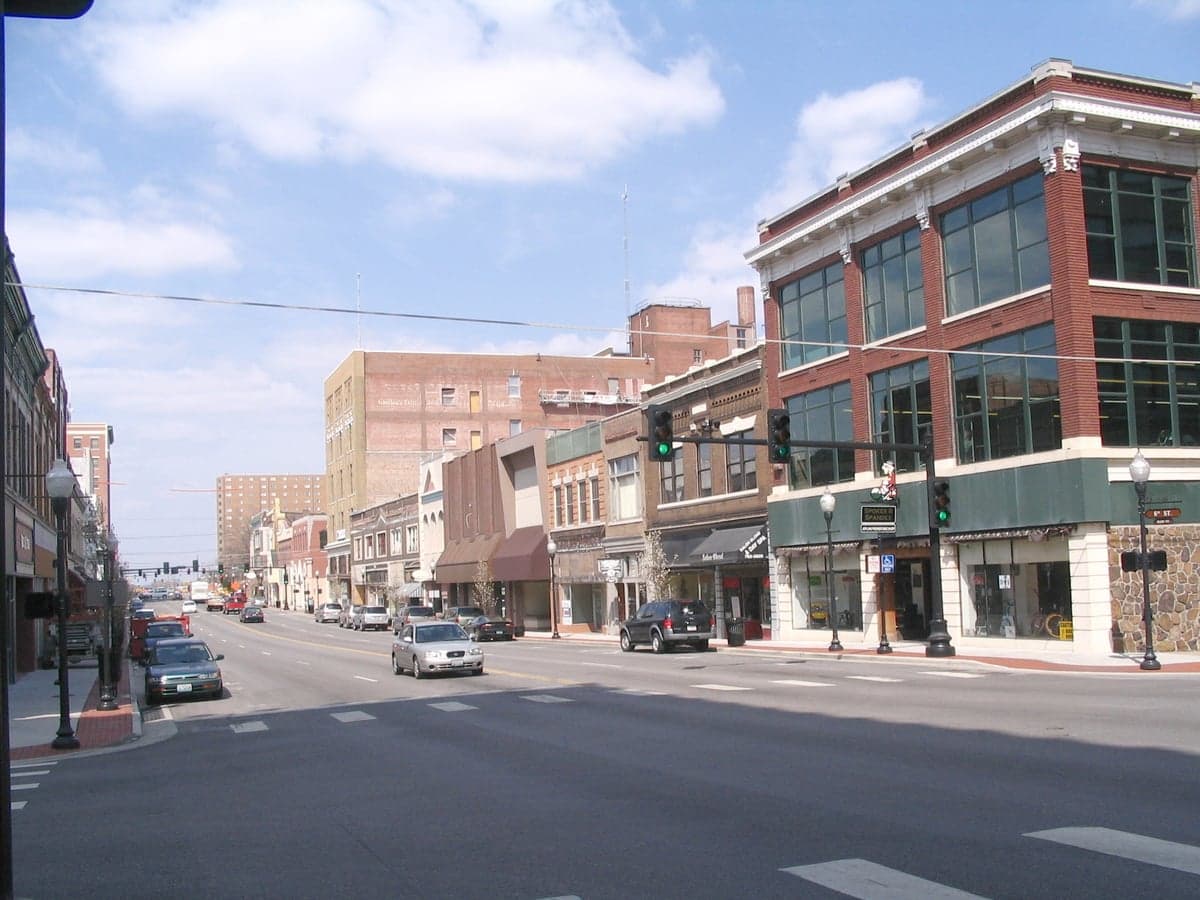
Photo: Wikipedia
Strategic Assessment of Joplin, MO
Workable tactical position. Some exposure to population density or targets, but generally defensible in a crisis.
What does the Strategic Assessment tell us?
Our Strategic Assessment grades tactical survivability of an area. Major population centers, military targets, fallout zones, natural disasters, and border exposure all drive risk — lower exposure means a more defensible position in a crisis.
This is heavily inspired by Joel Skousen's Strategic Relocation book. Highly recommended you checkout the book ($)What does this tell us?
Our Strategic Assessment grades tactical survivability of an area. Major population centers, military targets, fallout zones, natural disasters, and border exposure all drive risk — lower exposure means a more defensible position in a crisis.
This is heavily inspired by Joel Skousen's Strategic Relocation book. Highly recommended you checkout the book ($)Strategic Pillars

Key Distances
Regional Safe Places
Below is our recommended "safe zones" in Missouri and the surrounding area based on our strategic heuristics. For most people, it's unrealistic to live in a “safe zone” full-time due to work, family or other personal reasons. They tend to be more rural. However, many of these areas are perfect for second homes and retreat properties that double as a vacation home or even a short-term rental.


Important Note: For informational purposes only. This does not mean nothing bad ever happens in the green zones. Please use common sense. This is based on public data and modeled with AI. We tried to take a conservative approach but mistakes happen. We update this regularly as new information becomes available.
Solar Generator Recommendations
Backup power matters more here than in safer locations. We've picked three solar generators across budgets and capacity tiers — start with the budget unit if you only need a few essentials, or step up if you want to run a fridge and HVAC for days at a time.

Jackery Portable Power Station Explorer 300
Budget OptionPower on the Go: Weighing only 11 lbs, it's convenient to set up and store with book-sized foldable solar panels

BLUETTI Portable Power Station AC180
Designed for both indoor and outdoor scenarios, AC180 is highly capable as it has a robost capacity and continuous output power.

EF ECOFLOW DELTA Pro Ultra Power Station
Upgraded PickEcoFlow DELTA Pro Ultra is a whole-home energy system designed to grow with your family. Integrated with the Smart Home Panel 2, it scales to meet your evolving energy needs — keeping your home powered, intelligent, and secure through every stage of life.
We earn a commission, at no additional cost to you.
Strategic Assessment Analysis
Joplin, Missouri, sits in a sweet spot that few relocation analysts talk about openly: it’s far enough from the major fault lines of American collapse to breathe, but close enough to the nation’s logistical spine to matter. The city’s 2011 EF5 tornado—which killed 161 people and flattened a third of the town—forged a survivalist DNA into the local culture that no amount of FEMA pamphlets can replicate. For a conservative-leaning relocator looking at the next decade of potential unrest, supply-chain shocks, or mass-casualty events, Joplin offers a rare combination of geographic isolation, hardened infrastructure, and a population that already knows what it means to rebuild from scratch.
Geographic position and natural advantages for long-term security
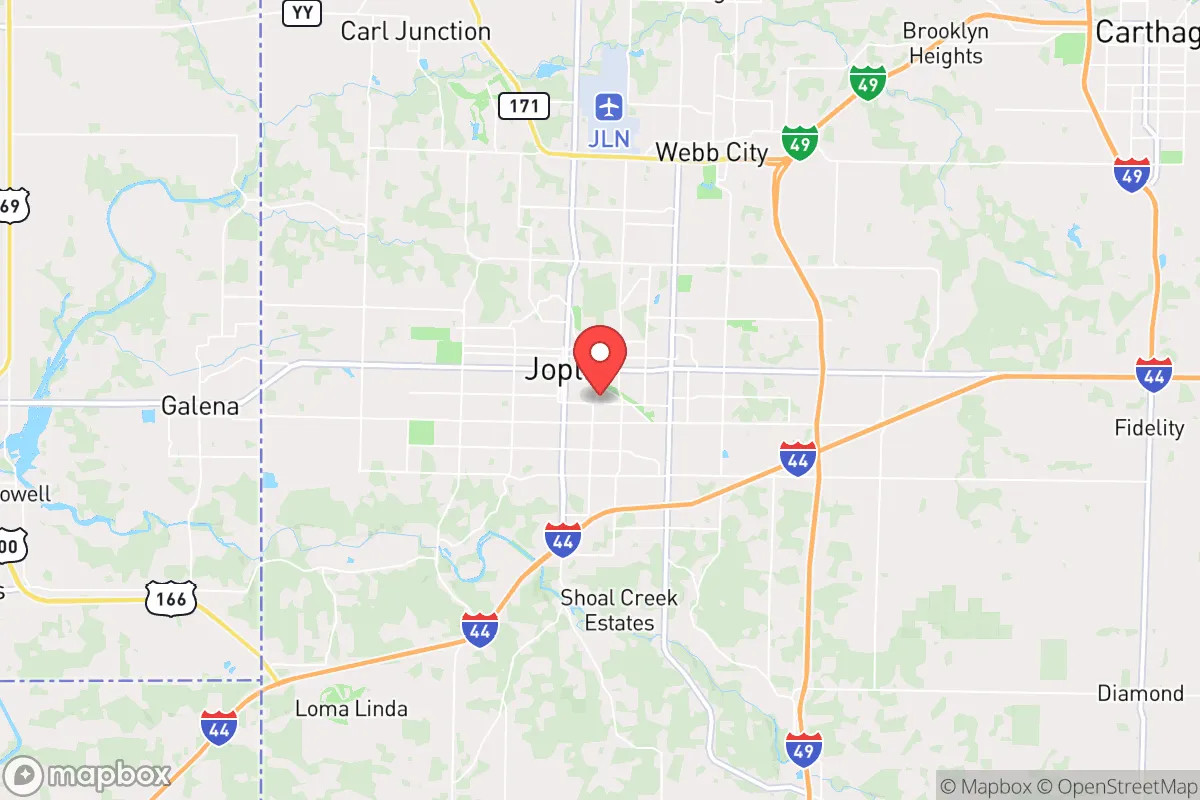
Joplin sits in the southwest corner of Missouri, roughly 140 miles from Tulsa, 170 miles from Kansas City, and 200 miles from Oklahoma City—close enough to access major medical and supply hubs in a crisis, but far enough that a regional disaster in any one of those cities won’t directly swamp the area. The city anchors the I-44 corridor, which runs straight to St. Louis and the eastern seaboard, while U.S. Route 71 provides a north-south artery into Arkansas and the Gulf. That dual-axis road network means Joplin can serve as a redistribution point for supplies or evacuees without being a chokepoint that draws unwanted attention. The Ozark Plateau to the south offers rugged terrain, dense hardwood forests, and hundreds of miles of unpaved backroads that make vehicular pursuit difficult and provide natural cover for those who know how to use it. Water is abundant: the Spring River, Shoal Creek, and Center Creek all run through or near the city, and the Ozark aquifer beneath the region is one of the largest freshwater sources in the central U.S. For a prepper, that means you’re not dependent on a single reservoir or a fragile municipal pump—wells in this area typically hit good water at 100 to 200 feet, and many rural properties already have them. The climate is four-season but moderate: hot summers, cold winters, but rarely extreme enough to kill crops or freeze pipes for weeks on end. Growing seasons run about 190 days, long enough for corn, beans, squash, and most staple vegetables. The land is cheap—agricultural acreage outside city limits still runs under $4,000 per acre as of 2025—which makes it feasible for a family to buy a small homestead without taking on crippling debt.
Risks, exposures, and proximity to fallout-relevant landmarks
No location is a fortress, and Joplin has real vulnerabilities that a strategic relocator must weigh. The most obvious is tornado risk: the city sits in the heart of Tornado Alley, and the 2011 event wasn’t a fluke—EF2 and EF3 storms hit the region every few years. That means any serious prepping plan must include a below-ground storm shelter or reinforced safe room; above-ground “safe rooms” are not adequate for the wind speeds this area can produce. On the man-made threat side, Joplin is 70 miles from the Neosho National Fish Hatchery—not a target itself—but more concerning is the proximity to the Fort Leonard Wood military installation (90 miles northeast) and the Whiteman Air Force Base (120 miles north), which houses B-2 bombers. In a major conflict or civil unrest scenario, those bases could become secondary targets or staging areas that draw military traffic through the I-44 corridor. The city also sits within 200 miles of the New Madrid Seismic Zone, which produced magnitude 7+ earthquakes in 1811-1812 that temporarily reversed the flow of the Mississippi River. A modern recurrence would likely damage bridges and roads along I-44 and I-55, potentially isolating Joplin from eastern supply routes for weeks. On the positive side, Joplin has no nuclear power plants within 100 miles, no major chemical storage facilities, and no large-scale dams upstream that could fail catastrophically. The nearest major population center that might become a “fallout zone” in a societal breakdown scenario is Tulsa, and that’s far enough that you’d have days of warning before any refugee flow reached Joplin—time to lock down or relocate to a secondary position in the Ozarks.
Practical resilience for a relocator: food, water, energy, and defensibility
For a single person or family looking to be self-sufficient, Joplin’s practical resilience is above average for a city of its size (about 52,000 in the city proper, 180,000 in the metro area). The local food system is robust: the Joplin Regional Farmers Market operates year-round, and within a 30-minute drive you’ll find dozens of small farms selling grass-fed beef, pastured pork, and raw dairy (Missouri has some of the most permissive raw milk laws in the country). The Ozark region has a strong tradition of hunting and fishing—deer, turkey, squirrel, and rabbit are abundant on public land, and the Spring River holds good populations of smallmouth bass and catfish. For water security, the city’s municipal supply comes from the Shoal Creek and Big Sugar Creek watersheds, but the real advantage is the Ozark aquifer: it’s a karst system with high recharge rates, meaning wells rarely go dry even during drought. A solar-powered well pump with a 500-gallon cistern is a realistic setup for under $5,000. Energy resilience is mixed: the local grid is served by Liberty Utilities and Empire District Electric, both of which have above-average reliability for the Midwest, but outages after storms are common (typically 4-8 hours, occasionally 2-3 days after a major ice storm). Solar is viable—the region gets about 210 sunny days per year—but battery storage is essential because net metering policies in Missouri are less favorable than in states like California. Defensibility is where Joplin shines for a prepper mindset. The city is surrounded by rural, low-density terrain with long sightlines; there are no major interstate interchanges within the city limits that would create natural chokepoints for looters or organized groups. The local law enforcement culture is pro-Second Amendment—Missouri is a constitutional carry state, and Jasper County (where Joplin sits) has a sheriff’s office that publicly supports armed self-defense. The population is overwhelmingly white (85%) and politically conservative (Jasper County voted +45 points for Trump in 2024), which means less cultural friction for a relocator who shares those values. The downside is that the area has a methamphetamine problem—Jasper County ranks in the top 20% of Missouri counties for meth-related arrests—so rural properties need good perimeter security and awareness of transient activity.
Overall, Joplin presents a solid B+ strategic picture for a conservative relocator with prepper instincts. It’s not a bug-out bunker in the Idaho wilderness—you’re still within a day’s drive of several million people, and the tornado risk is real enough that you can’t ignore it. But the combination of cheap land, abundant water, a self-reliant local culture, and a population that has already survived a mass-casualty event makes it one of the most practical options in the central U.S. for someone who wants to be prepared without going full hermit. The key is to buy outside the city limits—within a 15- to 30-minute radius—where you can have acreage, a well, and a storm shelter, while still being able to drive into Joplin for hardware supplies, medical care, or community intel. If the next decade brings the kind of civic unrest or supply-chain collapse that many are quietly planning for, Joplin won’t be a fortress—but it will be a place where a prepared family can ride out the storm and still have a community worth rebuilding with.

* Values derived from national, state, county, city and local statistics and may differ in a specific area. Last updated: 2026-04-30T04:56:16.000Z
Narrative content on this page is AI-generated and may contain mistakes. Verify any details that matter before acting on them.
ReloMaps may earn a commission from affiliate links at no extra cost to you.

