 Popular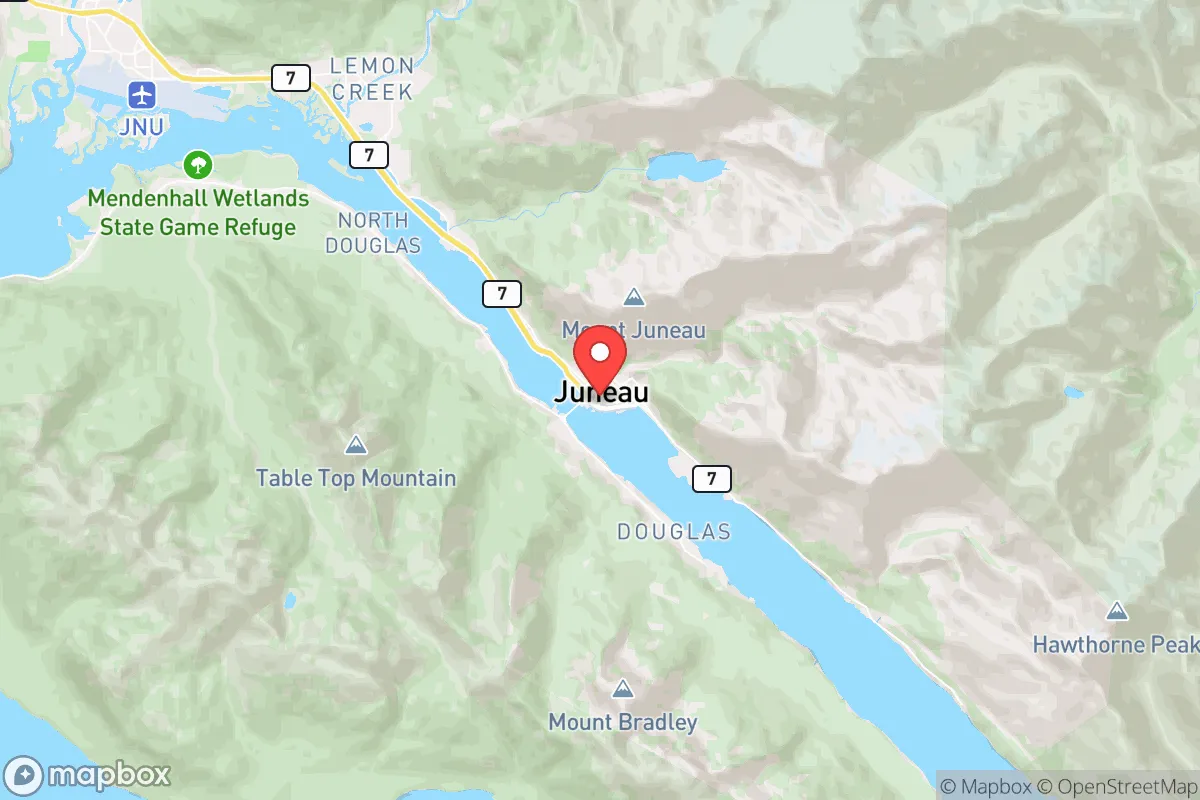
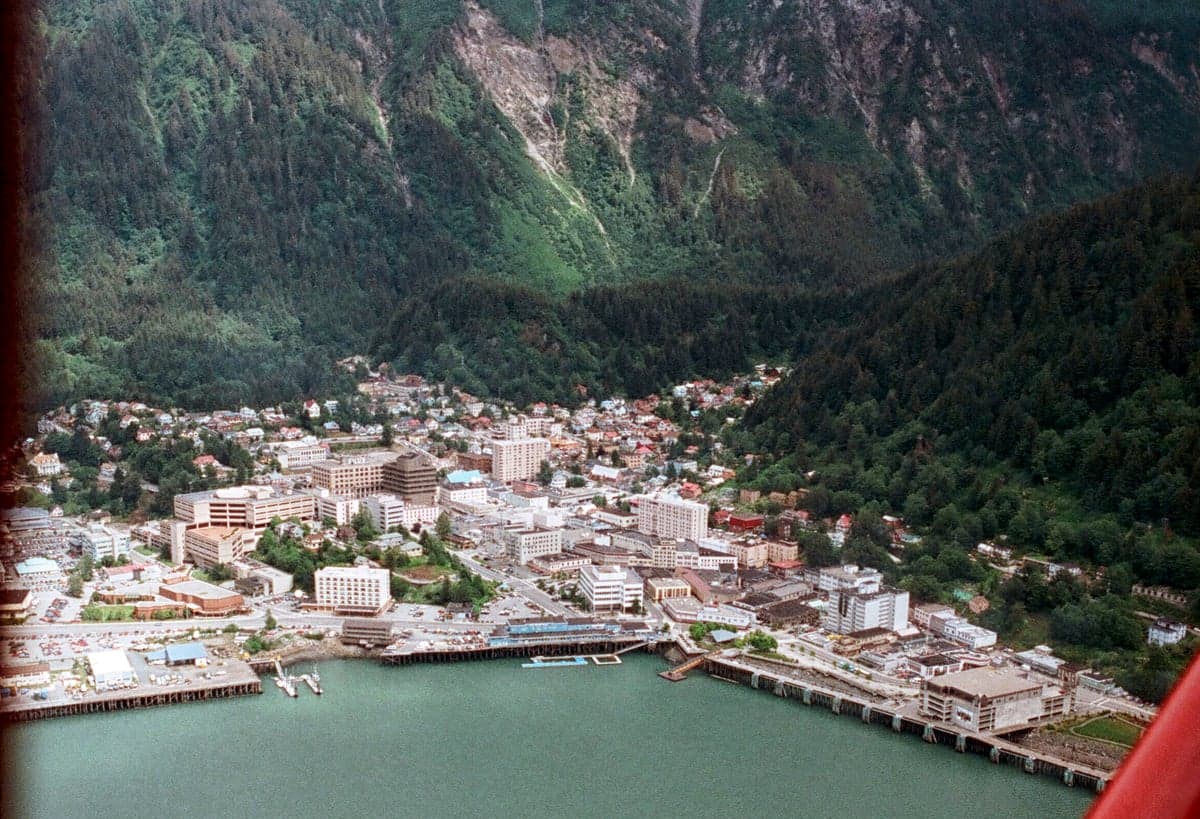
Photo: Wikipedia
Personal Sovereignty in Juneau, AK
Viable for self-reliance. Generally workable, though some barriers may limit total independence.
What does Personal Sovereignty tell us?
Personal Sovereignty measures your capacity for self-reliance and independence with minimal government friction. Higher scores mean fewer barriers between you and the way you want to live... but it assumes you have the space you need and good neighbors.
What does this tell us?
Personal Sovereignty measures your capacity for self-reliance and independence with minimal government friction. Higher scores mean fewer barriers between you and the way you want to live... but it assumes you have the space you need and good neighbors.
State Policy
Energy independence: Net exporter (350% of energy produced in-state)
Personal Liberty
Homesteading

Personal Liberty Analysis
Juneau, Alaska, presents a paradox for those prioritizing personal sovereignty: it sits within a state constitutionally dedicated to individual liberty and self-reliance, yet its geography and local governance create a uniquely constrained environment. While Alaska’s legal framework—no state income tax, broad self-defense rights, and strong property protections—offers a baseline of freedom that most of the Lower 48 cannot match, Juneau’s isolation, limited road access, and progressive municipal policies introduce significant friction for anyone seeking to live entirely off the grid or outside government oversight. For the strategic relocator, Juneau is less a bastion of unchecked autonomy and more a high-cost, high-regulation island where state-level liberties are often blunted by local realities.
Tax burden and regulatory posture: what the state gives, the city takes
Alaska’s tax structure is a major draw for sovereignty-minded individuals: no state income tax, no state sales tax, and the Permanent Fund Dividend (PFD) provides an annual cash payment to every resident, effectively a direct rebate on state resource wealth. However, Juneau’s municipal government imposes a 5% sales tax on most goods and services, and property taxes, while not exorbitant, are levied on assessed values that have climbed steadily with limited developable land. The regulatory posture in Juneau is notably more interventionist than in rural Alaska. The city enforces strict building codes, wetland protection ordinances, and coastal management rules that can delay or block construction of independent structures. Permitting for anything beyond a simple home addition is a multi-agency process involving the City and Borough of Juneau (CBJ), the Alaska Department of Environmental Conservation, and often the U.S. Army Corps of Engineers due to the region’s extensive wetlands. For the prepper or homesteader, this means that while the state won’t tax your income, the city will tax your purchases and regulate your land use with a thoroughness that feels more Pacific Northwest than Last Frontier.
Self-defense and gun law specifics: constitutional carry in a confined space
Alaska is a constitutional carry state—no permit required to carry a concealed firearm for anyone 21 or older who can legally possess a firearm—and Juneau residents enjoy this right without local preemption issues. The state also has strong castle doctrine and Stand Your Ground laws, meaning there is no duty to retreat in any place you are lawfully present. However, the practical application of these rights in Juneau is shaped by geography. The city is hemmed in by mountains and water, with a population density concentrated in a narrow strip of land. There are no gun stores in Juneau that sell modern sporting rifles or high-capacity magazines; residents must order online and ship to a local FFL, or fly to Anchorage. The local police department and district attorney’s office are generally professional but operate within a municipal culture that leans left—prosecutorial discretion in self-defense cases can be unpredictable. For the survivalist, the legal framework is solid, but the logistical reality is that ammunition and parts are harder to stockpile, and defensive scenarios in a compact urban environment differ from rural Alaska’s wide-open spaces.
Self-reliance and homesteading viability: lot sizes, zoning, and off-grid feasibility
True self-reliance in Juneau is a steep climb. The city’s zoning code is restrictive: minimum lot sizes in residential zones range from 6,000 to 10,000 square feet, and agricultural zoning is virtually nonexistent within the borough. Raising livestock for meat or eggs is permitted but limited—chickens are allowed, but pigs and goats require special permits and are often prohibited in denser neighborhoods. Off-grid living is legally possible but practically difficult. The CBJ requires all dwellings to have approved wastewater systems, and the region’s high rainfall (over 90 inches annually) makes septic system design and maintenance a constant challenge. Solar power is marginal due to long winter cloud cover; most off-grid homes rely on micro-hydro or propane, both of which require significant upfront capital and ongoing fuel logistics. There is no road connection to the rest of North America, meaning all heavy materials—lumber, tanks, generators—must arrive by barge or air, dramatically increasing costs. For the homesteader, Juneau offers the legal right to disconnect from utilities, but the environmental and regulatory hurdles make it one of the most expensive places in Alaska to actually do so.
Personal liberties: parental rights, medical autonomy, speech, and property
Alaska’s state constitution provides robust protections for personal liberties, including a strong privacy clause that has been interpreted to protect medical autonomy and parental decision-making. Parental rights in education are relatively strong—Alaska has no statewide mask or vaccine mandates for schoolchildren, and homeschooling is lightly regulated, requiring only an annual notification. Medical freedom is also notable: Alaska allows naturopathic physicians to practice independently, and there is no state-level prescription drug monitoring program that mandates reporting for all controlled substances, though federal rules still apply. Speech and assembly rights are protected under the state constitution, and Juneau’s local government has not enacted the kind of emergency orders seen in Seattle or Portland. Property rights are generally respected, but the city’s zoning and wetland regulations create a de facto limitation on how you can use your land. Eminent domain is rarely used, but the permitting process can effectively deny you the right to build what you want where you want. For the parent or individual concerned about government overreach, Juneau offers a state-level buffer against the worst federal and coastal elite trends, but the local bureaucracy is a persistent friction point.
Overall, Juneau’s personal sovereignty profile is a study in contrasts. The state of Alaska provides a legal foundation that is among the most liberty-friendly in the nation—no income tax, constitutional carry, strong property and privacy protections, and a culture of self-reliance. But Juneau itself is a high-cost, high-regulation island where local governance and geography conspire to limit the practical exercise of that freedom. For the survivalist or prepper, the calculus is clear: if you can afford the land, navigate the permitting maze, and accept the logistical burdens of an isolated city, Juneau offers a level of personal autonomy that is rare in the United States. If you are looking for cheap land, minimal regulation, and the ability to live entirely off the grid with little government interaction, you will find better options in the Mat-Su Valley, the Kenai Peninsula, or interior Alaska. Juneau is for those who value state-level liberty but are willing to trade some local autonomy for the amenities and community of a capital city—a trade that not every sovereignty-minded individual will find worthwhile.

* Values derived from national, state, county, city and local statistics and may differ in a specific area. Last updated: 2026-04-20T23:18:26.000Z
Narrative content on this page is AI-generated and may contain mistakes. Verify any details that matter before acting on them.
ReloMaps may earn a commission from affiliate links at no extra cost to you.

