 Popular
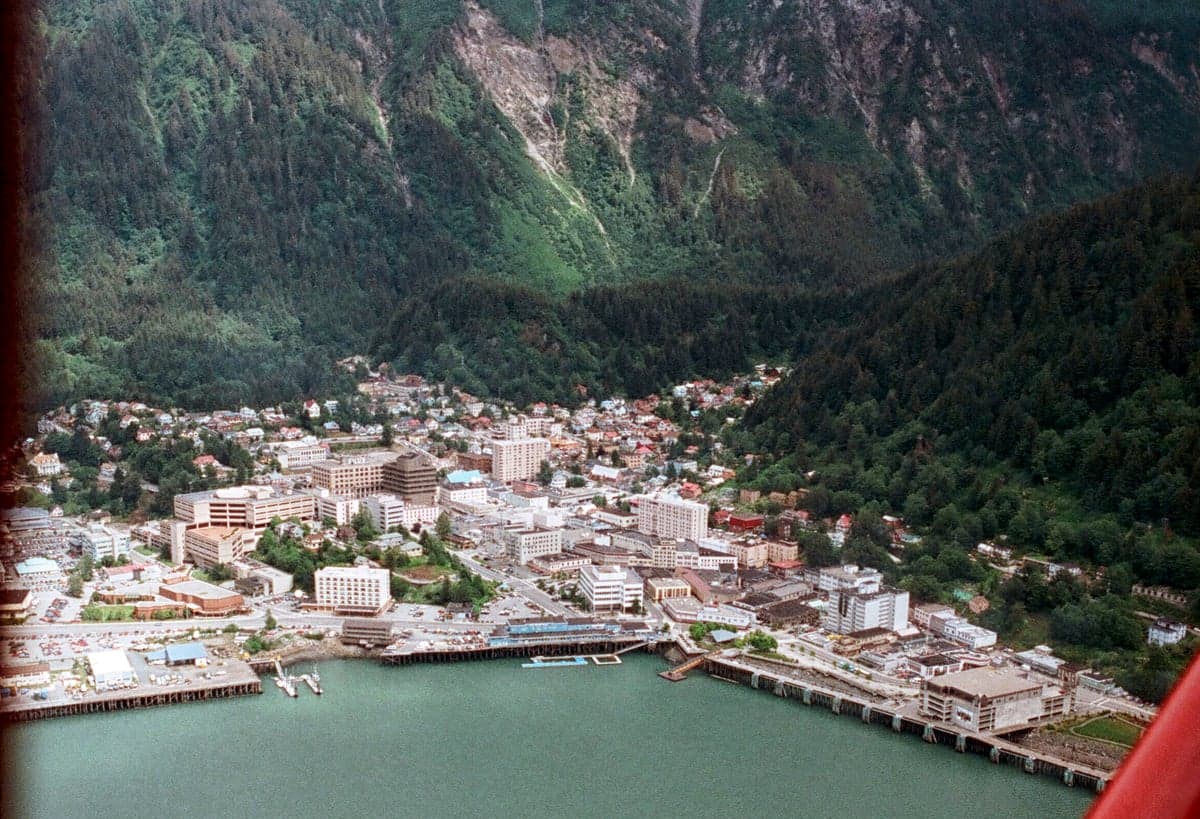
Photo: Wikipedia
Political ClimatePolitical Climate in Juneau, AK
District shown is the primary district for this city’s centroid. Cities may span multiple districts.
Inherited from parent state — no local data available.
Local Political AnalysisPolitical Analysis of Juneau, AK
Juneau’s political climate has shifted noticeably over the past decade, and if you’ve lived here as long as I have, you’ve felt it. The city sits in a Cook PVI of R+6, which on paper suggests a solidly Republican-leaning area, but the reality on the ground is more complicated. Juneau itself has drifted leftward in recent years, especially in local elections, while the surrounding Southeast Alaska communities—like the more conservative fishing towns of Petersburg and Wrangell—still lean heavily red. The trajectory here is concerning if you value limited government and personal freedoms, because the progressive influence in the capital city is growing, and it’s starting to shape policy in ways that feel like overreach.
How it compares
When you compare Juneau to other parts of Alaska, the contrast is stark. Anchorage and Fairbanks are more politically mixed, but Juneau’s status as the state capital means it attracts a higher concentration of government workers and out-of-state transplants who bring progressive ideas with them. Drive an hour south to Sitka, and you’ll find a more libertarian-leaning community that values individual rights and resists heavy-handed regulations. Even closer, the Mendenhall Valley area of Juneau still holds onto some of that old-school Alaskan independence, but downtown and the Douglas Island side have become strongholds for candidates who push for stricter environmental rules, higher taxes, and more government involvement in daily life. The R+6 rating masks a widening divide between the city core and the outlying areas, and that split is only getting sharper.
What this means for residents
For folks who just want to be left alone to hunt, fish, run a small business, or raise a family without the government breathing down their necks, the trend in Juneau is troubling. Local ordinances around land use and development have gotten more restrictive, and there’s a growing push for policies that sound good in theory but end up costing you time and money. Property taxes have crept up as the city funds new programs and studies, and the school board has leaned into curriculum changes that prioritize ideology over basics. If you’re a gun owner, you’ll notice that while state law still protects your rights, the local political chatter is increasingly hostile to the Second Amendment. The long-term outlook? If the progressive faction keeps gaining ground, expect more red tape on everything from building a new shed to launching a guide service. It’s not a crisis yet, but it’s a slow erosion of the freedom that drew many of us here in the first place.
Culturally, Juneau still has that rugged Alaskan spirit in its bones—people are self-reliant, resourceful, and neighborly in a way that’s hard to find in the Lower 48. But the policy distinctions are becoming more pronounced. The city has embraced a “green” agenda that goes beyond common-sense conservation, with bans on single-use plastics and stricter emissions rules that feel more like virtue signaling than practical solutions. Meanwhile, the state legislature, which meets here, often passes laws that Juneau’s local government then tries to undermine or ignore. It’s a weird dynamic: you’ve got a capital city that’s out of step with the rest of Alaska, and the disconnect is growing. If you’re thinking of moving here, just know that the political climate is shifting, and the days of live-and-let-live are slowly being replaced by a more controlling, top-down approach. Keep an eye on local elections—that’s where the real change is happening.

State Political ClimatePolitical Climate in Alaska
State Political AnalysisPolitical Environment in the State
Alaska has long been a politically unique state, leaning Republican in presidential elections but with a fiercely independent streak that defies easy categorization. Over the past 20 years, the state has shifted from reliably red (voting for George W. Bush by 26 points in 2004) to a more competitive battleground, with Donald Trump winning by 10 points in 2020 and 13 points in 2024. The dominant coalition is a mix of rural conservatives, resource-industry workers, and libertarian-leaning independents, but Anchorage and the Mat-Su Valley now drive the state’s partisan lean, while Southeast Alaska and the Bush have become more Democratic. The trajectory is toward a slow but noticeable purple shift, driven by in-migration from blue states and a growing urban professional class.
Urban vs. rural divide
The political map of Alaska is starkly divided between a few population centers and vast rural expanses. Anchorage, home to 40% of the state’s population, is the key battleground: the city’s Assembly is now controlled by a progressive majority, and its state house districts have flipped from red to blue over the past decade. The Matanuska-Susitna Borough (Mat-Su), just north of Anchorage, is the state’s conservative stronghold, with Wasilla and Palmer reliably delivering 65-70% Republican votes. Fairbanks is more mixed, with the University of Alaska campus pulling the city center left while the surrounding North Pole and Eielson AFB areas stay red. Juneau and Southeast Alaska lean Democratic, driven by state government workers and a tourism economy. The rural Bush—villages like Bethel, Nome, and Utqiaġvik—votes heavily Democratic due to tribal ties and reliance on federal programs, but turnout is low. The real story is the Mat-Su’s explosive growth: it’s now the second-largest population center and the engine of conservative voting power.
Policy environment
Alaska’s policy environment is a mixed bag for conservatives. On the plus side, there is no state income tax or sales tax, funded by the Permanent Fund oil revenue—a massive freedom advantage. The state has a constitutional budget reserve and a strict spending cap, though the legislature has raided it in recent years. Gun rights are strong: Alaska is a constitutional carry state with no permit required for concealed carry, and it has preemption laws preventing local gun bans. Education policy is a flashpoint: the state has a flat per-student funding formula, but there is no school choice program, and the teachers’ union is powerful in Anchorage and Juneau. Election laws are relatively open: Alaska uses a top-four primary system and ranked-choice voting, passed by ballot initiative in 2020, which has frustrated conservatives by allowing moderate Republicans and Democrats to win over hardline candidates. Healthcare is dominated by the state’s Medicaid expansion under the ACA, which the legislature has not reversed. Property rights are generally strong, but the state’s vast federal land ownership (60% of Alaska is federal) creates constant tension over resource development.
Trajectory & freedom
Alaska is becoming less free in several key areas, which should concern anyone moving here for liberty. The 2020 ranked-choice voting initiative (Measure 2) was a major blow, diluting the power of primary voters and allowing cross-party spoilers. In 2024, a repeal effort failed, meaning the system is likely here to stay. Parental rights took a hit in 2023 when the Anchorage School Board adopted a policy allowing students to use preferred names and pronouns without parental notification—a policy the state legislature has so far failed to override. On the positive side, the legislature passed a law in 2024 banning transgender athletes from girls’ sports (HB 105), and a 2023 law (SB 89) strengthened parental rights in medical decisions. Gun rights remain intact, but there is growing pressure from Anchorage Democrats for red flag laws and safe storage requirements. The biggest freedom concern is the state’s fiscal trajectory: the Permanent Fund dividend has been slashed by the legislature to fund government, dropping from $2,000 per person in 2015 to around $1,300 in 2024, effectively a tax increase on residents. Property rights are under threat from the Biden administration’s restrictions on oil and mining in the National Petroleum Reserve and the Arctic National Wildlife Refuge, which the state is fighting in court.
Civil unrest & political movements
Alaska has seen relatively little civil unrest compared to the Lower 48, but there are visible flashpoints. The most organized movement is the Alaska Independence Party, which advocates for secession or a “free Alaska” under the 1958 statehood compact—a fringe but vocal group that holds annual conventions in Wasilla. On the left, the Alaska Democratic Party and groups like Alaska Action Network have organized protests in Anchorage over abortion rights and climate policy, with a notable 2022 rally of 2,000 people outside the Loussac Library. Immigration politics are muted because Alaska has a small foreign-born population, but the state has no sanctuary policies. Election integrity controversies flared after the 2020 and 2022 elections, with the Alaska Republican Party challenging the ranked-choice system in court; a 2024 lawsuit over ballot drop boxes in Anchorage is ongoing. The most visible flashpoint for a new resident would be the annual Iditarod protests in Anchorage, where animal rights activists clash with mushers and locals—a small but persistent reminder of the cultural divide between urban progressives and rural traditionalists.
Projection
Over the next 5-10 years, Alaska is likely to continue its slow drift toward purple, but not blue. The key demographic driver is in-migration from states like California, Washington, and Oregon, which is bringing more progressive voters to Anchorage and Juneau. The Mat-Su will remain a conservative bastion, but its growth is slowing as housing prices rise. The ranked-choice voting system will likely produce more moderate Republican and Democratic winners, frustrating both wings. The biggest wildcard is the state’s fiscal health: if oil revenues continue to decline, the state may be forced to adopt an income tax or cut the Permanent Fund dividend further, which would accelerate out-migration of conservatives. On the positive side, the state’s constitutional carry law and strong property rights are unlikely to change, and the legislature’s Republican majority will block most progressive initiatives. A new resident moving in now should expect a state that is still broadly conservative on guns and taxes, but with a growing progressive urban core that will make statewide elections increasingly competitive. The Alaska of 2035 will look more like Montana than Texas—conservative but not reliably red, with a libertarian streak that resists both parties’ extremes.
For a conservative-leaning individual or family, Alaska offers a unique mix of freedom and risk. The lack of income tax and strong gun rights are genuine advantages, but the ranked-choice voting system and growing urban progressivism in Anchorage are real concerns. The best bet is to settle in the Mat-Su Valley, where the political culture aligns with traditional values, and to stay engaged in local elections to protect the state’s remaining liberties. Alaska is still a place where you can live largely free from government overreach, but that freedom requires constant vigilance—and a willingness to fight for it at the ballot box.
* Values derived from national, state, county, city and local statistics and may differ in a specific area. Last updated: 2026-04-20T23:18:26.000Z
Narrative content on this page is AI-generated and may contain mistakes. Verify any details that matter before acting on them.
ReloMaps may earn a commission from affiliate links at no extra cost to you.

