 Popular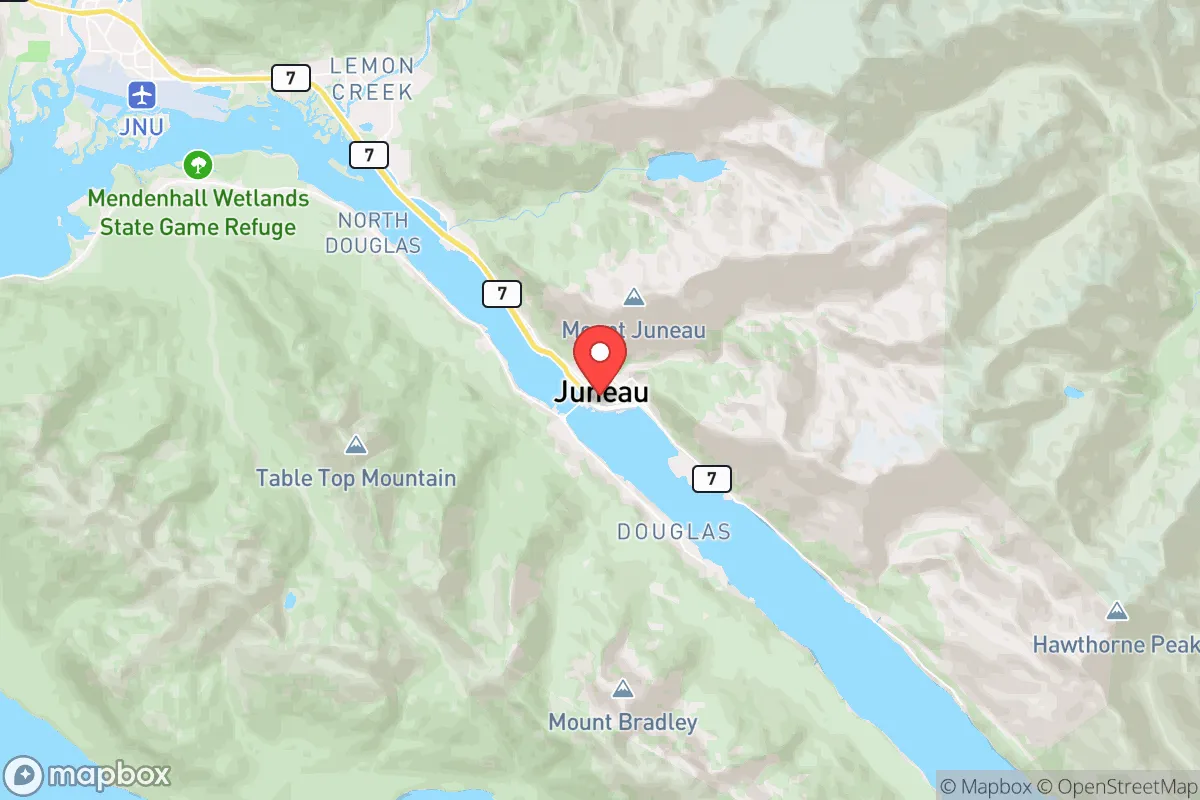
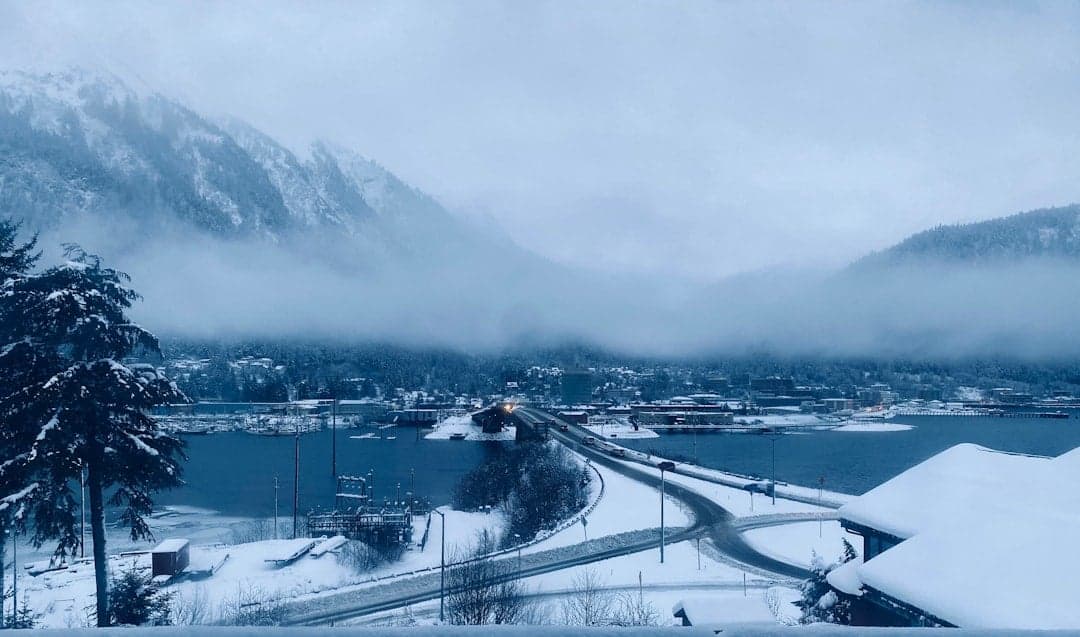
Photo: Kathrine Coonjohn via Unsplash
Demographics of Juneau City And, AK
Affluence Level in Juneau City And, AK
An upper-middle-class area. Household wealth, education levels, and homeownership run ahead of national benchmarks.
People of Juneau City And, AK
Juneau City and Borough, Alaska, is a compact capital city of roughly 31,969 residents, defined by its remote coastal setting, a predominantly white population (61.8%), and a notably high educational attainment level (40.5% college-educated). The city’s character is shaped by a mix of long-established Tlingit families, government employees, and a small but visible East/Southeast Asian community (6.8%), with a very low foreign-born rate of 2.4%. Unlike many American cities, Juneau’s population is not sprawling or suburbanizing; it is tightly clustered along the Gastineau Channel in distinct neighborhoods that reflect its layered history of indigenous settlement, gold rush boom, and government-driven stability.
How the city was settled and grew
Juneau’s human history begins with the Auk and Taku Tlingit people, who used the area as a seasonal fishing and trading ground for centuries, with their descendants still present in the Douglas neighborhood and the Auke Bay area. The modern city was founded in 1880 after a gold strike by Joe Juneau and Richard Harris, triggering a rush that drew a transient, mostly white male population of miners, merchants, and speculators. The original settlement clustered around what is now Downtown Juneau and the Douglas Island side, where the Treadwell mine complex (1881–1917) employed thousands, including a significant number of Chinese and Scandinavian immigrants. By the early 20th century, the gold economy faded, but Juneau’s designation as the Alaska territorial capital in 1906 (and later state capital in 1959) anchored a new wave of government workers, lawyers, and administrators, who settled in West Juneau and the Lemon Creek corridor. The population remained overwhelmingly white through the mid-20th century, with a small Alaska Native presence and virtually no Black or Hispanic residents.
Modern era (post-1965)
After the 1965 Hart-Cellar Act, Juneau’s foreign-born population remained minimal (2.4% today), but domestic in-migration shifted the city’s demographic texture. The Alaska Native Claims Settlement Act (1971) and the expansion of state government brought a modest influx of Alaska Native families from rural villages, many settling in Douglas and Auke Bay, where tribal organizations and cultural centers are concentrated. The most notable modern demographic change has been the growth of an East/Southeast Asian community (6.8%), primarily Filipino and Korean families drawn to Juneau’s fishing industry, healthcare sector, and the University of Alaska Southeast campus in Auke Bay. The Hispanic population (7.0%) is largely a post-2000 phenomenon, driven by service-industry and construction workers, with a visible cluster in the Lemon Creek and Mendenhall Valley neighborhoods. The Black population (0.7%) and Indian subcontinent population (0.1%) remain statistically negligible, reflecting Juneau’s limited economic diversity and high cost of living. The city’s white population (61.8%) is older and more established, concentrated in West Juneau and the Downtown historic district, while younger families and newcomers gravitate toward the Mendenhall Valley for its newer housing stock and schools.
The future
Juneau’s population is aging and slowly declining, with a net out-migration of younger adults seeking lower costs and more job opportunities in Anchorage or the Lower 48. The East/Southeast Asian community is plateauing, as second-generation families assimilate and fewer new immigrants arrive due to high housing costs and limited entry-level jobs. The Hispanic population is the fastest-growing segment, though from a small base, and is likely to continue expanding in the Mendenhall Valley and Lemon Creek service corridors. The Alaska Native population is stable but not growing significantly, with younger members often leaving for urban centers. Over the next 10–20 years, Juneau will likely become slightly more Hispanic and slightly less white, but it will remain a predominantly white, government-anchored city with a small, stable East/Southeast Asian minority. The city is not tribalizing into distinct ethnic enclaves; rather, it is homogenizing into a low-diversity, high-education, high-cost environment where the main demographic pressure is out-migration, not immigration.
For a conservative-leaning individual or family considering relocation, Juneau offers a stable, safe, and educated community with strong public schools and a low crime rate, but it is not a place of rapid demographic change or cultural diversity. The population is aging, the economy is government-dependent, and the cost of living is among the highest in Alaska. New arrivals will find a city that is politically moderate to liberal in local elections but socially traditional in daily life, with a population that values outdoor recreation and self-reliance over urban amenities or ethnic variety.

* Values derived from national, state, county, city and local statistics and may differ in a specific area. Last updated: 2026-04-19T19:24:50.000Z
Narrative content on this page is AI-generated and may contain mistakes. Verify any details that matter before acting on them.
ReloMaps may earn a commission from affiliate links at no extra cost to you.

