 Popular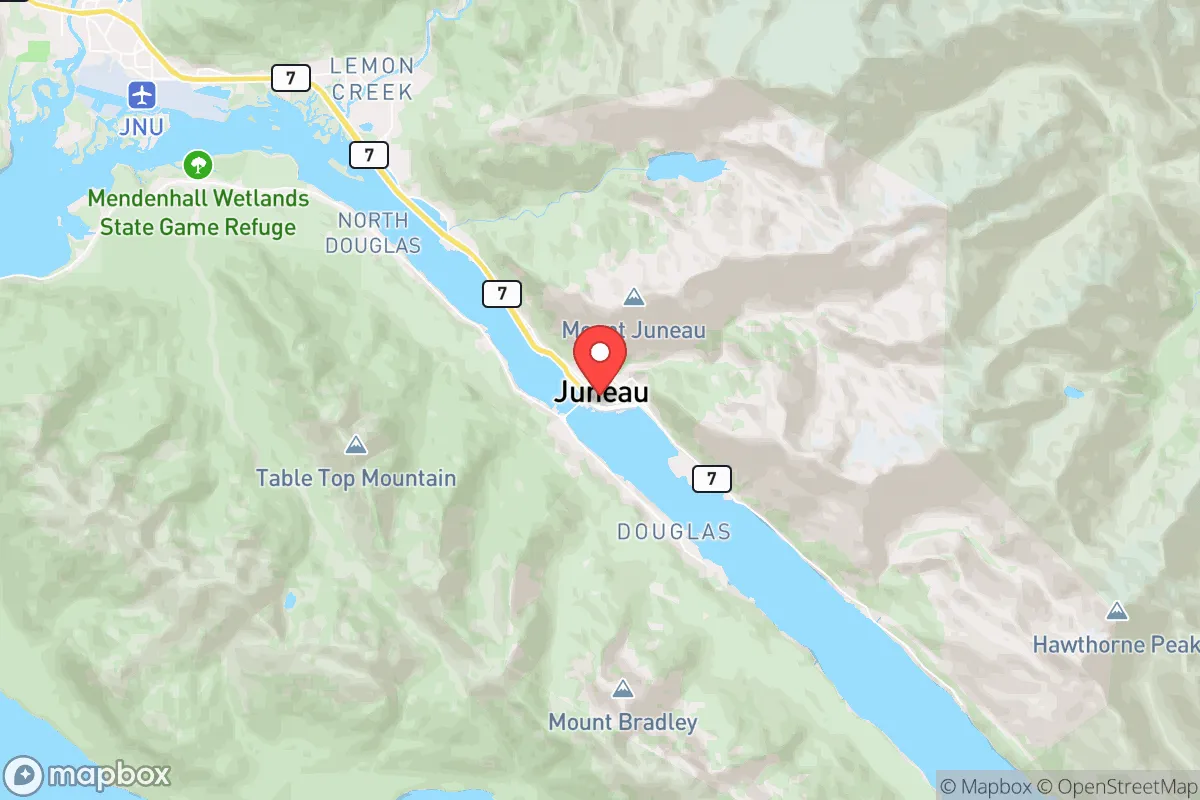
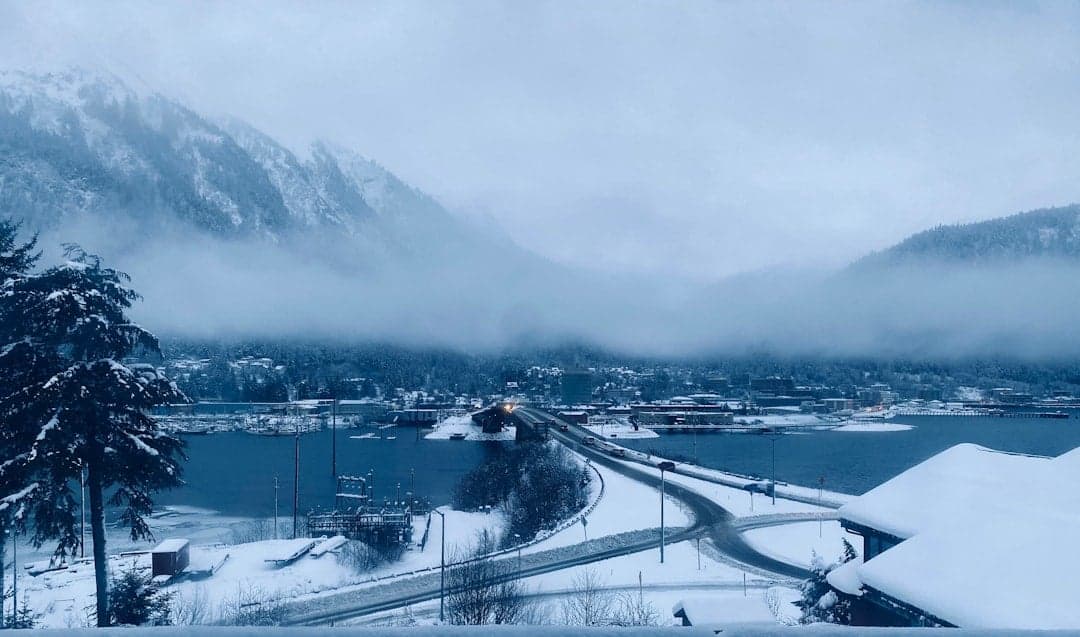
Photo: Kathrine Coonjohn via Unsplash
Political ClimatePolitical Climate in Juneau City And, AK
District shown is the primary district for this city’s centroid. Cities may span multiple districts.
Inherited from parent state — no local data available.
Local Political AnalysisPolitical Analysis of Juneau City And, AK
Juneau City and Borough has a political climate that’s more complicated than its Cook PVI of R+6 might suggest. While the borough as a whole leans Republican on paper, the city of Juneau itself has been drifting leftward over the past decade, with local elections and policy debates increasingly reflecting progressive priorities. If you’ve lived here as long as I have, you’ve watched the shift happen—slowly at first, then faster after 2020. The surrounding areas, like the Mendenhall Valley and out toward Auke Bay, still hold a more traditional, live-and-let-live conservative streak, but the downtown core and the state government workforce have pulled the overall tone toward a kind of coastal-liberal consensus that feels out of step with most of Alaska.
How it compares
Compared to Anchorage or Fairbanks, Juneau is noticeably more progressive on social and environmental issues. Anchorage’s Cook PVI is R+9, and Fairbanks is R+12, so Juneau’s R+6 actually makes it the bluest of Alaska’s three largest cities. But the real contrast is with the small towns just a short flight or ferry ride away. Sitka, for instance, has a similar PVI but a much more libertarian streak—people there are fiercely independent and suspicious of any government overreach, whether it’s from Juneau or Washington. Haines and Skagway are even more conservative, with a strong emphasis on personal freedom and local control. In Juneau, you’ll find a growing number of residents who support things like carbon taxes, stricter land-use regulations, and expanded public-sector union power—ideas that would get laughed out of a town hall in Haines. The borough assembly has also pushed through zoning changes and housing mandates that feel like they’re designed to centralize decision-making rather than let neighborhoods sort things out themselves.
What this means for residents
For the average Juneau resident, the political drift means more rules and less room to make your own choices. Property owners have seen new restrictions on short-term rentals and development, even on private land. The local government has also leaned into mask mandates and vaccine requirements longer than most of the state, which rubbed a lot of folks the wrong way—especially those of us who remember when Juneau was more about self-reliance than government guidance. Taxes are another sore spot: the borough has one of the highest sales tax rates in Alaska at 5.5%, and there’s constant talk of adding a local income tax or increasing property assessments. If you value keeping more of what you earn and making your own decisions about your property and health, the trend here is concerning. The school board has also become a battleground, with progressive members pushing curriculum changes that emphasize social justice over core academics—something that’s driving more families to consider homeschooling or moving to the Valley where the schools are a bit more traditional.
On the cultural side, Juneau still has a strong outdoor, subsistence, and fishing heritage that cuts across political lines. Most people here, regardless of party, care deeply about the Tongass National Forest and the salmon runs. But the policy fights are getting sharper. The push to ban cruise ships on certain weekends, restrict mining exploration, and limit logging on state lands has created a real divide between those who see the economy as needing to grow and those who want to lock it down. If you’re looking for a place where government stays out of your business and lets you live your life, Juneau is becoming less that place every year. The long-term trajectory, unless there’s a serious course correction, points toward more regulation, higher costs, and a political culture that’s increasingly comfortable telling you what’s best for you.

State Political ClimatePolitical Climate in Alaska
State Political AnalysisPolitical Environment in the State
Alaska has long been a politically unique state, leaning Republican in federal elections but with a fiercely independent, libertarian streak that makes it less predictable than many other red states. Over the past 20 years, the state has shifted from reliably red to a more volatile swing state, with the 2020 presidential election seeing Joe Biden win the state’s single electoral vote by a razor-thin margin, though Donald Trump carried it in 2024 by about 13 points. The dominant coalition is a mix of rural conservatives, resource-extraction workers, and a growing population of military and veteran families, but Anchorage and the Mat-Su Valley are the real battlegrounds that decide most statewide races.
Urban vs. rural divide
The political map of Alaska is starkly divided between the urban core of Anchorage and the vast, rural expanse. Anchorage, home to about 40% of the state’s population, leans slightly left, with its downtown and midtown precincts consistently voting Democratic. The Matanuska-Susitna Borough (Mat-Su), just north of Anchorage, is the state’s conservative stronghold, with towns like Wasilla and Palmer routinely delivering 65-70% of their votes to Republican candidates. Fairbanks is more mixed, with the university area leaning left and the surrounding military and mining communities voting right. The Southeast panhandle, including Juneau and Sitka, is reliably blue due to government employment and tourism, while the rural Bush—villages like Bethel, Nome, and Barrow—votes heavily Democratic in state races but is often culturally conservative on social issues. The real political energy, however, is in the Mat-Su Valley, where population growth is fastest and where the state’s most vocal conservative activists are based.
Policy environment
Alaska’s policy environment is defined by its lack of a state income tax or statewide sales tax, funded instead by oil revenue and the Permanent Fund Dividend (PFD). This low-tax structure is a major draw for conservatives, but it creates a volatile budget that swings with oil prices. The state has a strong regulatory posture on resource extraction, with the Alaska Department of Natural Resources overseeing oil, gas, and mining, but it’s generally pro-development compared to the Lower 48. Education policy is decentralized, with local school boards controlling curriculum, but the state has seen recent battles over parental rights, including a 2023 law requiring parental notification for any health services provided to minors. Healthcare is a mixed bag: Alaska has a high rate of Medicaid enrollment (about 25% of the population), but the state also has a thriving private-pay and direct-primary care movement, especially in the Mat-Su. Election laws are relatively straightforward—no-excuse absentee voting and same-day registration are allowed—but there’s been a push for voter ID laws, with a 2024 bill requiring photo ID at the polls that passed the legislature but was vetoed by Governor Mike Dunleavy.
Trajectory & freedom
Alaska is currently in a tug-of-war between expanding and contracting personal freedoms. On the positive side for conservatives, the state has some of the strongest gun rights in the nation, with constitutional carry (no permit needed) since 2013 and a 2024 law preempting any local gun ordinances, meaning Anchorage can’t pass its own restrictions. Parental rights were strengthened in 2023 with HB 105, which requires schools to notify parents of any changes to a student’s health or well-being, including gender identity discussions. However, the state has seen a concerning expansion of government overreach in the form of the Alaska Supreme Court’s 2024 ruling that the state must fund gender-transition procedures for Medicaid recipients, a decision that has sparked legislative pushback. Property rights remain strong, with no statewide zoning and minimal land-use restrictions outside of designated conservation areas, but the state’s high property taxes in Anchorage (about 1.2% of assessed value) are a growing concern for homeowners. The biggest freedom issue is the PFD: in 2023, the legislature capped the dividend at about $1,300, down from the historical formula that would have paid over $3,000, sparking outrage among conservatives who see it as a broken promise and a tax by another name.
Civil unrest & political movements
Alaska has a history of low-level civil unrest, mostly centered on resource extraction and indigenous rights. The most visible flashpoint in recent years was the 2021-2022 protests over the proposed Pebble Mine in Bristol Bay, which drew both environmental activists and pro-mining conservatives into heated confrontations. On the right, the Alaska Independence Party (AIP) remains a vocal but fringe force, pushing for a state referendum on secession, though it has never gained mainstream traction. The 2020 election integrity controversy was muted compared to other states, but a 2022 audit of the ranked-choice voting system—adopted by ballot measure in 2020—found no widespread fraud, though many conservatives remain skeptical of the system and have pushed for its repeal. Immigration politics are less prominent in Alaska than in border states, but the influx of refugees (mostly from Africa and the Middle East) into Anchorage has created some tension, with a 2023 city council vote on sanctuary city status narrowly failing. The most visible political movement is the “Keep Alaska Free” coalition, which organizes around gun rights, parental rights, and PFD restoration, and holds annual rallies in Wasilla and Fairbanks.
Projection
Over the next 5-10 years, Alaska is likely to become more politically volatile as demographic shifts continue. The biggest factor is in-migration: the Mat-Su Valley is growing at about 2% annually, drawing conservative families from the Lower 48 who are fleeing high taxes and progressive policies in states like California and Washington. This will likely push the state further right in statewide races, but Anchorage is becoming more diverse and younger, with a growing Hispanic and Asian population that leans left. The oil industry’s decline—production has dropped 70% since its 1988 peak—will force the state to either raise taxes or cut services, which could spark a major political realignment. The PFD fight will be the central issue: if the legislature continues to cap the dividend, expect a populist backlash that could elect more libertarian or even third-party candidates. The ranked-choice voting system is likely to survive a repeal attempt in 2026, but if it doesn’t, the state could see a return to more partisan primaries. For a conservative moving in now, expect the Mat-Su to become even more of a redoubt, while Anchorage and Juneau will remain blue islands. The state’s overall freedom trajectory is positive on guns and parental rights, but concerning on taxes and the PFD.
For a new resident, the bottom line is that Alaska offers a unique blend of low taxes, strong gun rights, and a growing conservative community in the Mat-Su Valley, but you’ll need to navigate a volatile state budget and a political system that’s still sorting out its post-oil identity. If you’re looking for a place where your vote counts and your freedoms are respected, the Mat-Su is your best bet, but keep an eye on Anchorage—it’s where the state’s political future will be decided.
* Values derived from national, state, county, city and local statistics and may differ in a specific area. Last updated: 2026-04-19T19:24:50.000Z
Narrative content on this page is AI-generated and may contain mistakes. Verify any details that matter before acting on them.
ReloMaps may earn a commission from affiliate links at no extra cost to you.

