Photo: Wikipedia
Demographics of Kaanapali, HI
Affluence Level in Kaanapali, HI
A wealthy area with high-earning, well-educated households. Incomes, home values, and educational attainment meaningfully outpace national averages.
People of Kaanapali, HI
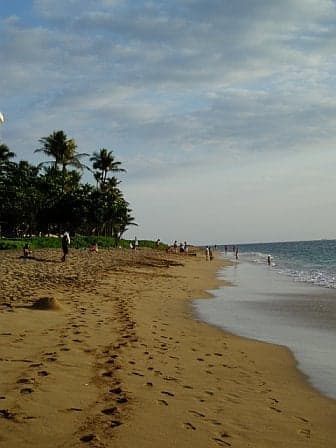
Kaanapali today is a master-planned resort community on Maui’s west coast, home to roughly 1,216 residents in a mix of luxury condominiums, timeshare complexes, and a small permanent workforce. The population is notably older and wealthier than the island average, with 44.2% holding a college degree and a demographic profile that is 73.5% white, 10.4% Hispanic, 6.1% East/Southeast Asian, and 0.8% Black. Despite its small size, Kaanapali functions as a distinct economic enclave, shaped entirely by the tourism industry that replaced its plantation-era roots.
How the city was settled and grew
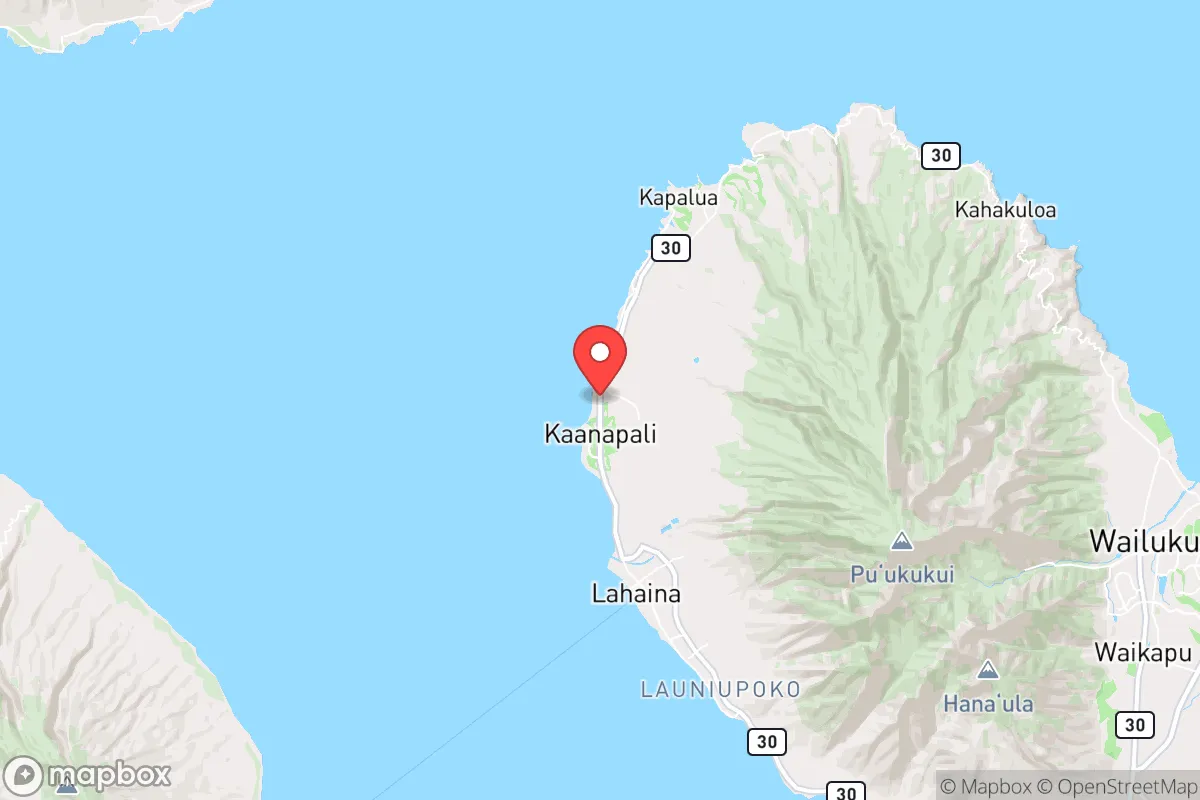
Kaanapali was not a historic Hawaiian village but rather a purpose-built resort destination developed from the 1960s onward. Before that, the area was largely agricultural, part of the vast sugarcane plantations that dominated West Maui. The original population consisted of Native Hawaiian families living in scattered homesteads along the coast, with the nearest historic settlement being Honokowai to the north, where taro farmers and fishermen maintained traditional lifeways. The Kaanapali Beach Resort master plan, launched in 1959 by the American Factors (Amfac) company, transformed the coastline. The first hotel, the Sheraton Maui, opened in 1963, and the development drew a workforce from across Maui—primarily Native Hawaiians, Filipinos, and Japanese-Americans who had previously worked the plantations. These workers settled not in Kaanapali itself but in nearby communities like Lahaina (3 miles south) and Napili-Honokowai (2 miles north), where modest housing was available. Kaanapali’s own residential footprint remained tiny, limited to a few employee housing clusters and the Kaanapali Hillside area, where early resort managers and executives built homes.
Modern era (post-1965)
The 1965 Immigration and Nationality Act had minimal direct effect on Kaanapali, as the resort’s growth was driven by domestic in-migration rather than foreign immigration. The key demographic shift came in the 1970s and 1980s, when mainland Americans—predominantly white retirees, second-home buyers, and hospitality executives—began purchasing condominiums in developments like The Whaler and Kaanapali Alii. These enclaves remain overwhelmingly white and affluent today. Meanwhile, the service workforce that staffs the resort’s hotels and restaurants lives in Lahaina, Napili, and Kahana, creating a stark socioeconomic divide. The 2020 Census data reflects this: Kaanapali’s foreign-born population is just 6.5%, well below Maui County’s average, and the East/Southeast Asian share (6.1%) is largely composed of Japanese-American and Filipino-American families who commute from Lahaina’s Mala and Puunoa neighborhoods. The Indian-subcontinent population (0.7%) is negligible, mostly transient professionals in hotel management. Hispanic residents (10.4%) include both long-time local families and newer arrivals from Mexico and Central America working in landscaping and housekeeping, typically renting in Napili’s older apartment blocks.
The future
Kaanapali’s population is trending older, whiter, and wealthier, with no signs of reversal. The 2023 Lahaina wildfire, which destroyed much of the workforce housing in Lahaina town, has intensified the housing crisis: many service employees who previously commuted from Lahaina have been displaced, and Kaanapali resorts are increasingly reliant on workers commuting from as far as Kihei or Wailuku. This is likely to accelerate the homogenization of Kaanapali’s permanent resident base into an exclusively high-net-worth retiree and second-home owner demographic. The East/Southeast Asian and Hispanic shares are expected to plateau or decline as affordable housing in West Maui becomes scarcer. New developments, such as the proposed Kaanapali 2020 plan for additional luxury units, will reinforce the resort’s character as an exclusive, gated-style enclave. No significant immigrant community growth is anticipated; the foreign-born share will likely remain below 7%.
For a conservative-leaning individual or family considering relocation, Kaanapali offers a stable, low-crime, high-amenity environment with a politically moderate-to-conservative tilt (Maui County leans Democratic, but West Maui’s resort corridor is more libertarian-leaning on economic issues). The trade-off is clear: you will live among other affluent, mostly white retirees and vacation-home owners, with minimal cultural or economic diversity in your immediate neighborhood. The real Hawaii—its working-class, multiethnic communities—lies a short drive south in Lahaina or north in Napili, but Kaanapali itself remains a curated, insulated resort bubble. If that aligns with your priorities, it is one of the safest and most predictable places in the state to settle.

* Values derived from national, state, county, city and local statistics and may differ in a specific area. Last updated: 2026-04-24T00:09:19.000Z
Narrative content on this page is AI-generated and may contain mistakes. Verify any details that matter before acting on them.
ReloMaps may earn a commission from affiliate links at no extra cost to you.

