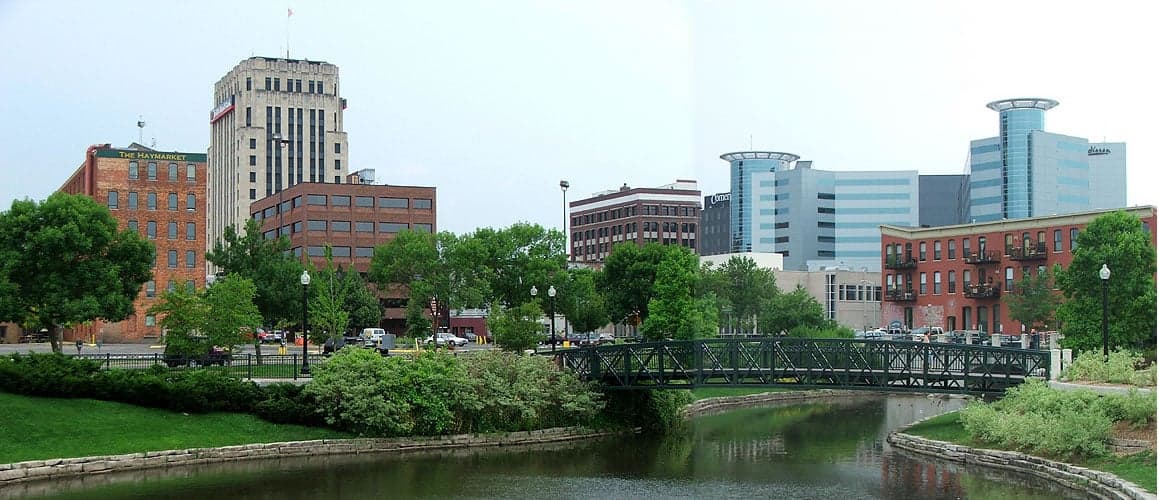
Photo: Wikipedia
Strategic Assessment of Kalamazoo, MI
Meaningful friction. Expect exposure to either population pressure, blast zones, or natural disaster risk. Consider buying a retreat property.
What does the Strategic Assessment tell us?
Our Strategic Assessment grades tactical survivability of an area. Major population centers, military targets, fallout zones, natural disasters, and border exposure all drive risk — lower exposure means a more defensible position in a crisis.
This is heavily inspired by Joel Skousen's Strategic Relocation book. Highly recommended you checkout the book ($)What does this tell us?
Our Strategic Assessment grades tactical survivability of an area. Major population centers, military targets, fallout zones, natural disasters, and border exposure all drive risk — lower exposure means a more defensible position in a crisis.
This is heavily inspired by Joel Skousen's Strategic Relocation book. Highly recommended you checkout the book ($)Strategic Pillars

Key Distances
Regional Safe Places
Below is our recommended "safe zones" in Michigan and the surrounding area based on our strategic heuristics. For most people, it's unrealistic to live in a “safe zone” full-time due to work, family or other personal reasons. They tend to be more rural. However, many of these areas are perfect for second homes and retreat properties that double as a vacation home or even a short-term rental.


Important Note: For informational purposes only. This does not mean nothing bad ever happens in the green zones. Please use common sense. This is based on public data and modeled with AI. We tried to take a conservative approach but mistakes happen. We update this regularly as new information becomes available.
Solar Generator Recommendations
Backup power matters more here than in safer locations. We've picked three solar generators across budgets and capacity tiers — start with the budget unit if you only need a few essentials, or step up if you want to run a fridge and HVAC for days at a time.

Jackery Portable Power Station Explorer 300
Budget OptionPower on the Go: Weighing only 11 lbs, it's convenient to set up and store with book-sized foldable solar panels

BLUETTI Portable Power Station AC180
Designed for both indoor and outdoor scenarios, AC180 is highly capable as it has a robost capacity and continuous output power.

EF ECOFLOW DELTA Pro Ultra Power Station
Upgraded PickEcoFlow DELTA Pro Ultra is a whole-home energy system designed to grow with your family. Integrated with the Smart Home Panel 2, it scales to meet your evolving energy needs — keeping your home powered, intelligent, and secure through every stage of life.
We earn a commission, at no additional cost to you.
Strategic Assessment Analysis
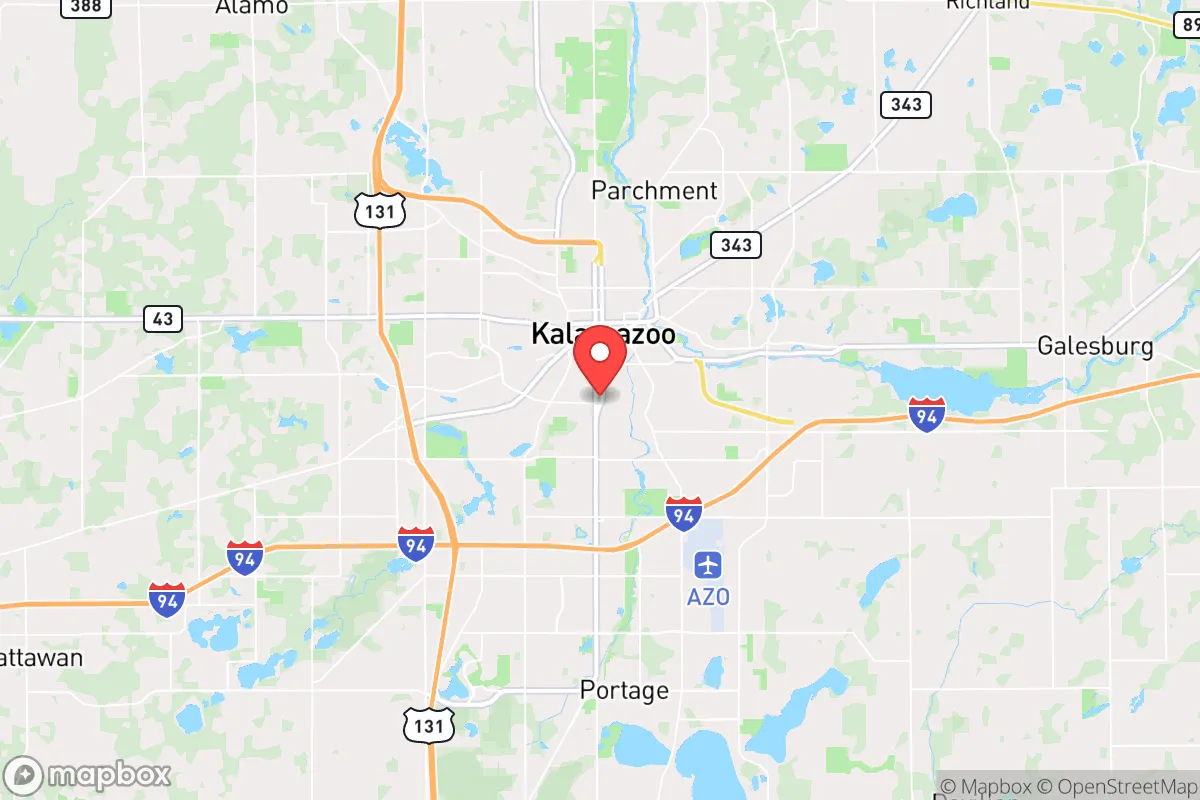
Kalamazoo, Michigan, occupies a strategic position in the Great Lakes region that offers a mix of genuine resilience factors and significant vulnerabilities for those thinking long-term about relocation. Located roughly halfway between Chicago and Detroit, and about 40 miles east of Lake Michigan, the area benefits from abundant freshwater access, a relatively moderate climate, and a diversified economy that includes manufacturing, healthcare, and education. However, its proximity to major population centers, interstate corridors, and critical infrastructure also introduces exposure risks that a prepper-minded relocator must weigh carefully. The city itself has a population around 73,000, with the broader Kalamazoo-Portage metro area pushing 260,000—small enough to avoid the worst of urban collapse scenarios, but large enough to be a target during widespread unrest.
Geographic position and natural advantages for long-term sustainability
Kalamazoo sits in a region defined by the Kalamazoo River watershed, which provides surface water and groundwater resources that are more reliable than many parts of the country. The area receives about 36 inches of precipitation annually, meaning drought is rarely a concern, and the growing season of roughly 150 days supports small-scale agriculture. The surrounding landscape is a mix of farmland, hardwood forests, and wetlands, offering both food production potential and natural cover. The city is not directly on a major fault line, and tornado risk, while present, is lower than in the Plains states. The Great Lakes act as a massive thermal buffer, moderating temperature extremes and providing a nearly inexhaustible freshwater source—a critical advantage in any long-term disruption scenario. For a relocator, the ability to tap into local water sources, grow food, and maintain moderate temperatures without heavy energy inputs is a tangible resilience asset.
Risks, exposures, and proximity to fallout-relevant landmarks
The most pressing concern for a survivalist assessment is Kalamazoo's location along the I-94 corridor, a major east-west artery connecting Chicago and Detroit. In a crisis involving mass migration, civil unrest, or supply chain collapse, this highway becomes a liability—a funnel for displaced populations and a target for looting or roadblocks. The city is also within 150 miles of the Palisades Nuclear Plant (though it was decommissioned in 2022, the spent fuel remains on-site), and roughly 200 miles from the Fermi 2 nuclear plant near Detroit. While not immediate fallout zones, these sites represent potential contamination risks if a major incident occurs. Additionally, Kalamazoo is home to a major rail yard and several chemical storage facilities, including the site of the 2010 Enbridge oil spill—the largest inland oil spill in U.S. history. For a prepper, these industrial and transportation nodes are magnets for disaster, whether natural or man-made. The city's proximity to Battle Creek (home to the Kellogg Company and a major federal center) and the larger metro areas of Grand Rapids and Lansing means that any regional instability will ripple into Kalamazoo quickly.
Practical resilience for a relocator: food, water, energy, and defensibility
On the practical side, Kalamazoo offers several advantages for someone serious about self-sufficiency. The surrounding agricultural land is fertile and relatively affordable—farmland prices in Kalamazoo County are lower than in the western suburbs of Chicago or Detroit, and the area has a strong local food movement with farmers' markets, CSAs, and a growing number of small-scale farms. Water access is excellent: the Kalamazoo River runs through the city, and many rural properties have wells with good yields. The region's energy grid is part of the Midcontinent Independent System Operator (MISO), which has a mixed generation portfolio including coal, natural gas, and renewables. However, grid reliability is a concern during extreme weather events, and the area has experienced multi-day outages from ice storms and derechos. For a relocator, investing in solar panels with battery storage and a backup generator is a wise move. Defensibility is a mixed bag: the city itself is flat and spread out, with few natural chokepoints, but the surrounding rural areas offer more secluded properties with tree cover and limited road access. The key is to avoid being too close to the I-94 corridor or the downtown core, and instead look at properties in townships like Oshtemo, Texas Township, or Climax—areas with lower population density and better natural barriers.
The overall strategic picture for a conservative-leaning relocator
For someone approaching relocation from a prepper mindset—concerned about civic unrest, economic collapse, or mass casualty events—Kalamazoo presents a mixed but workable option. The area's freshwater abundance, agricultural potential, and moderate climate are genuine long-term advantages that many other parts of the country lack. However, the risks from its position along a major transportation corridor, proximity to industrial hazards, and the potential for spillover from larger urban centers cannot be ignored. The conservative-leaning relocator will find that the surrounding rural areas lean more Republican than the city itself, but the political culture in Kalamazoo County is purple, with a noticeable progressive presence in the city proper. This cultural tension can be a double-edged sword: it means less ideological uniformity, but also less risk of being in a bubble that collapses under its own weight. The smart play here is to secure a property outside the city limits, with good water and defensible terrain, while maintaining access to the city's medical and supply resources. Kalamazoo is not a bug-out location—it's a base of operations that requires active preparation, but one that offers the raw materials for long-term survival if you're willing to put in the work.

* Values derived from national, state, county, city and local statistics and may differ in a specific area. Last updated: 2026-04-29T19:09:31.000Z
Narrative content on this page is AI-generated and may contain mistakes. Verify any details that matter before acting on them.
ReloMaps may earn a commission from affiliate links at no extra cost to you.

