Photo: Wikipedia
Quality of Life in Kalamazoo, MI
Above-average quality of iife. The area offers a reasonable cost of living, decent mobility, and a mix of neighborhood amenities.
What does Quality of Life tell us?
Quality of Life blends cost of living, nearby amenities, socioeconomic signals, and neighborhood character. City-level scores represent the whole municipality; individual neighborhoods can differ.
What does this tell us?
Quality of Life blends cost of living, nearby amenities, socioeconomic signals, and neighborhood character. City-level scores represent the whole municipality; individual neighborhoods can differ.
Cost of Living
23% below national average
The Real Cost of Living in Kalamazoo, MI for 2026
| Tier | Individual | Family (4) |
|---|---|---|
| Survival | $16k | $31k |
| Comfortable | $32k | $47k |
| Luxury | $88k+ | $137k+ |
| Elite (Top 5%) | $110k+ | $170k+ |
104%
The Area Signal
A metric tracking the socioeconomic signals of the area.
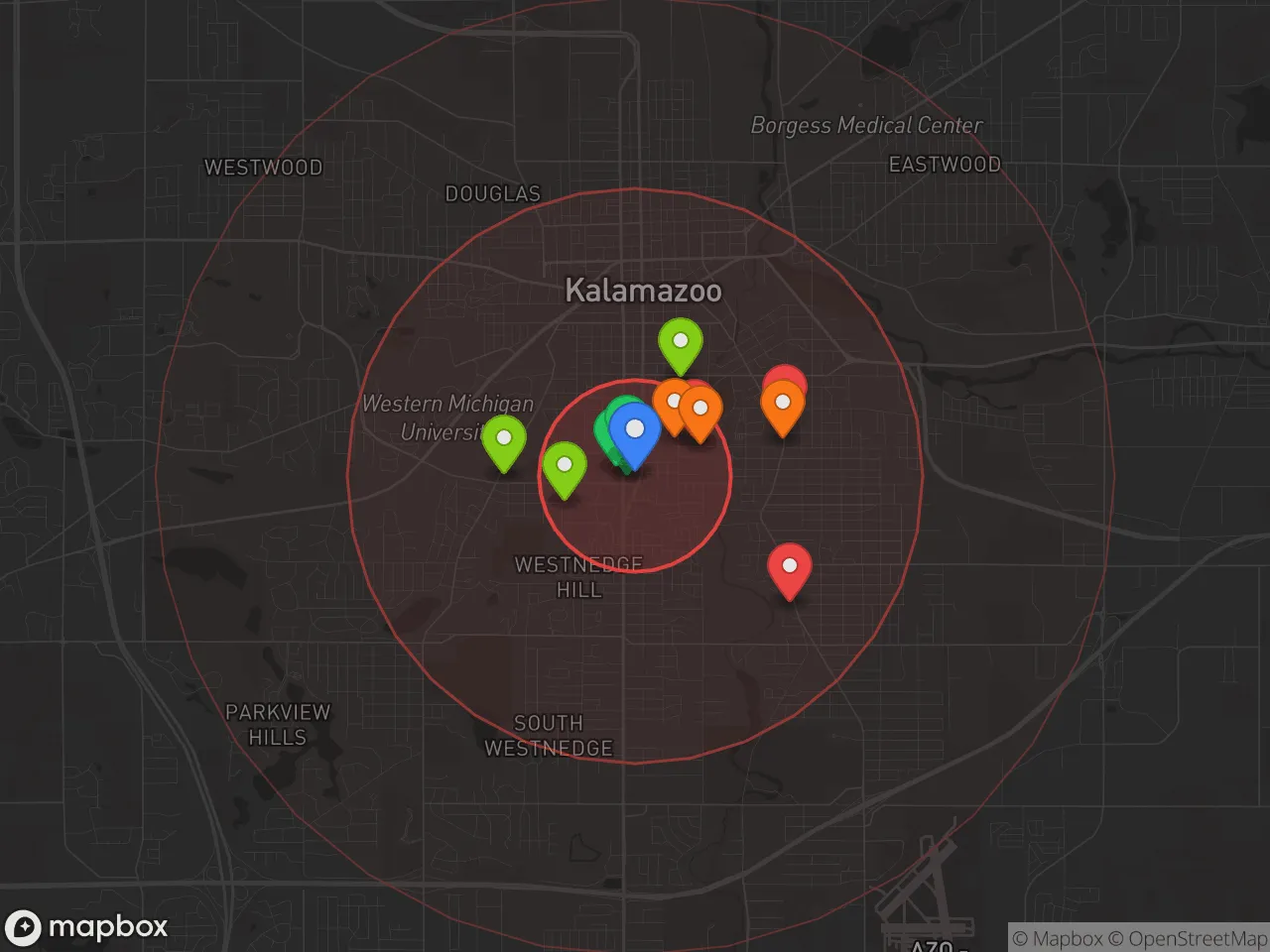
Hobbies
Explore the areaGroceries
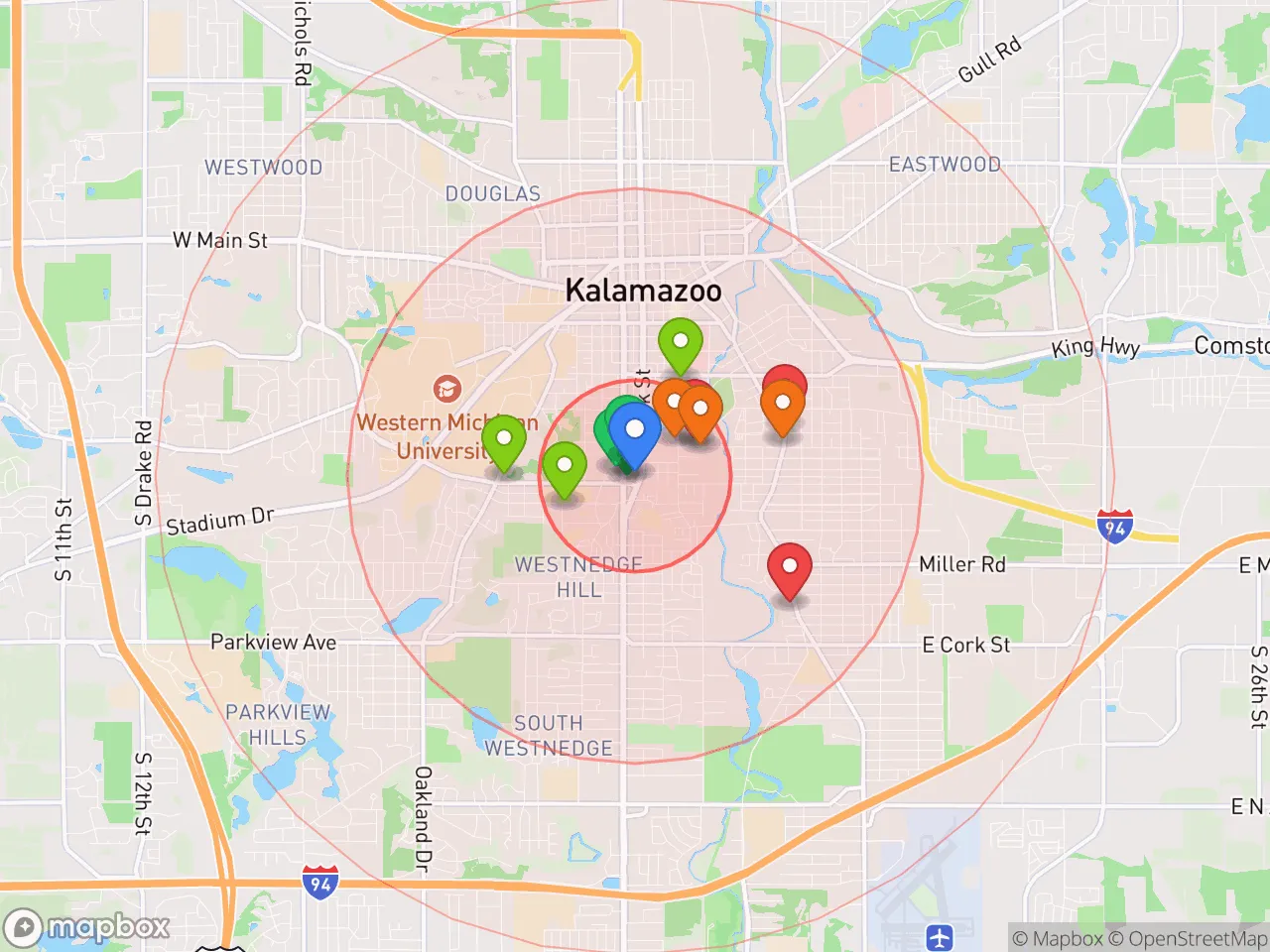
6 within 10 miles
Gas
20 within 10 miles
Hospital
8 within 20 miles
Airport
DTW — Detroit Metropolitan Wayne County
Post Office
USPS — Kalamazoo, MI
Critical Amenities
Quality-of-Life Analysis
Kalamazoo, Michigan, offers a quality of life defined by its blend of Midwestern affordability and a surprisingly robust cultural and educational infrastructure, attracting a population that is both economically diverse and notably well-educated for a city its size. With a cost of living index of 77—well below the national average of 100—the area draws young professionals from Western Michigan University and Kalamazoo College, along with families and retirees seeking a lower-stress, higher-value lifestyle than what is available in larger Michigan metros like Grand Rapids or Ann Arbor. The city’s median household income hovers around $45,000, reflecting a mix of students, service workers, and professionals in healthcare and manufacturing, creating a community that is neither uniformly affluent nor struggling, but rather grounded in practical, community-oriented values.
Cost of living, housing affordability, and how Kalamazoo compares to nearby cities
Kalamazoo’s cost of living index of 77 makes it significantly cheaper than the national average, and it undercuts nearby cities like Grand Rapids (index ~85) and Ann Arbor (index ~100) by a wide margin. The median home value of $164,500 is roughly half the national median, allowing first-time buyers to enter the market with a modest down payment, while the median rent of $1,031 is about 20% below the national average, making it feasible for single earners and students. Housing stock is older—much of it built before 1960—but prices have risen steadily since 2020, with annual appreciation around 6-8%, signaling a market that is still affordable but no longer stagnant. Compared to Battle Creek (median home value ~$120,000), Kalamazoo is pricier but offers more job density and amenities; compared to Portage, its immediate suburb, Kalamazoo city proper is cheaper but has older infrastructure. The average commute of 18 minutes is a standout advantage, cutting the national average nearly in half, which translates to lower transportation costs and more time for family or recreation.
What daily life is like: amenities, schools, and the local rhythm
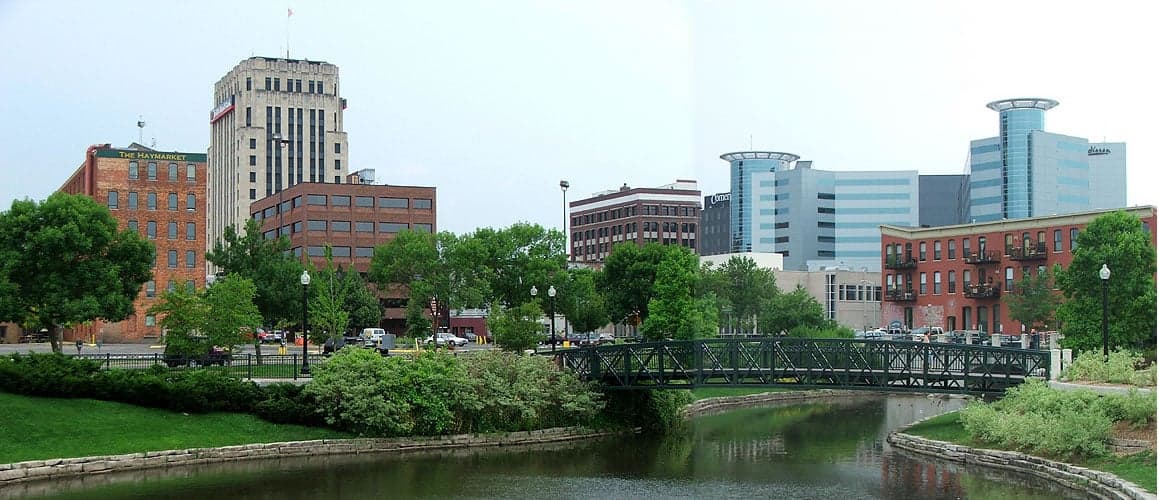
Daily life in Kalamazoo revolves around a compact, walkable downtown anchored by the Kalamazoo Mall, a pedestrian-friendly stretch of shops and restaurants, and the Kalamazoo River Valley Trail for biking and running. The Kalamazoo Promise—a scholarship program guaranteeing free college tuition for graduates of Kalamazoo Public Schools—is a defining feature, driving higher enrollment and home-buying decisions among families with children. The public school system itself is mixed: Kalamazoo Public Schools serve a diverse, high-poverty student body with below-average test scores, but the Promise program offsets this by ensuring college access, and nearby Portage Public Schools consistently rank among the top in the region. Cultural amenities are outsized for a city of 73,000, including the Kalamazoo Institute of Arts, the Gilmore Piano Festival, and the Bell’s Brewery Eccentric Café, which anchors a vibrant craft beer scene. The rhythm is slower than a major metro but faster than rural southwest Michigan, with weekend farmers markets, minor-league hockey at Wings Event Center, and easy access to Lake Michigan beaches (about 40 minutes west) providing a steady cadence of low-key recreation.
Kalamazoo is best suited for people who prioritize affordability and community over prestige and pace—young families drawn by the Promise scholarship, remote workers who value a short commute and low housing costs, and retirees who want cultural amenities without big-city prices. Professionals in healthcare (Ascension Borgess and Bronson Methodist are major employers) and education (Western Michigan University) will find a stable job market, while those seeking high-end retail, luxury housing, or a fast-paced nightlife scene may feel limited. The city’s economic diversity means no single demographic dominates, creating a genuinely mixed-income, mixed-background environment that rewards engagement over affluence.

Crime in Kalamazoo, MI
Significantly higher crime rates than 79% of comparable U.S. locations.
Violent CrimeViolent Crime Analysis
Property CrimeProperty Crime Analysis
Crime Analysis
Kalamazoo, Michigan, reports a violent crime rate of 1,077.2 incidents per 100,000 residents and a property crime rate of 2,940.9 per 100,000, placing it among the more dangerous cities in the state for its size. These figures significantly exceed both Michigan and national averages, reflecting a persistent public safety challenge that potential residents should weigh carefully. The city’s proximity to the larger Grand Rapids metropolitan area and its status as a regional hub for education and healthcare do not offset the elevated crime risks documented in official statistics.
Crime in context
Kalamazoo’s violent crime rate is roughly three times the national average of about 380 per 100,000, while its property crime rate is nearly double the U.S. median. Compared to other Michigan cities of similar population, Kalamazoo ranks higher than Ann Arbor (roughly 250 violent crimes per 100K) but lower than Flint (over 2,000 per 100K). The city’s crime index places it in the 10th percentile nationally, meaning 90% of U.S. cities are safer. Property crime, including theft and burglary, is the most common offense, but the violent crime rate—driven largely by aggravated assault and robbery—is a standout concern. These numbers reflect systemic issues that local law enforcement and community programs have struggled to reverse in recent years.
What residents experience
Residents report that crime is not evenly distributed across the city. Neighborhoods near downtown and the Northside tend to see higher concentrations of violent incidents, while areas closer to Western Michigan University and the city’s outskirts experience lower rates. Property crime, including vehicle break-ins and package theft, is a daily annoyance in many residential zones. The local justice system, influenced by progressive policies in Kalamazoo County, has drawn criticism for prioritizing diversion and reduced sentencing for repeat offenders. Critics argue that liberal-leaning judges and district attorneys in this region contribute to a revolving-door effect, where offenders cycle back onto the streets quickly, undermining deterrence and victim confidence. This ideological approach, while intended to reduce incarceration, correlates with the city’s stubbornly high crime metrics and leaves many residents feeling unsafe, especially after dark.
Neighborhood-level variation is significant. The West Main Hill and Bronson Park areas report fewer violent crimes, while the Edison and Eastside neighborhoods see elevated rates. Prospective residents should consult block-level crime maps and consider that even safer pockets may be affected by spillover from higher-crime zones. Overall, Kalamazoo’s safety profile demands careful neighborhood selection and heightened awareness of local justice policies that may influence recidivism and public security.
* Values derived from national, state, county, city and local statistics and may differ in a specific area. Last updated: 2026-04-29T19:09:31.000Z
Narrative content on this page is AI-generated and may contain mistakes. Verify any details that matter before acting on them.
ReloMaps may earn a commission from affiliate links at no extra cost to you.

