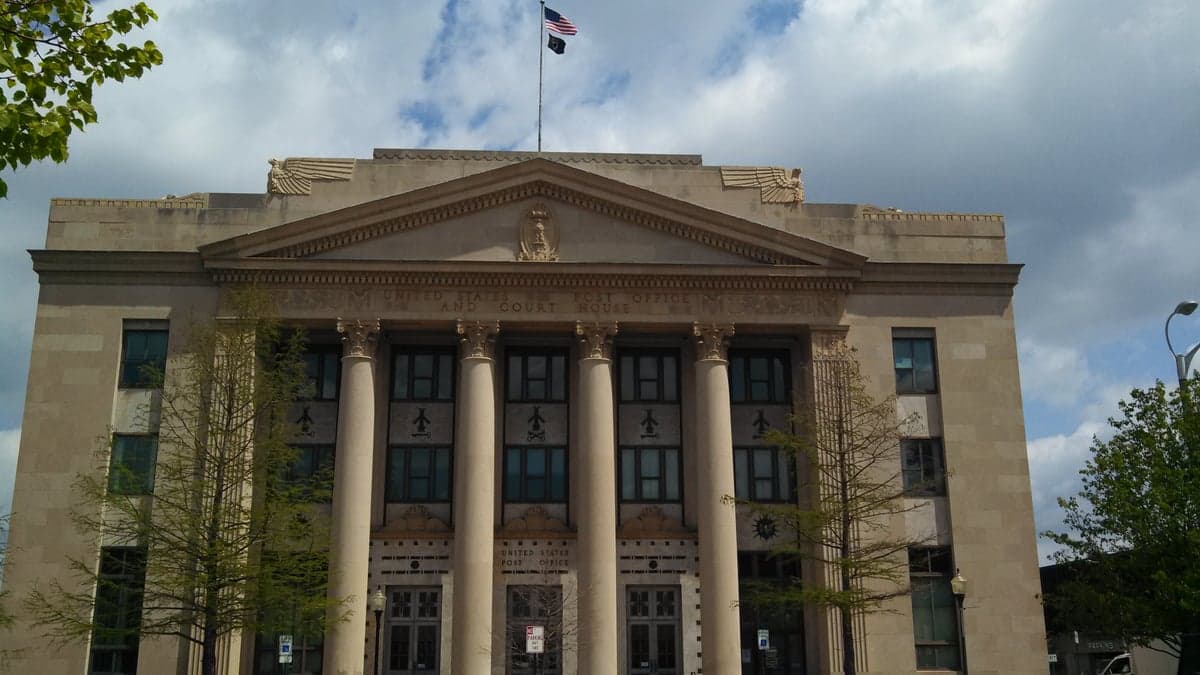
Photo: Wikipedia
Demographics of Shawnee County
Affluence Level in Shawnee County
A middle-class area roughly in line with national averages across income, home values, education, and employment.
People of Shawnee County
Shawnee County, anchored by the state capital Topeka, is home to 178,315 residents who form a predominantly white (71.7%) and politically moderate-to-conservative population with a strong Midwestern character. The county’s identity is shaped by its role as a government and railroad hub, a history of German and European settlement, and a growing Hispanic community (13.6%) that is reshaping its cultural landscape. With a foreign-born share of just 2.5% — well below the national average — Shawnee County remains a largely native-born, stable community where family roots run deep and change comes gradually.
Settlement & growth (pre-1960)
Before American settlement, the area now known as Shawnee County was home to the Kansa (Kaw) and Osage nations, who used the Kansas River valley for hunting and seasonal camps. The land was part of the vast Louisiana Purchase, and after the 1830 Indian Removal Act, the Shawnee tribe was forcibly relocated to the area from Ohio, giving the county its name. The U.S. government established the Shawnee Methodist Mission near present-day Topeka in the 1830s as part of its assimilation efforts, though the tribe was later pushed further south to Oklahoma.
American settlement began in earnest after the 1854 Kansas-Nebraska Act opened the territory to white homesteaders. The county was officially organized in 1855, and Topeka was founded the same year by a group of New England abolitionists and free-state settlers from the New England Emigrant Aid Company. These early arrivals were overwhelmingly Yankees — educated, Protestant, and anti-slavery — who established Topeka as a free-state stronghold during the Bleeding Kansas conflict. The town’s location on the Kansas River and its designation as the territorial capital (and later state capital in 1861) drove early growth.
The railroad era transformed Shawnee County. The Atchison, Topeka and Santa Fe Railway established its headquarters and massive repair shops in Topeka in the 1870s, drawing thousands of workers. This brought a wave of German and Irish immigrants who settled in neighborhoods like Potwin Place and the Tennessee Town area. German Catholics and Lutherans built churches and schools, while Irish laborers filled the railroad yards. Smaller numbers of Swedish and Czech immigrants arrived in the 1880s, farming in the county’s rural townships around Silver Lake and Rossville.
African Americans arrived in two distinct waves. The first came during Reconstruction (1865–1880), with freed slaves moving to Topeka for jobs on the railroad and in government. The Tennessee Town neighborhood became the heart of Topeka’s Black community, named for the many families who migrated from Tennessee. The second wave came during the Great Migration (1910–1940), when Southern Blacks fled Jim Crow for industrial jobs in Topeka’s rail yards and meatpacking plants. By 1950, Black residents made up roughly 8% of the county’s population, concentrated in East Topeka and Tennessee Town.
The Dust Bowl and Great Depression brought a smaller influx of white migrants from Oklahoma and Arkansas in the 1930s, many of whom settled in rural areas like Dover and Auburn. Post-World War II, the county grew steadily as the state government expanded and the Goodyear Tire & Rubber Company opened a major plant in Topeka in 1944, employing thousands. Suburbanization began in the 1950s, with middle-class families moving to new developments in West Topeka and the growing town of Silver Lake.
Modern era (post-1965)
The 1965 Hart-Cellar Act had a muted effect on Shawnee County compared to coastal regions. The foreign-born population remains low at 2.5%, and most post-1965 immigration has been from Latin America and Southeast Asia. Hispanic residents — primarily of Mexican descent — began arriving in the 1970s, drawn by agricultural work in the county’s rural areas and service jobs in Topeka. The Hispanic share grew from under 3% in 1980 to 13.6% today, with concentrations in East Topeka and the Oakland neighborhood. A smaller community of Vietnamese refugees settled in Topeka after 1975, working in manufacturing and owning small businesses, though the East/Southeast Asian population remains just 0.9%.
Domestic migration has been the bigger story. Since the 1980s, Shawnee County has experienced slow but steady out-migration of young adults to Kansas City and the Sun Belt, offset by in-migration of retirees and state government workers. The county’s population peaked at 178,600 in 2010 and has since plateaued. Suburbanization has continued, with Washburn University’s growth driving development in southwest Topeka, and bedroom communities like Silver Lake and Rossville attracting families seeking lower taxes and better schools. The Black population has declined slightly (from 9.2% in 2000 to 7.3% today), as younger Black residents move to larger metro areas for more opportunity.
Politically, Shawnee County has shifted rightward. It voted for Donald Trump in 2020 and 2024, reflecting the broader Kansas trend of rural and suburban conservatism. The county’s white population (71.7%) is aging, with a median age of 38.5, while the Hispanic population is younger and growing. The Indian subcontinent population is tiny (0.5%), mostly professionals employed at the University of Kansas Medical Center in Topeka or state government.
The future
Shawnee County is slowly diversifying, but the pace is glacial compared to the rest of the country. The Hispanic population will likely continue growing, reaching 18–20% by 2040, driven by higher birth rates and continued migration from Mexico and Central America. This growth is concentrated in East Topeka, where Spanish-language churches and businesses are becoming more visible. The white population will continue to shrink as a share, though it will remain the majority for decades. The Black population is stable but not growing, as out-migration to larger cities offsets births.
The county is not tribalizing into distinct enclaves — rather, it is slowly homogenizing as Hispanic families move into previously white neighborhoods and suburbs. The foreign-born share will rise but likely stay under 5%, as Shawnee County lacks the job base or ethnic networks to attract large immigrant flows. The biggest demographic shift may be the continued aging of the white population, which will strain local services and schools. For a newcomer, Shawnee County offers a stable, affordable, and politically conservative environment where change is gradual and community ties remain strong.
This is a place where the past still shapes the present — a government and railroad town with deep European roots, a modest but growing Hispanic presence, and a population that values stability over rapid change. For someone moving in now, Shawnee County offers a low-cost, family-oriented lifestyle with a conservative political culture, but limited ethnic diversity and a slowly shrinking young adult population.

* Values derived from national, state, county, city and local statistics and may differ in a specific area. Last updated: 2026-06-01T12:00:29.000Z
Narrative content on this page is AI-generated and may contain mistakes. Verify any details that matter before acting on them.
ReloMaps may earn a commission from affiliate links at no extra cost to you.

