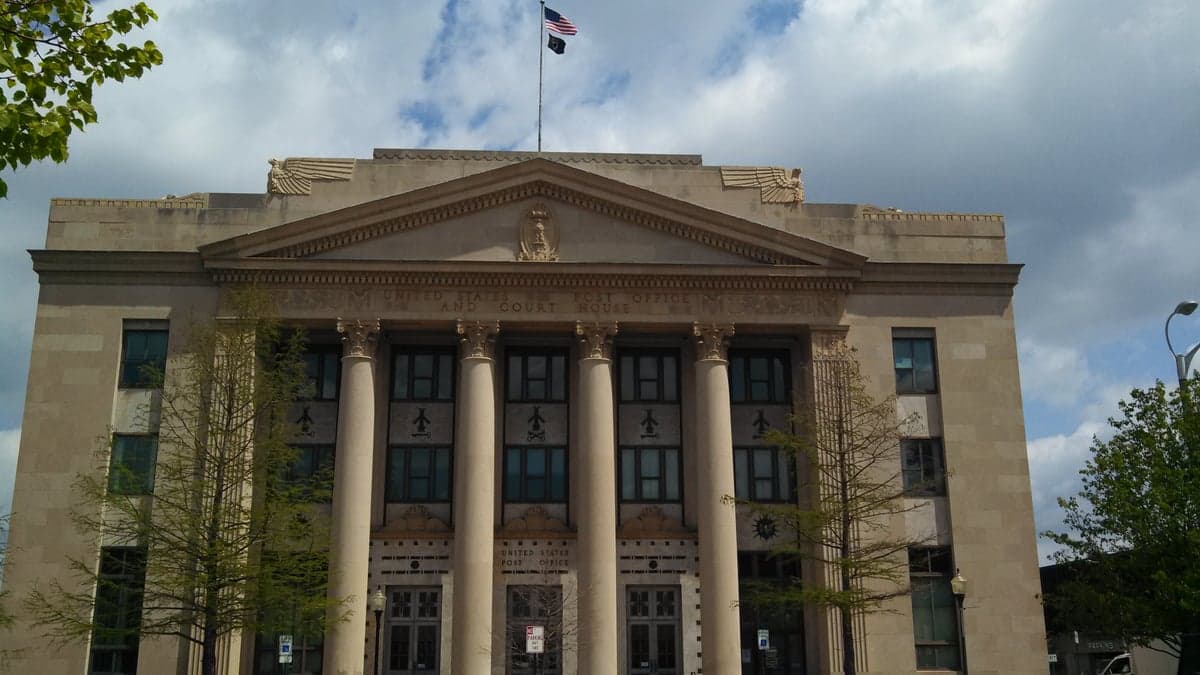
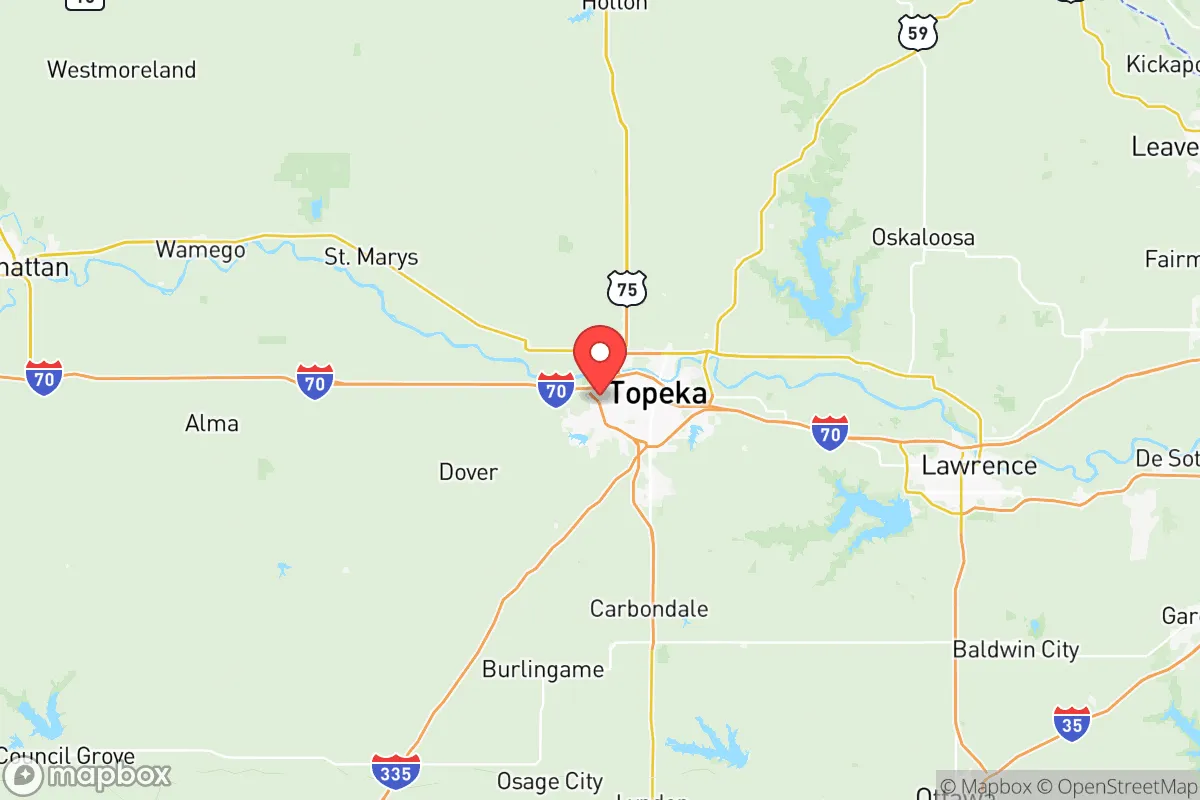
Photo: Wikipedia
Quality of Life in Shawnee County
A livable area that tracks near national norms for affordability, walkability, and neighborhood health.
What does Quality of Life tell us?
Quality of Life measures an area by evaluating factors like cost of living, nearby amenities, country club access, airport proximity, socioeconomic signals and neighborhood character. For large states, this is a general average — quality of life can vary dramatically between metro areas, suburbs, and rural communities within the same state.
What does this tell us?
Quality of Life measures an area by evaluating factors like cost of living, nearby amenities, country club access, airport proximity, socioeconomic signals and neighborhood character. For large states, this is a general average — quality of life can vary dramatically between metro areas, suburbs, and rural communities within the same state.
Cost of Living
26% below national average
136%
The Real Cost of Living in Shawnee County for 2026
| Tier | Individual | Family (4) |
|---|---|---|
| Survival | $15k | $29k |
| Comfortable | $33k | $49k |
| Luxury | $114k+ | $177k+ |
| Elite (Top 5%) | $134k+ | $208k+ |
Quality-of-Life Analysis
Shawnee County offers a wide spectrum of living environments concentrated around Topeka, then fanning out into quiet small towns and fully rural countryside. The county draws government employees, healthcare workers, and retirees to its urban core; families and tradespeople to bedroom suburbs like Rossville and Silver Lake; and farmers, equestrians, and commuter professionals to the open lands around Dover and Berryton. With a cost-of-living index of 74 (well below the national 100) and a median home value of $170,400, the county provides affordable entry points at every density level.
Largest town(s) & population centers
Topeka, the county seat and state capital, anchors Shawnee County with roughly 125,000 residents. Daily life here is shaped by state government, the University of Kansas Health System St. Francis Campus, and companies like Goodyear and BNSF Railway. Downtown Topeka has seen renewal around the Kansas Statehouse, with restaurants, the Topeka Civic Theatre & Academy, and the Noto Arts District drawing foot traffic. Residential options range from historic neighborhoods like Potwin Place (with Queen Anne homes) to newer subdivisions near S.W. 29th & Wanamaker. Median rent ($970) and a short average commute of 17.8 minutes make the city accessible for young professionals and families alike. Suburban-style growth extends along S.W. 21st Street and south of I-470, where big-box retail and medical clinics cluster. The twin cities of Silver Lake (pop. ~1,400) and Rossville (pop. ~1,100) sit just north of Topeka; both are small towns that function as quiet commuter hubs, with Silver Lake’s school system (rated among the county’s best) drawing families away from the capital’s urban core.
Smaller towns & rural pockets
Beyond the Topeka metro, Shawnee County holds a string of unincorporated communities and incorporated villages that sustain a distinctly slower pace. Auburn (pop. ~1,300) lies along U.S. 75 south of Topeka, offering a compact downtown with a grocery store and a locally owned hardware store. Wakarusa, straddling the county line south of Topeka, is unincorporated but retains a strong farm identity, with grain elevators and a volunteer fire department. Dover (unincorporated) sits near the Kansas River in the county’s far northwest — a cluster of homes and St. Matthew’s Catholic Church surrounded by cropland. Berryton, east of Topeka, is another unincorporated area where subdivisions on well-water lots mix with cattle pastures. Tecumseh, now essentially a south-Topeka neighborhood, was once a separate town and still has its own post office and small park. In the county’s very far southwest corner, Grantville (pop. ~200) is a tiny cross-roads community near the Jefferson County line. These places lack chain retail and rely on Topeka for most shopping and healthcare; they appeal to residents who trade acreage and quiet for longer drives to the grocery store.
Cost & lifestyle range
The cost spread across Shawnee County narrows the gap between urban and rural living. In Topeka’s central neighborhoods (e.g., near Gage Park or S.W. 10th Avenue), homes can be found below $150,000, often in need of cosmetic updates. At the higher end, newer subdivisions in southwest Topeka and near Lake Shawnee (e.g., the Shawnee Heights area) see median prices climb toward $250,000–$300,000. Silver Lake and Rossville command a premium for their school districts and small-town feel, with typical home values around $180,000–$220,000. In rural pockets like Dover or Berryton, homes on 1–5 acres often fall in the $200,000–$275,000 range, while larger farmsteads with 20+ acres may exceed $400,000. Rentals follow a similar gradient: downtown Topeka apartments can dip below $750 per month, while brand-new complexes near Wanamaker Road exceed $1,200. Property taxes are moderate (Burnett County – no, Shawnee County’s mill levy averages about 140–150 mills, but Kansas’s tax structure keeps overall housing costs low). The county’s low COL index (74) means that even middle-income households — state employees earning $40,000–$60,000 — can comfortably own a home on a 30-year mortgage.
Shawnee County best suits people who want affordable homeownership without sacrificing access to capital-city amenities. Young professionals and state government workers thrive in central Topeka or its walkable edges; families gravitate to Silver Lake, Rossville, or the rural fringe for schools space; retirees often choose quiet acreages near Berryton or the lake communities. The short commute (~18 minutes) means nearly any part of the county keeps life close-knit and drives manageable. For those who value low property prices, schools, and a spectrum from urban bustle to true farmland, this county delivers one of Kansas’s most balanced quality-of-life spreads.

Crime in Shawnee County
Crime rates similar to the national median for U.S. locations.
Violent CrimeViolent Crime Analysis
Property CrimeProperty Crime Analysis
Crime Analysis
Shawnee County, anchored by the state capital Topeka, presents a mixed safety picture where violent crime rates significantly exceed both Kansas and national averages, while property crime remains a persistent concern for residents. The county recorded a violent crime rate of 447.8 per 100,000 residents and a property crime rate of 1,806.8 per 100,000 in the most recent reporting period, placing it among the higher-crime jurisdictions in the state. These figures reflect a community grappling with the challenges of a mid-sized urban center, where crime is not uniformly distributed across the county’s diverse neighborhoods and towns.
Crime in context
Shawnee County’s violent crime rate of 447.8 per 100,000 is roughly 20% higher than the Kansas state average of approximately 370 per 100,000 and nearly double the national median for counties of similar population size. The property crime rate of 1,806.8 per 100,000 also exceeds the Kansas average of about 1,600 per 100,000, though it is more in line with other urbanized counties in the eastern part of the state. For comparison, neighboring Douglas County (Lawrence) reports a violent crime rate near 300 per 100,000, while rural counties like Wabaunsee and Osage to the west and south see rates below 150 per 100,000. The disparity is largely driven by concentrated crime in Topeka, where the majority of the county’s population resides and where socioeconomic pressures are greatest. The Shawnee County District Attorney’s office, under progressive leadership in recent years, has faced criticism for plea-bargaining rates and reduced sentencing for repeat offenders, a factor that some residents and law enforcement officials link to the elevated crime numbers.
What residents experience
For those living in Shawnee County, the experience of crime varies sharply by location and time of day. In central Topeka, particularly neighborhoods near the downtown core and along the Kansas Avenue corridor, residents report frequent property crimes such as vehicle break-ins, theft from porches, and vandalism. The city’s older residential areas, including the Highland Park and Oakland communities, see higher rates of aggravated assault and burglary. In contrast, suburban communities like Silver Lake and Rossville to the north and west report crime rates that are a fraction of Topeka’s, with violent incidents being rare and property crime limited to occasional thefts. The unincorporated areas of the county, such as those near Tecumseh and Berryton, offer a quieter experience, though residents there still face risks from rural property crimes like equipment theft. Daily life for families often involves taking standard precautions—locking vehicles, using home security systems, and avoiding certain blocks after dark—but many residents express frustration that the justice system’s leniency toward repeat offenders undermines these efforts.
Neighborhood-level variation
Crime in Shawnee County is not a monolith; it clusters in specific areas while leaving others largely untouched. The highest violent crime rates are concentrated in Topeka’s central and east-side neighborhoods, particularly around the Holliday Park and Central Park districts, where poverty and gang activity intersect. Conversely, the western suburbs of Topeka, including the Wanamaker Road corridor and the Shawnee Heights area, see property crime rates that are 30-40% lower than the county average. Smaller towns like Auburn and Dover in the southern part of the county report crime rates comparable to rural Kansas, with violent crime virtually absent. The Shawnee County Sheriff’s Office and Topeka Police Department have implemented targeted patrols in high-crime zones, but the effectiveness is hampered by a judicial environment that some critics argue prioritizes rehabilitation over accountability. For prospective residents, the safest choices are the outlying towns and the western half of Topeka, while those considering central or east-side neighborhoods should research block-level data and visit at different times of day.
* Values derived from national, state, county, city and local statistics and may differ in a specific area. Last updated: 2026-06-01T12:00:29.000Z
Narrative content on this page is AI-generated and may contain mistakes. Verify any details that matter before acting on them.
ReloMaps may earn a commission from affiliate links at no extra cost to you.

