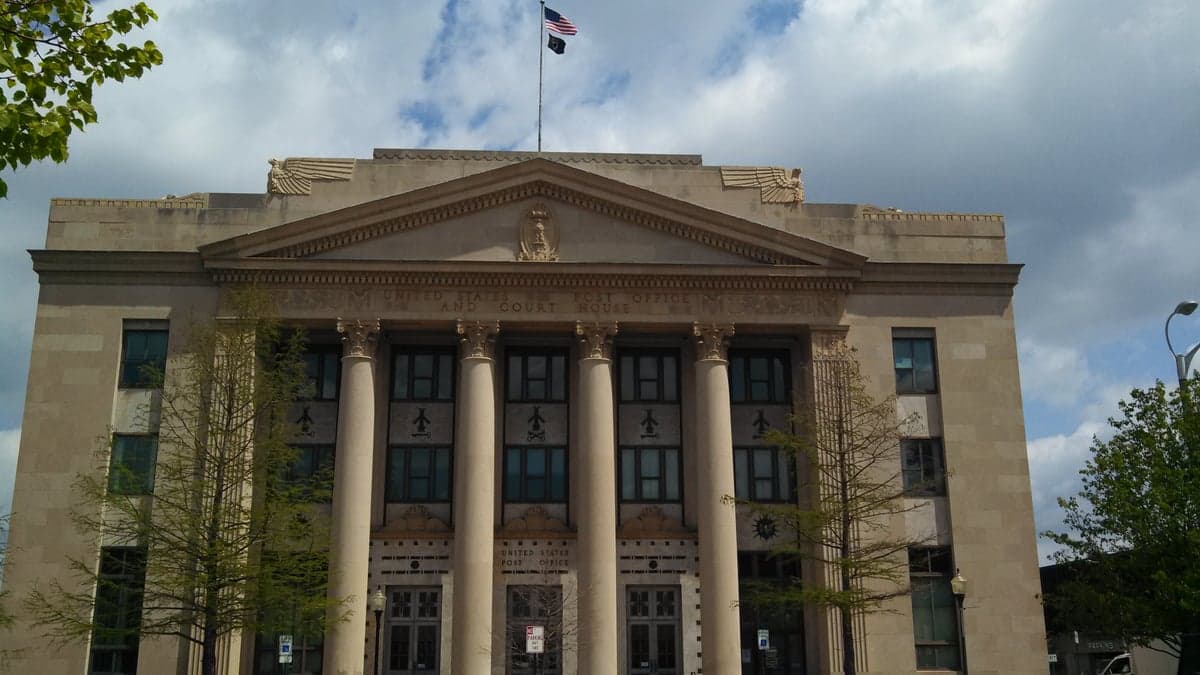
Photo: Wikipedia
Political ClimatePolitical Climate in Shawnee County
Showing district-level results — no local-only data available.
Local Political AnalysisPolitical Analysis of Shawnee County
Shawnee County, Kansas, has long been a reliably conservative area, but like many places across the country, it's seen some interesting shifts in recent years. The Cook Partisan Voting Index (PVI) gives the county a solid R+10 rating, meaning it votes about 10 points more Republican than the national average. That’s a hair more conservative than the state of Kansas as a whole, which sits at R+9, so you’re looking at a place that’s been a bedrock of traditional values. But if you’ve lived here as long as I have, you’ll notice the political winds aren’t as steady as they used to be, especially in the county seat of Topeka, where the state government’s presence brings a more mixed bag of voters.
How it compares
When you stack Shawnee County against the rest of Kansas, the difference is subtle but real. The state’s R+9 PVI reflects a broad, rural-to-suburban conservative base, but Shawnee County’s R+10 is driven by the deep-red precincts outside of Topeka. Towns like Auburn, Rossville, and Silver Lake are where you’ll find the real conservative backbone—folks who vote straight-ticket Republican and aren’t shy about it. Meanwhile, the city of Topeka itself is a different animal. Neighborhoods like the Humboldt area and parts of Potwin have leaned more Democratic in recent cycles, thanks to a growing progressive influence from state workers and younger transplants. The swing precincts are often in the suburbs just west of Topeka, like around Wanamaker Road, where you’ll see a mix of fiscal conservatives and moderate Republicans who sometimes split their tickets. It’s not a blue wave by any means, but the contrast between the county’s rural red and urban purple is something to keep an eye on.
What this means for residents
For those of us who value limited government and personal freedoms, the trajectory here is a bit concerning. The state legislature in Topeka has held the line on many conservative priorities—like protecting Second Amendment rights and keeping taxes low—but the local city council in Topeka has pushed some progressive policies that feel like government overreach. Things like zoning changes that favor dense development over property rights, or public health mandates that stepped on personal choices during the pandemic, have left a bad taste in a lot of mouths. The county’s R+10 lean means these ideas don’t get far countywide, but they’re a reminder that the fight for individual liberty is never really over. If you’re looking to settle here, you’ll find the rural towns are a safe bet for traditional values, while Topeka requires a bit more vigilance at the ballot box.
Culturally, Shawnee County still holds onto its Kansas roots—church potlucks, county fairs, and a general distrust of big government are the norm. But there’s a growing divide between the old guard and the new arrivals, especially in Topeka, where state employees and university folks bring a more progressive mindset. Policy-wise, you’ll see this play out in debates over school funding and local taxes, with rural residents pushing back against any hint of redistribution. The long-term outlook? If the county keeps its R+10 edge, it’ll stay a conservative stronghold, but the purple pockets in Topeka could widen if the state government continues to attract a more diverse workforce. For now, it’s a place where you can still breathe easy, but you’d better keep your eyes open.

State Political ClimatePolitical Climate in Kansas
State Political AnalysisPolitical Environment in the State
Kansas is a reliably Republican state with a Cook PVI of R+9, but don’t let that single number fool you into thinking it’s a monolith. The state has been on a slow, steady rightward march over the last 10-20 years, driven largely by an exodus from the more moderate suburbs of Kansas City and a simultaneous strengthening of rural and exurban conservative coalitions. While the state still elects the occasional moderate Republican governor (like Laura Kelly, a Democrat who won in 2018 and 2022), the legislature has become increasingly conservative, and the state’s overall trajectory is one of deepening red, not blue.
Urban vs. rural divide
The political map of Kansas is a textbook study in the urban-rural split. The two major population centers—Johnson County (suburban Kansas City) and Wyandotte County (Kansas City, KS)—are the state’s blue anchors. Johnson County, once a bastion of moderate Republicanism, has been trending left for a decade, with its affluent, college-educated voters increasingly voting Democratic in presidential races. Wyandotte County is reliably deep blue, driven by a large minority and working-class population. In contrast, the rest of the state is overwhelmingly red. Sedgwick County (Wichita) is a bellwether: it’s Republican-leaning but not deeply so, often deciding statewide races. The real conservative firepower comes from the vast rural expanse—places like Garden City, Dodge City, and Hays—where voters are culturally and economically conservative. The 2022 gubernatorial race saw Kelly win Johnson and Wyandotte by huge margins, but she lost the rest of the state by a combined 12 points. The divide isn’t just about party; it’s about worldview. Rural Kansans see the state as a last bastion of traditional values, while urbanites increasingly align with national Democratic trends.
Policy environment
Kansas’s policy environment is a mixed bag for conservatives, but the trend is clearly toward smaller government and lower taxes. The state’s flat income tax—currently 5.7%—was a signature achievement of the 2022 tax reform package, which also accelerated the elimination of the state’s food sales tax. Property taxes remain a perennial complaint, but the legislature has passed caps on annual increases for homeowners. On education, Kansas has a robust school choice landscape: the state’s tax-credit scholarship program for private schools was expanded in 2023, and there’s a growing push for Education Savings Accounts. Healthcare is a flashpoint: Kansas refused Medicaid expansion under the Affordable Care Act, a decision that frustrates moderates but is cheered by fiscal conservatives who see it as a federal overreach. Election laws have tightened: the 2021 election integrity law requires photo ID for all ballots, limits drop boxes, and shortens the mail-in ballot window. This is a state that values local control—county commissions and school boards have real power, which means policy can vary dramatically from Lawrence (a deep-blue college town) to Colby (a deeply conservative farming community).
Trajectory & freedom
On the freedom front, Kansas is moving in a decidedly libertarian-conservative direction. The Second Amendment Preservation Act, passed in 2021, prohibits state and local enforcement of any future federal gun bans or confiscation orders—a direct challenge to federal overreach. Parental rights were strengthened in 2023 with a law requiring schools to notify parents of any changes to a student’s health or emotional well-being, and to obtain parental consent for any sex education materials. Medical freedom saw a win with the Medical Freedom Act (2022), which prohibits employers and government entities from requiring COVID-19 vaccines as a condition of employment or service. On the flip side, the state’s tax burden remains a concern: while income taxes are flat, property taxes are high relative to neighboring states like Missouri, and the state’s sales tax on groceries is only being phased out slowly. The Kansas City Star recently reported that the state’s overall tax burden ranks in the middle of the pack nationally, but the trajectory is clearly toward lower rates. The biggest threat to freedom in Kansas is the creeping influence of federal mandates, but the state legislature has been aggressive in pushing back, particularly on environmental regulations and energy policy.
Civil unrest & political movements
Kansas is not a hotbed of civil unrest, but it has its flashpoints. The most visible political movement in recent years has been the anti-abortion activism, which culminated in the 2022 “Value Them Both” amendment—a ballot measure that would have declared no constitutional right to abortion in Kansas. It was defeated by a 59-41 margin, a stunning result in a red state that shocked both sides. That vote was driven by a coalition of suburban women in Johnson County and younger voters in Lawrence and Manhattan. On the right, the Kansas Republican Party has seen a factional war between the “Main Street” moderates and the “MAGA” conservatives, with the latter gaining ground in primaries. Immigration politics are less heated than in border states, but there’s a strong undercurrent of concern in western Kansas, where meatpacking plants in Dodge City and Liberal have drawn large immigrant populations. There have been no serious secession or nullification movements, but the state’s Second Amendment Sanctuary status is a point of pride for many. Election integrity remains a live issue: the 2020 and 2022 cycles saw no major scandals, but conservative activists continue to push for hand-counting of ballots and stricter voter roll maintenance. A new resident would notice the political signs in yards—they’re everywhere, and they’re overwhelmingly Republican, but the “Value Them Both” defeat showed that the state’s conservatism has limits.
Projection
Over the next 5-10 years, Kansas will likely become more conservative, not less, but in a specific way. The in-migration pattern is key: people are moving to Kansas from blue states like California and Illinois, but they’re settling in the exurbs and rural areas—places like Spring Hill, Basehor, and Andover—where they’re looking for lower taxes and less regulation. This is reinforcing the rural and exurban conservative base. Meanwhile, Johnson County will continue to drift left, but it’s already so blue that it can’t flip the state on its own. The biggest wildcard is the Kansas City metro as a whole: if the Kansas side continues to attract more moderate and left-leaning professionals, the state’s overall PVI could shift from R+9 to R+7 or R+6 over a decade. But that’s a slow bleed, not a flood. The legislature will likely pass more school choice measures, further tax cuts, and additional election integrity laws. The biggest risk to freedom is a future Democratic governor who could veto those bills, but the GOP’s supermajority in the legislature can override vetoes on most issues. A new resident moving in now should expect a state that is culturally conservative, fiscally cautious, and increasingly assertive in pushing back against federal overreach.
For a conservative-leaning individual or family, Kansas offers a strong bet: low taxes (and getting lower), robust gun rights, parental control in schools, and a political culture that values local control. The trade-off is that you’ll live in a state where the urban-rural divide is real and visible—your experience in Overland Park will be very different from Hays. But if you’re looking for a place where your values are the majority, where the government is more likely to leave you alone than tell you what to do, and where the trajectory is toward more freedom, not less, Kansas is a solid choice. Just keep an eye on Johnson County—that’s where the future of the state’s politics will be decided.
* Values derived from national, state, county, city and local statistics and may differ in a specific area. Last updated: 2026-06-01T12:00:29.000Z
Narrative content on this page is AI-generated and may contain mistakes. Verify any details that matter before acting on them.
ReloMaps may earn a commission from affiliate links at no extra cost to you.

